What to notice at home
Plan the cat's day separately from the human move: where the carrier waits, who closes doors, where litter and food go, how medications travel, and where the cat lands first in the new home.
Updated
Cat travel
Prepare for a long-distance move by practicing the carrier, keeping familiar bedding, planning litter and food stops, and asking your vet about cats who panic or get carsick.
The move is easier when the first room, carrier, paperwork, and travel plan are ready before boxes take over the home.
Plan the cat's day separately from the human move: where the carrier waits, who closes doors, where litter and food go, how medications travel, and where the cat lands first in the new home.
Update microchip and ID, gather records, practice carrier time, pack familiar bedding, food, litter, cleanup supplies, and medications, then set up one quiet room before letting your cat explore.

Call your veterinarian before the move for cats with heart or breathing disease, severe anxiety, diabetes, kidney disease, medication needs, motion sickness, or a history of not eating under stress.
Travel gear works best when it is practiced before the trip, so the carrier, mat, harness, or reward pouch already feels familiar.
Affiliate links: Furball Cove may earn from qualifying purchases at no extra cost to you.
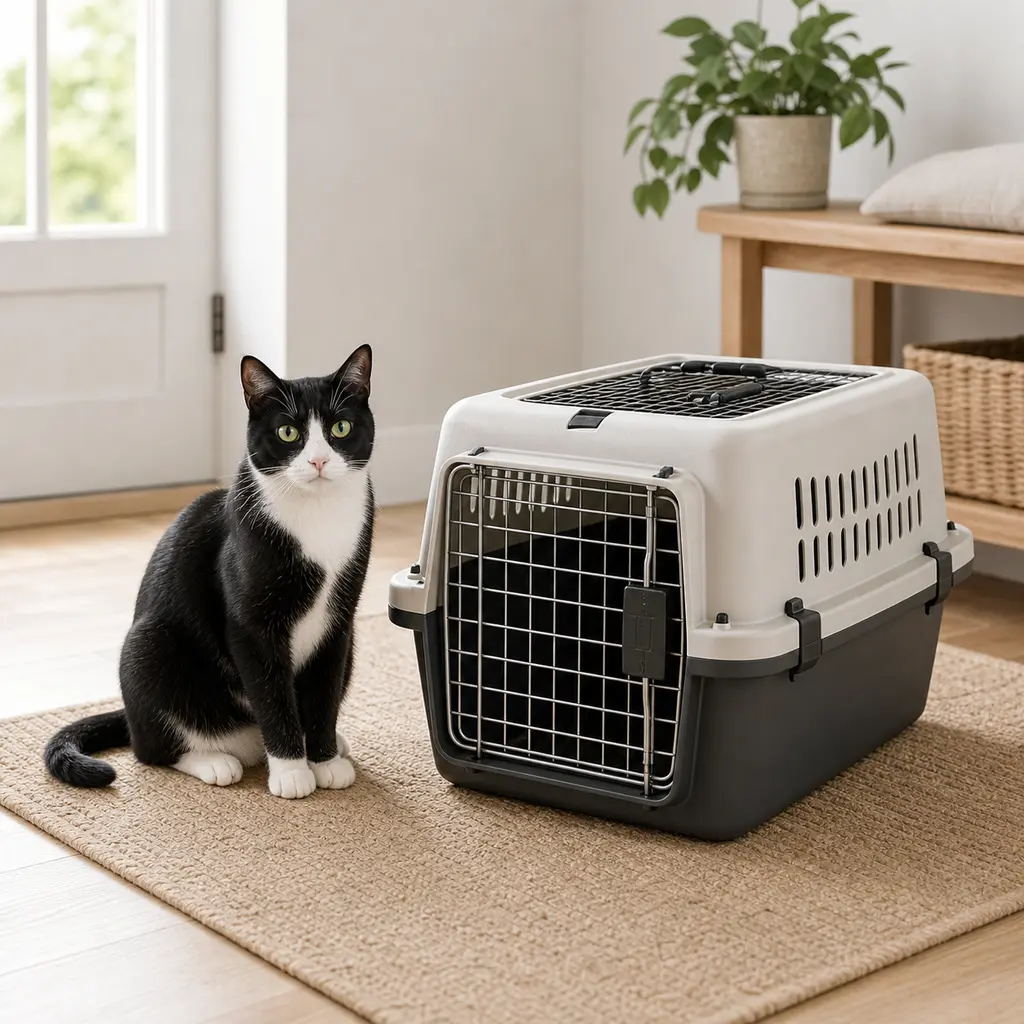
A sturdy carrier keeps travel and vet trips more controlled than carrying a loose cat.
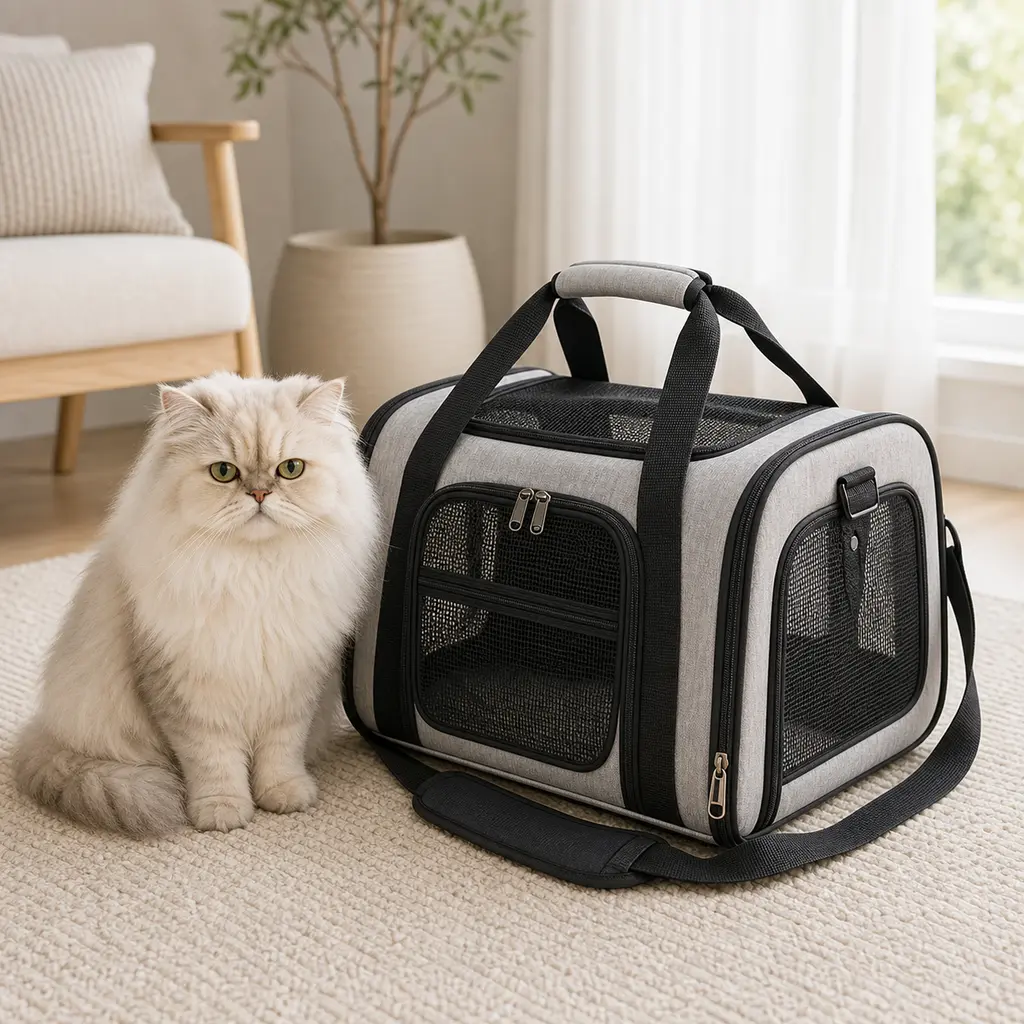
A soft carrier can work for calm, supervised travel when it fits the cat and trip.
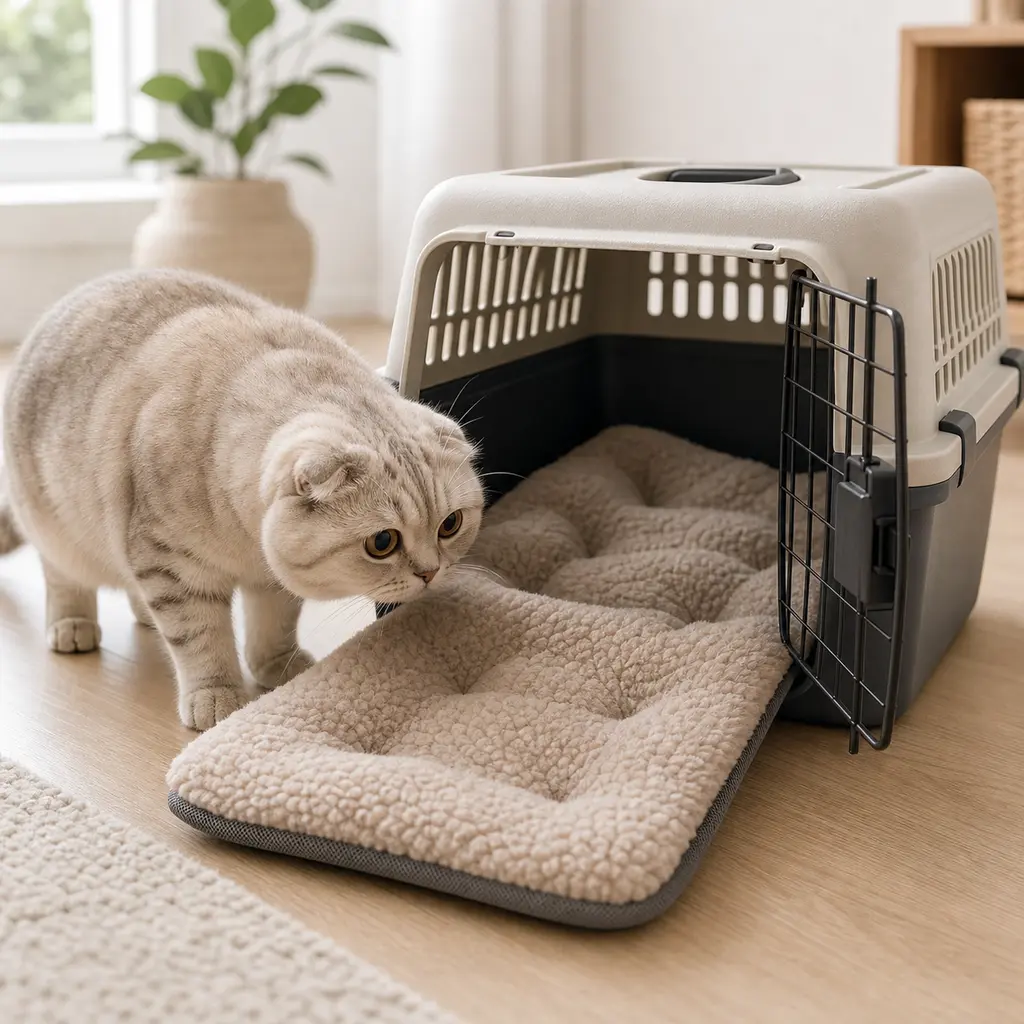
A familiar mat can help the carrier smell and feel less sudden.
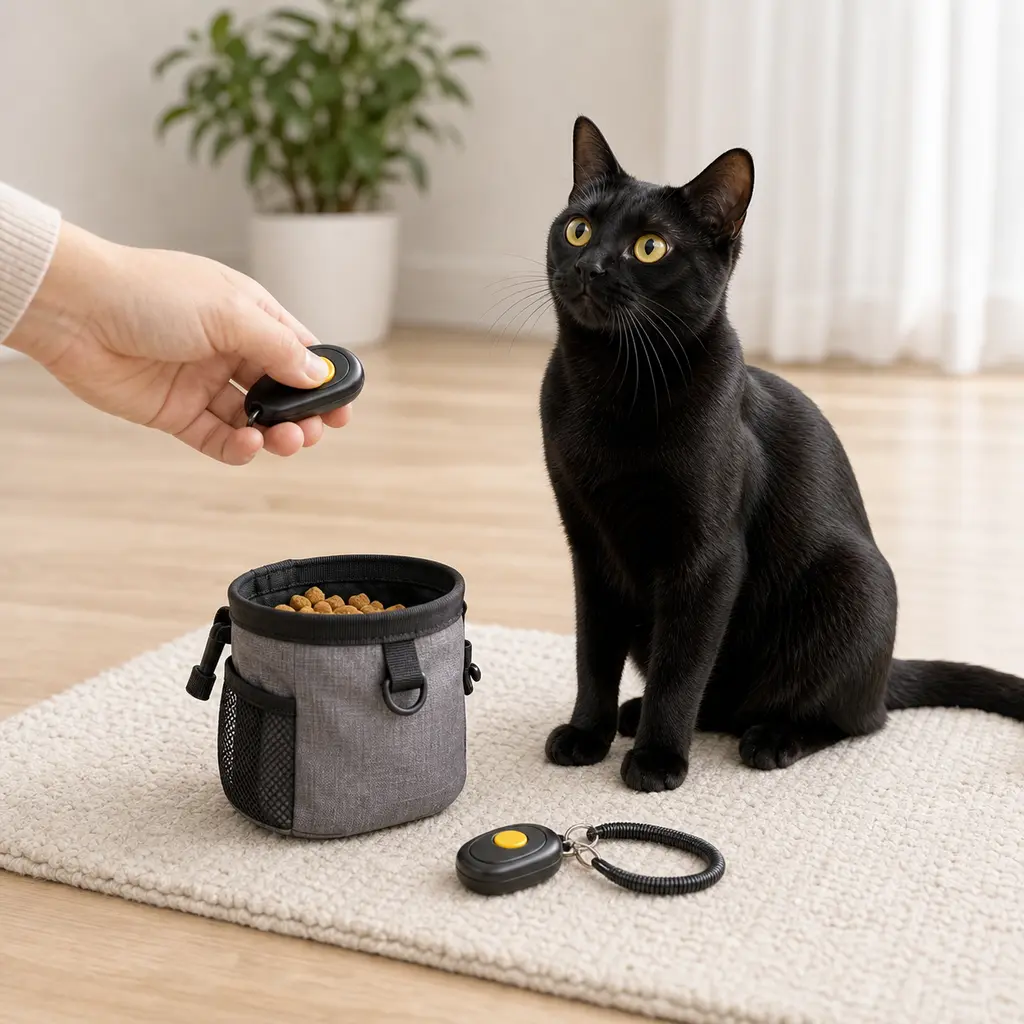
Small rewards help carrier, harness, and car practice stay low pressure.
Prepare for a long-distance move by practicing the carrier, keeping familiar bedding, planning litter and food stops, and asking your vet about cats who panic or get carsick.
Call your veterinarian before the move for cats with heart or breathing disease, severe anxiety, diabetes, kidney disease, medication needs, motion sickness, or a history of not eating under stress.