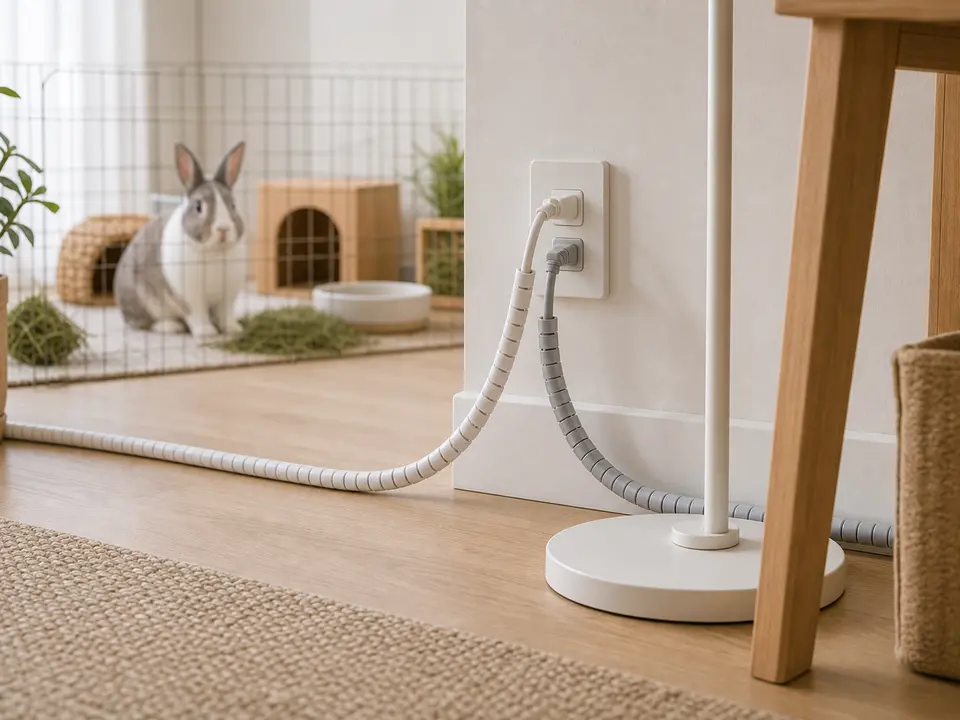
To stop a rabbit from chewing cords, block access before training. Cover cords, lift them, route them behind barriers, close gaps behind furniture, and offer safe chew textures nearby. Cord chewing is too tempting and too risky to leave as a willpower test.
Rabbits explore with their teeth, and cords are right at rabbit height. A good cord plan looks tidy, but it starts with a simple truth: if your rabbit can reach the wire, the setup is not finished.
Block the cord before redirecting
Use cord covers, cable boxes, furniture placement, pen panels, or raised routing so your rabbit cannot reach the actual wire. Redirecting only works after the dangerous option is gone. Do the boring protection first, especially around desks, lamps, chargers, routers, and media stands.
Check the setup behind furniture
People miss the setup spots rabbits find first: the gap behind a couch, a charger beside the bed, the lamp cord tucked under a table, or the router cable near a baseboard. Get down low and trace every reachable cord path before free-roam time.
Offer a better chewing texture
Once the cord is unreachable, place safe chew work near the same area: willow, cardboard, hay twists, seagrass, or other rabbit-safe textures. The goal is not to stop chewing. It is to make the allowed chewing option easier than hunting for the wire.
Watch the timing of cord hunting
Some rabbits go for cords when breakfast is late, floor time is boring, or the same desk corner is always open. Write down when it happens. If the pattern repeats, add enrichment before that time and close off the target before your rabbit rehearses the habit.
Keep the room livable
Cord protection should be easy enough that you keep using it. A tidy cable channel, a blocked desk gap, or a simple exercise pen barrier beats a complicated system you remove after two days. The best rabbit-proofing is the version that survives real life.
Take any chewed cord seriously
If your rabbit chews a live cord, unplug it safely if you can do so without touching damaged wire, move your rabbit away, and watch for burns, drooling, weakness, breathing changes, or unusual behavior. Call a rabbit-savvy vet or emergency clinic for guidance if you suspect contact or injury.
Before you decide
Can your rabbit reach any actual wire from the floor?
Are cords covered, lifted, boxed, or behind a real barrier?
Is there safe chewing near the area your rabbit keeps choosing?
Does cord hunting happen at a predictable time?
Would your protection still be in place after a busy week?
Next best moves
Block cord access before relying on redirection.
Check desk, lamp, charger, router, and media areas from floor height.
Offer safe chew textures near the protected zone.
Call a rabbit-savvy vet if your rabbit may have chewed a live cord or shows injury signs.
Chew-safe setup helpers
These are practical pieces for the routine, not clutter to buy all at once.
Affiliate links: Furball Cove may earn from qualifying purchases at no extra cost to you.