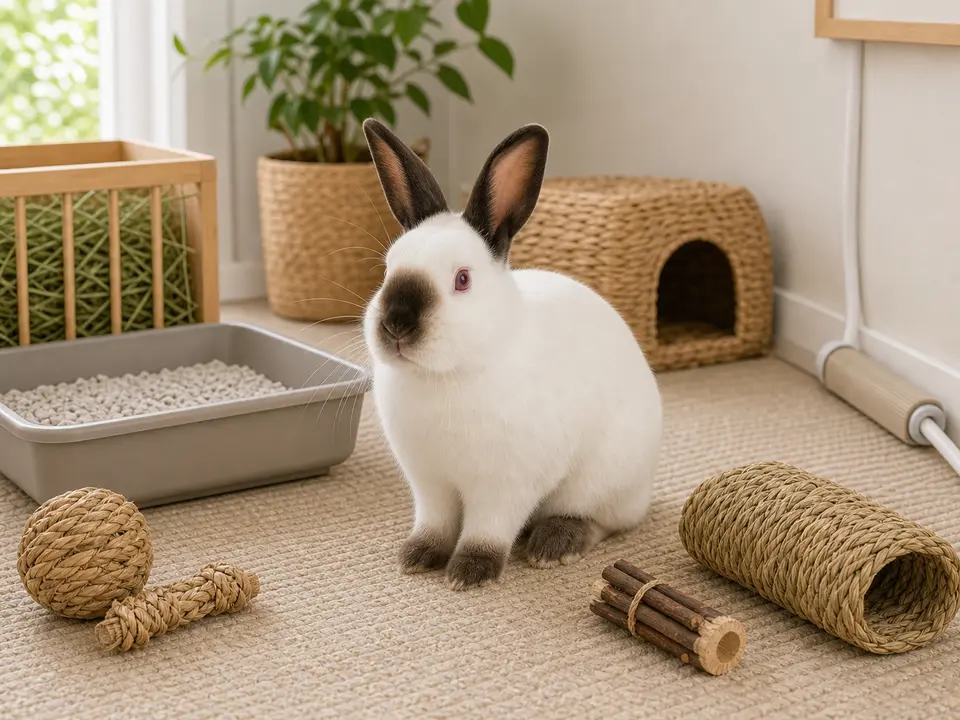
To stop a rabbit from chewing furniture, block the favorite edges first, offer safe chew textures nearby, and change the room routine that keeps sending your rabbit back to the same leg, baseboard, rug corner, or couch edge. Chewing is normal; the room needs better choices.
Furniture chewing is annoying, but it is also useful information. Your rabbit has picked a texture, location, or time of day that feels satisfying. A good fix protects the furniture and gives that chewing energy a safer job.
Protect the favorite edge first
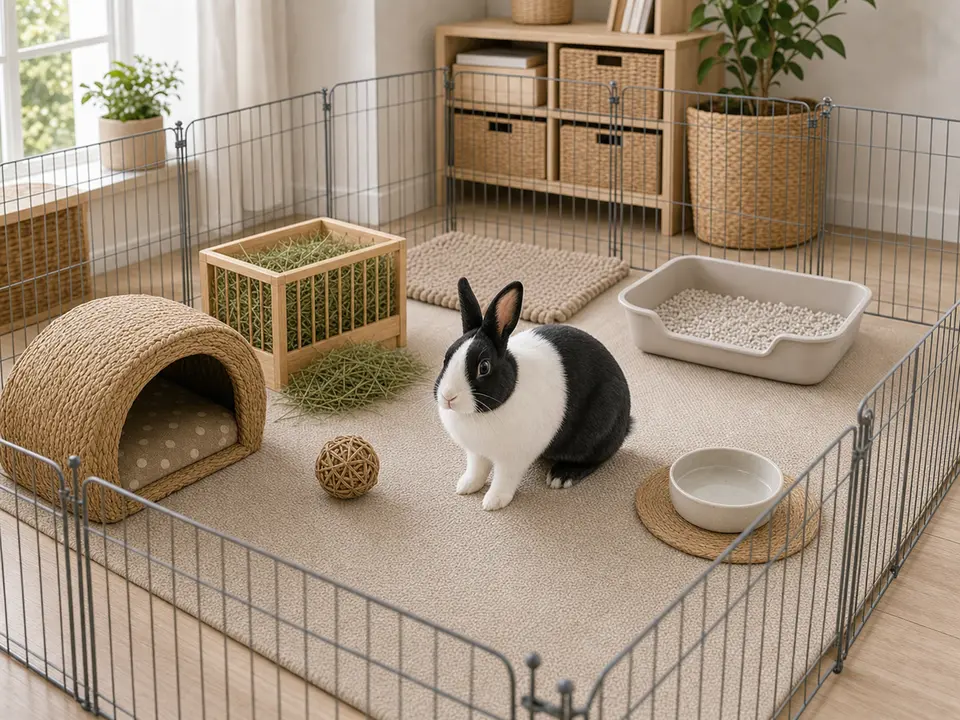
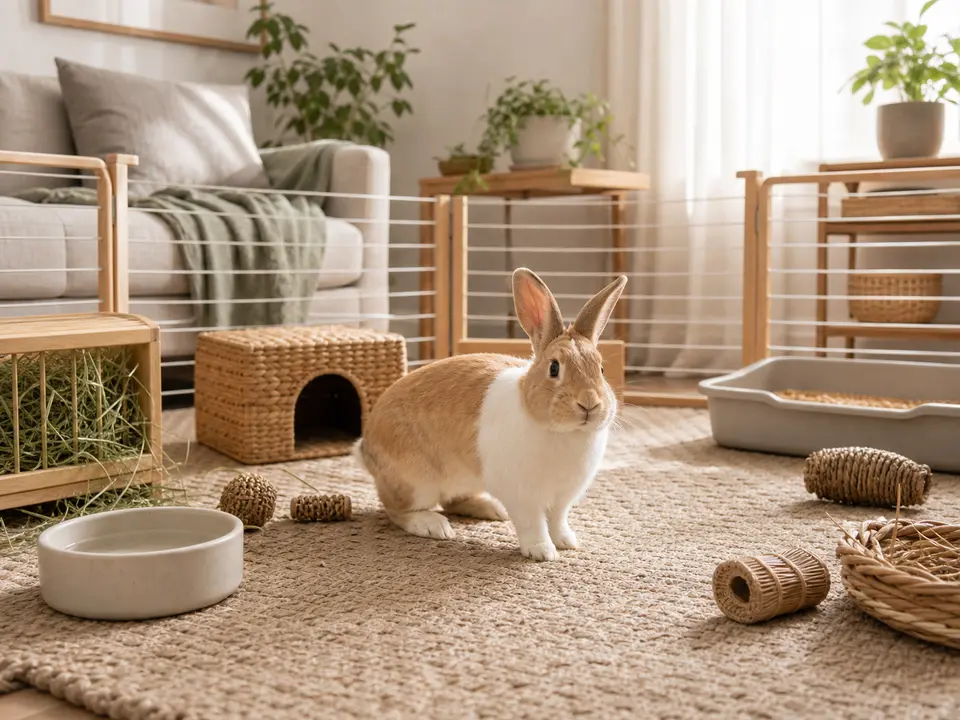
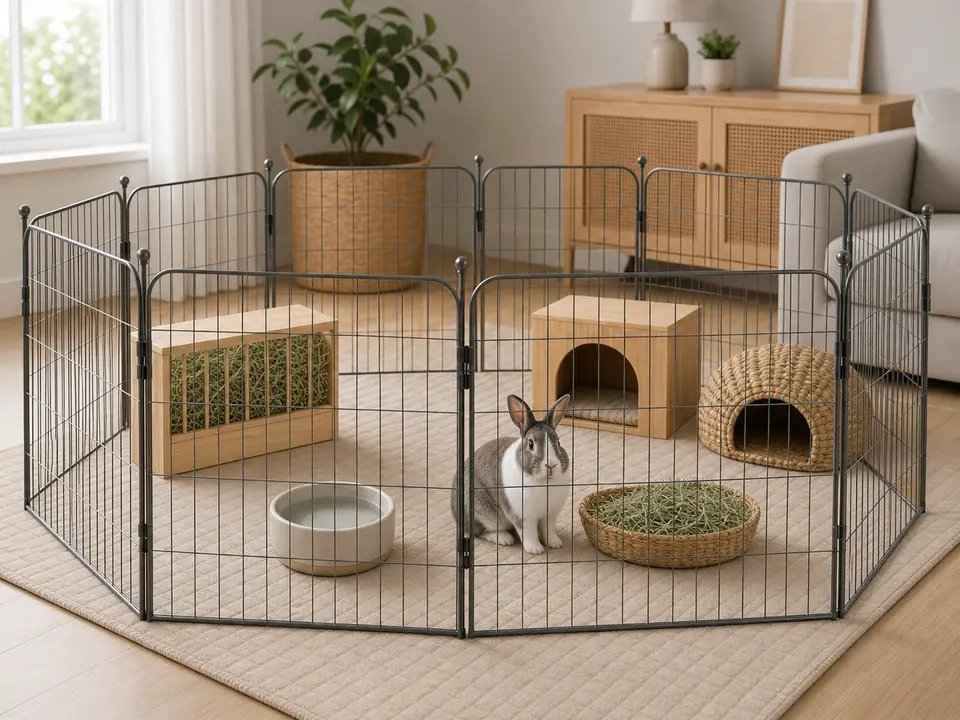
Start with the exact spot your rabbit chooses: a table leg, couch corner, baseboard, rug edge, or shelf. Use a barrier, pen panel, washable mat, furniture guard, or rearranged layout so the target is not available. Redirection works better after the old favorite is blocked.
Match the texture safely
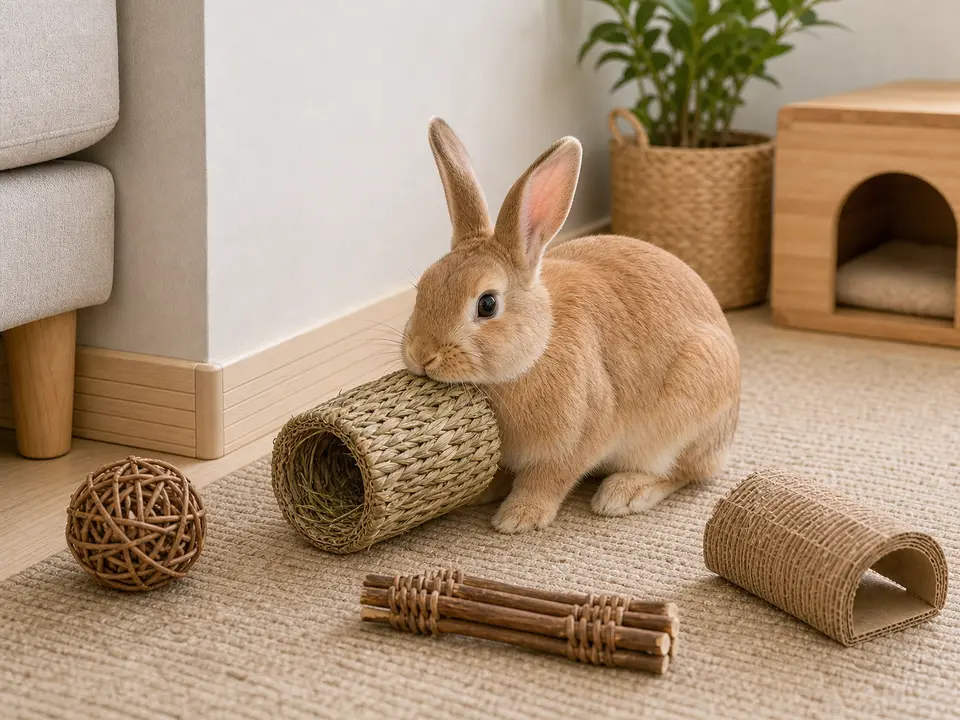
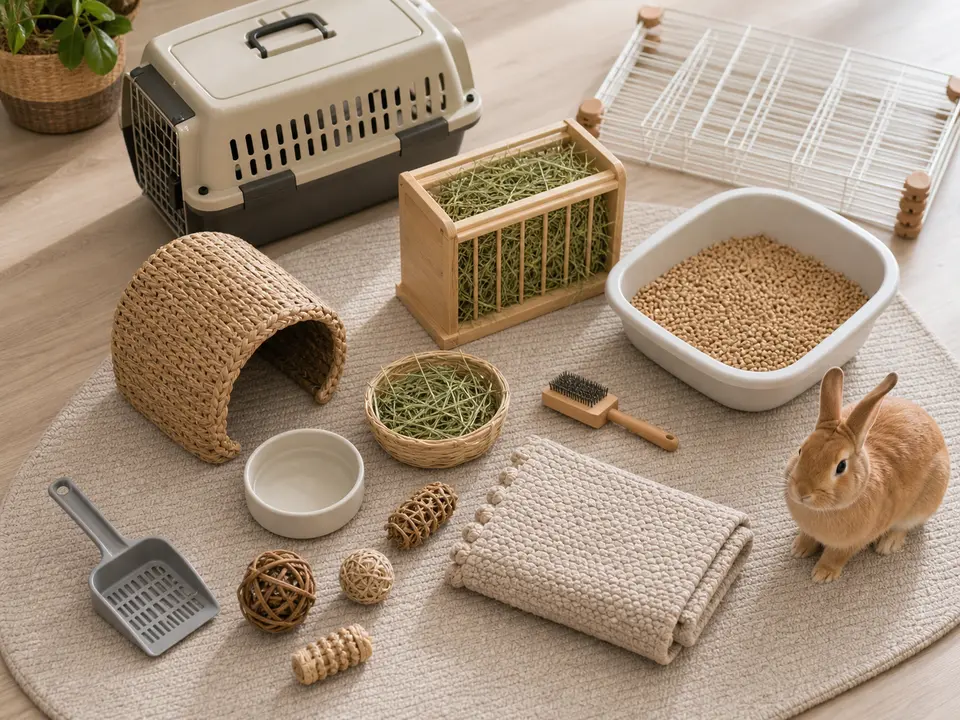
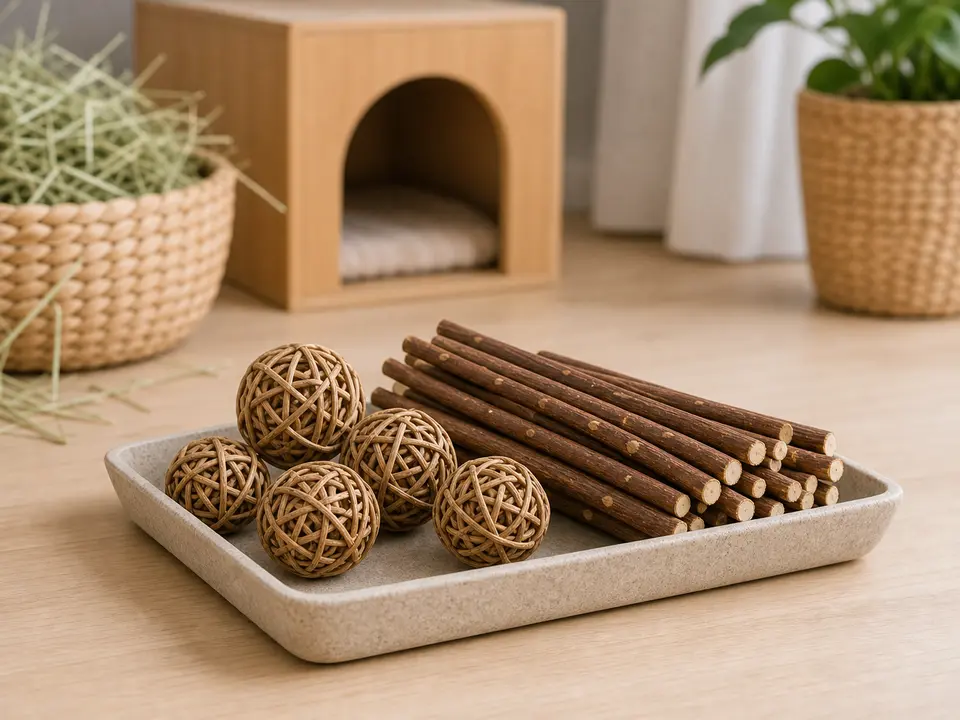
A rabbit chewing wood may need a safe wood or willow option. A rabbit digging at fabric may need cardboard, seagrass, or a dig-friendly surface. The replacement should live near the problem area at first, because a chew toy across the room does not compete with the couch leg.
Check boredom and timing
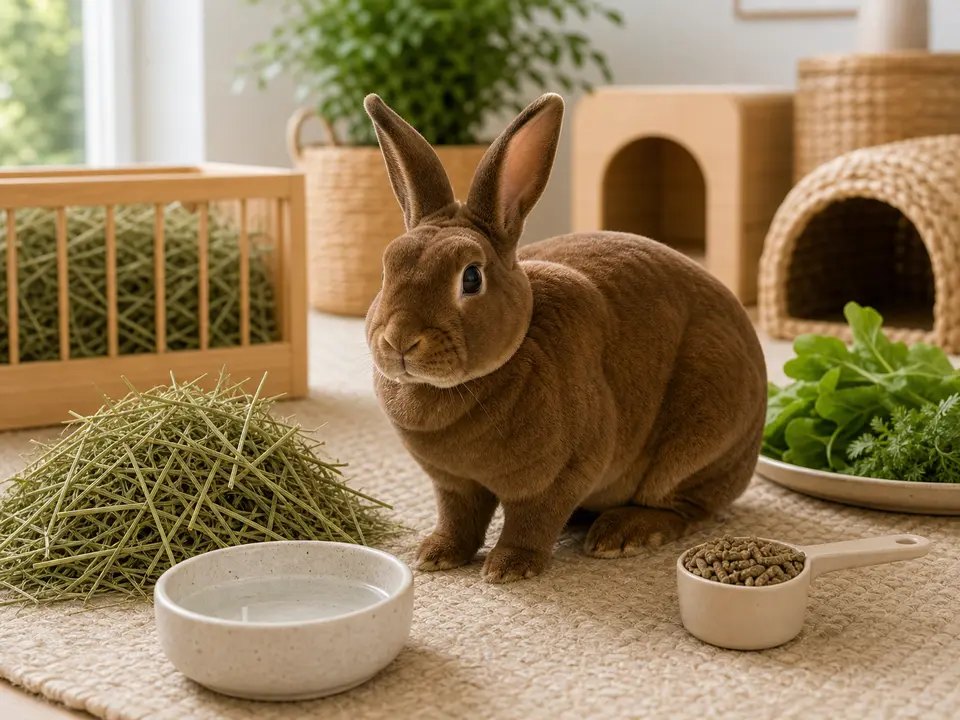
Many rabbits target furniture when they want breakfast, more floor time, or a better job. If chewing spikes at the same time each day, offer hay, forage work, or a chew project before the habit starts. Prevention feels less dramatic, but it works better than interrupting every few minutes.
Fix rug and floor edges
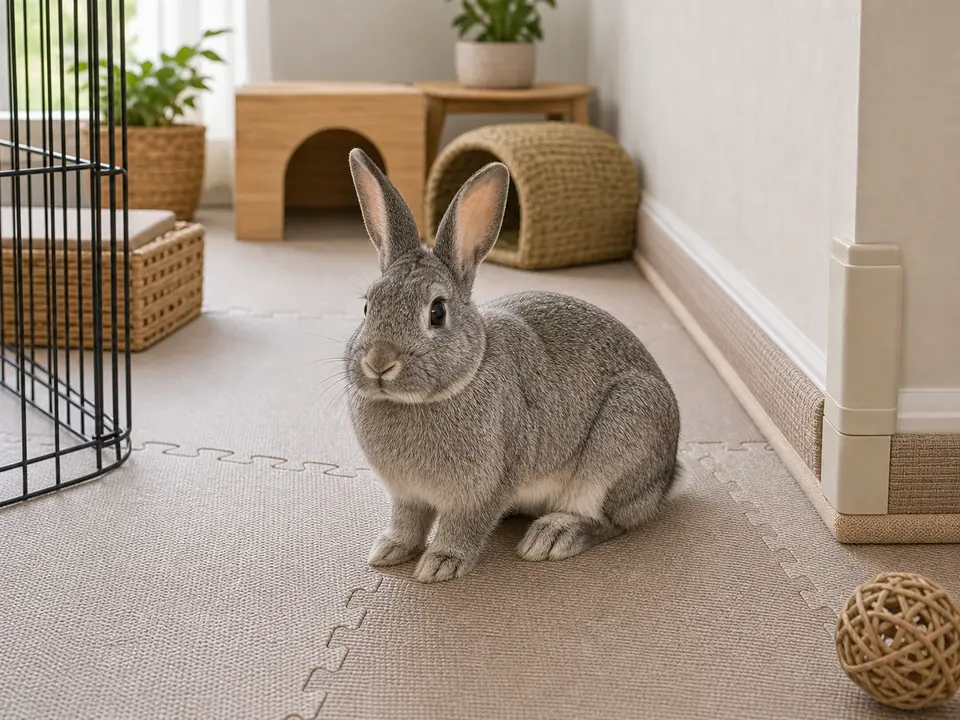
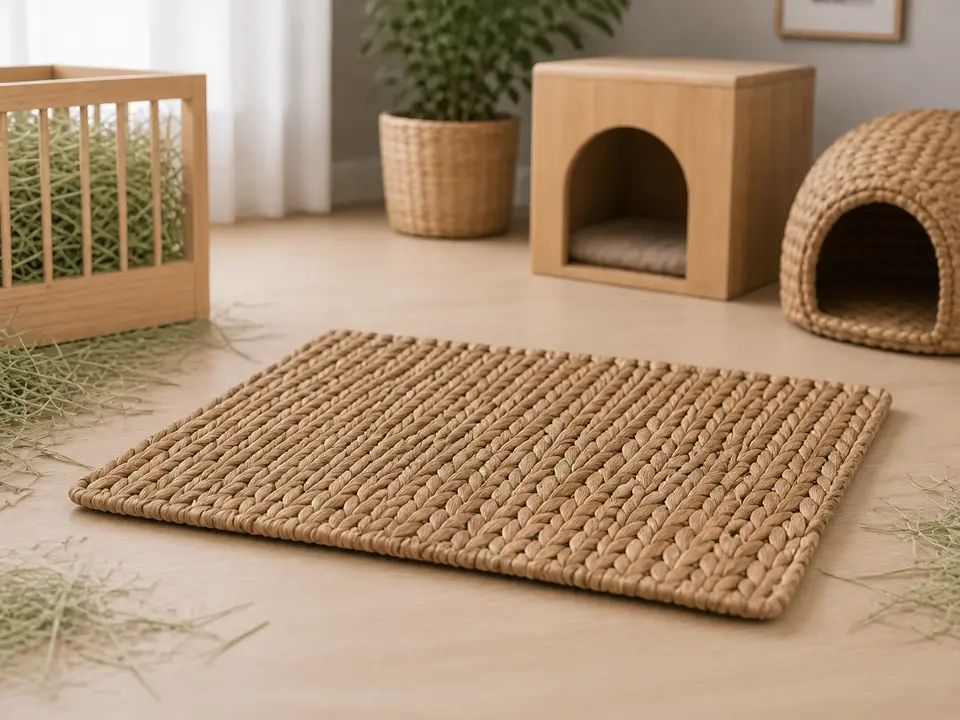
Rug corners and soft floor transitions are furniture-adjacent trouble spots. Tape is rarely enough for determined rabbits. Use heavier washable rugs, tucked edges, mats held by furniture, or a blocked zone so the rabbit cannot start pulling at the same tempting seam.
Keep protection clean-looking and repeatable
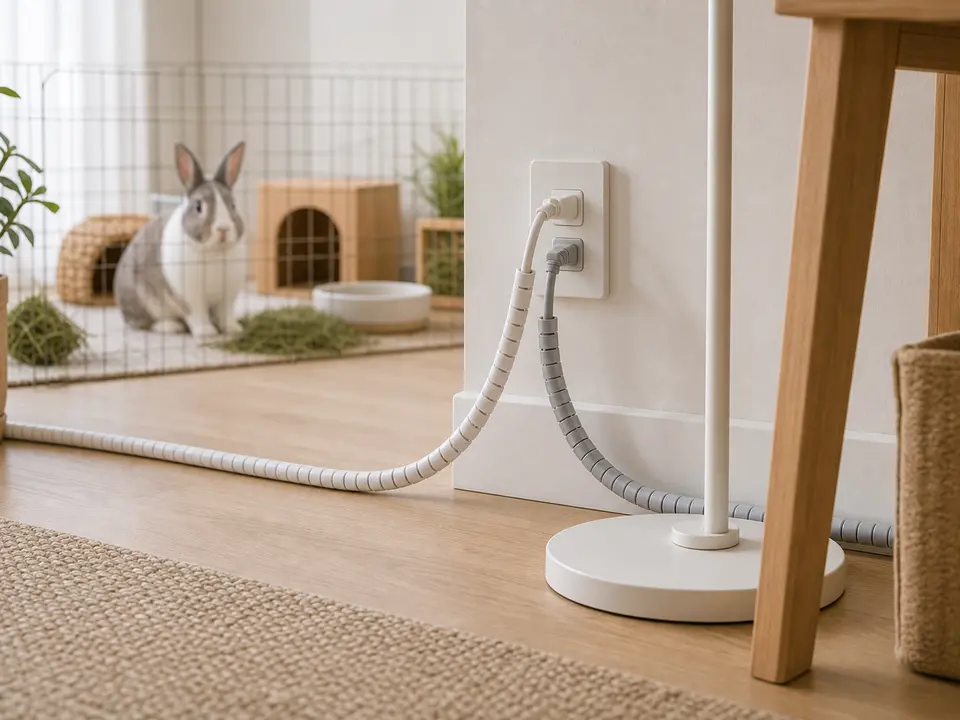
The best furniture protection is something you can live with: simple panels, a clean cable route, a mat that belongs there, or a chew station that looks intentional. Choose supplies that fit the room and are easy to reset. If the fix makes the room miserable for people, it probably will not stay in place long enough to help.
Notice stress or pain changes
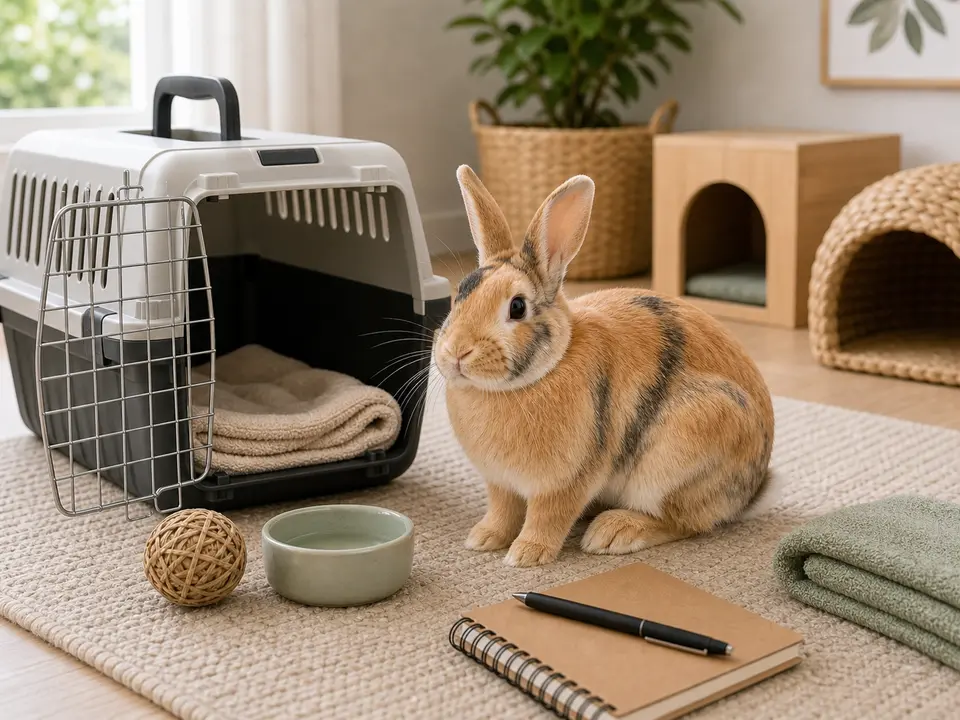
Chewing can increase with stress, confinement, boredom, dental discomfort, or changes in routine. If your rabbit suddenly chews obsessively, stops eating hay, drools, leaves smaller poops, or acts painful, bring a rabbit-savvy vet into the conversation instead of treating it as a furniture problem only.
Before you decide
What exact furniture edge does your rabbit choose?
Is that edge physically blocked before you redirect?
Is the safe chew texture similar enough to compete?
Does the chewing happen at a predictable time of day?
Could stress, confinement, dental discomfort, or appetite changes be involved?
Next best moves
Block the favorite furniture target first.
Offer safe textures that match what your rabbit keeps choosing.
Use enrichment before the predictable chewing time.
Call a rabbit-savvy vet if chewing changes arrive with dental, appetite, poop, pain, or behavior concerns.
Chew-safe setup helpers
These are practical pieces for the routine, not clutter to buy all at once.
Affiliate links: Furball Cove may earn from qualifying purchases at no extra cost to you.
Chewing is normal rabbit behavior. Furniture often wins because it is reachable, textured, and in the rabbit's path.
Will chew toys stop furniture chewing?
They help most when the furniture edge is blocked and the safe chew option is close to the problem spot.
Should I use bitter spray?
Some people try it, but physical blocking and better chew options are usually more reliable. Avoid spraying anything your rabbit should not ingest or breathe.