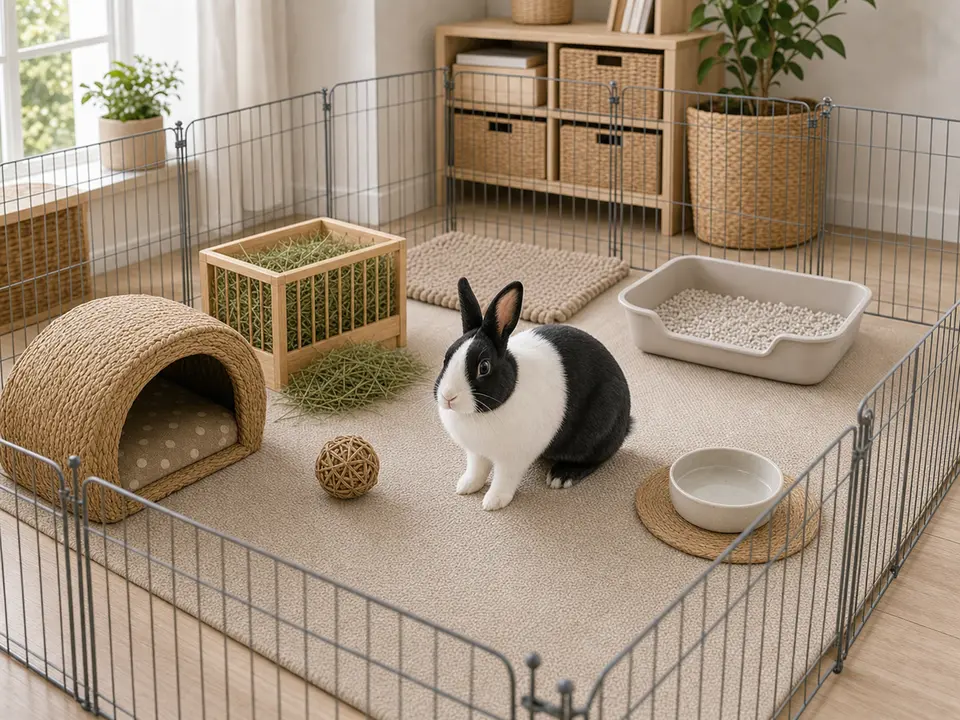
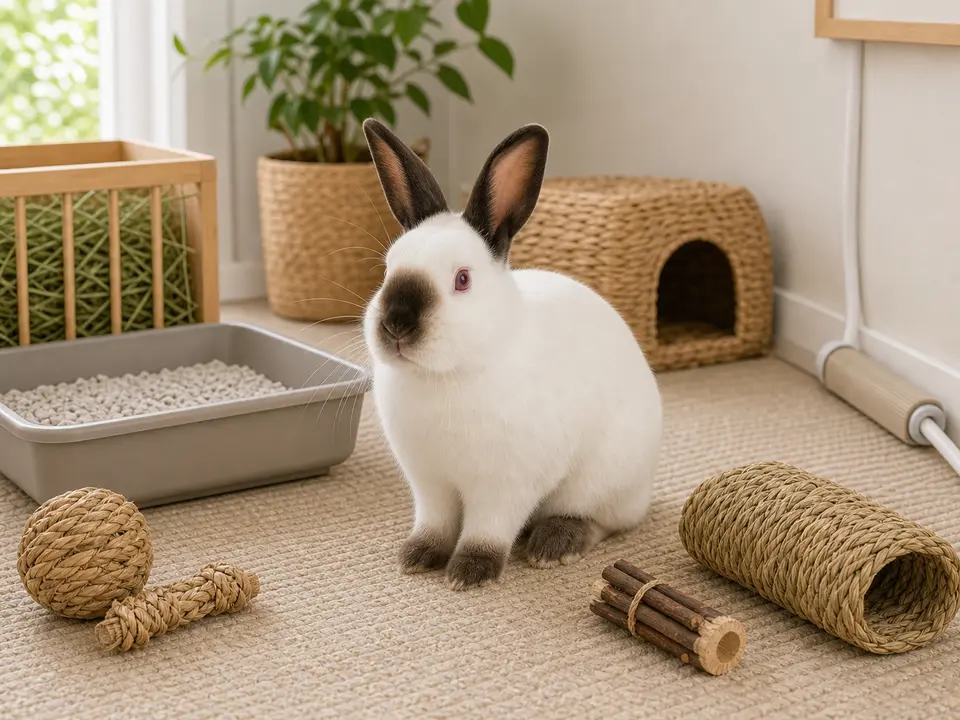
A good rabbit enclosure should work like a small room, not a storage box. It needs space to hop and stretch, a hay-and-litter station, clean water, grippy flooring, a hideout, safe chewing, and a layout you can clean every day without dismantling the whole setup.
The enclosure is your rabbit's home base. If it feels cramped, slippery, messy, or hard to reset, your rabbit will show you through litter misses, chewing, pacing, or reluctance to move.
Size it for real movement
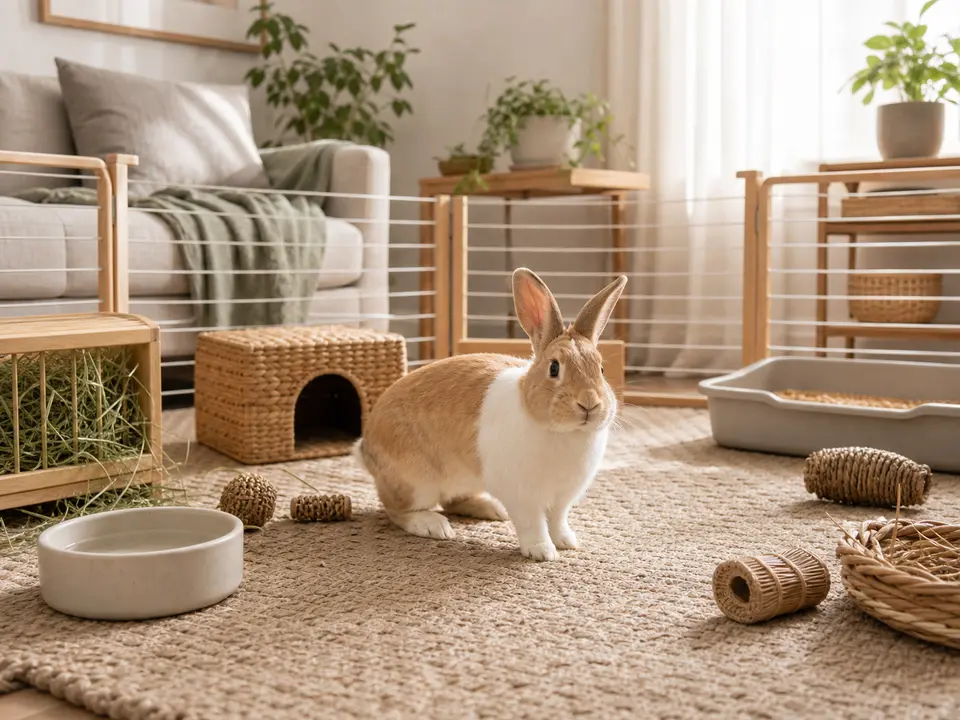
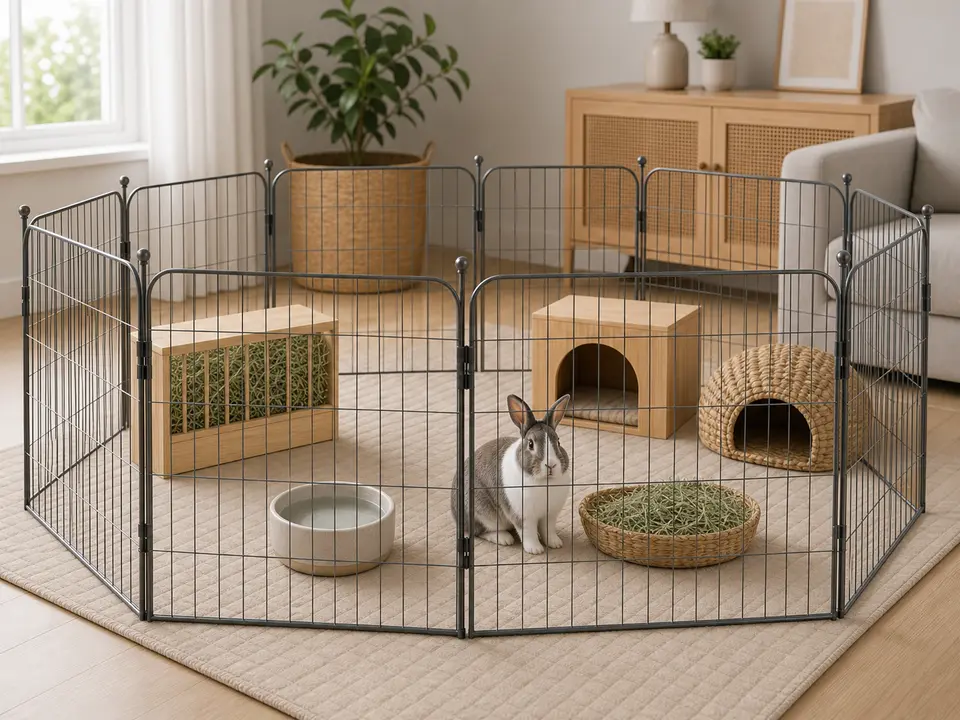
Your rabbit should be able to take several hops, stretch fully, stand comfortably, and move between zones without crowding. An exercise pen often works better than a small cage because it creates flexible space while still protecting the room. Watch your rabbit move through the setup before deciding it is finished.
Build clear daily zones
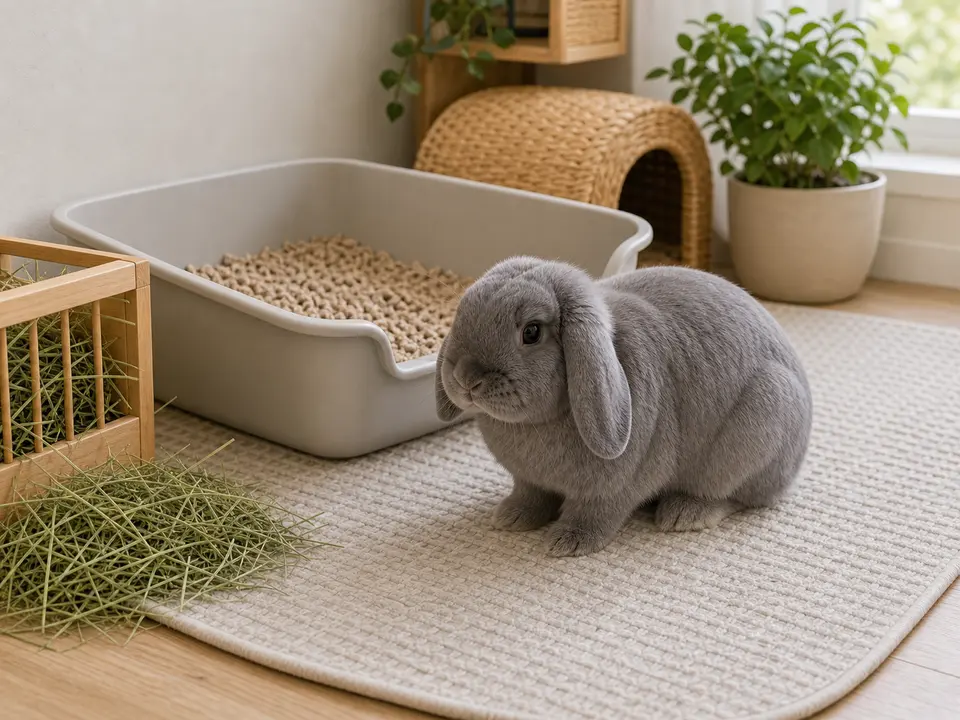
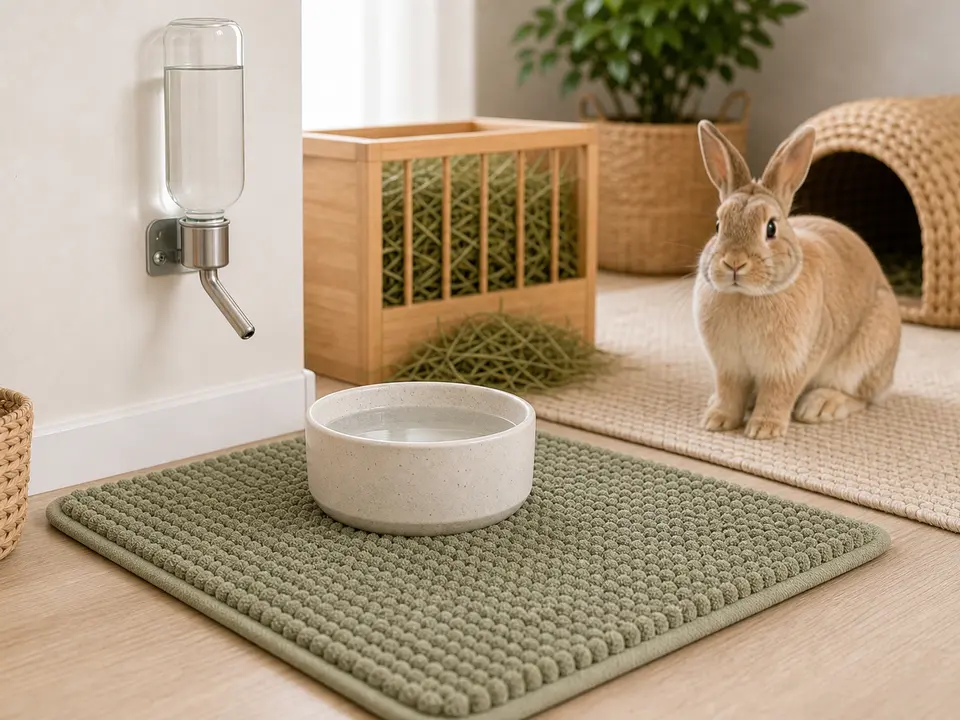
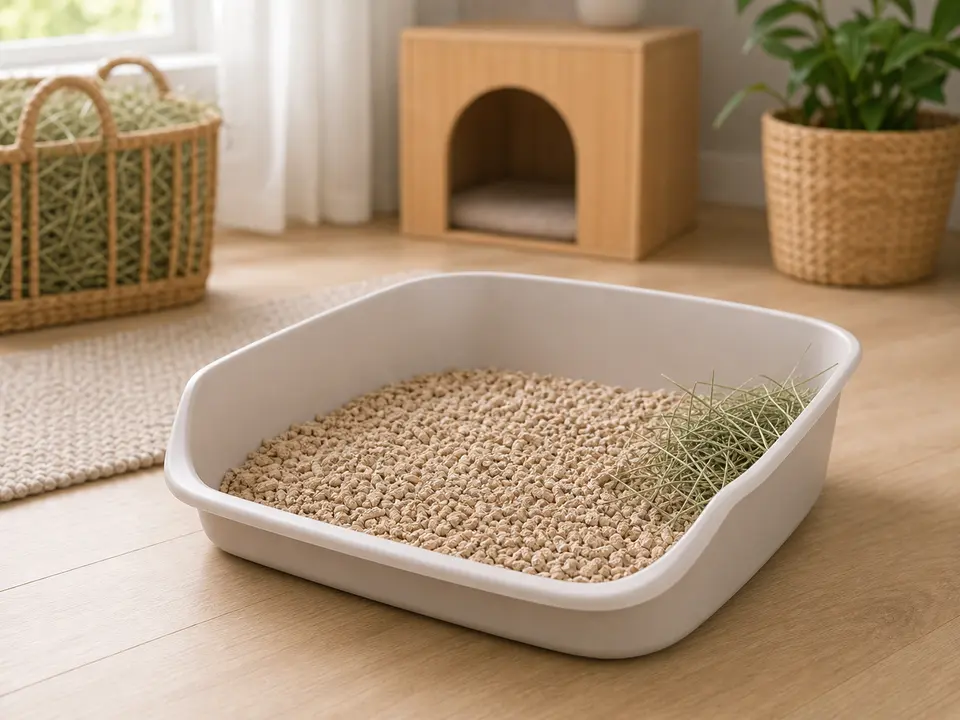
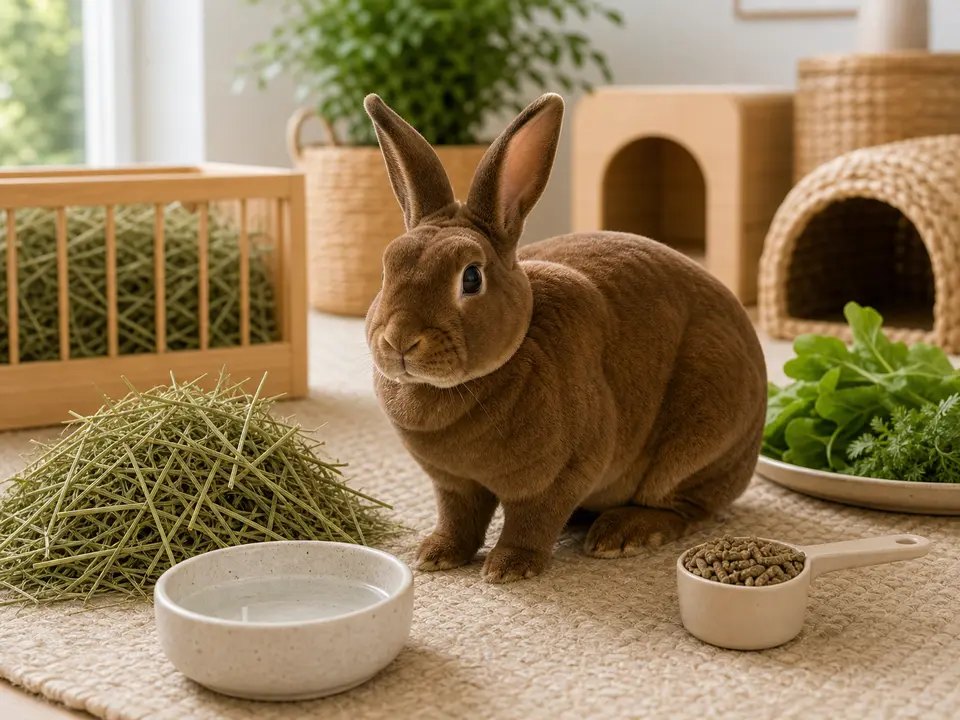
Place hay and litter together, water nearby, a hideout away from the messiest corner, and a rest area on steady flooring. A simple zone layout helps the rabbit understand the room and helps you notice when appetite, water, or litter habits change.
Use traction underfoot
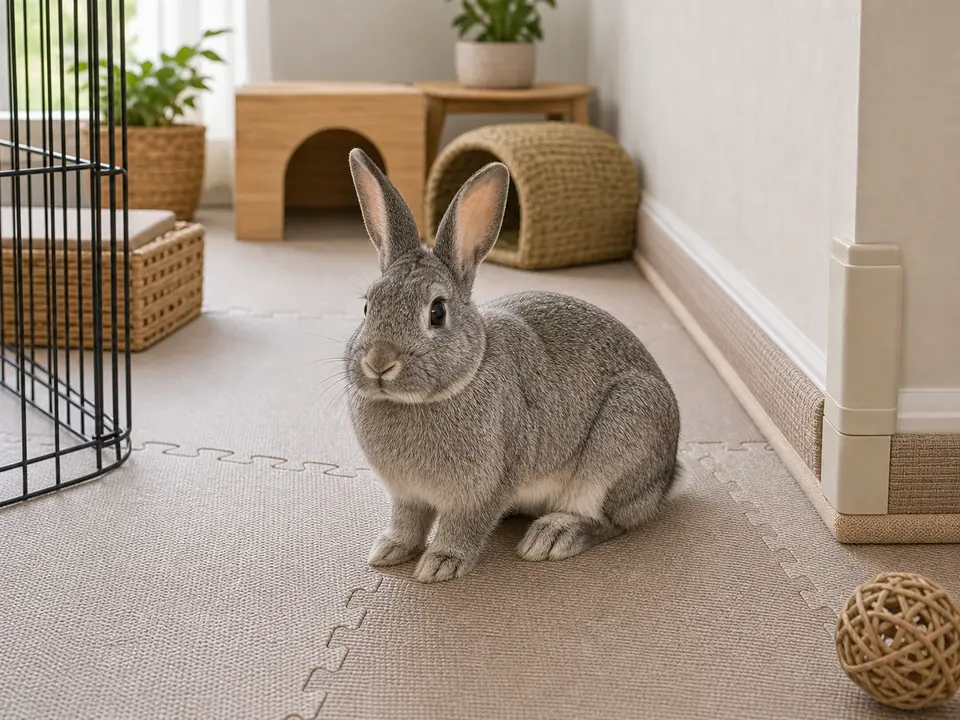
Plastic trays, slick floors, and bare tile can make rabbits slide or avoid movement. Add washable mats, rugs, or fleece layers that stay flat and do not bunch dangerously. Traction should cover the paths your rabbit uses most, not only the prettiest corner. If a mat wrinkles or shifts every time your rabbit turns, choose something heavier or anchor the edge safely.
Include a proper hideout
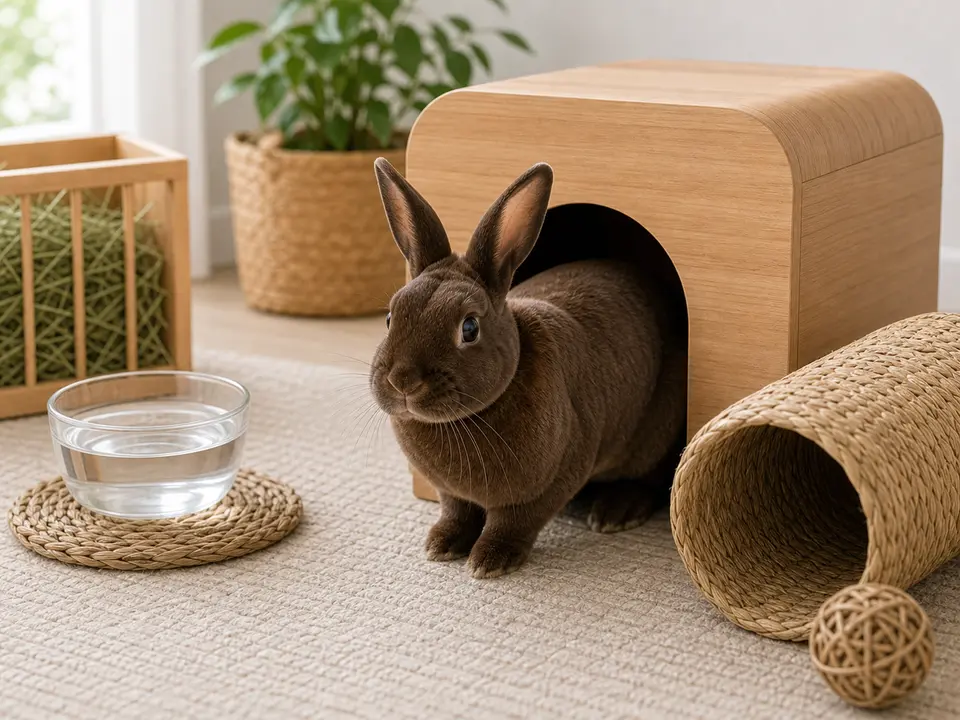
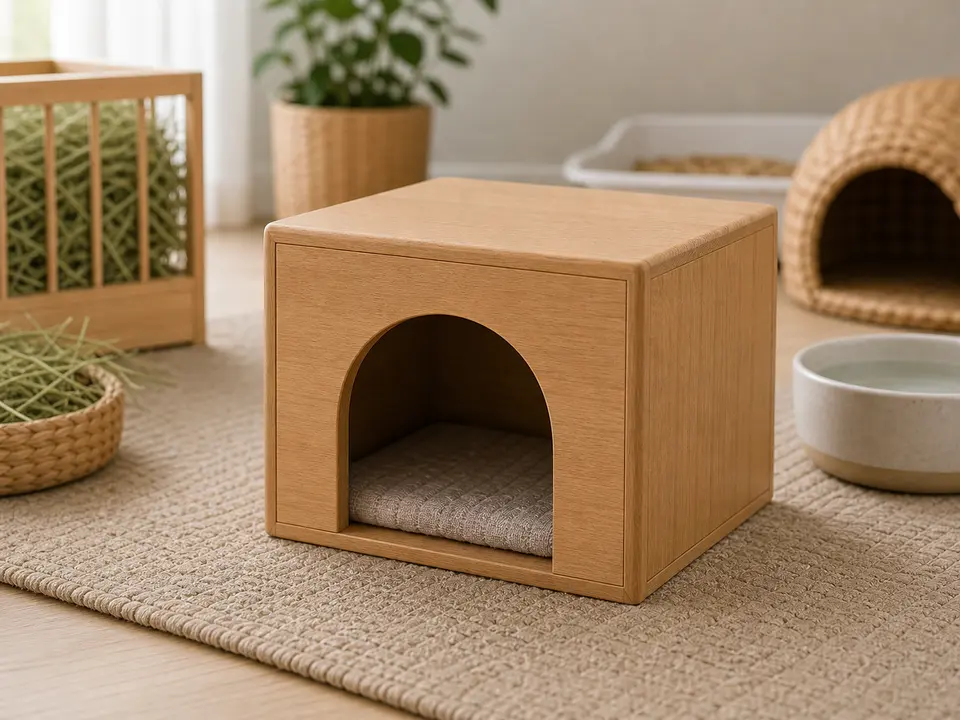
A hideout gives your rabbit a retreat from noise, visitors, and busy household movement. Choose one that is large enough to turn around in and easy to exit. If the enclosure has no retreat, your rabbit may feel watched even when everyone means well. Place it where your rabbit can rest without blocking the litter or water path.
Plan chewing before trouble starts
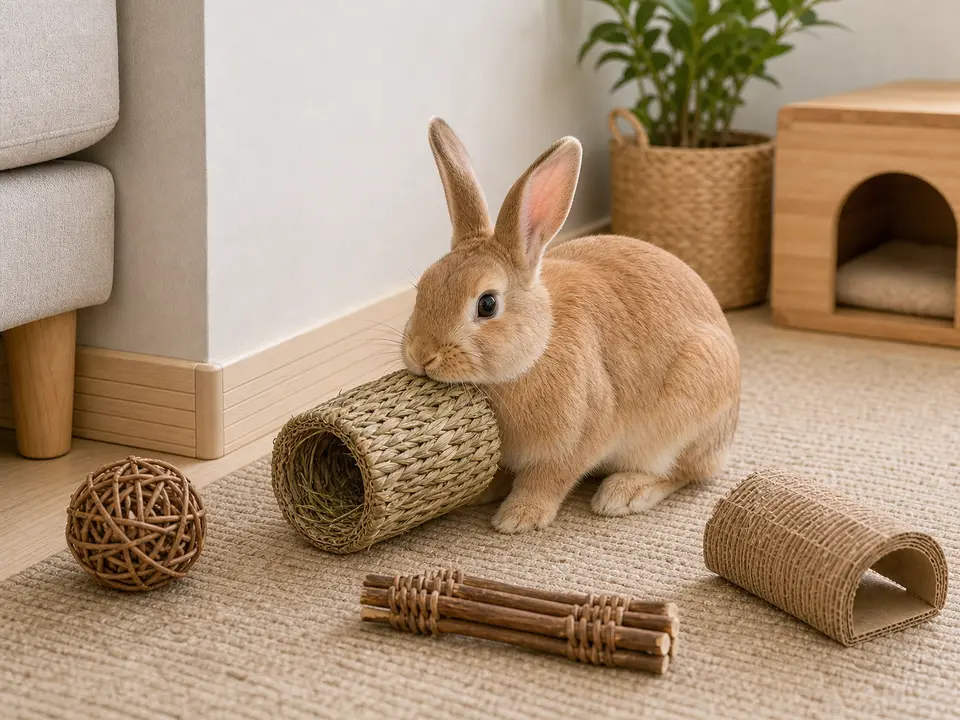
Safe chew options belong inside the enclosure from the beginning. Add cardboard, willow, seagrass, hay toys, or other rabbit-safe textures near the edges your rabbit investigates. Chewing is normal; the enclosure should give it a safe job.
Keep cleaning easy
If daily cleanup requires moving every panel, you will resent the setup. Leave space to pull the litter box, sweep hay, refill water, and replace mats. A clean enclosure is not about perfection; it is about a routine simple enough to do every day. The easier the reset, the more consistent the care.
Before you decide
Can your rabbit hop, stretch, hide, eat, drink, and use the box without crowding?
Are hay and litter placed together in a clear station?
Does the floor have traction where your rabbit actually moves?
Can you clean the enclosure every day without rebuilding it?
Next best moves
Use a roomy pen or safe room base instead of a tiny cage.
Build zones for hay, litter, water, rest, hiding, and chewing.
Prioritize washable traction and easy cleaning.
Add supervised floor time outside the enclosure when the room is rabbit-proofed.
Enclosure pieces that matter most
Start with space, traction, litter, and a retreat before adding decoration.
Affiliate links: Furball Cove may earn from qualifying purchases at no extra cost to you.