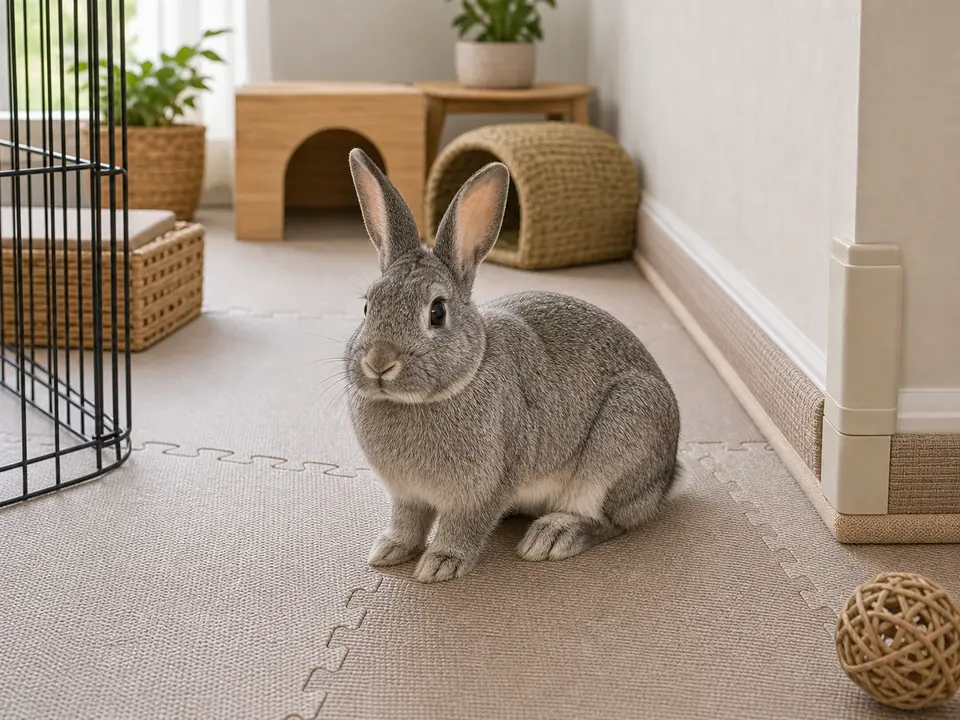
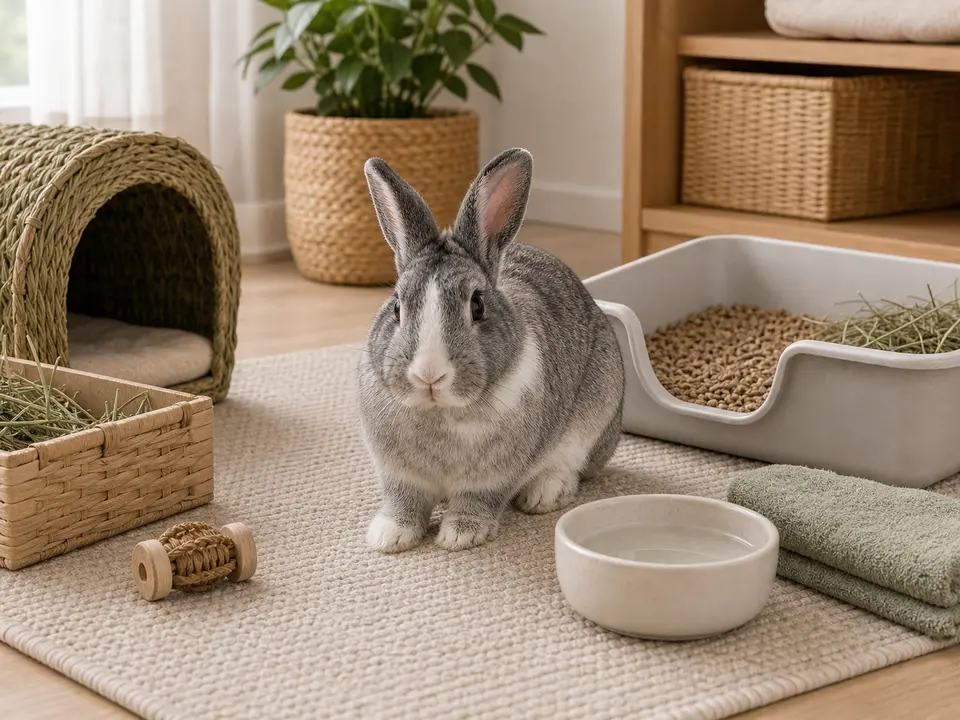
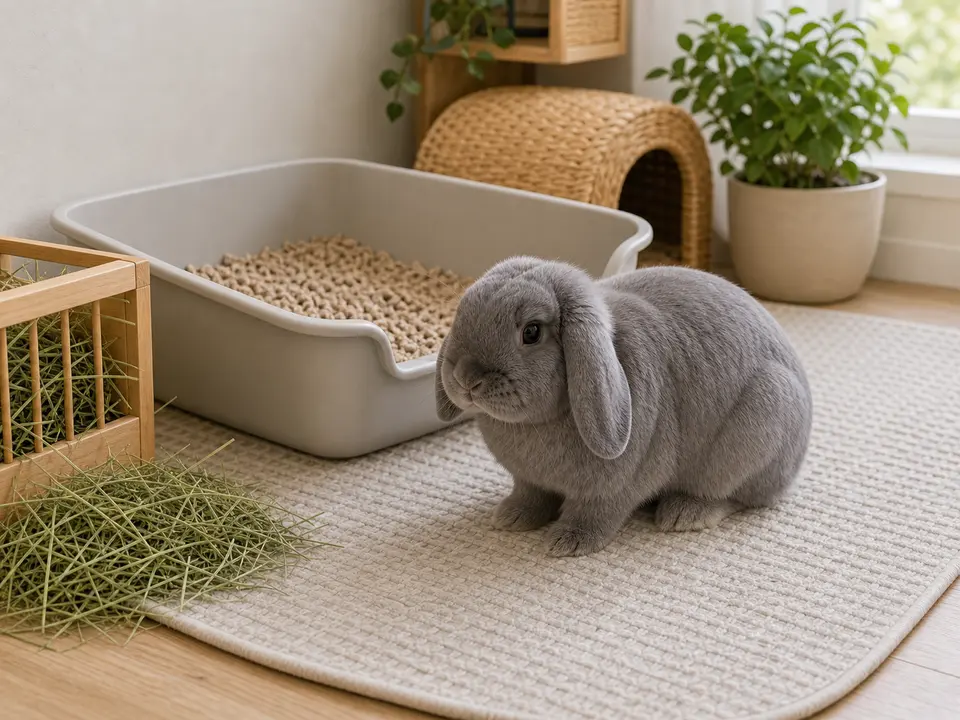
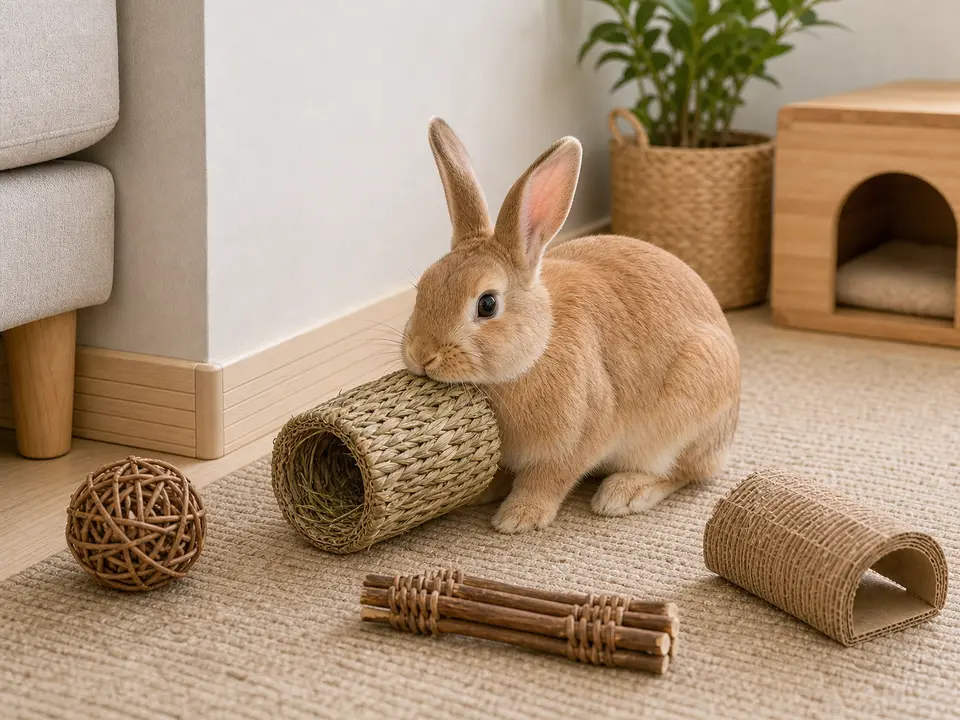
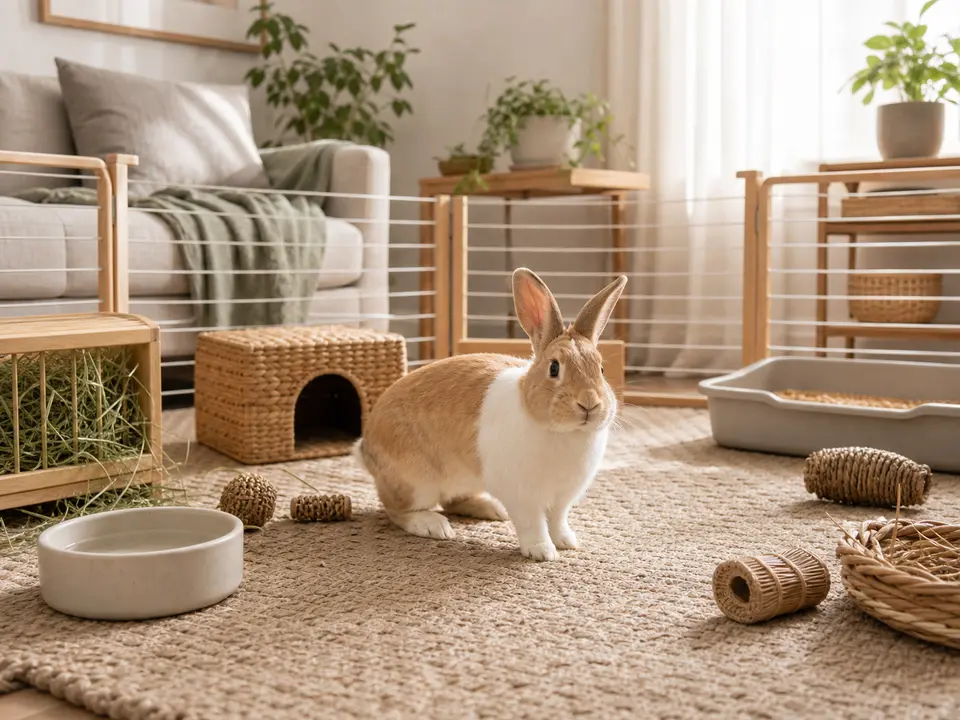
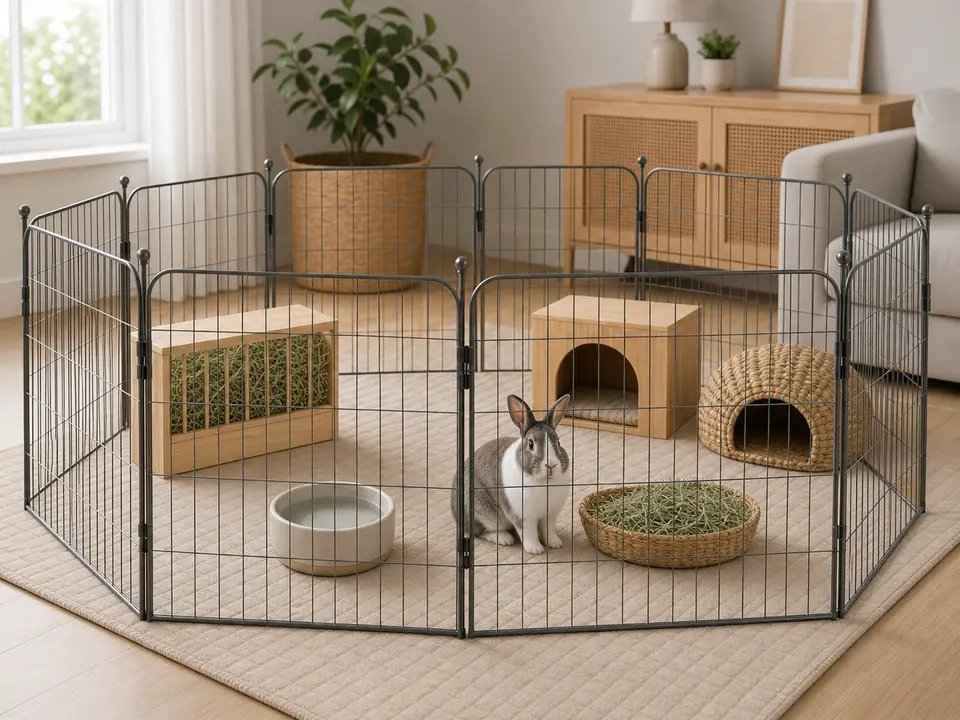
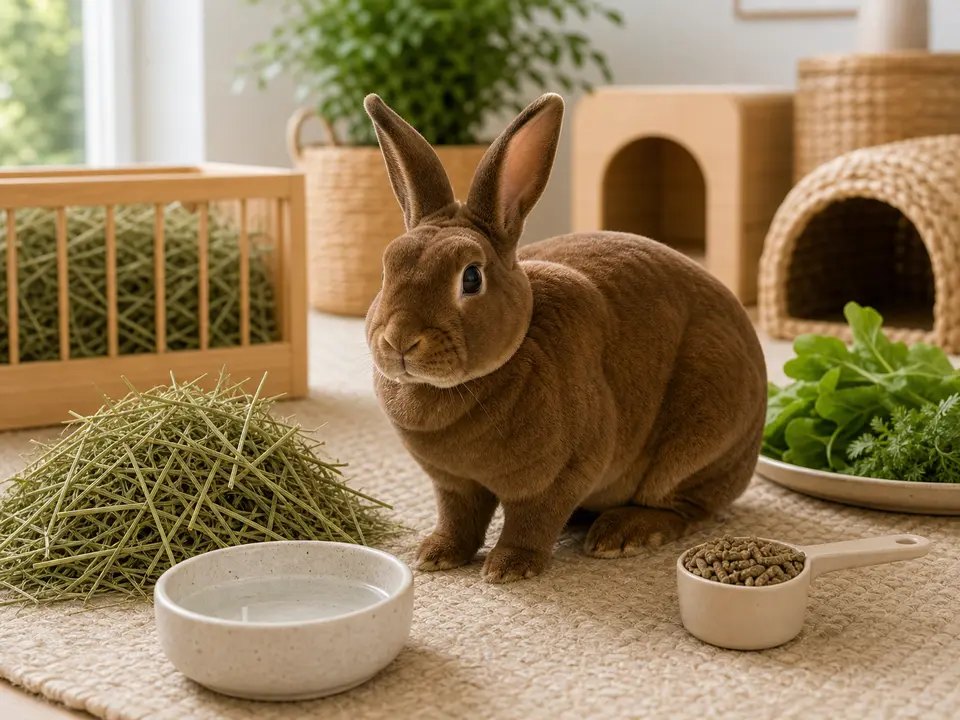
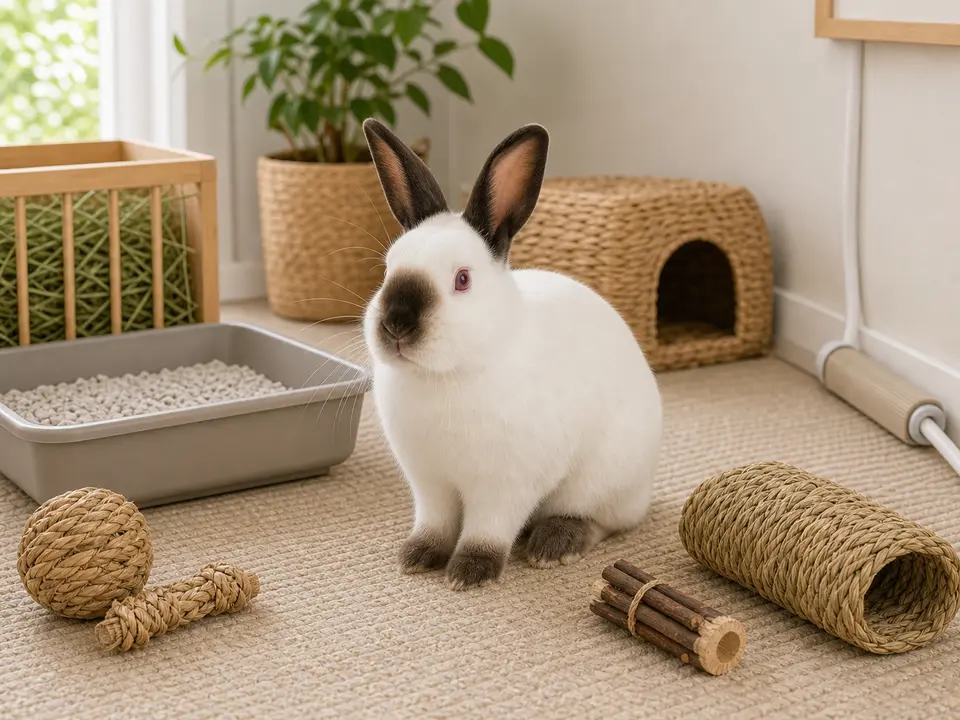
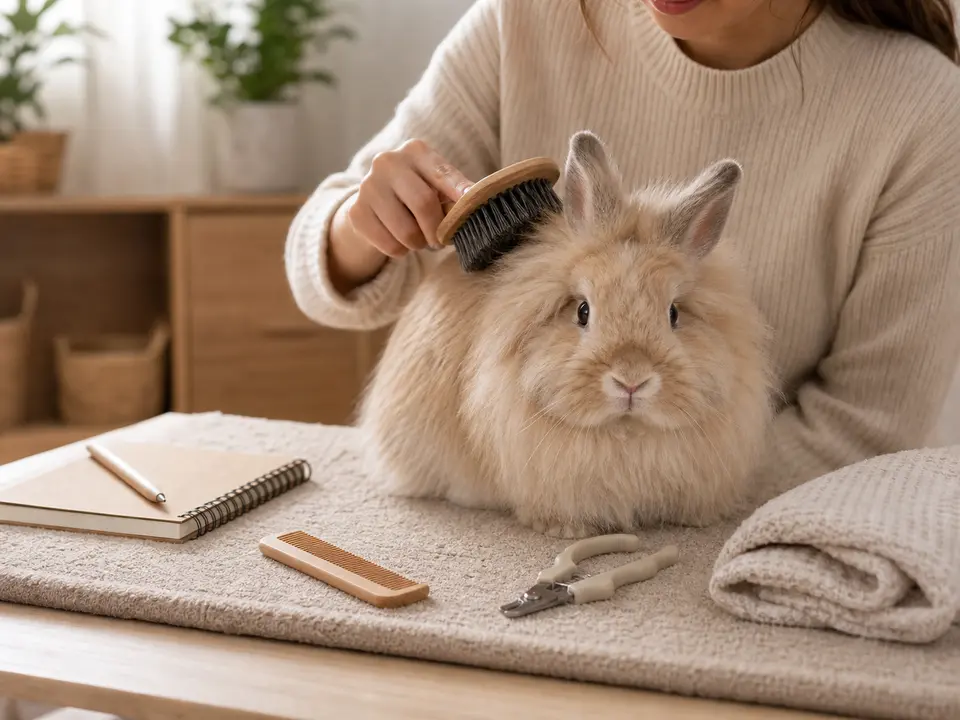
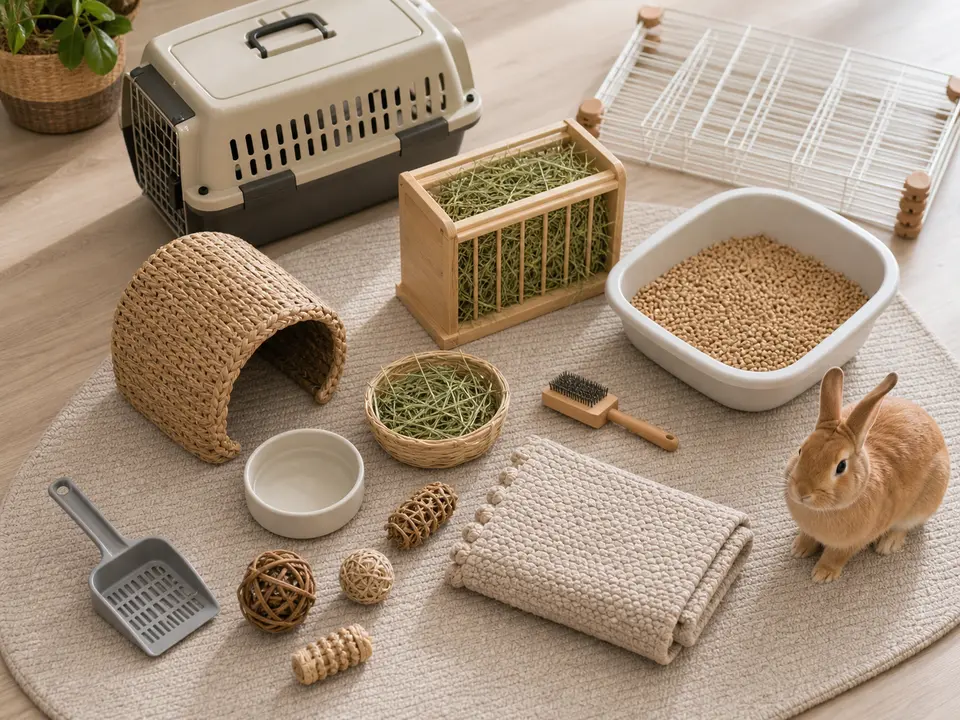
The best rabbit flooring gives traction, protects feet, handles hay and litter mess, and does not invite constant chewing. Washable rugs, low-pile mats, fleece over stable padding, and protected floor zones often work better than slick tile, bare wood, or loose rugs that slide.
Flooring is not just a design choice. It shapes how much your rabbit moves, where they rest, whether they slip, and how easy the room is to clean after hay, fur, and litter scatter.
Start with traction
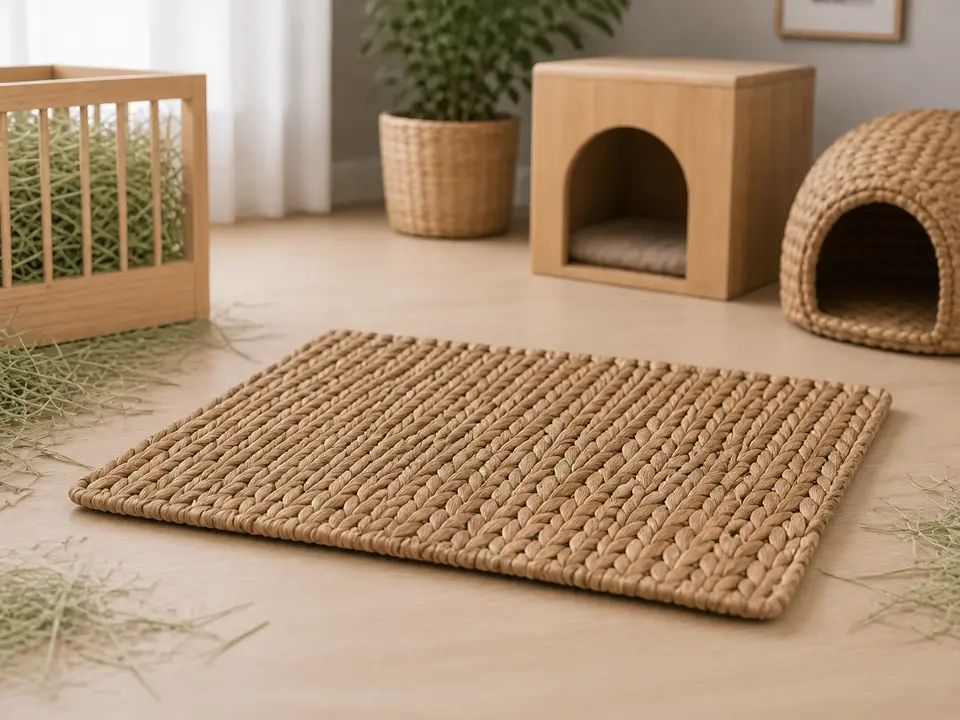
A rabbit who slides may stop exploring, tense their body, or avoid parts of the room. Cover the main paths with washable rugs or mats that stay flat. Focus on the route between hay, water, litter, hideout, and favorite resting spots. Start with the paths your rabbit already uses before buying a room full of flooring.
Protect feet where rabbits linger
Hard or abrasive surfaces can be rough on feet, especially for larger rabbits, seniors, or rabbits who rest in one spot. Add softer washable layers in common resting areas while still keeping the surface steady enough that paws do not sink or twist. Check favorite corners first because that is where pressure builds.
Plan for hay and litter scatter
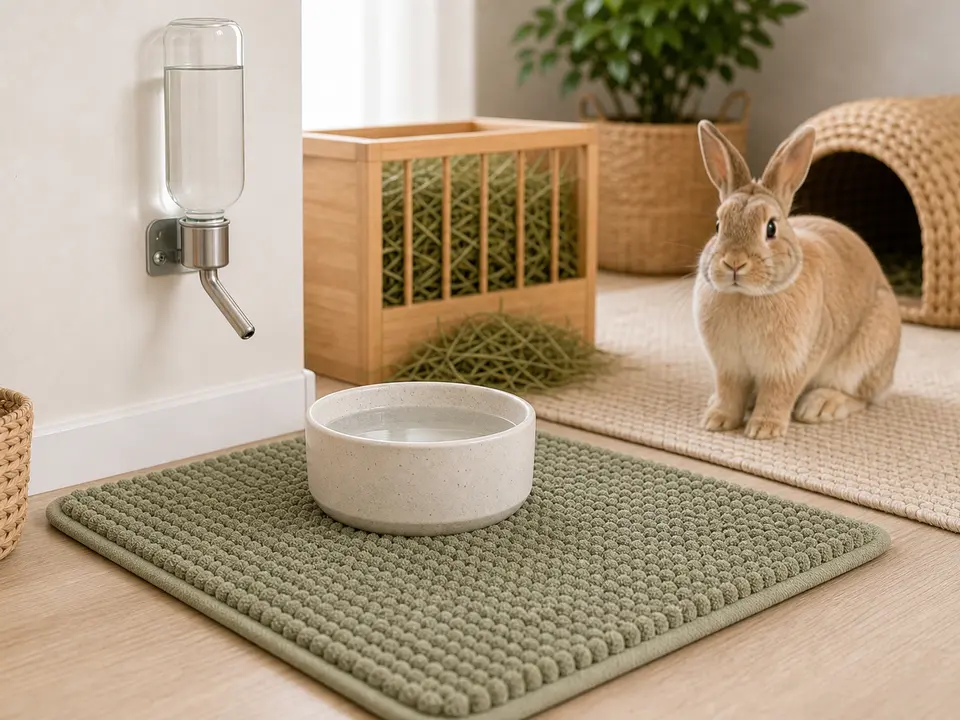
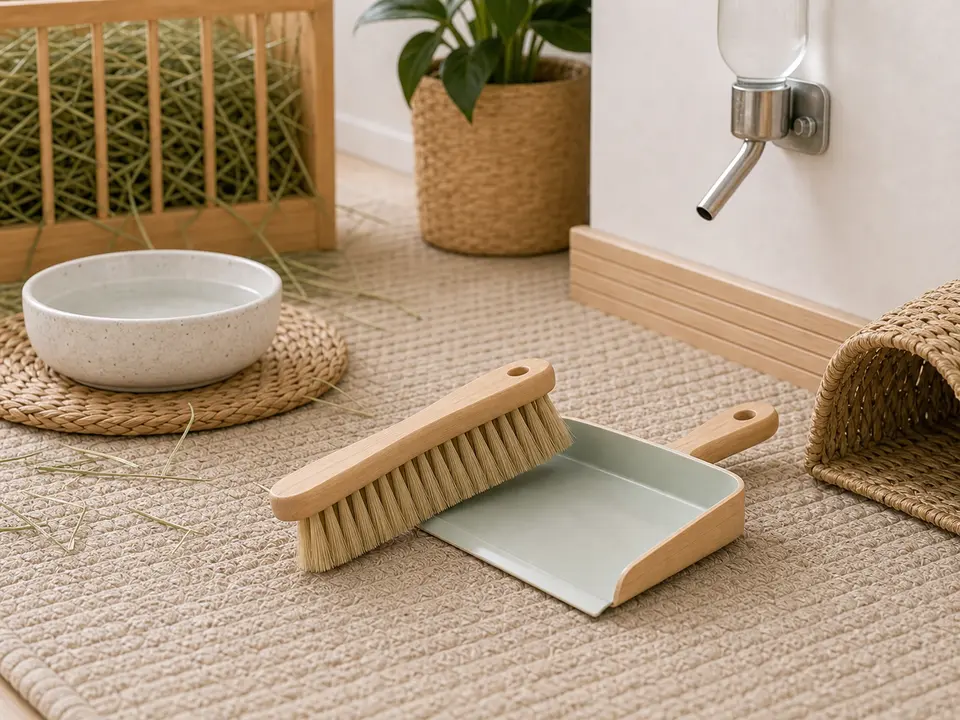
The best flooring is easy to clean around the messy station. Put washable mats under hay and litter zones, keep a small broom nearby, and avoid deep carpet where damp litter or hay crumbs disappear. Cleanup should take minutes, not become a weekend job. Dry floors also make sore spots easier to notice.
Block tempting edges
Many rabbits chew rug corners, foam puzzle mats, and loose fabric edges. Tuck edges under furniture, use heavier mats, block corners, or choose low-profile washable rugs. If your rabbit can lift the edge, they may decide it is a project. Check edges during floor time, because chewing often starts where people stop looking.
Use zones instead of one giant rug
Several washable zones can work better than one expensive rug. Put durable traction where your rabbit runs, softer rest where they flop, and easy-clean mats where hay and litter scatter. A zoned floor is easier to replace when one piece wears out. It also lets you change the messy area without disturbing the whole room.
Watch how your rabbit moves
Your rabbit will tell you whether the floor works. Look for confident hopping, relaxed flops, fewer slips, and normal movement between stations. Keep a note about where your rabbit hesitates, skids, chews edges, or avoids the area, then adjust the flooring before assuming they are lazy.
Before you decide
Does your rabbit have traction on the paths they actually use?
Are resting spots comfortable for feet and joints?
Can you clean hay, litter, fur, and water spills easily?
Are rug and mat edges protected from chewing?
Next best moves
Cover slick paths before expanding free-roam time.
Use washable zones for traction, rest, and litter scatter.
Avoid loose chewable edges wherever possible.
Adjust flooring when movement, slipping, or chewing patterns tell you the setup is not working.
Flooring supplies that earn their space
Choose pieces that add traction, clean up easily, and do not turn into chew projects.
Affiliate links: Furball Cove may earn from qualifying purchases at no extra cost to you.