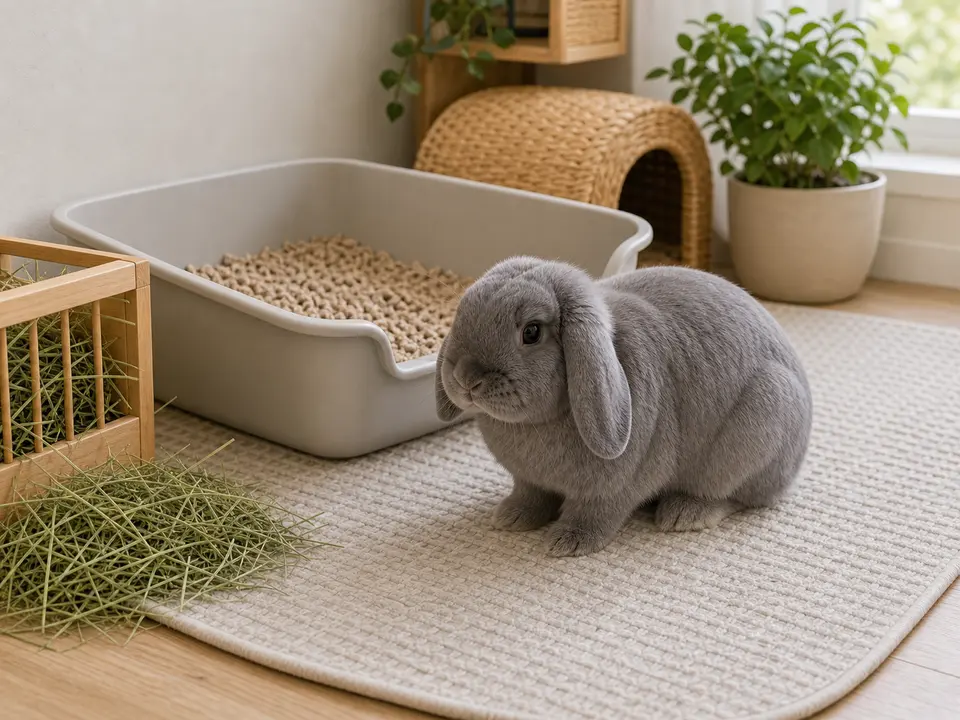
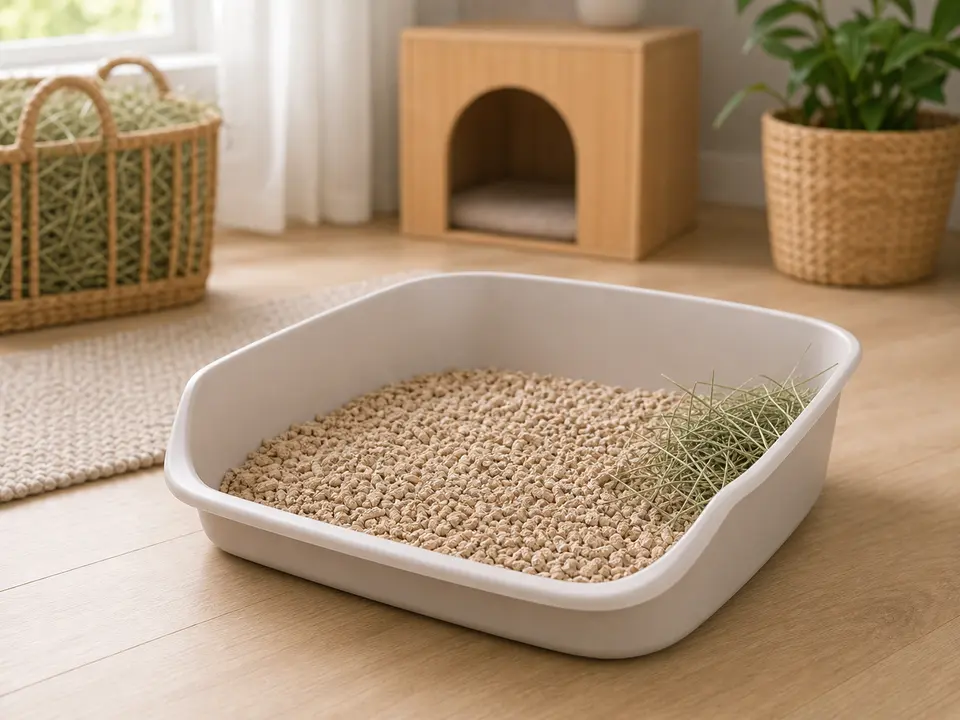
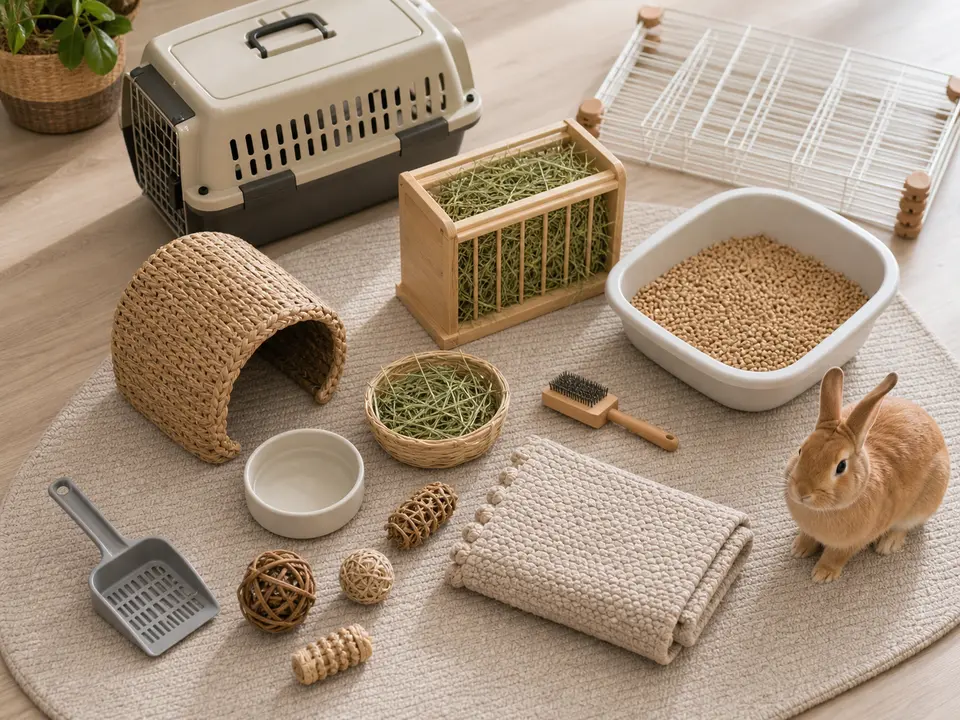
Hay can go in or right beside the litter box because many rabbits like to eat while they poop. Keep it clean and reachable so the habit helps litter training instead of turning hay into damp bedding.
Litter problems usually make more sense when you look at the box, hay placement, flooring, cleaning rhythm, and recent household changes together. This page turns the question into a setup check you can actually use.
Yes, keep eating hay beside the box
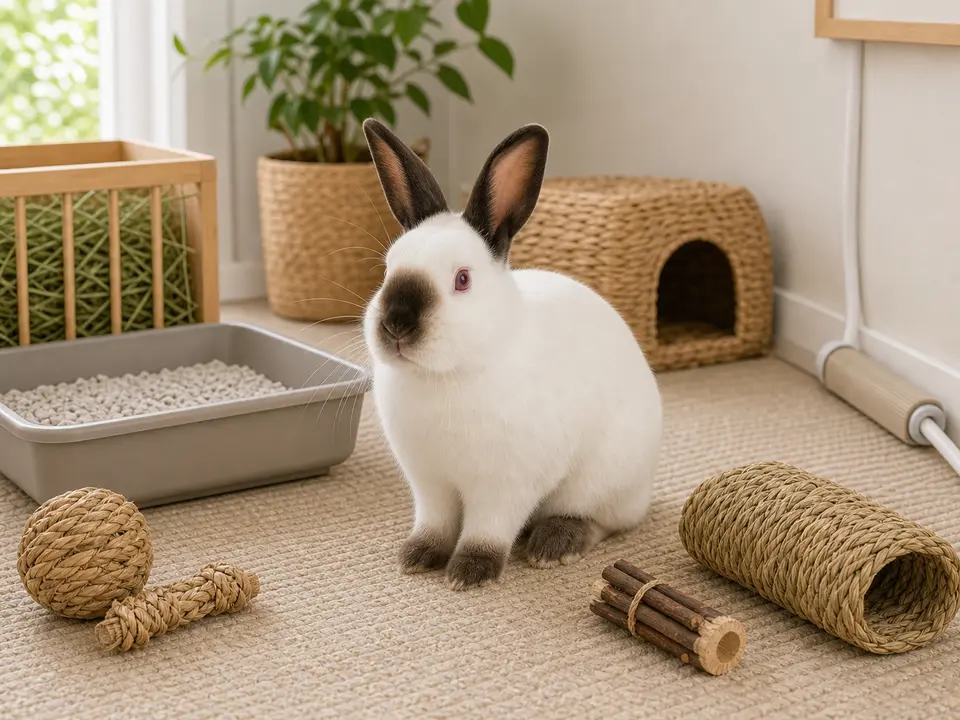
Hay can go in or right beside the litter box because many rabbits like to eat while they poop. Keep it clean and reachable so the habit helps litter training instead of turning hay into damp bedding. A rabbit missing the box is usually giving you a setup clue. Picture the exact moment: where the hay is, how high the edge feels, whether the box is roomy enough to turn around, and whether a busy corner makes the whole thing less inviting.
This is why the best fix often looks plain: a larger box, a calmer spot, better hay placement, or a lower edge can solve more than another round of scolding ever would.
Place hay where it stays clean and reachable
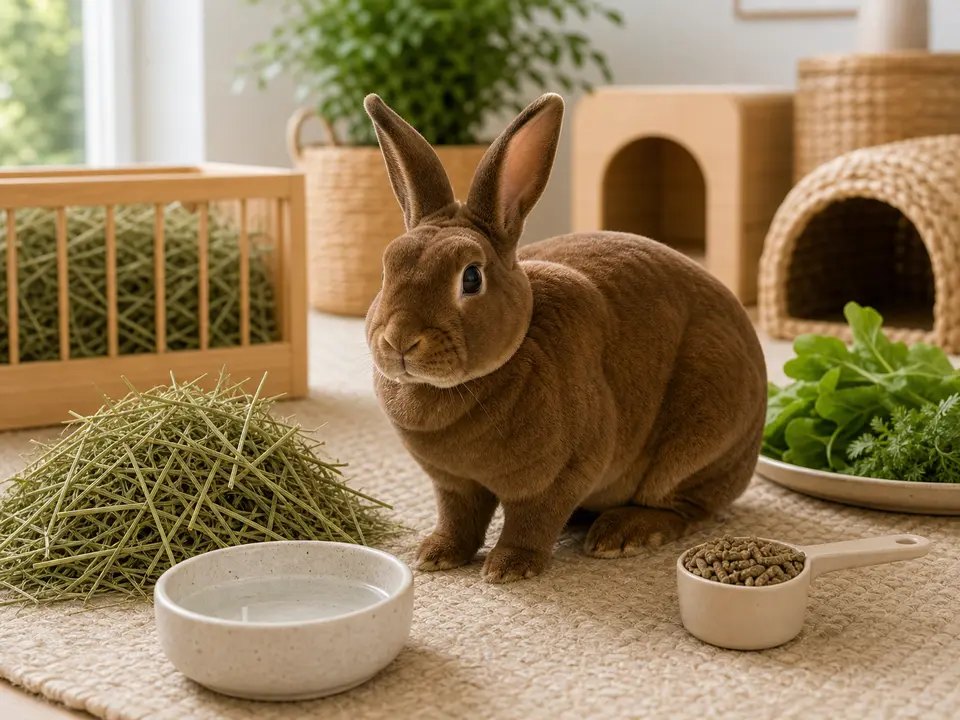
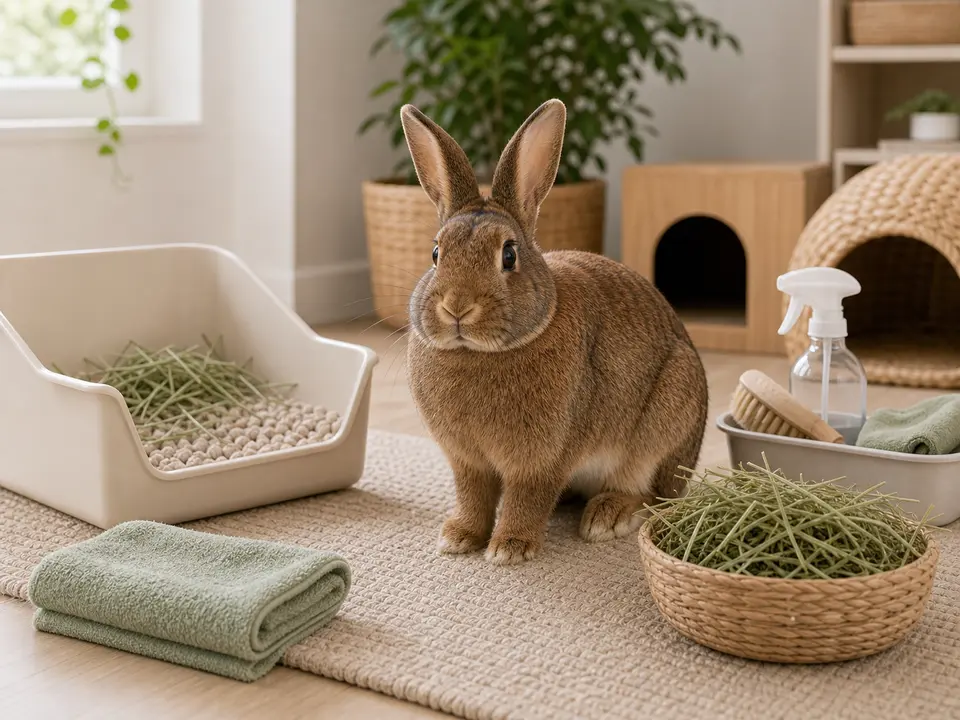
Many rabbits like to eat and poop in the same general area, so hay placement matters. A hay rack or hay pile at one end of the box can make the right spot obvious. If the accident happens in a repeat location, test whether that spot is actually where the box needs to be.
A box placed where your rabbit already pauses will usually teach faster than a perfect-looking box tucked in the corner you wish they preferred.
Let your rabbit sit fully inside while eating
The fastest way to get confused is to change the box, litter, cleaning product, room layout, and schedule all at once. Try one improvement first: a larger box, lower entry, second box, different placement, or less perfumed cleaning routine. Then give your rabbit time to answer.
Give each change a fair test before you add another one. Rabbits notice room changes, and too much tinkering can make the box feel new every morning.
Refresh small hay piles before they get soiled
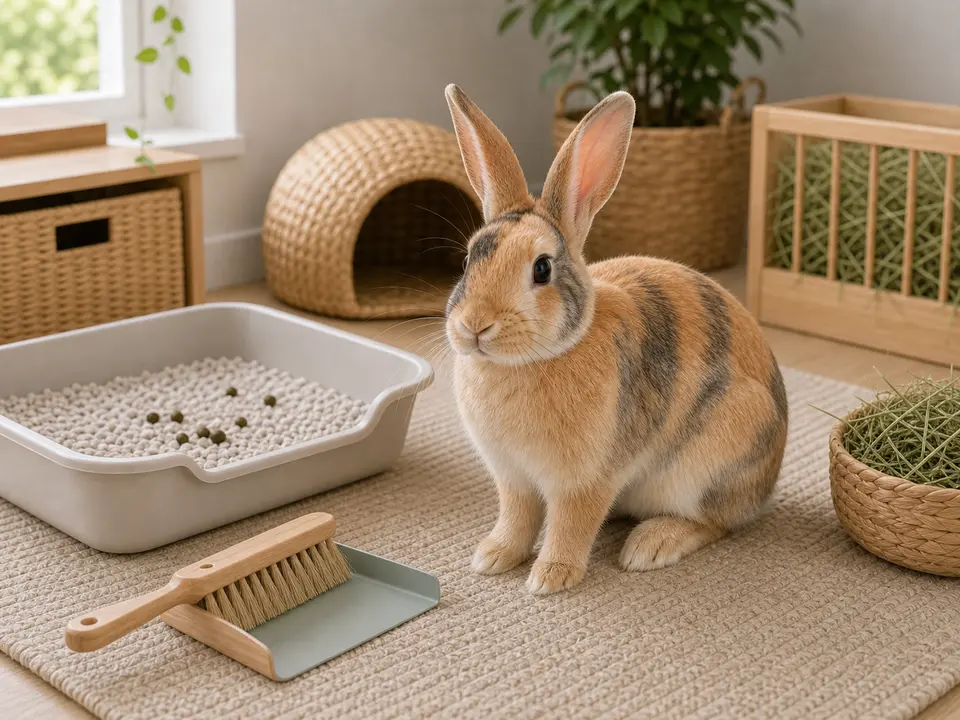
Poop outside the box, pee beside the edge, digging litter out, or avoiding the box can mean different things. Look at the pattern before scrubbing everything away: same corner, same time of day, after room changes, after bonding stress, or after your rabbit seems stiff. The pattern is more useful than frustration.
Take one photo before you clean if the pattern is confusing. The exact corner, splash line, or poop trail can tell you whether this is location, edge height, or stress.
Adjust the rack if poops land outside
Most litter problems are setup problems, but sudden urine changes, straining, pain, wet fur, loss of appetite, or a rabbit who stops using a box they normally trust can be more than housekeeping. If the change is abrupt or your rabbit seems uncomfortable, ask a rabbit-savvy vet.
That balance matters: keep the page calm for normal messes, but do not dismiss sudden changes that arrive with pain, appetite loss, or urine trouble.
Before you decide
Is the box large enough to turn around in?
Is hay near or in the box?
Did the location, litter, cleaning smell, or routine change?
Could pain or urine discomfort be involved?
Next best moves
Make the box bigger before blaming the rabbit.
Place hay where the rabbit naturally spends time.
Clean enough for comfort without making the box smell unfamiliar.
Litter tools that make the habit easier
These are practical pieces for the routine, not clutter to buy all at once.
Affiliate links: Furball Cove may earn from qualifying purchases at no extra cost to you.
Hay can go in or right beside the litter box because many rabbits like to eat while they poop. Keep it clean and reachable so the habit helps litter training instead of turning hay into damp bedding.
What is the first setup change to try?
Try the simplest likely fix: a larger box, lower edge, hay at one end, a second box, or moving the box to the repeat accident spot.
When could this be health-related?
Sudden misses, urine changes, straining, wet fur, pain signs, or appetite changes are reasons to ask a rabbit-savvy vet.