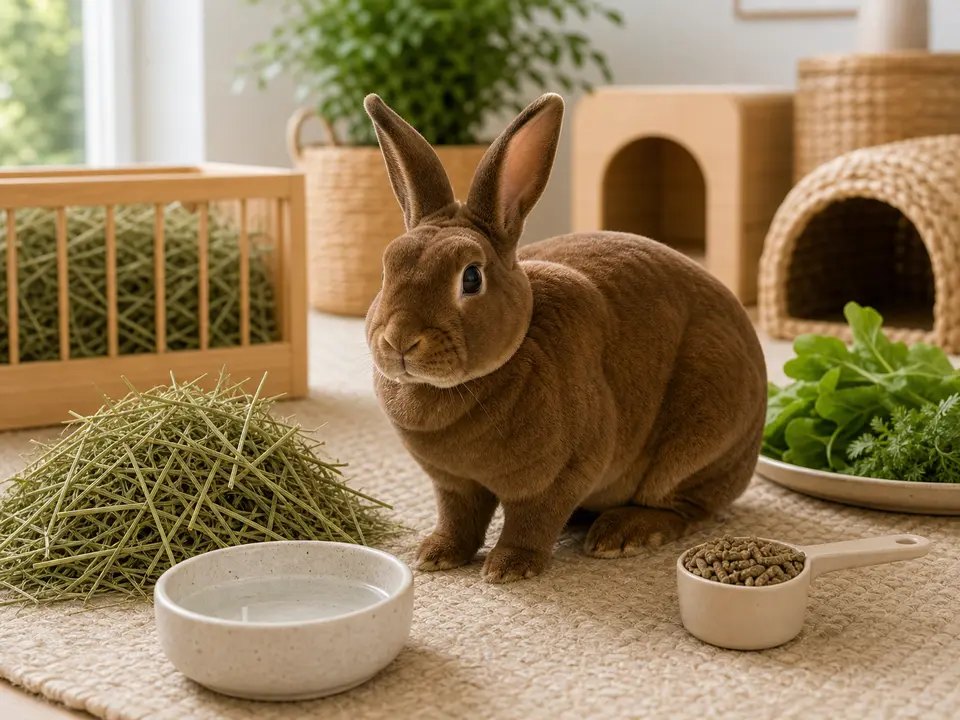
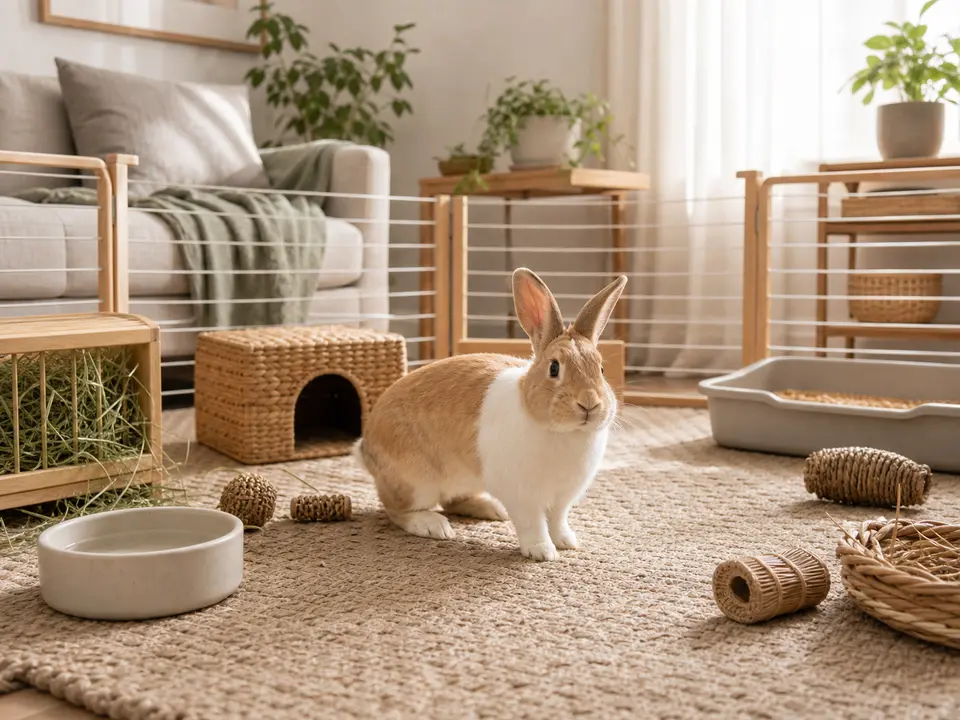
Most adult rabbits should have unlimited fresh grass hay, such as timothy, orchard grass, meadow, or other appropriate grass hay. Hay is not a side dish. It supports chewing, gut movement, litter habits, and daily enrichment, so the best hay is the one your rabbit will actually eat consistently.
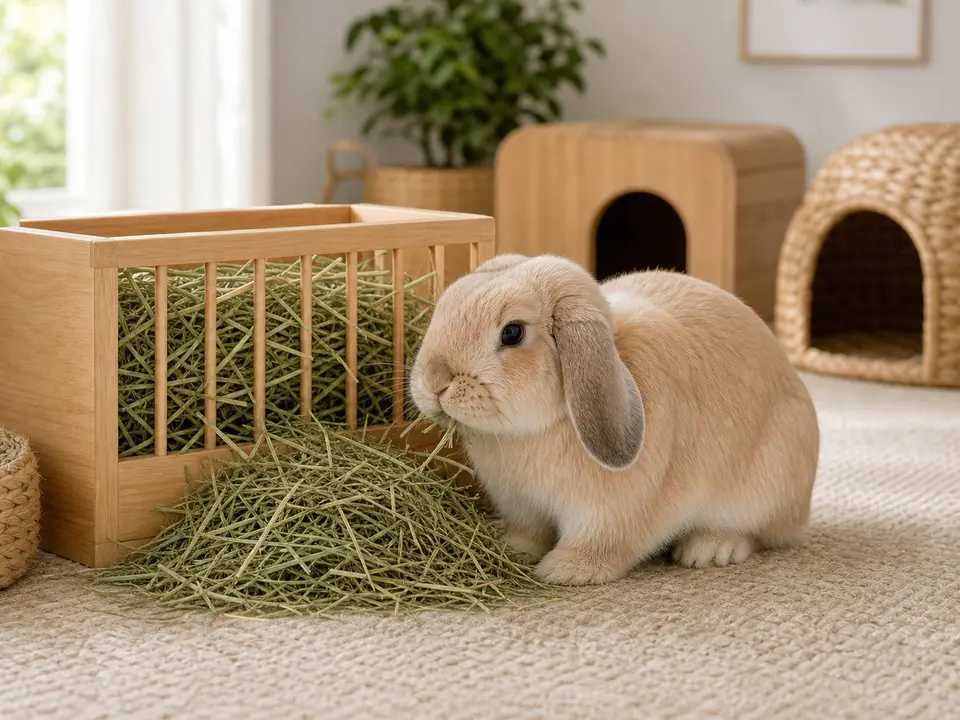
A rabbit's hay setup should be easy to reach and easy to refresh. If the hay is stale, hidden, too high, or hard to pull, your rabbit may ignore the very thing their day should revolve around.
Make hay the main event
Hay should be available all day, not only at mealtimes. A rabbit who grazes steadily has more chewing time, more normal gut movement, and a more useful daily routine. Keep the hay pile visible enough that you can tell whether it is actually shrinking.
Choose fresh grass hay your rabbit eats
Timothy hay is common, but orchard grass, meadow hay, or another suitable grass hay may be a better match for your rabbit's taste and texture preference. Good hay should smell fresh, look dry, and avoid moldy, dusty, or damp spots. If your rabbit refuses one type, try another grass hay before assuming they dislike hay.
Place hay where habits already happen
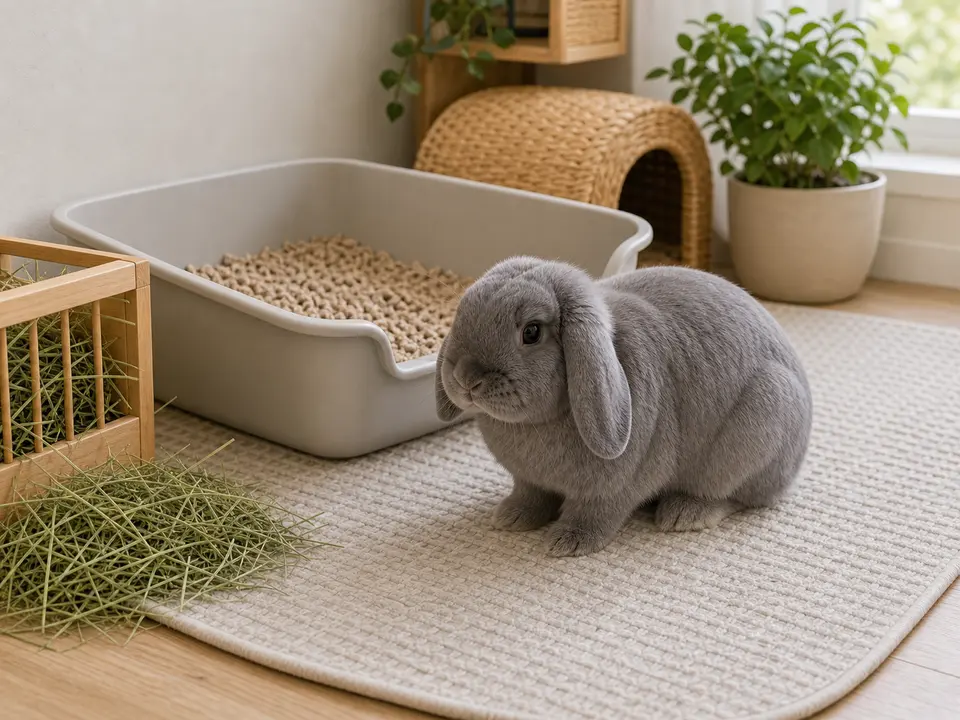
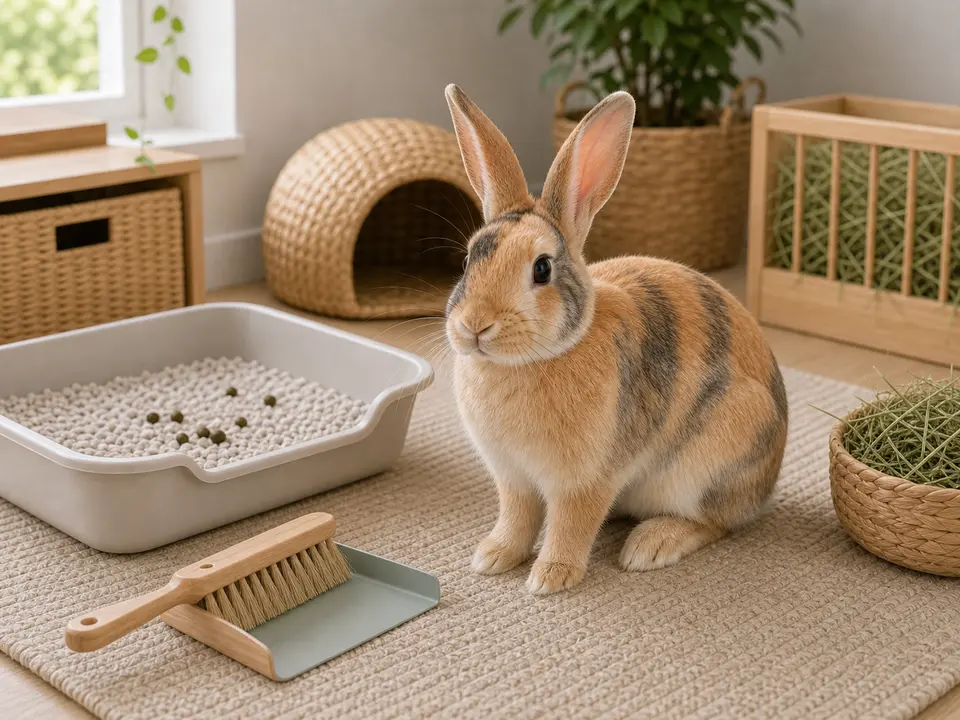
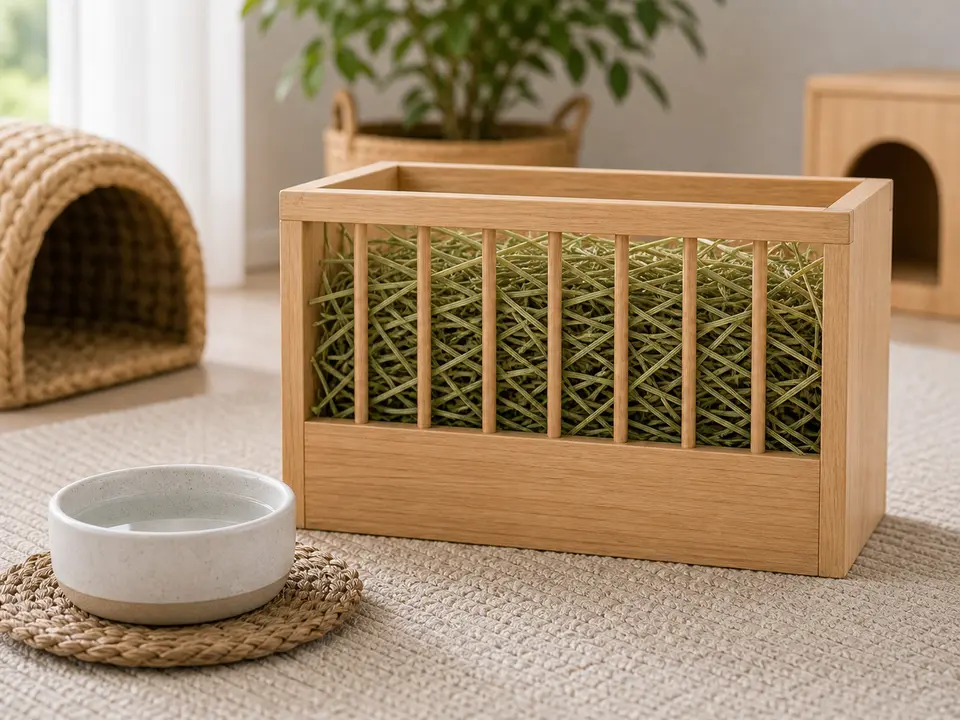
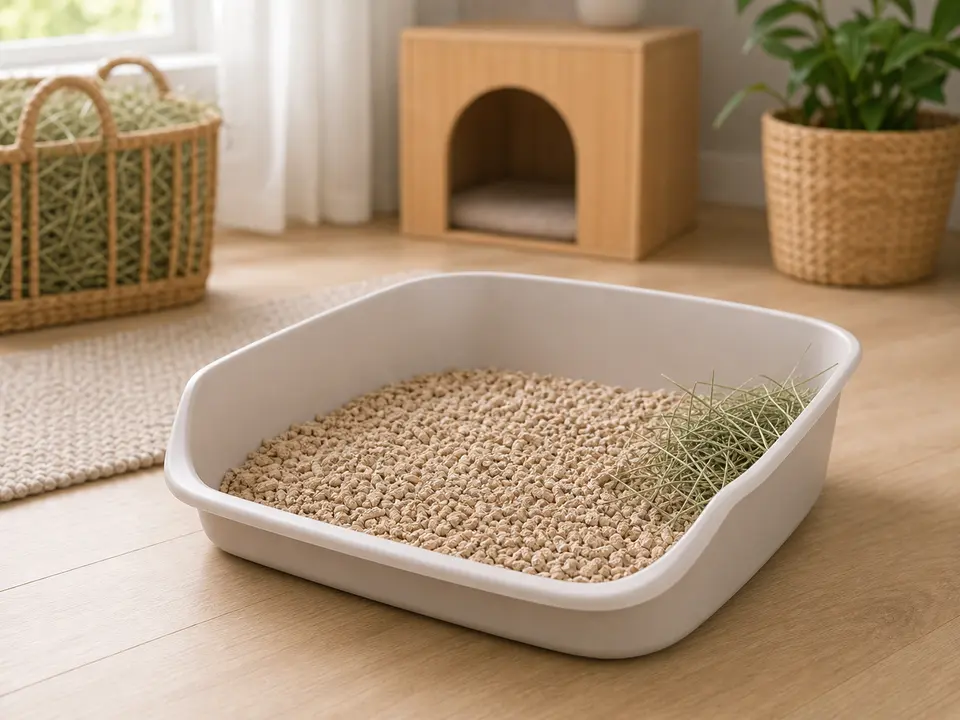
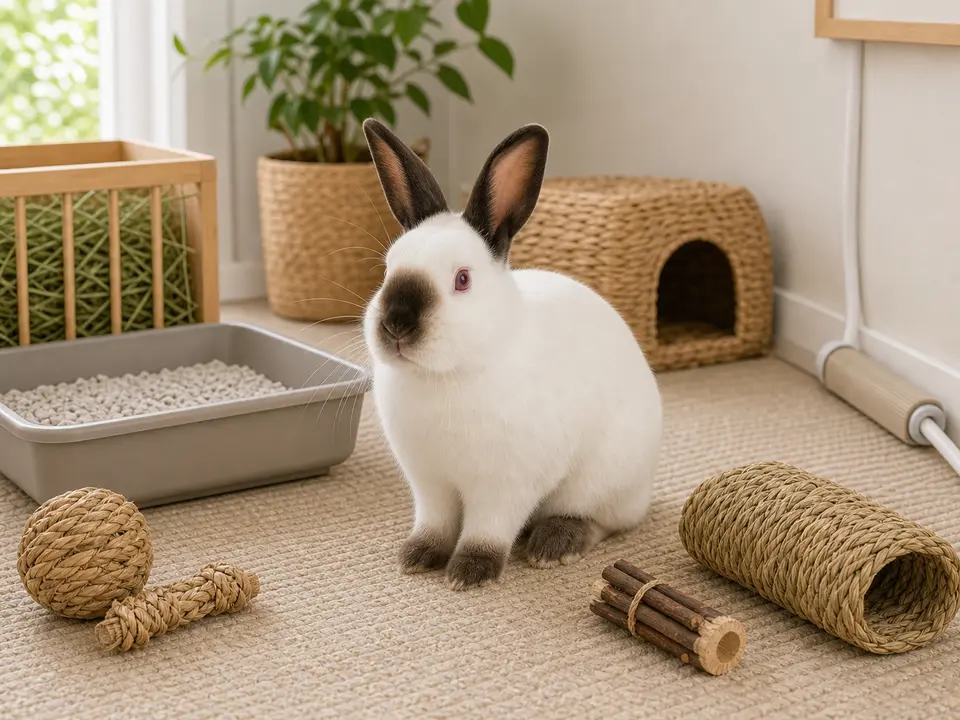
Many rabbits eat hay while using the litter box, so place hay in or beside the box in a way that stays reachable and clean. A hay rack can help with mess, but it should not make the hay hard to pull. Comfort beats a tidy photo.
Refresh before it turns boring
Rabbits often prefer fresh handfuls over hay that has been breathed on, sat in, or mixed with litter. Add smaller fresh amounts more often if that gets your rabbit eating. Shake out old dusty pieces and keep stored hay dry, airy, and away from strong smells.
Use poop as hay feedback
The litter box tells you whether hay eating is steady. Smaller, fewer, dry, or oddly shaped poops can mean your rabbit is eating less fiber, drinking less, shedding heavily, stressed, or unwell. If poop changes come with less appetite, call a rabbit-savvy vet.
Make hay interesting without hiding it
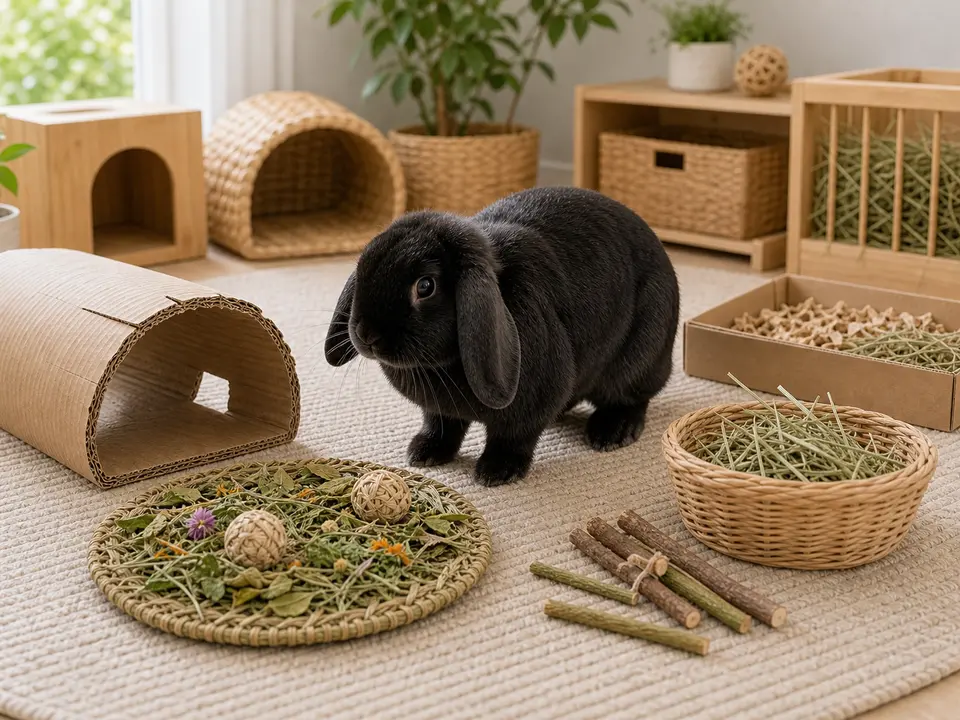
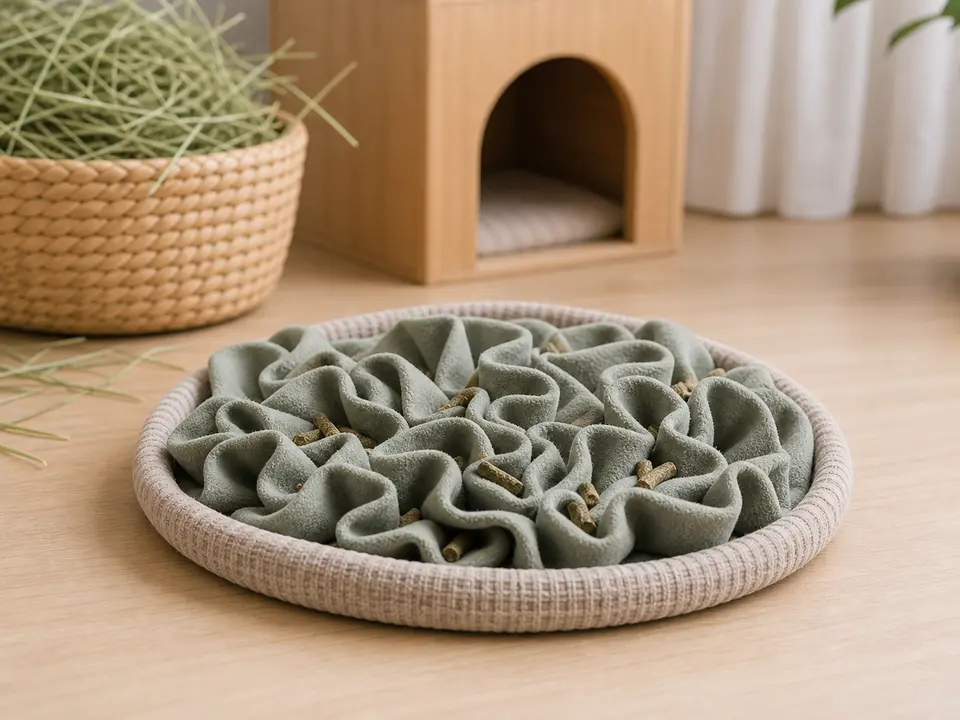
Use a hay rack, cardboard box, paper bag with safe openings, or forage mat to make hay more engaging, but keep the main supply easy to access. Hay enrichment should encourage eating, not turn every meal into a puzzle your rabbit abandons.
Before you decide
Is fresh grass hay available all day?
Can your rabbit reach and pull hay easily?
Does the hay smell fresh and stay dry?
Are poops normal in size and number?
Next best moves
Keep grass hay visible, fresh, and easy to reach.
Try another appropriate grass hay if your rabbit rejects one texture.
Connect hay to the litter station without making it dirty or hard to pull.
Call a rabbit-savvy vet if hay refusal comes with appetite, poop, weight, or dental clues.
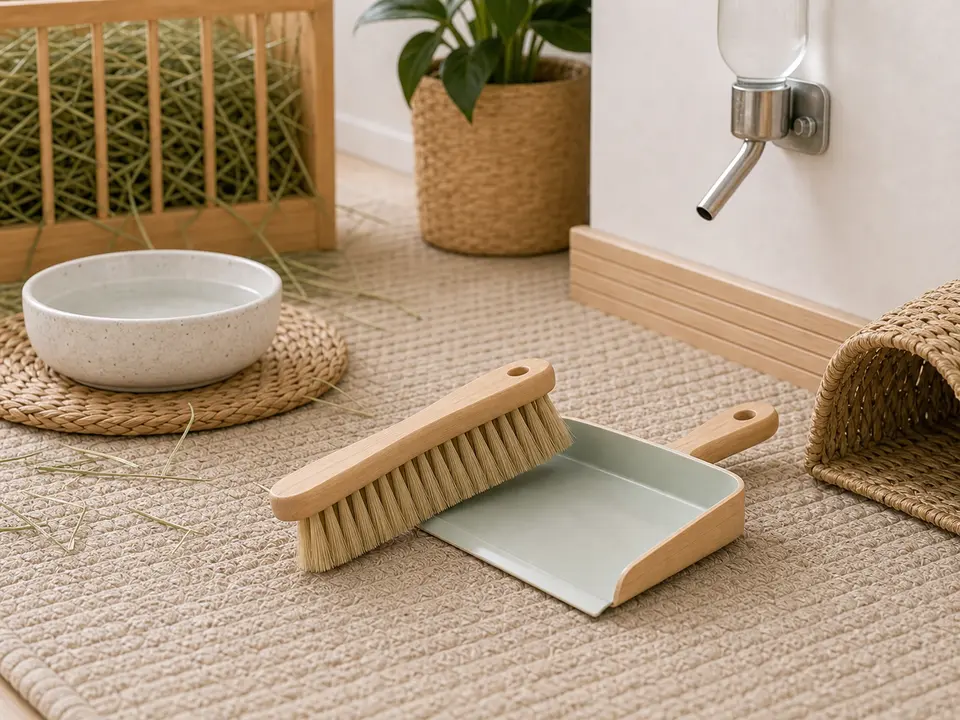
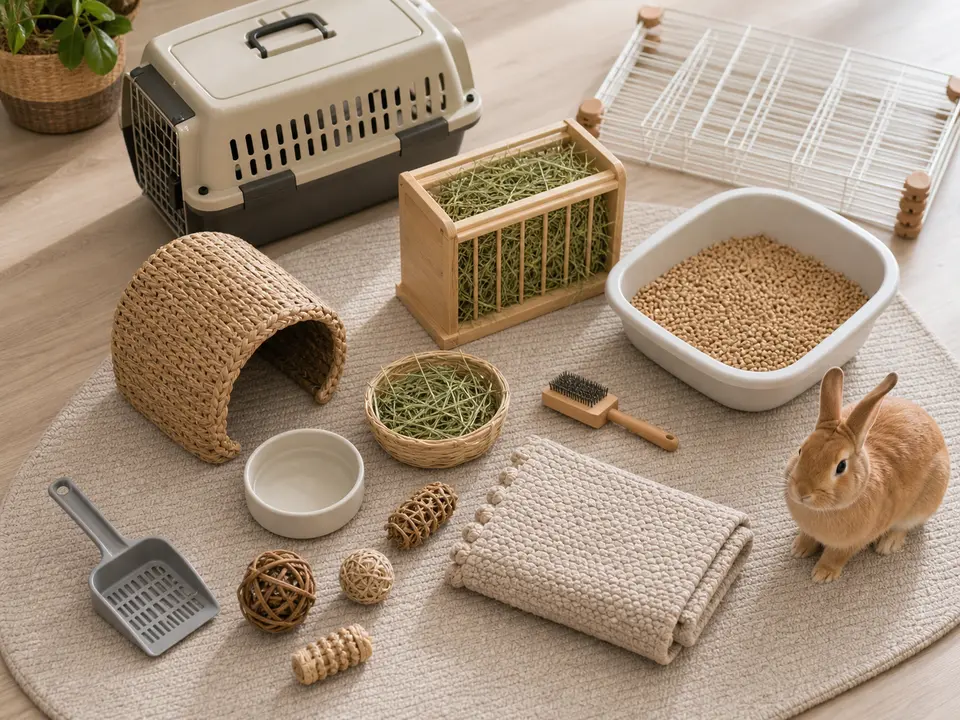
Helpful hay routine supplies
These pieces make hay easier to serve, clean, and keep interesting without hiding it.
Affiliate links: Furball Cove may earn from qualifying purchases at no extra cost to you.
Many adult rabbits do well on timothy, orchard grass, meadow, or another suitable grass hay. The best choice is fresh, clean, and eaten consistently.
How much hay should a rabbit eat?
Hay should be available all day. Many rabbit owners describe the daily amount as roughly the rabbit's body size or more, but appetite and poop are the practical checks.
What if my rabbit will not eat hay?
Try fresher hay, a different grass hay, better placement, and less competition from pellets or treats. If refusal continues or poops change, call a rabbit-savvy vet.