The kind of hideout a rabbit needs should be roomy enough to turn around in, easy to enter and leave, chew-safe, stable, and placed where your rabbit can rest without being cornered. A hideout is not a sign your rabbit dislikes you. It is a normal retreat that helps trust grow.
Rabbits are prey animals, so privacy matters. A good hideout lets your rabbit choose quiet without disappearing into an unsafe gap behind furniture.
Choose a hideout with room to turn
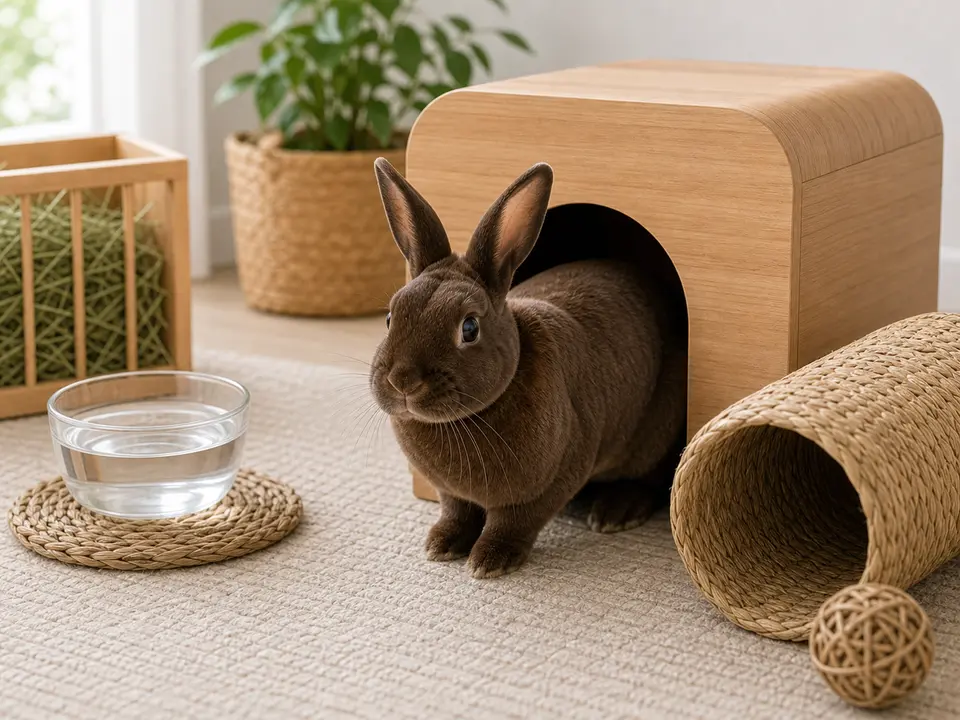
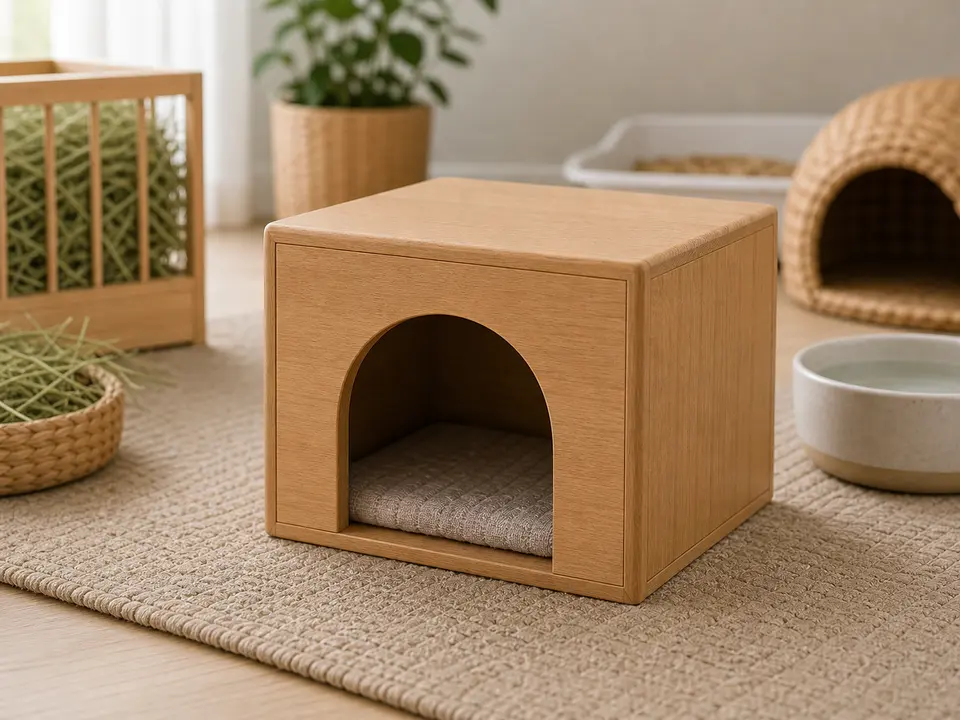
The hideout should fit your rabbit's actual body, not the product photo. Your rabbit should be able to enter, turn, rest, and leave without squeezing. Large rabbits and bonded pairs need more space than tiny decorative huts usually provide. The right kind of hideout looks useful before it looks cute. Measure your rabbit's resting posture if you are unsure.
Use more than one exit when possible
A hideout with two openings can feel safer because your rabbit does not get trapped by hands, another pet, or a noisy visitor. In the room setup, make sure the opening stays clear and no one reaches inside. If the hideout has one exit, angle it toward open space instead of a wall.
Place it near the daily routine
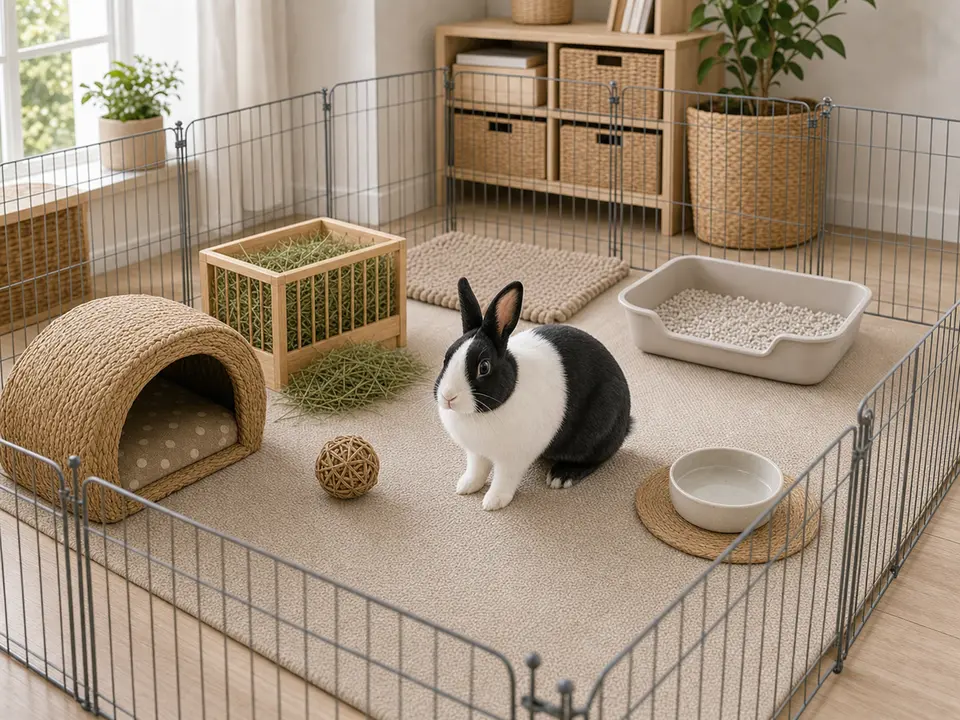
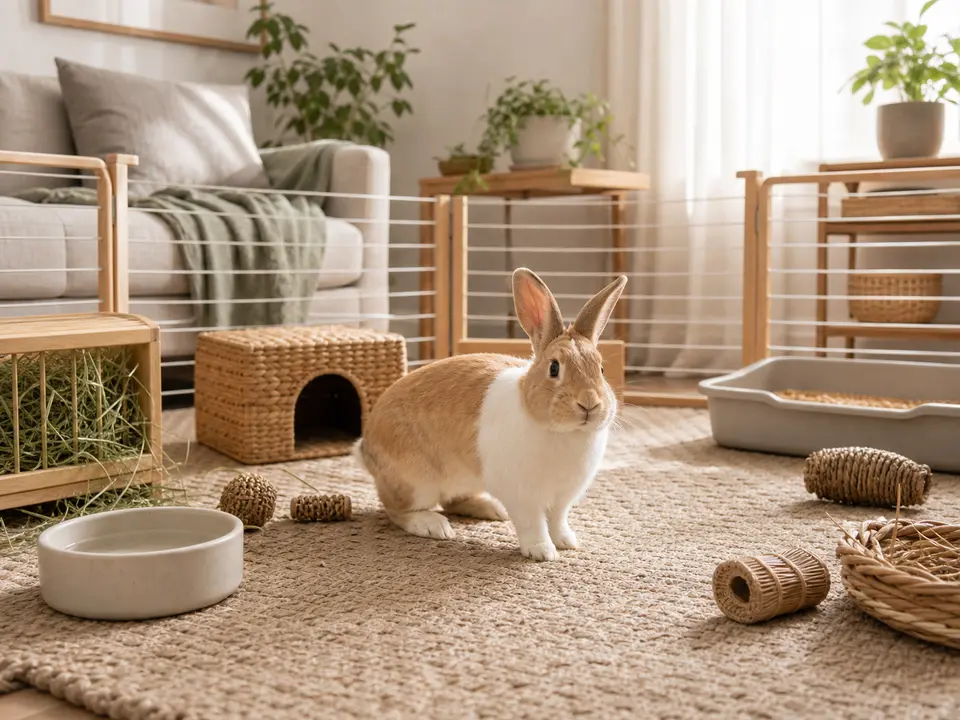
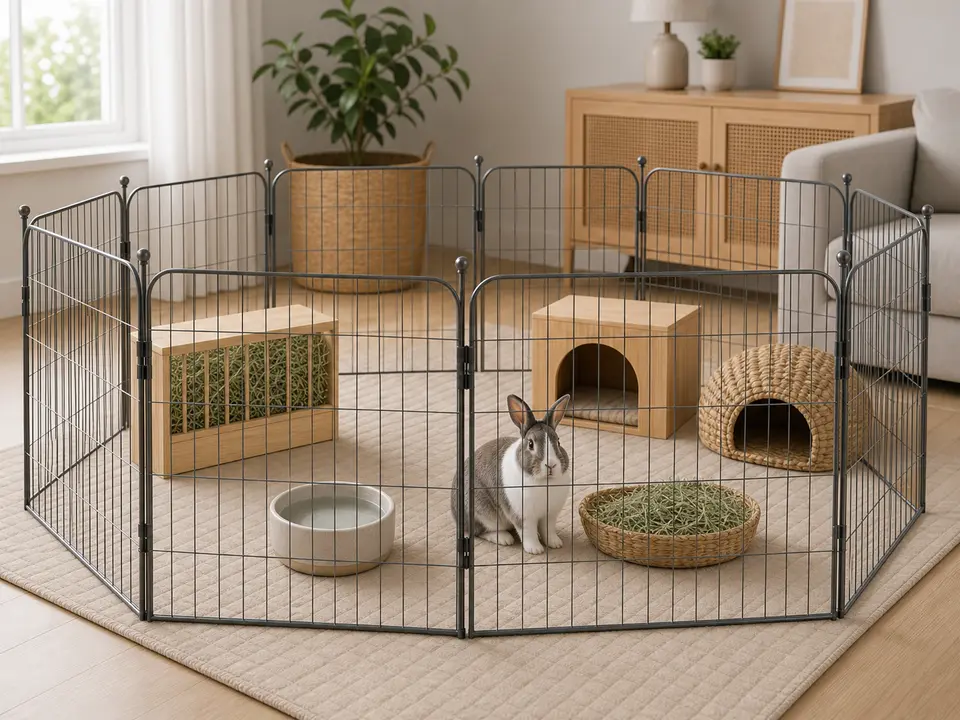
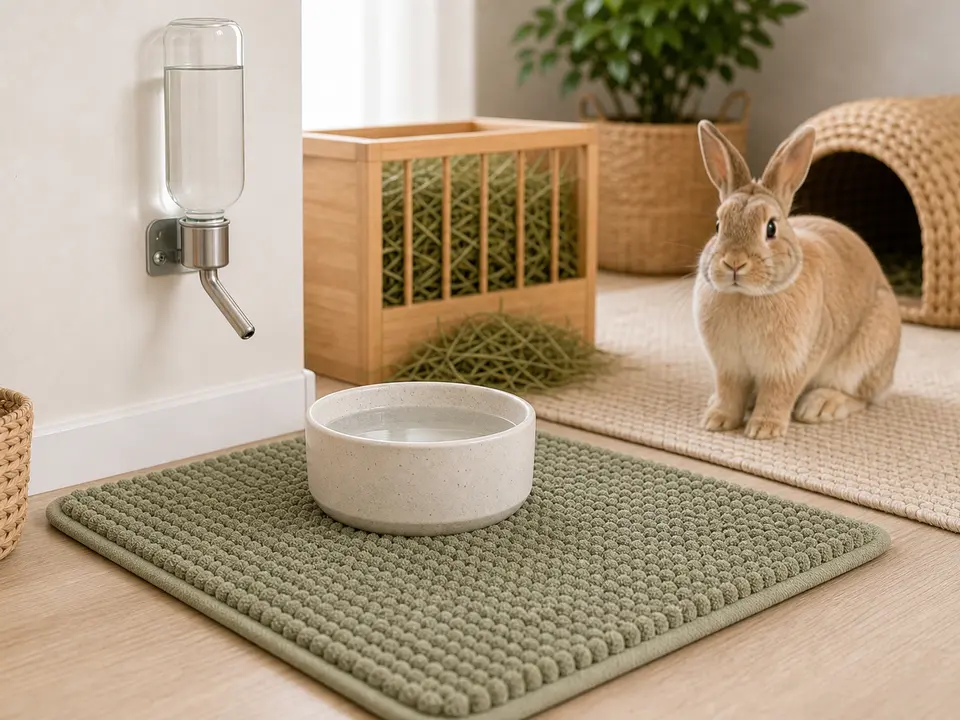
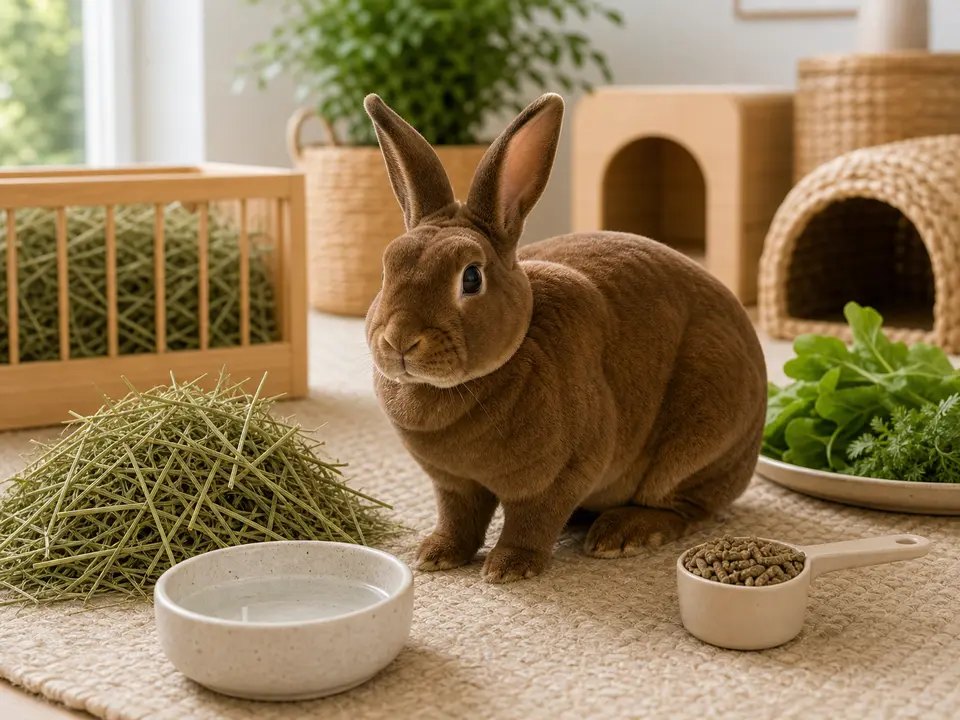
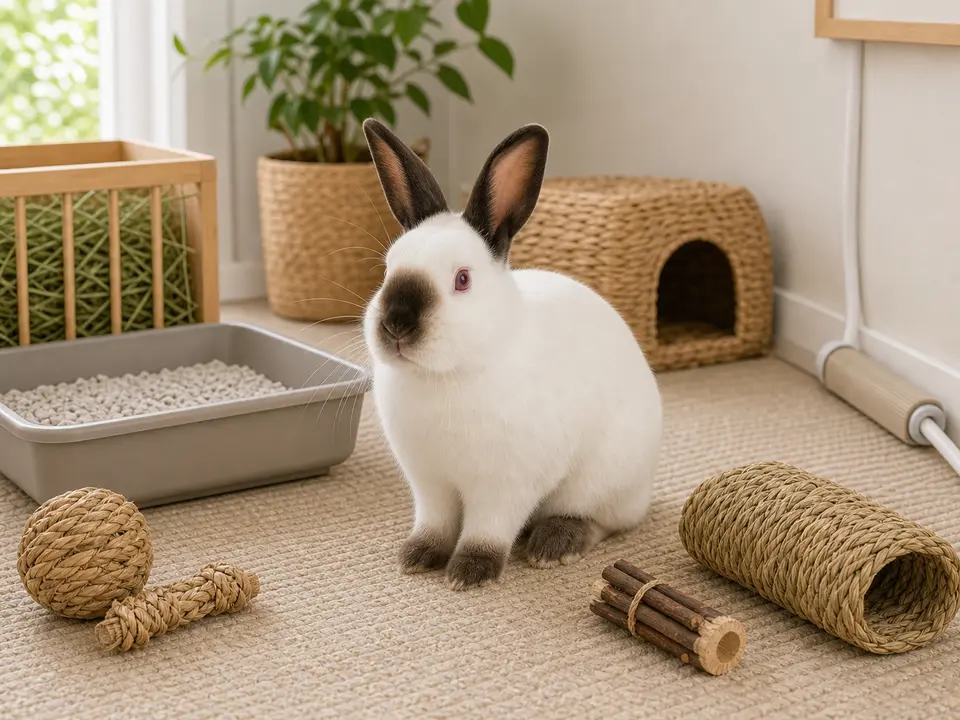
A hideout works best near the normal living area, not isolated from hay, water, and litter. Your rabbit should be able to retreat, then come back to the routine without crossing a scary open room. Placement matters as much as the hideout itself.
Treat the hideout as a no-pressure zone
Do not drag your rabbit out of the hideout for attention. If you need your rabbit to come out, make the room calm, offer a reason to approach, and wait when you can. Respecting the retreat is part of bonding behavior: the rabbit learns that your hands do not take away every safe choice.
Choose chew-safe materials
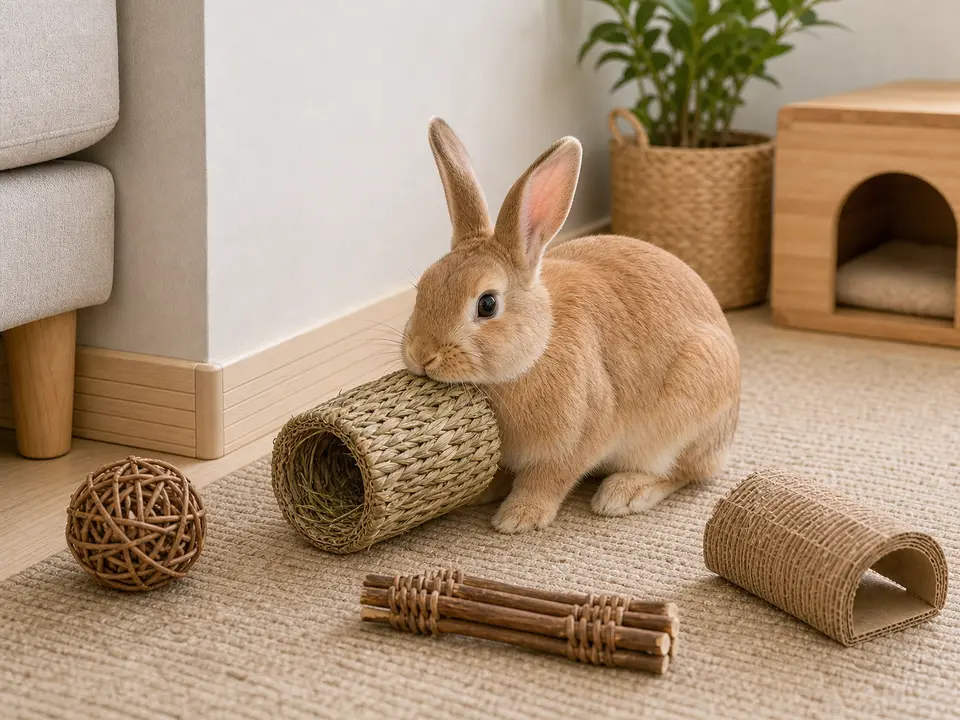
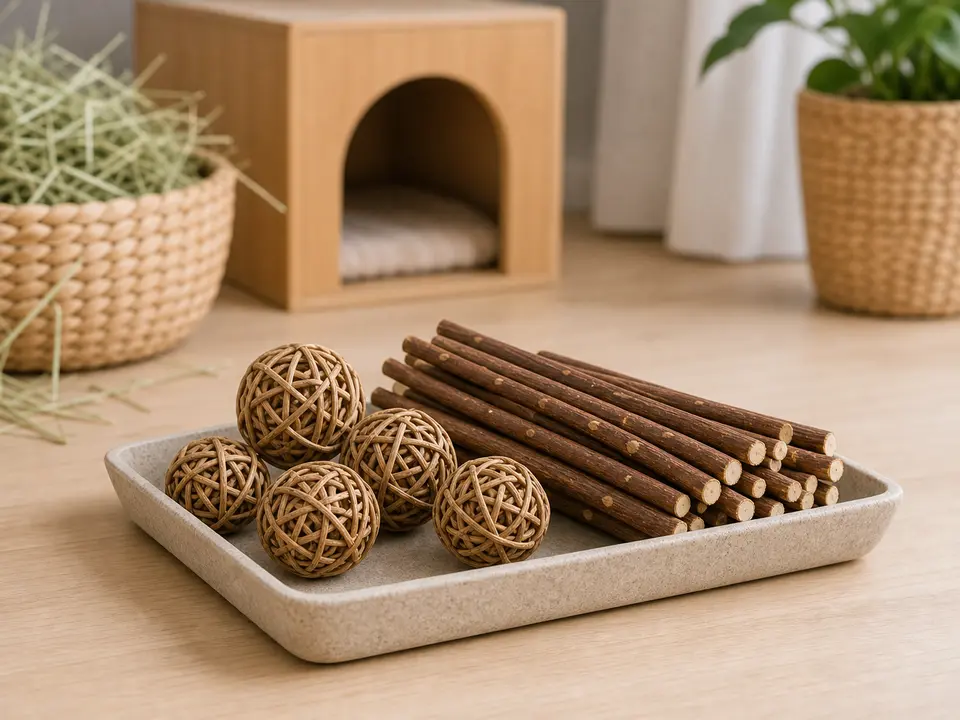
Cardboard, untreated rabbit-safe wood, and sturdy woven pieces can work when your rabbit uses them safely. Avoid sharp staples, dangling fabric, tiny holes, heavy pieces that wobble, or materials your rabbit shreds and eats in risky amounts.
Keep it clean without making it strange
Shake out hay, fur, and litter regularly, and replace damp cardboard or dirty bedding. Keep the hideout familiar, but not dirty. A clean retreat should still smell like part of the rabbit's room, not like a harsh cleaner. If your rabbit starts avoiding it, check dampness, wobbling, and whether the entrance feels blocked.
Before you decide
Can your rabbit enter, turn around, rest, and leave easily?
Is the exit clear and protected from grabbing hands?
Is the hideout close enough to hay, water, litter, and daily life?
Are the materials chew-safe and easy to clean?
Next best moves
Treat the hideout as a normal retreat, not a bonding failure.
Choose size and exit safety before looks.
Keep the hideout near the daily routine but away from heavy traffic.
Respect the boundary so trust can build.
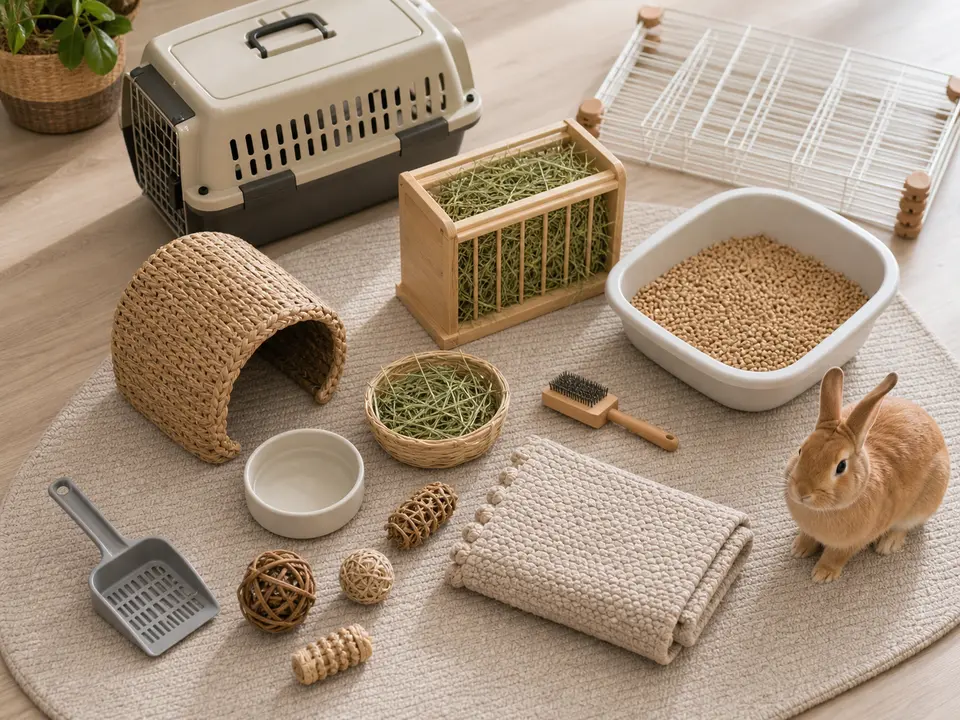
Hideout pieces that support the room
A good hideout gives privacy while keeping the setup easy to clean and supervise.
Affiliate links: Furball Cove may earn from qualifying purchases at no extra cost to you.