A rabbit who is not eating needs quick attention, especially if poops are fewer, smaller, or missing. Check hay, favorite foods, water, posture, and the litter box, then call a rabbit-savvy vet for guidance. With rabbits, appetite and gut movement are closely linked.
This is one of the rabbit questions to take seriously without turning the room into chaos. Your job is to gather the right clues, keep your rabbit calm, and get rabbit-savvy help instead of spending hours guessing.
Check appetite and poop together
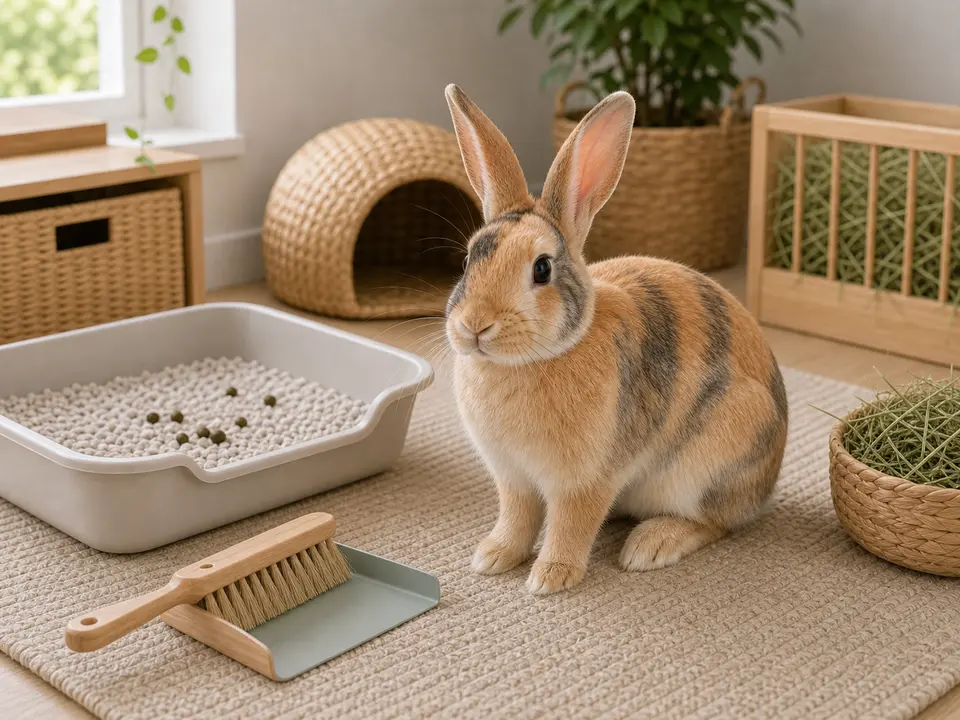
Look at the hay pile, pellet bowl, greens, water, and litter box. A rabbit who skips hay and also leaves fewer, smaller, dry, or no poops is more concerning than a rabbit who ignores one new food but keeps eating hay normally. Take a photo of the litter if the change is hard to describe.
Offer familiar food, not a buffet
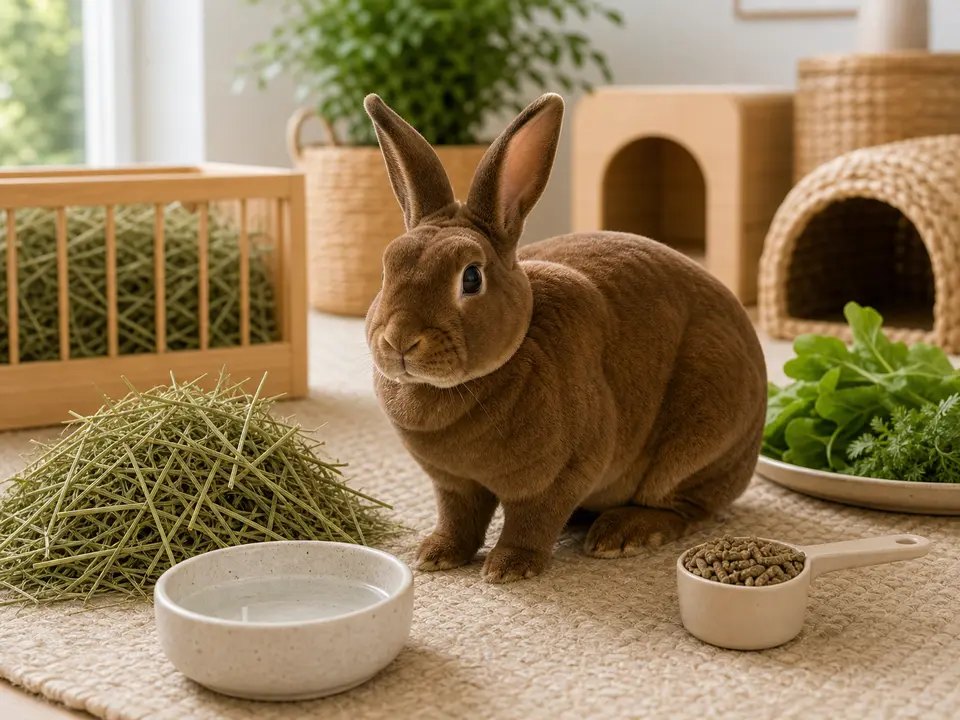
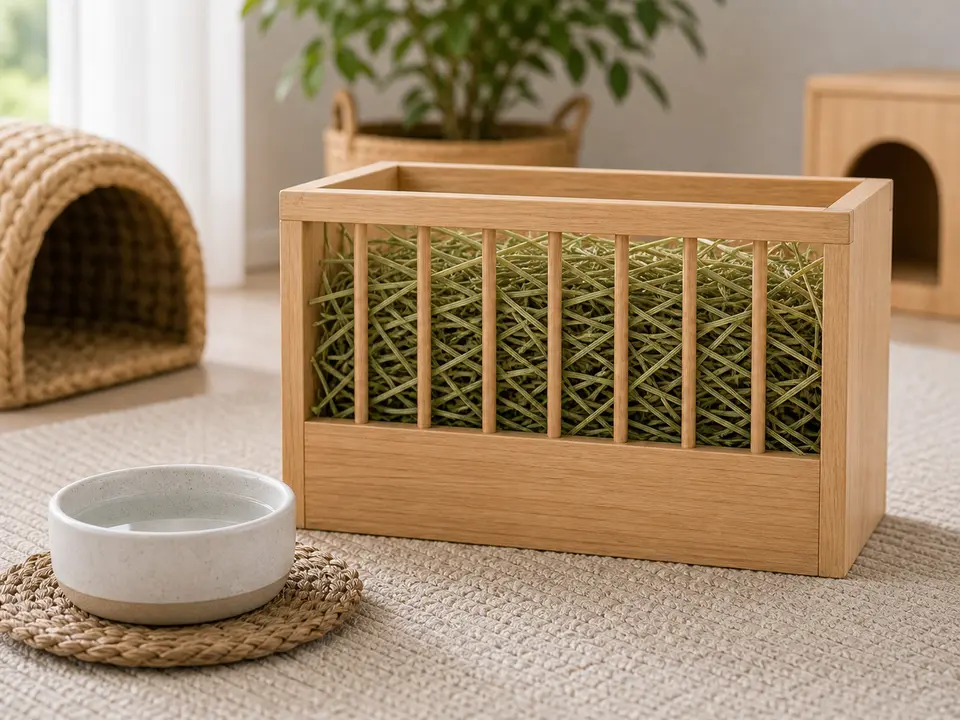
Offer fresh hay, water, and a small amount of a familiar favorite green if your rabbit will take it. Avoid suddenly introducing a pile of new foods, sugary treats, or random pantry items. You want to know whether your rabbit can eat normally, not whether one tempting bite distracts them. Keep the bowl simple so the pattern stays clear.
Watch posture and energy
A rabbit who sits hunched, presses the belly down, grinds teeth loudly, hides unusually, refuses favorite food, breathes strangely, or seems weak needs more urgency. Those body clues matter as much as the food bowl. Write down when you last saw normal eating and normal poops.
Keep the room calm while you call
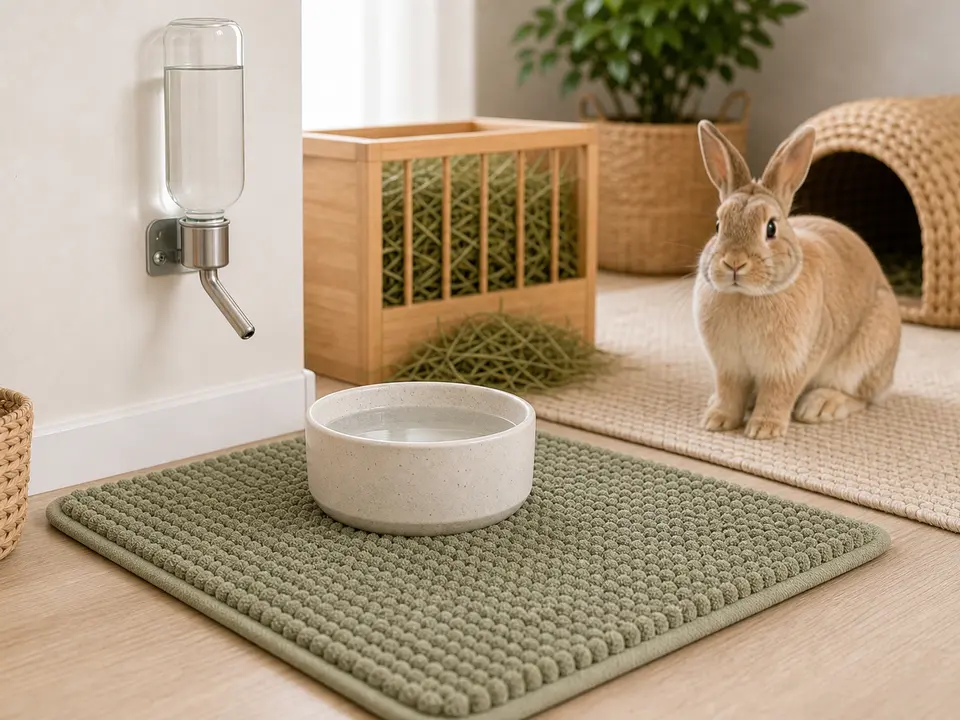
Do not chase, bathe, force handling, or start a major cage clean while your rabbit feels off. Put hay and water within easy reach, keep the room quiet, and call a rabbit-savvy vet or emergency clinic. Calm observation gives better information than frantic experiments.
Think about what changed
Recent travel, heat, loud noise, bonding stress, dental discomfort, a new food, molting, pain, or a litter setup change can all matter. Write a quick note about the timeline, including the last normal meal and last normal litter box check. The cause still needs rabbit-savvy guidance, but the timeline helps the vet understand the situation faster.
Reset gently after care
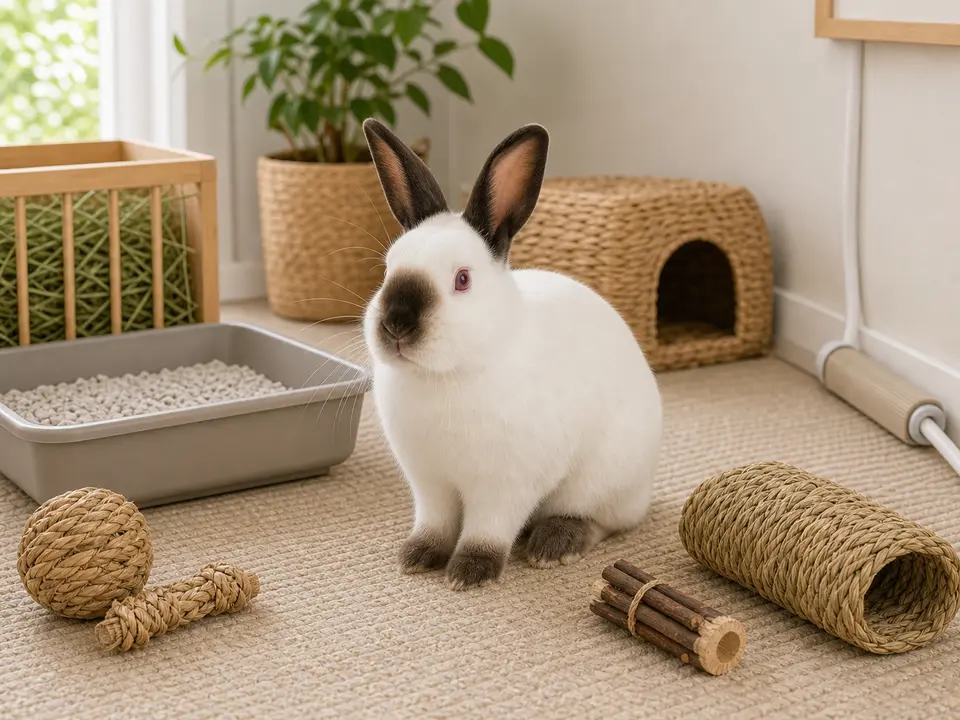
After your vet gives a plan, keep the daily setup easy: fresh hay, clean water, a simple litter box, traction, and a quiet rest area. Watch for appetite returning, normal poop size and number, and your rabbit choosing ordinary resting spots again. Keep notes until the routine looks familiar for more than one check. Small, steady observations are useful here.
Before you decide
When did your rabbit last eat hay normally?
Are poops normal, smaller, fewer, or missing?
Will your rabbit take a familiar favorite food?
Does posture, breathing, energy, or belly comfort look different?
Have you called a rabbit-savvy vet or emergency clinic for guidance?
Next best moves
Take appetite loss seriously, especially with fewer or smaller poops.
Offer familiar hay, water, and normal foods while you gather information.
Avoid frantic new foods or stressful handling while your rabbit feels off.
Call a rabbit-savvy vet promptly when a rabbit is not eating normally.
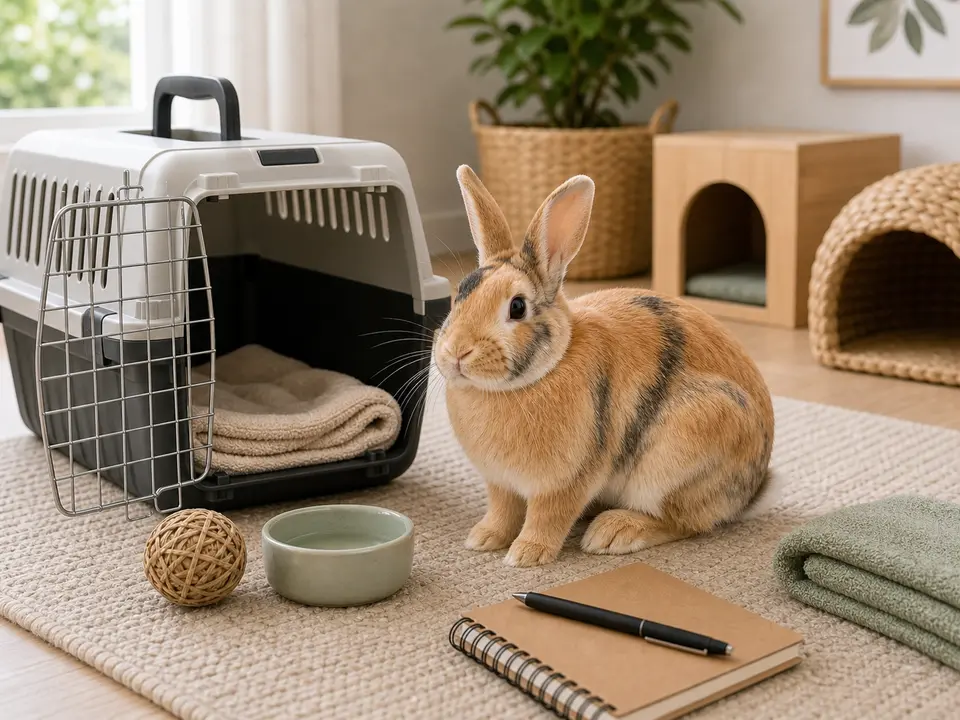
Useful supplies to keep the care routine clear
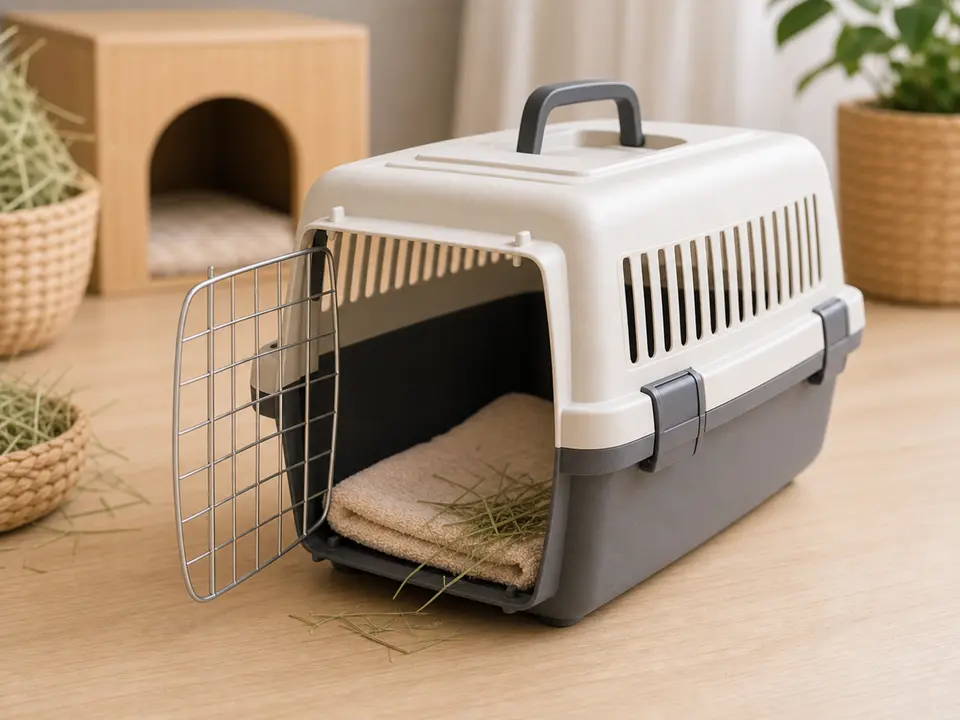
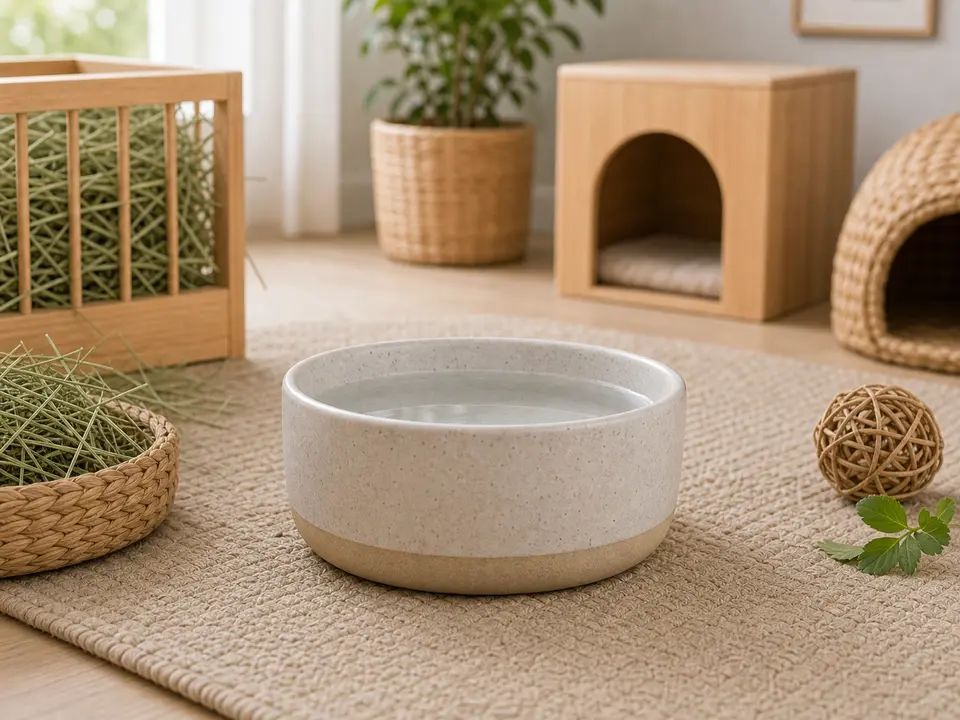
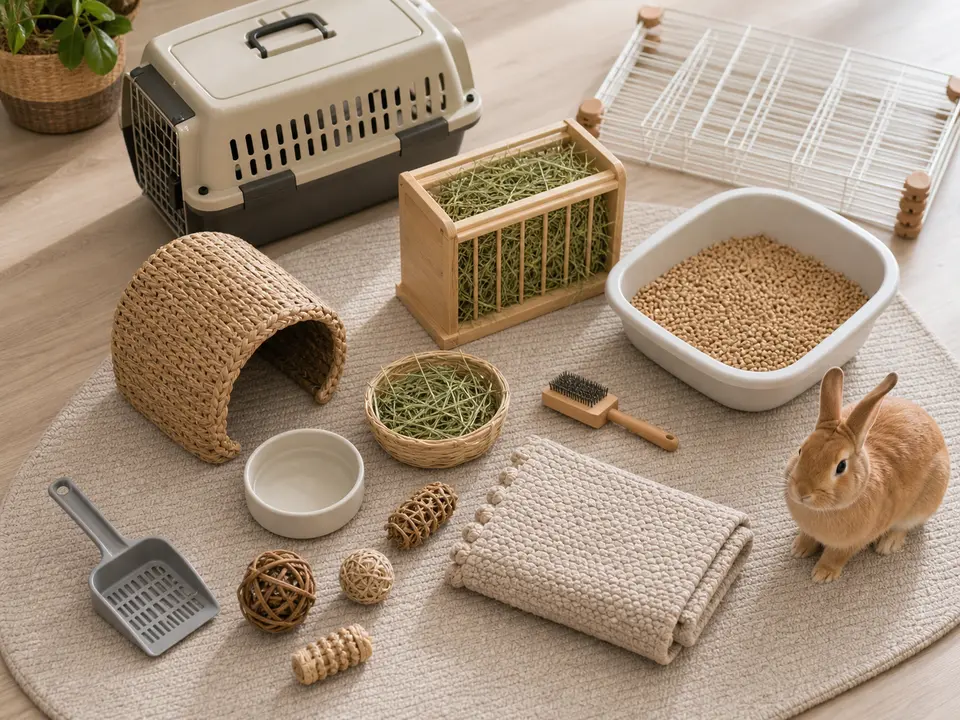
These do not replace a rabbit-savvy vet. They make transport, water, hay access, and observation easier while you follow the care plan.
Affiliate links: Furball Cove may earn from qualifying purchases at no extra cost to you.
It can become urgent quickly, especially when poops are fewer, smaller, or missing. Call a rabbit-savvy vet for guidance instead of waiting to see if it passes.
What should I check first?
Check hay, favorite foods, water, poop size and number, posture, energy, breathing, and when the change started.
Should I give treats to make my rabbit eat?
Offer familiar food, but do not rely on sugary treats or new foods to solve the problem. Appetite loss needs rabbit-savvy guidance.