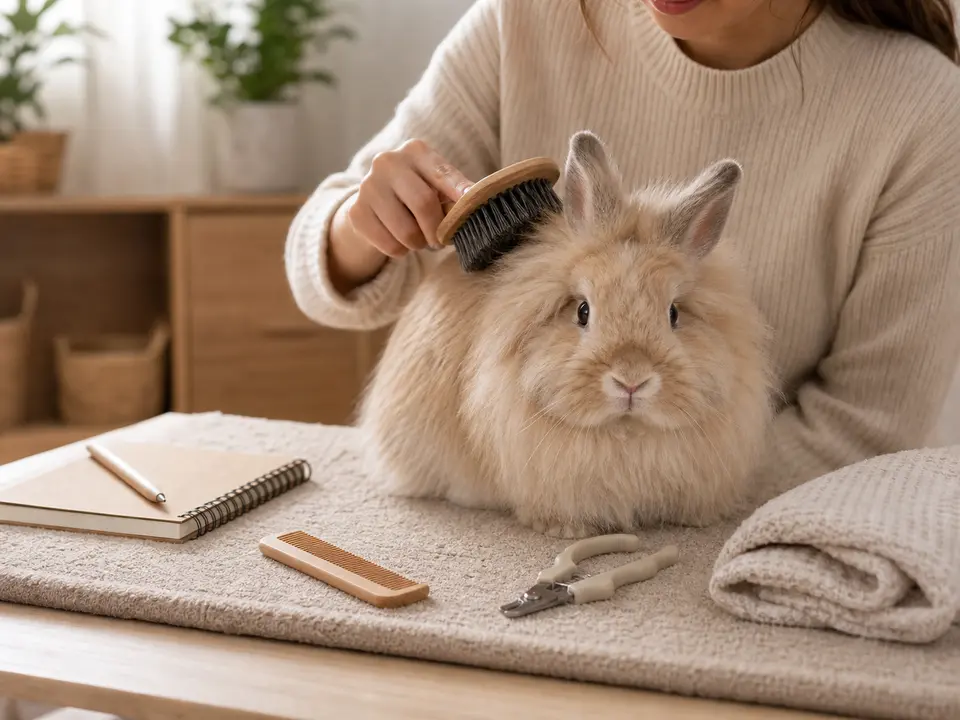
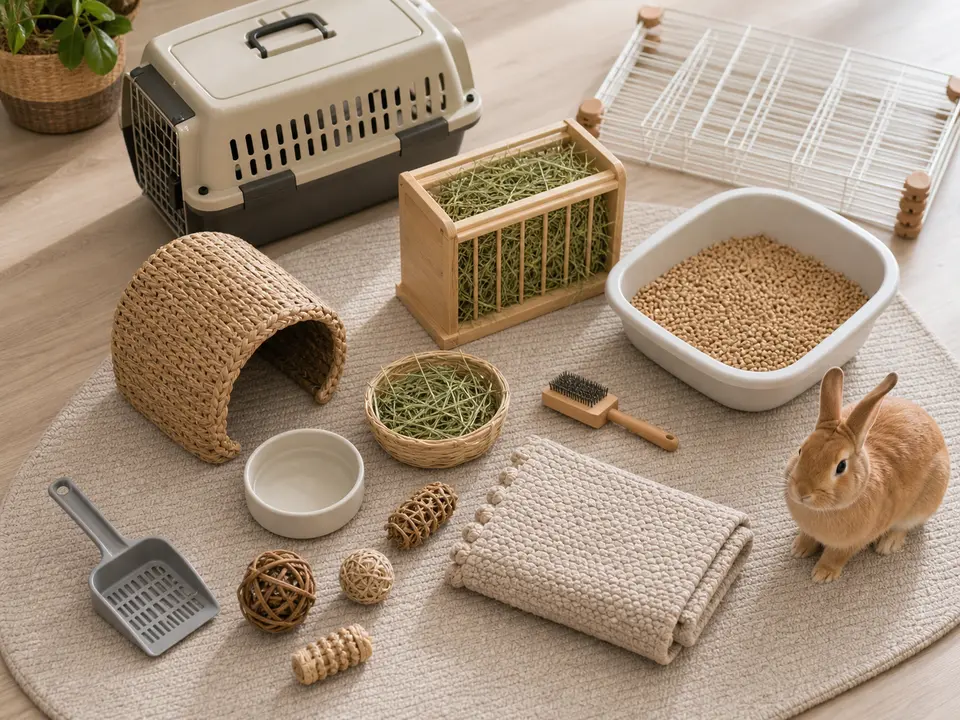
Rabbit pellets should usually be measured support, not the center of the diet. Choose a plain rabbit pellet appropriate for your rabbit's age and needs, keep hay first, avoid colorful mixes, and use the bowl, body condition, appetite, and poop to judge whether the routine is working.
Pellets are easy to overvalue because rabbits often love them. A good pellet routine is boring in the best way: measured, predictable, and never allowed to push hay out of the day.
Measure before you pour
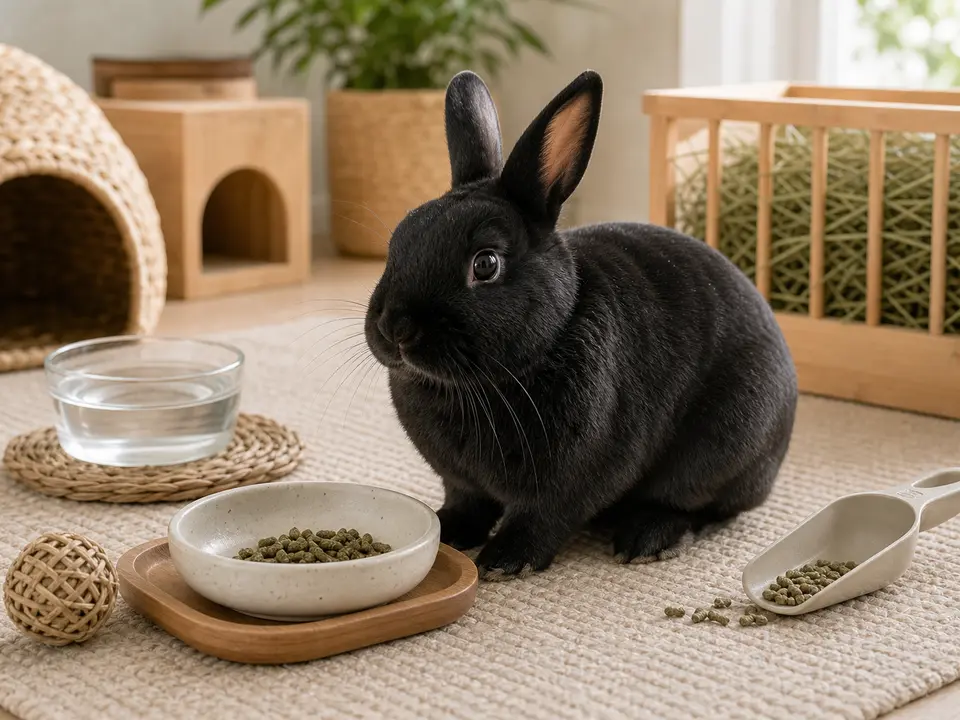
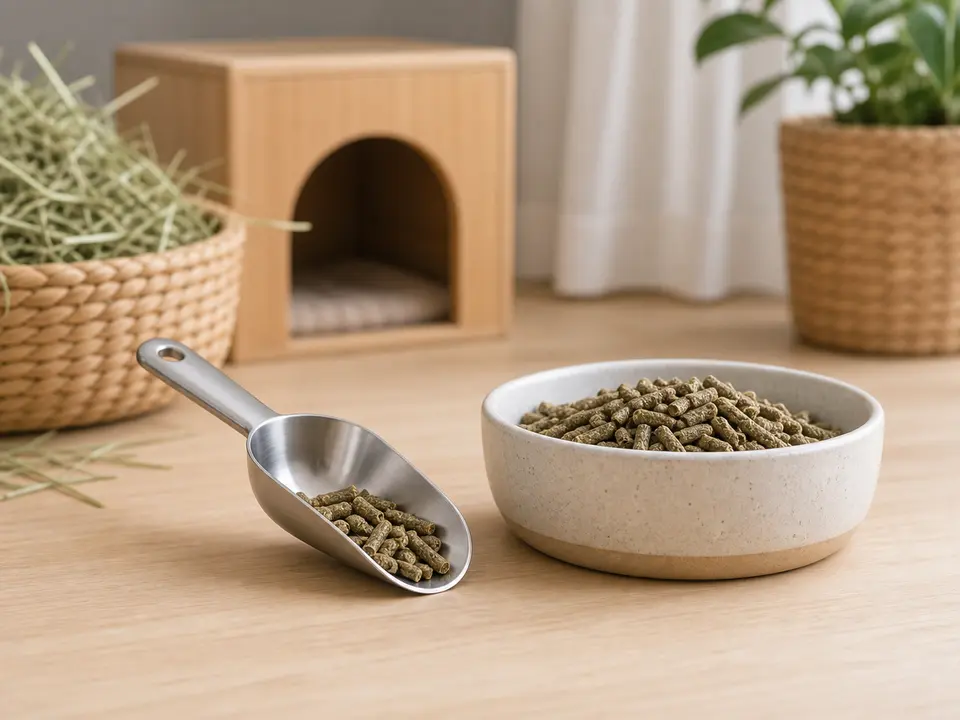
Use a scoop or scale so pellet meals stay consistent. Guessing by the handful can quietly grow over time, especially if your rabbit begs. The right amount depends on age, size, body condition, hay intake, and your vet's guidance, so treat the scoop as part of the routine. Consistency makes changes easier to spot.
Keep hay ahead of pellets
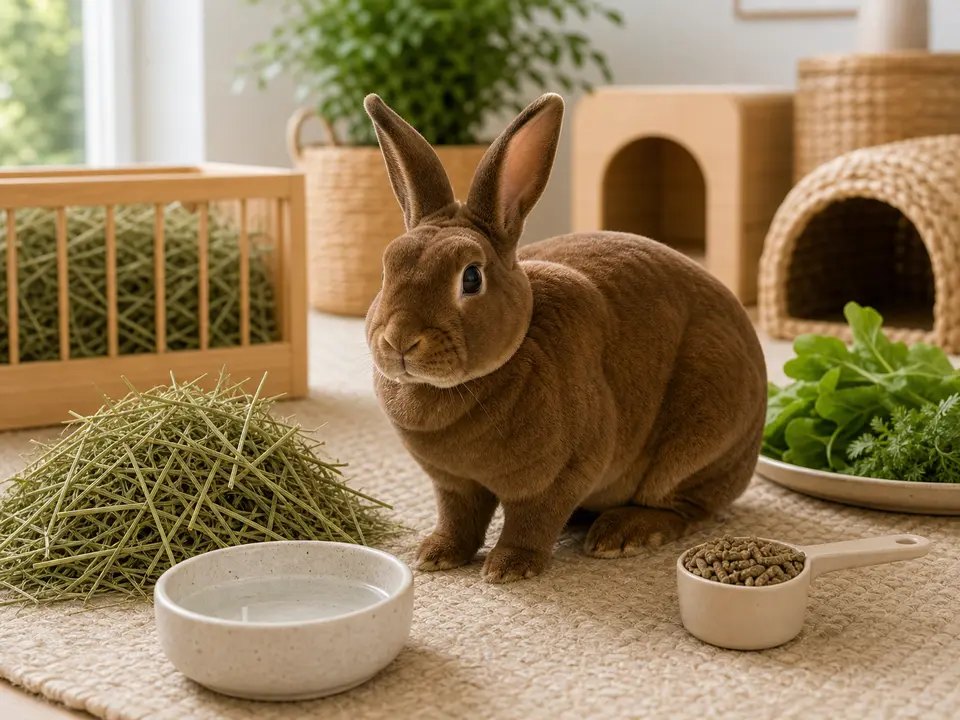
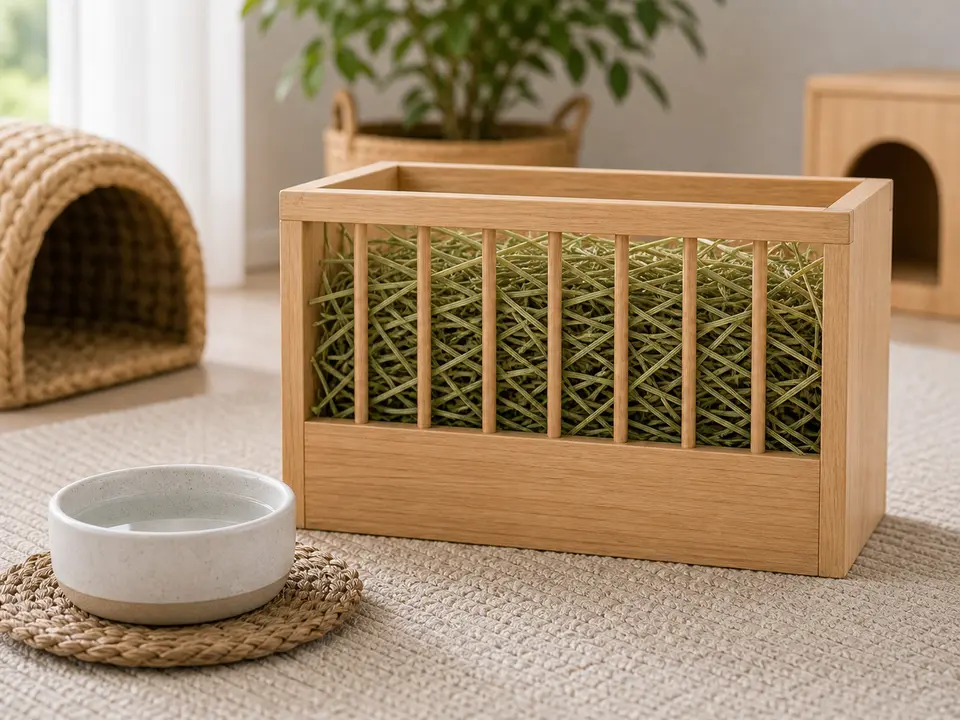
A rabbit who fills up on pellets may nibble less hay, and that can affect chewing time and poop quality. Offer fresh hay before pellet excitement takes over. If pellets disappear instantly but hay sits untouched, the routine needs adjusting. Some rabbits do better when pellets are served after you have seen real hay interest.
Choose plain pellets
Look for a simple rabbit pellet rather than a colorful mix with seeds, dried fruit, corn, or crunchy extras. Rabbits often pick out the sweet or rich pieces first, which makes the bowl look fun while the nutrition becomes uneven.
Use pellets for small enrichment
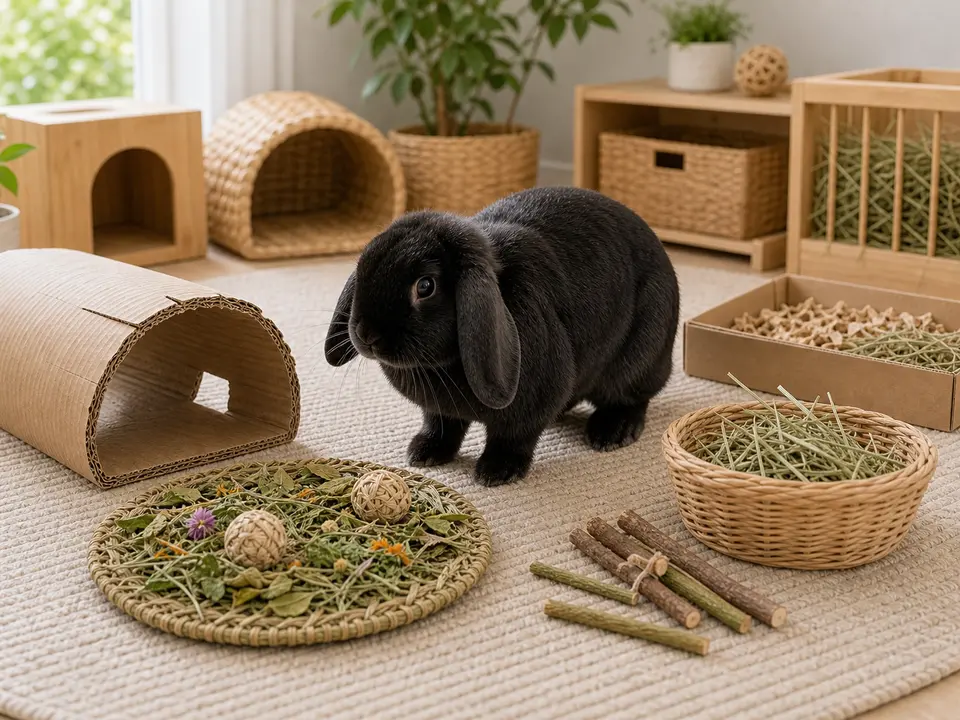
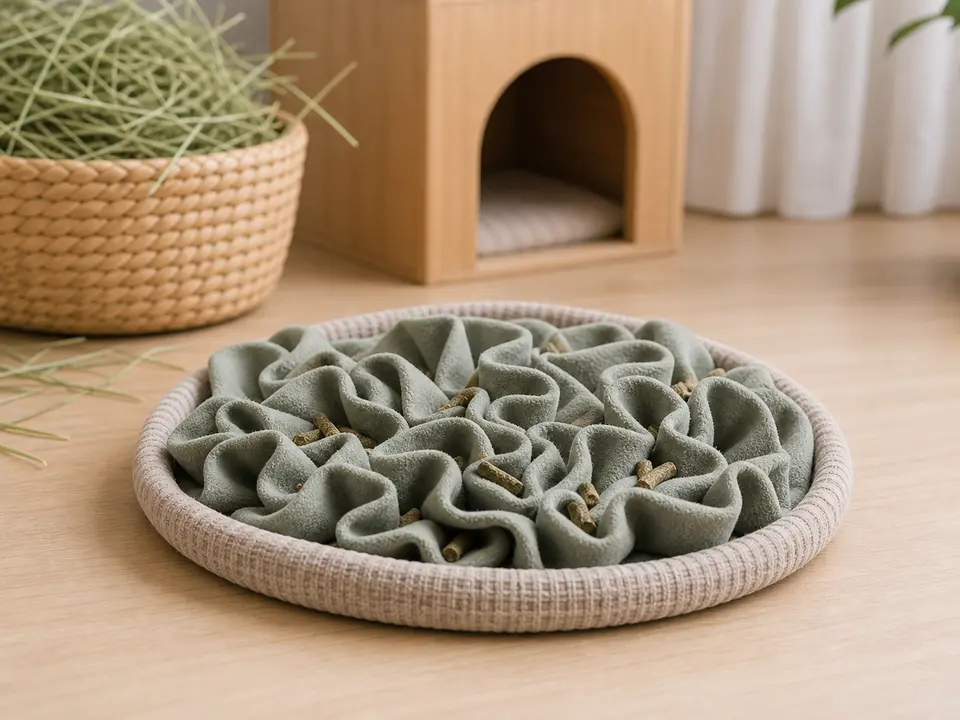
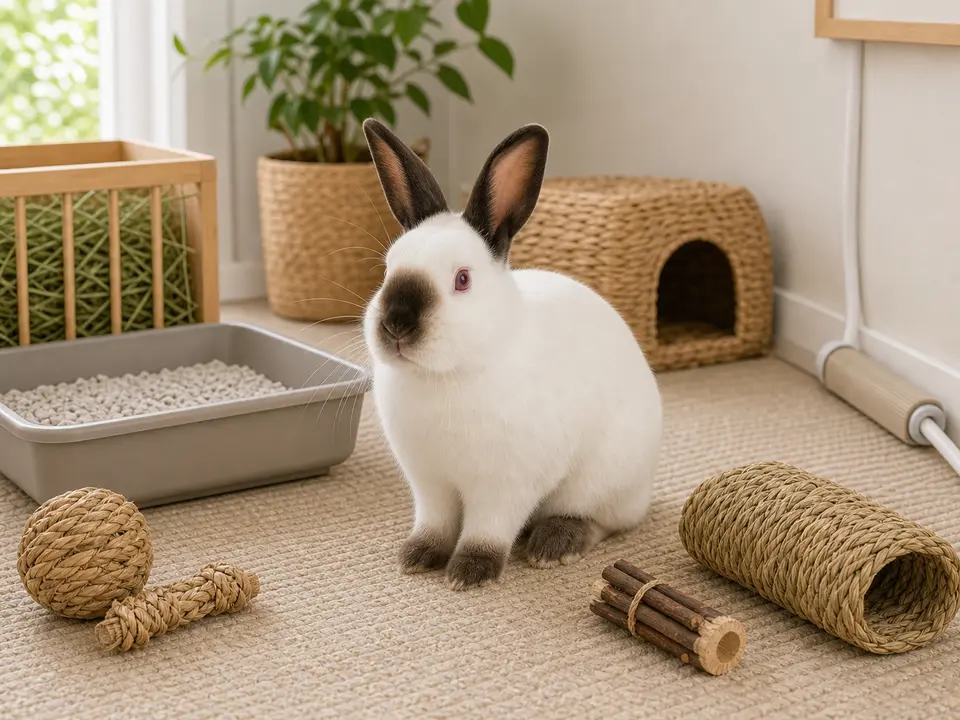
A measured pellet portion can become a short forage game: scatter a few in a mat, tuck them into hay, or use them during calm bonding. Keep the amount the same so enrichment does not become extra food by accident.
Adjust when life changes
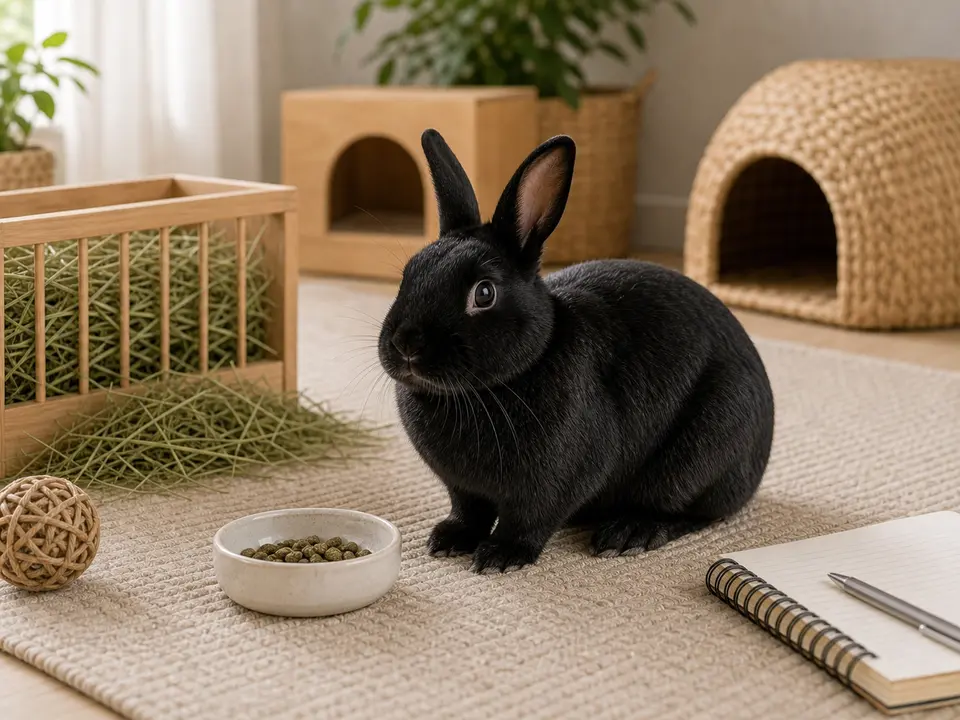
Young rabbits, seniors, rabbits losing weight, and rabbits with medical needs may need a different pellet plan. Do not guess through major weight, appetite, or poop changes. Bring notes to a rabbit-savvy vet and ask what amount fits your rabbit now. The scoop should change when the rabbit's real needs change, not just because begging got louder.
Watch the bowl and the litter box
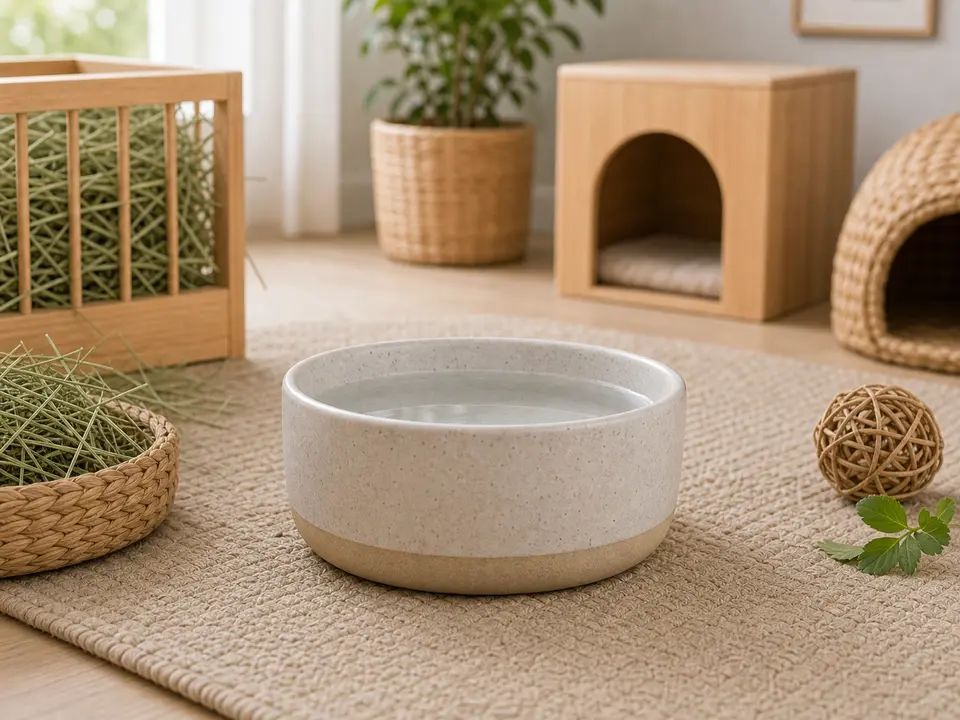
Pellets are only one clue. Look at hay eaten, water touched, poop size, energy, and whether your rabbit leaves pellets suddenly. A rabbit who refuses pellets may be picky, but sudden appetite changes deserve attention, especially if hay or poop changes too. Keep the old routine visible while you figure out what changed.
Before you decide
Are pellets measured instead of poured by habit?
Is your rabbit still eating plenty of hay?
Are the pellets plain rather than a colorful mix?
Did appetite, poop, or weight change after the pellet routine changed?
Next best moves
Keep pellets measured and hay-first.
Use plain rabbit pellets and avoid treat-style mixes.
Turn part of the measured portion into enrichment if it helps.
Ask a rabbit-savvy vet before making major pellet changes for weight, age, or health concerns.
Pellet routine supplies
Keep pellet feeding measured and tied to the hay-first routine.
Affiliate links: Furball Cove may earn from qualifying purchases at no extra cost to you.