Updated
Rabbit plant check
Is Norfolk Island Pine Safe for Rabbits?
Use caution
Norfolk Island pine should be treated as a plant-placement question, especially around dropped needles and pot access.
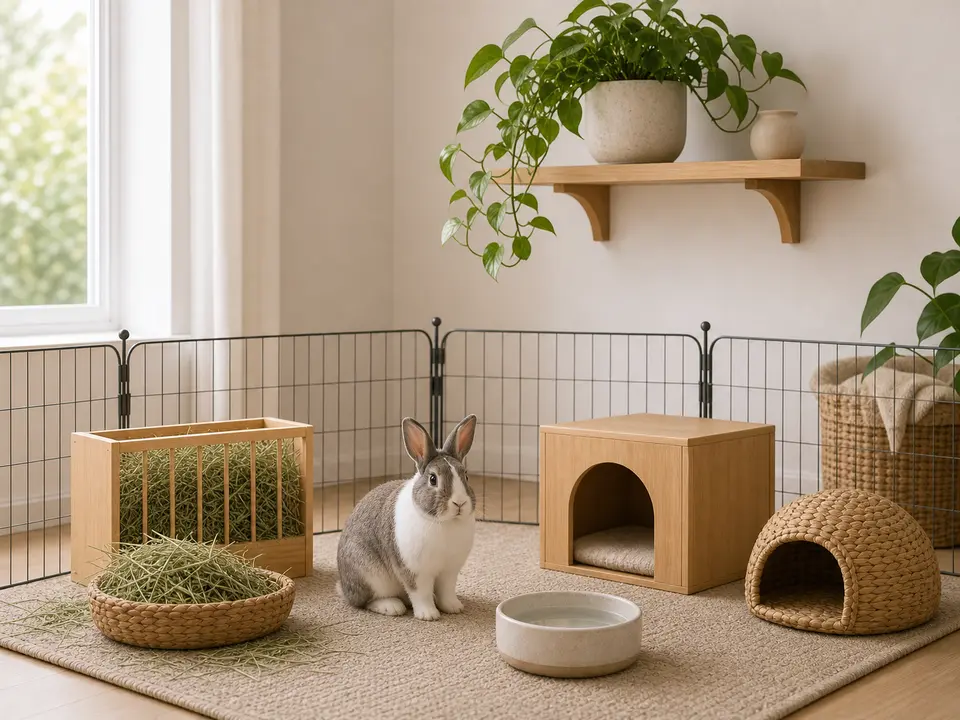 Norfolk Island Pine
Be stricter with norfolk island pine at first
Norfolk Island pine should be treated as a plant-placement question, especially around dropped needles and pot access. Keep the plant away until the rabbit room routine is predictable and you know whether your rabbit targets plants.
Watch more than the leaf
Pots, soil, trays, plant food, trimmings, and fallen pieces are part of the real setup. A plant can be a bad fit even when the leaf question sounds mild.
Use normal habits as your signal
After any nibble, appetite, poop, posture, and energy matter more than a quick glance at the plant.
Separate norfolk island pine leaves from the pot
The practical question with norfolk island pine is not only the leaf. Soil, trays, plant food, woody stems, and the pot itself can all become part of the rabbit's chewing route if the plant sits low.
Watch whether norfolk island pine becomes a target
Some rabbits ignore a plant for weeks and then test it during one curious floor-time loop. If your rabbit keeps returning to the pot, move the plant instead of turning every visit into correction.
Offer better chewing work
Hay, safe cardboard, willow, seagrass, and digging boxes give your rabbit a more useful job than investigating plant soil. Put the good options where your rabbit already likes to explore.
Keep norfolk island pine easy to manage
Choose a high shelf, hanging spot, or different room if leaves trail low or the pot drops pieces. A cautious plant can still be a poor fit for a rabbit room when it creates constant cleanup and supervision.
What to do
- Keep norfolk island pine away from the pen until you know how your rabbit reacts to plants.
- Check for dropped leaves, loose soil, and reachable watering trays.
- Move the plant higher or into another room if your rabbit is a determined chewer.
Avoid
- Putting norfolk island pine on a low stand, windowsill, or table near the rabbit route.
- Trusting supervision when leaves or stems can trail into reach.
Watch for
- Known chewing
- Drooling
- Not eating
- Quiet or hunched posture