Updated
Rabbit plant check
Is Pothos Safe for Rabbits?
Keep away
Keep pothos away from rabbit rooms.
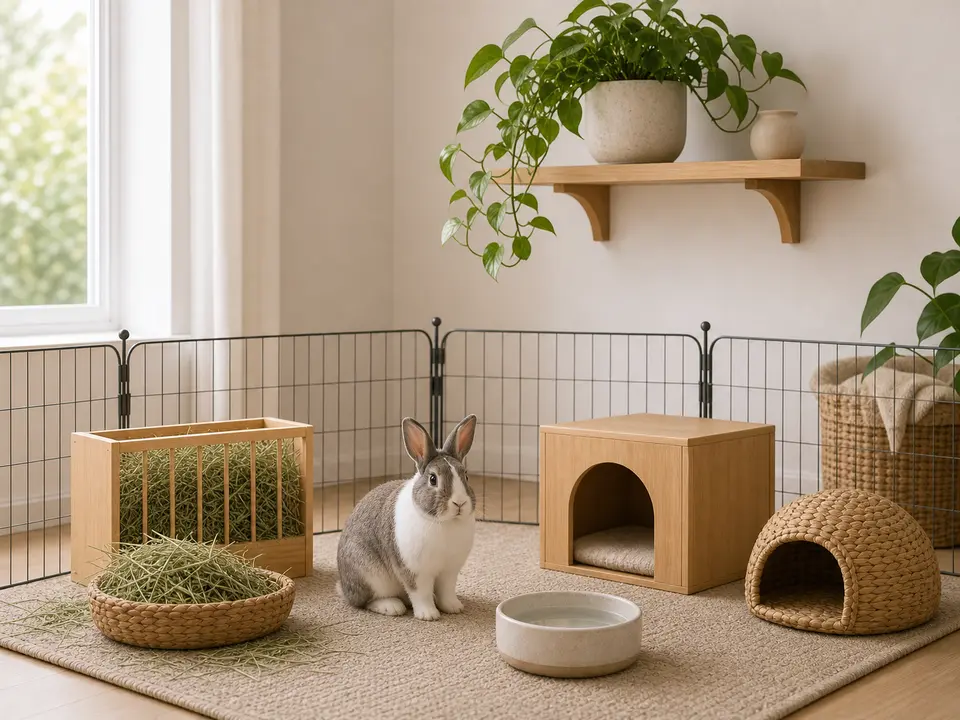 Pothos
Ask your vet if they ate it
If your rabbit ate pothos and seems off, has stopped eating, or you do not know the amount, call a rabbit-savvy veterinarian or pet poison hotline.
Treat vines as reachable
A curious rabbit can stretch farther than expected, so keep pothos out of rabbit rooms or trimmed far from floor time.
Do a reach check
Look from the rabbit's level, not from your standing height, and remove fallen leaves.
If chewing happened
Remove the plant, check appetite and poop, and call a rabbit-savvy vet if anything looks different.
Keep pothos out of rabbit space
Pothos is better handled as a plant for another room. Put it behind a closed door, high enough that leaves cannot trail down, or away from floor-time areas where a curious rabbit can reach it.
Check around pothos
The real-world problem is often not the pot itself. Leaves, trimmings, petals, vines, or damp soil can land behind furniture and wait there until your rabbit explores later.
If your rabbit got into pothos
Remove the plant, save the name if you know it, and watch appetite, poop, posture, and energy. If your rabbit seems off, ate an unknown amount, or stops eating, call a rabbit-savvy vet or pet poison hotline.
Make the path around pothos plant-free
The easiest room is one where your rabbit can move without meeting trailing vines, dropped leaves, or pots on low stands. A plant-free route lets you relax and notice normal behavior instead of hovering. Move low plant stands before they become part of the rabbit map.
What to do
- Move vines well above rabbit height.
- Check for trailing stems behind shelves.
- If a bite happened, note the amount and call your vet if your rabbit seems off.
Avoid
- Letting vines hang behind the pen.
- Trusting a shelf if leaves still trail within reach.
Watch for
- Drooling
- Not eating
- Pawing at the mouth
- Quiet or hunched posture
Amount
Best avoided. If your rabbit already ate it or chewed it, ask your veterinarian what to watch based on the amount and symptoms.