What should go near the litter box and what should stay away
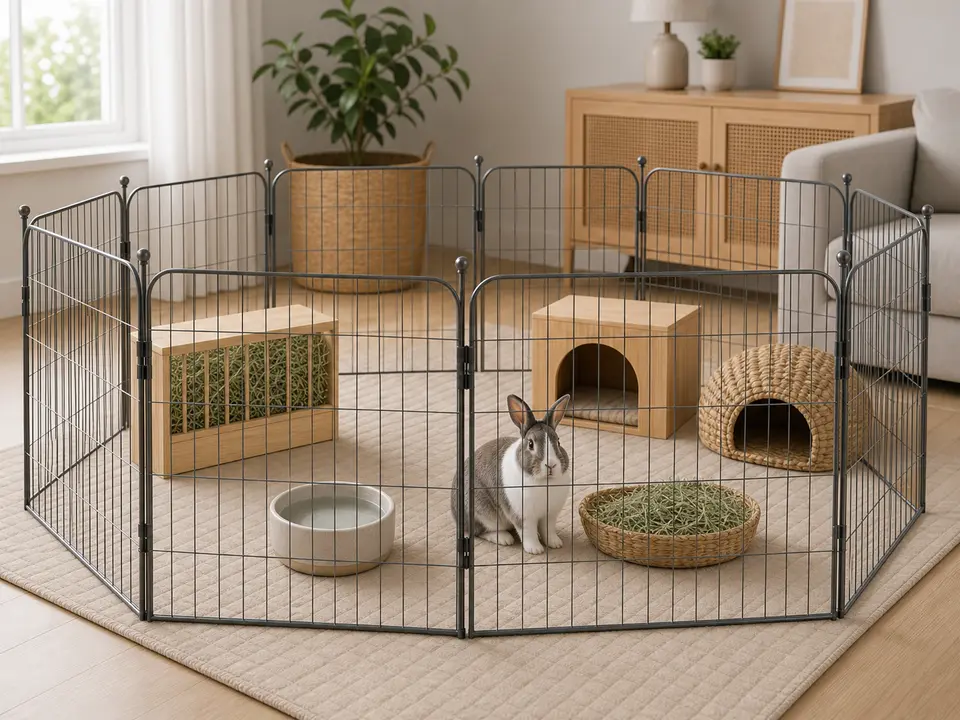
Near the litter box, keep hay, safe litter, a washable mat, and enough space to turn around. Keep water, soft beds, fabric toys, cords, and human storage far enough away that they do not become damp, dirty, or chew targets.
Rabbit supplies should earn their space in the daily routine. The best choice is the one that makes hay, litter, traction, chewing, transport, hiding, water, or cleanup easier tomorrow.
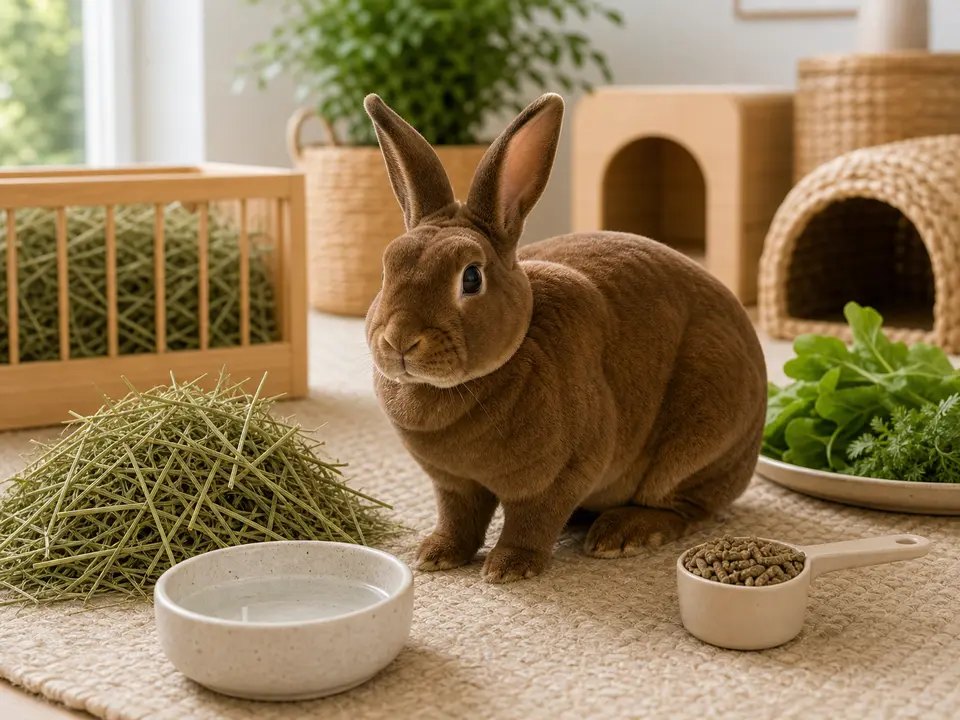
Keep hay with the box habit
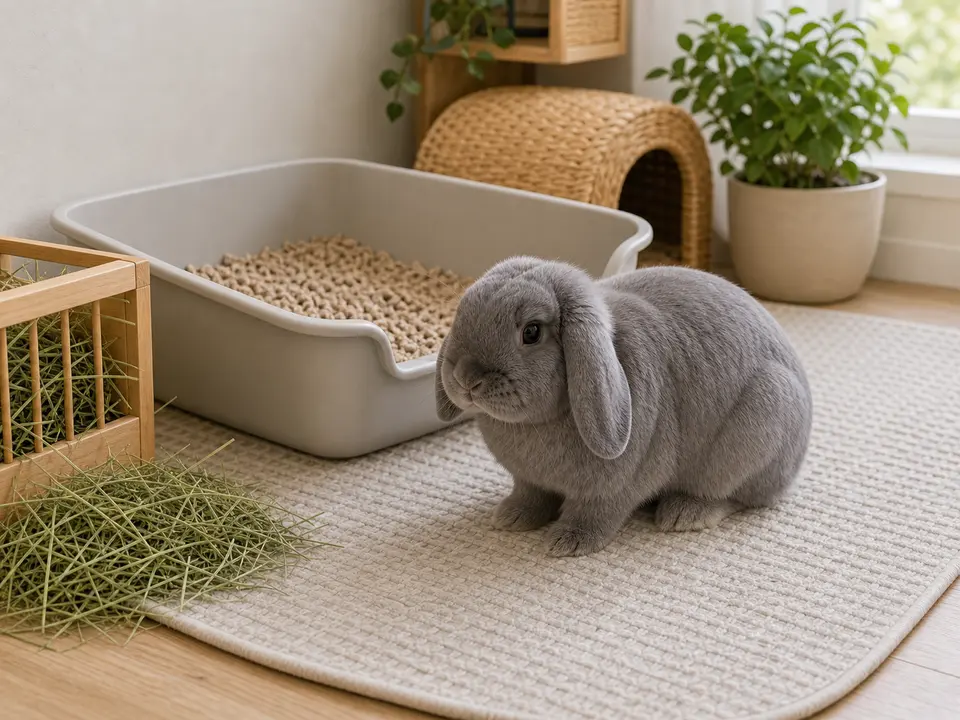
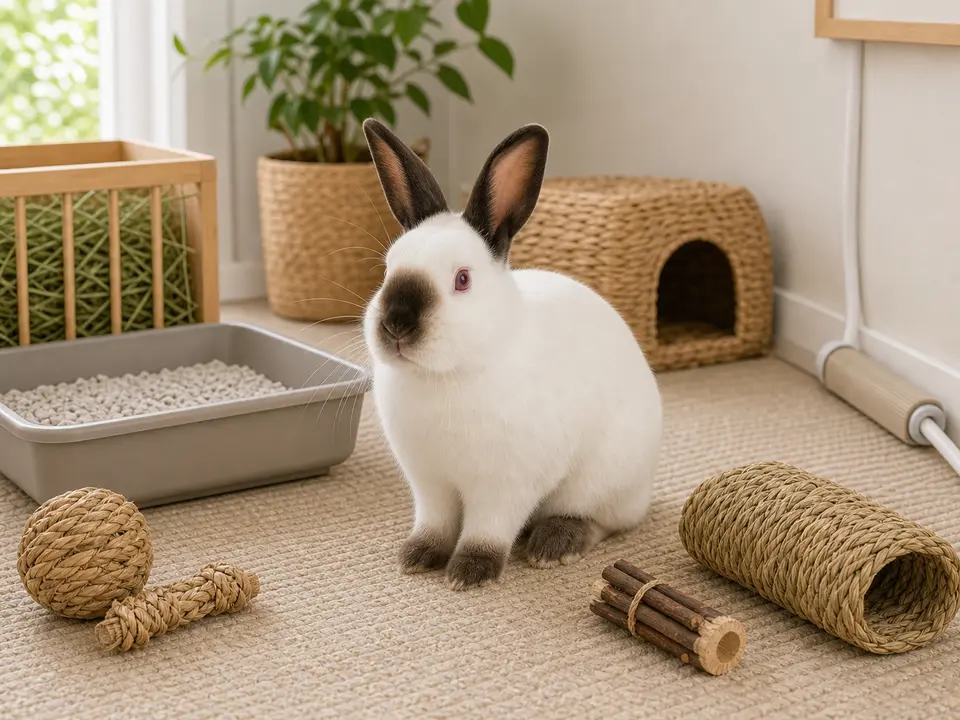
Near the litter box, keep hay, safe litter, a washable mat, and enough space to turn around. Keep water, soft beds, fabric toys, cords, and human storage far enough away that they do not become damp, dirty, or chew targets. Hay usually belongs near the litter box because many rabbits eat while they use it.
Use a roomy box and low, reachable hay placement so your rabbit can turn, eat, and leave without dragging half the setup across the floor.
Refill hay from a spot you can reach without crowding the box. If refills are awkward, hay tends to migrate to the floor and the habit gets harder to read.
Place water close but cleaner
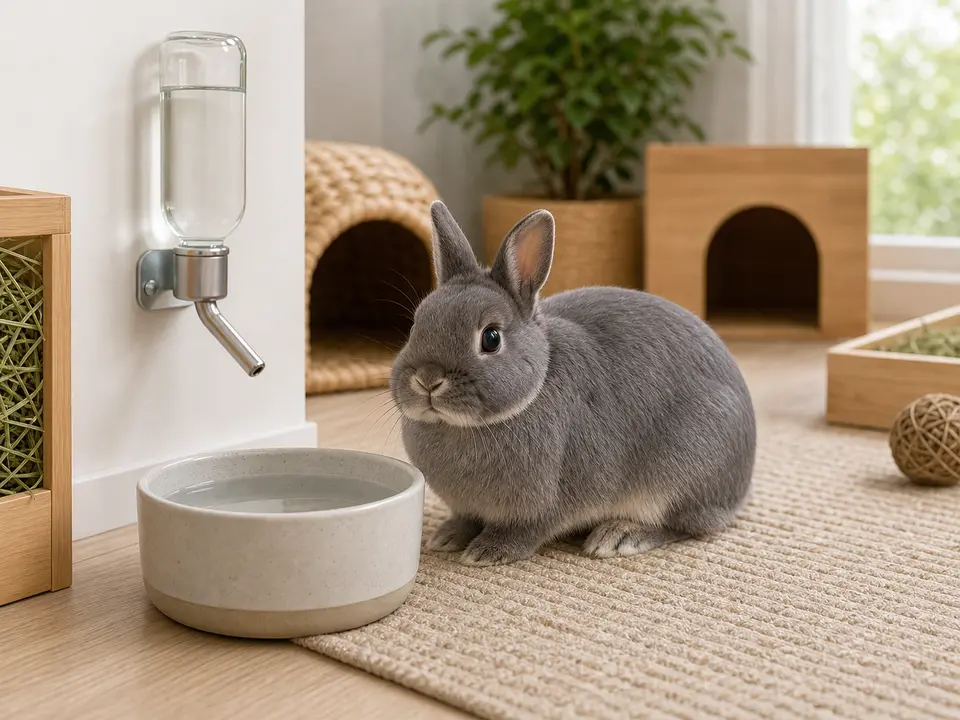
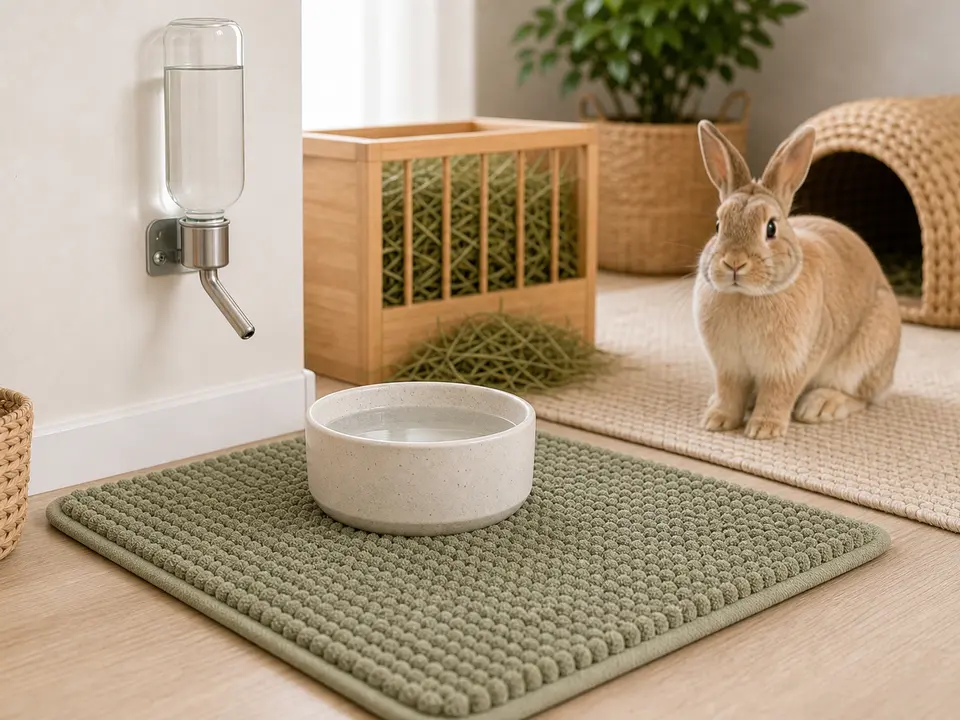
Water should be easy to reach, but not directly under the hay rack or in the kicked-litter path. A few inches can keep the bowl cleaner without making drinking inconvenient.
Use a heavy bowl on a washable mat if spills or nosing are part of the routine.
Refresh the water daily and watch what lands in it. If hay, litter, or fur keeps collecting in the bowl, move it slightly before changing the whole setup.
Move soft beds out of splash range
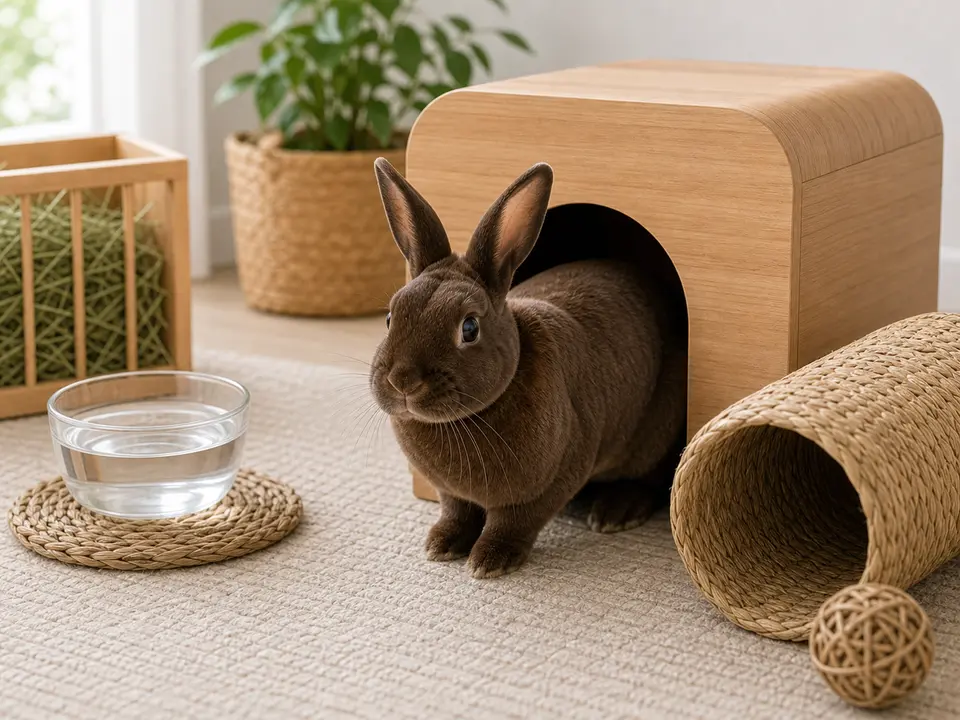
Soft beds, fabric tunnels, and plush toys should stay away from damp litter edges. Once fabric absorbs urine smell or wet hay, it can make the whole corner harder to reset.
Keep soft resting spots in a cleaner zone where your rabbit can relax without lying beside the messiest part of the box.
If a soft item must sit nearby, make it washable and easy to remove. Fabric that cannot be cleaned quickly should not guard the dirtiest corner.
Keep storage and cords away
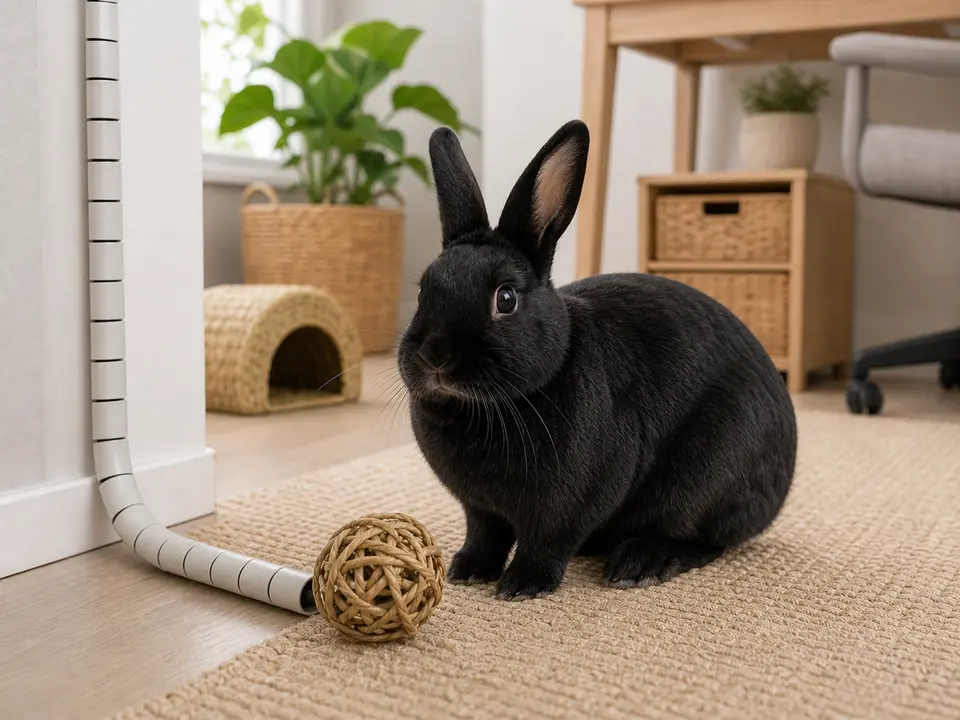
Human storage, charger cords, cleaning bottles, bags, and low shelves do not belong beside the litter box. The area already has hay, movement, and curiosity; adding hazards makes trouble more likely.
Keep the litter station plain: box, hay, mat, nearby water, and enough empty space to turn around.
A plain station is also easier to troubleshoot. When misses happen, you can see whether size, edge height, hay placement, or flooring is the real issue.
Adjust from the mess pattern
If hay spreads everywhere, water gets dirty, or pee lands over the edge, read that as setup feedback. Try a larger box, a higher back, a washable mat, or a small placement shift.
Sudden misses, wet fur, straining, appetite changes, or painful posture are different. Those clues deserve a rabbit-savvy vet, not another storage rearrangement.
Give one layout change a short trial before stacking more changes on top. Too many fixes at once make it hard to learn what actually helped.
Before you decide
What changed recently?
Can your rabbit choose a quiet retreat?
Are hay, water, litter, and footing easy?
Is this normal for your individual rabbit?
Next best moves
Make one small change.
Watch what your rabbit chooses next.
Keep the setup calm enough to repeat tomorrow.
Helpful rabbit supplies
These are practical pieces for the routine, not clutter to buy all at once.
Affiliate links: Furball Cove may earn from qualifying purchases at no extra cost to you.
What should go near the litter box and what should stay away?
Near the litter box, keep hay, safe litter, a washable mat, and enough space to turn around. Keep water, soft beds, fabric toys, cords, and human storage far enough away that they do not become damp, dirty, or chew targets.
What should I change first?
Choose one small setup change that makes the daily routine easier: closer hay, better traction, a calmer hideout, a larger box, or a shorter handling session.
When should I get extra help?
If your rabbit stops eating or pooping, seems painful, breathes strangely, or changes suddenly, call a rabbit-savvy vet. For bonding or handling problems, an experienced rabbit rescue can also help.