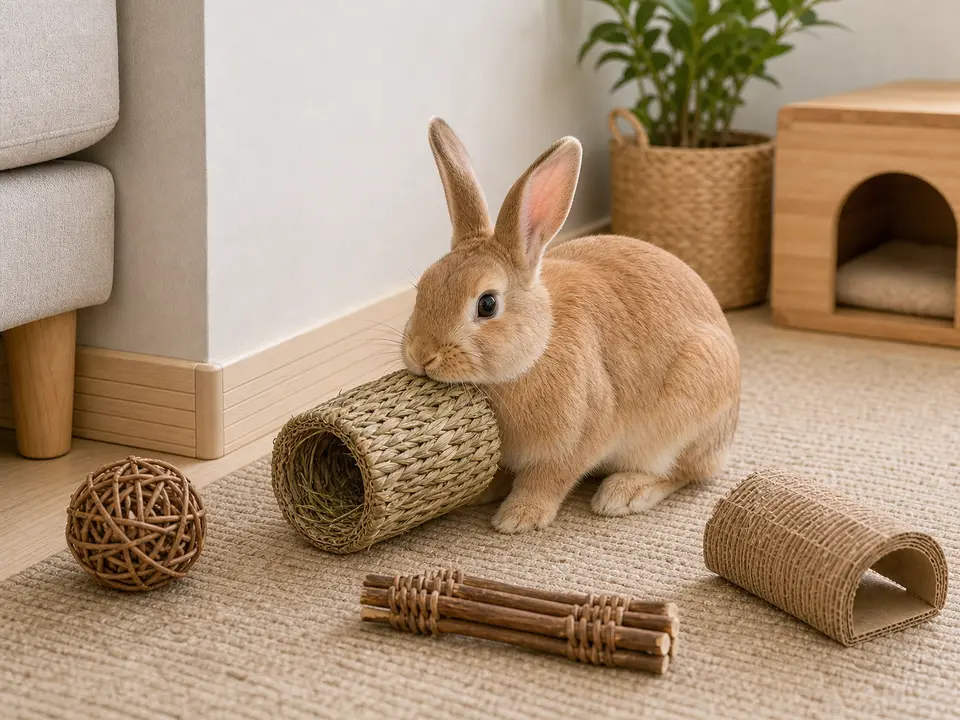
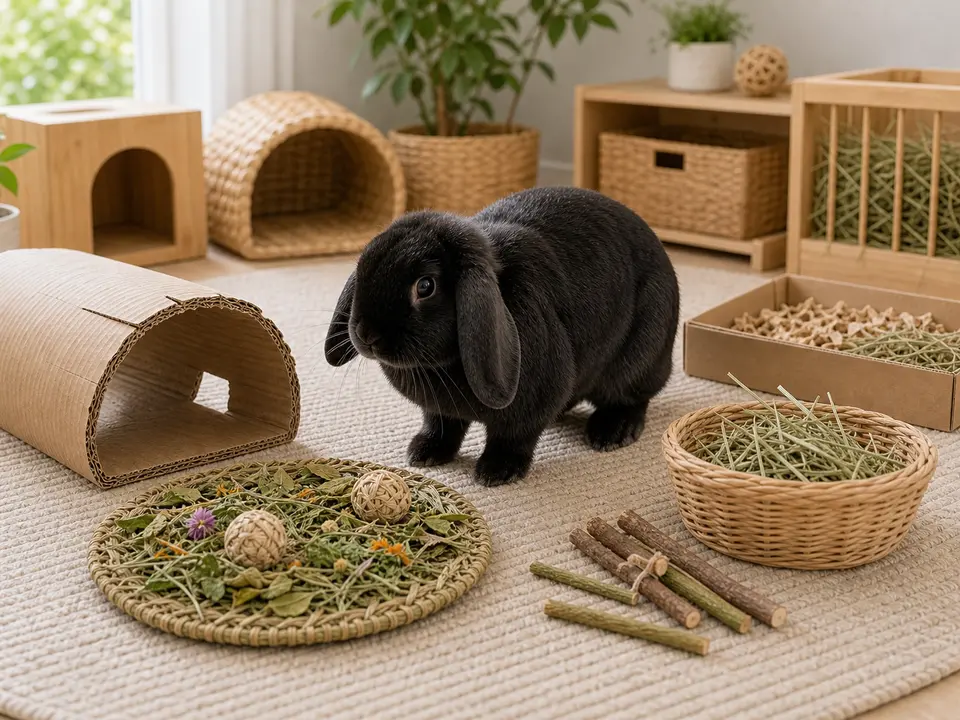
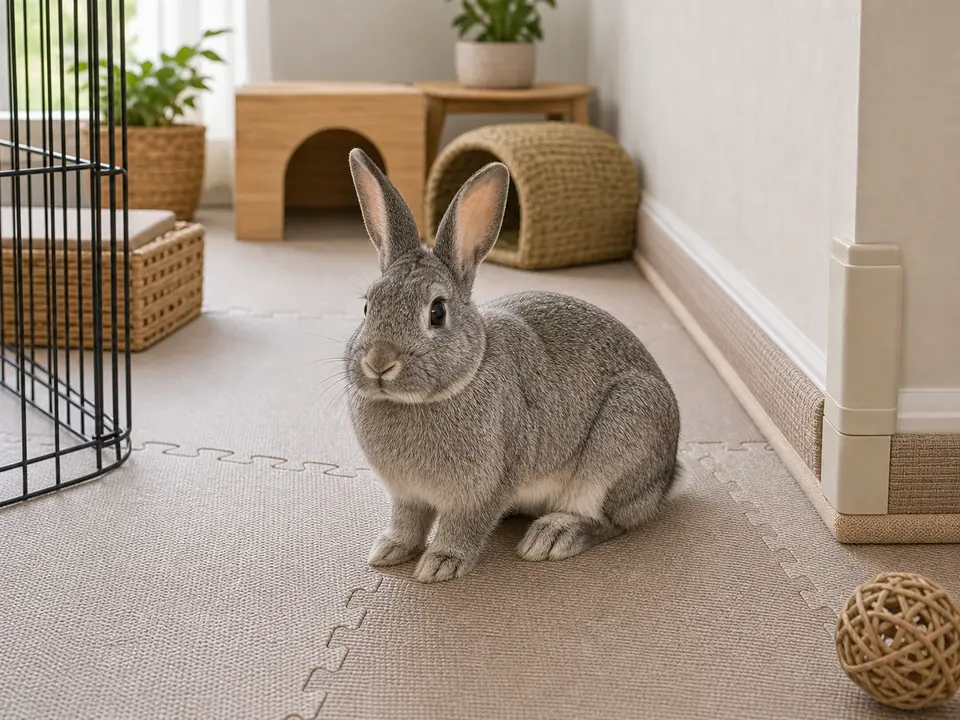
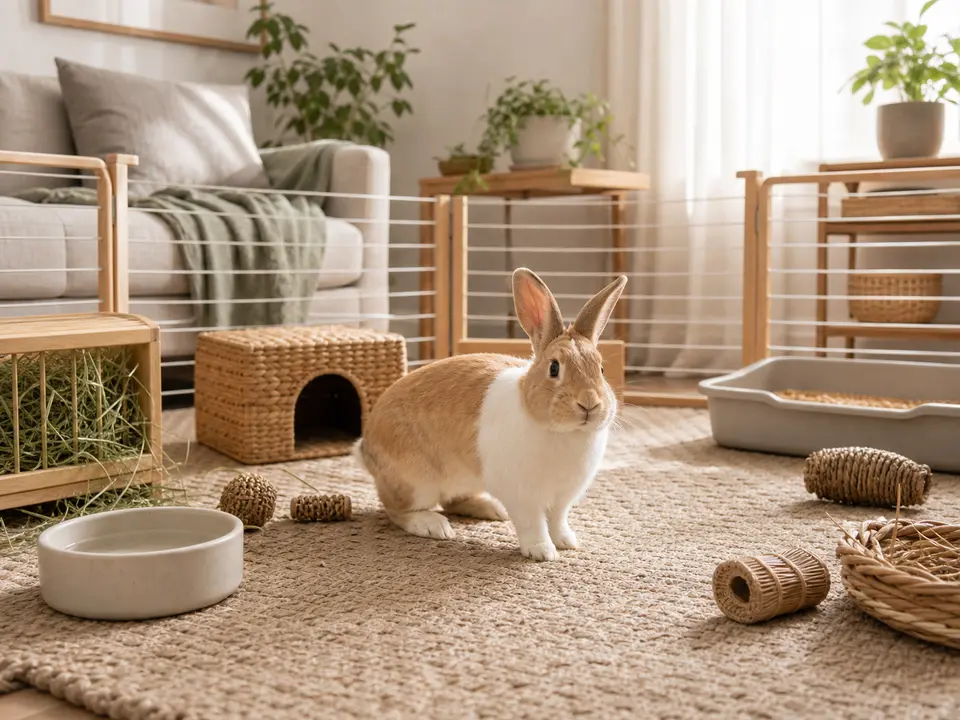
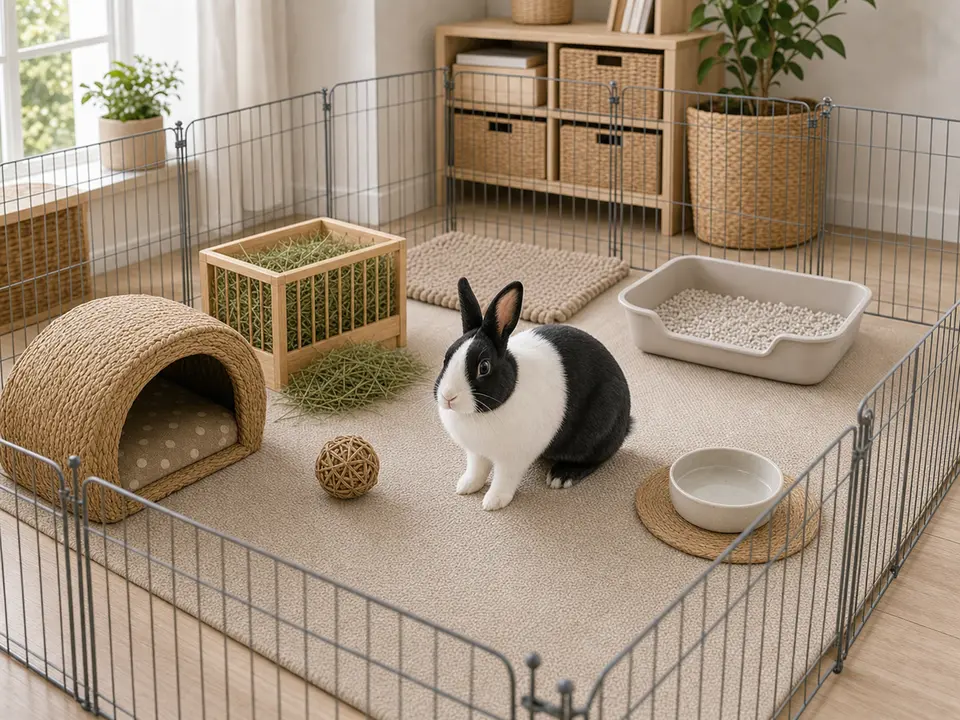
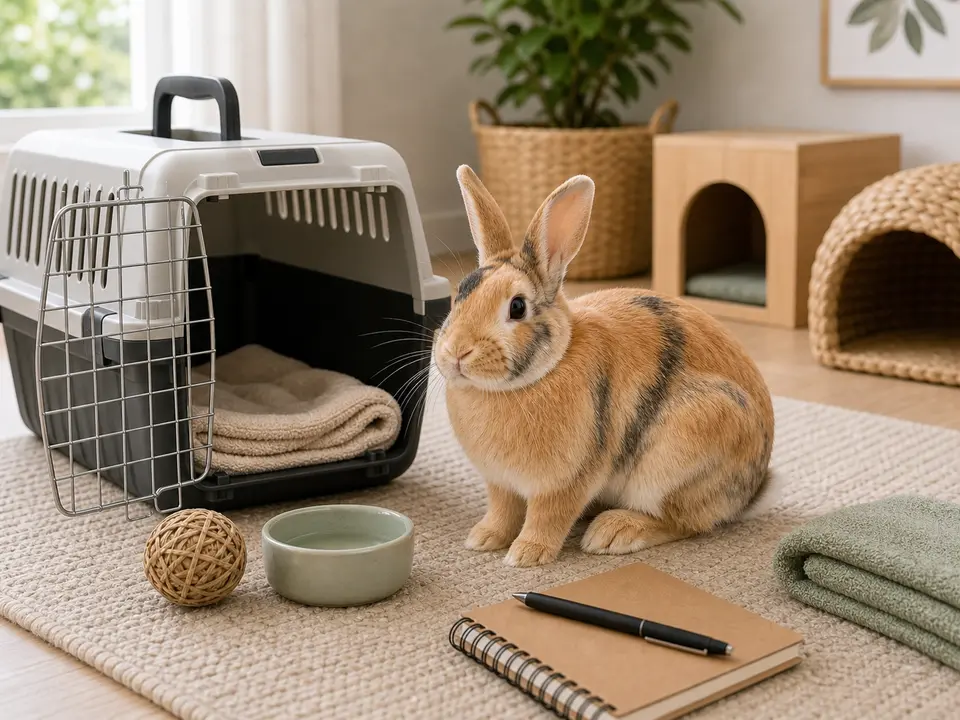
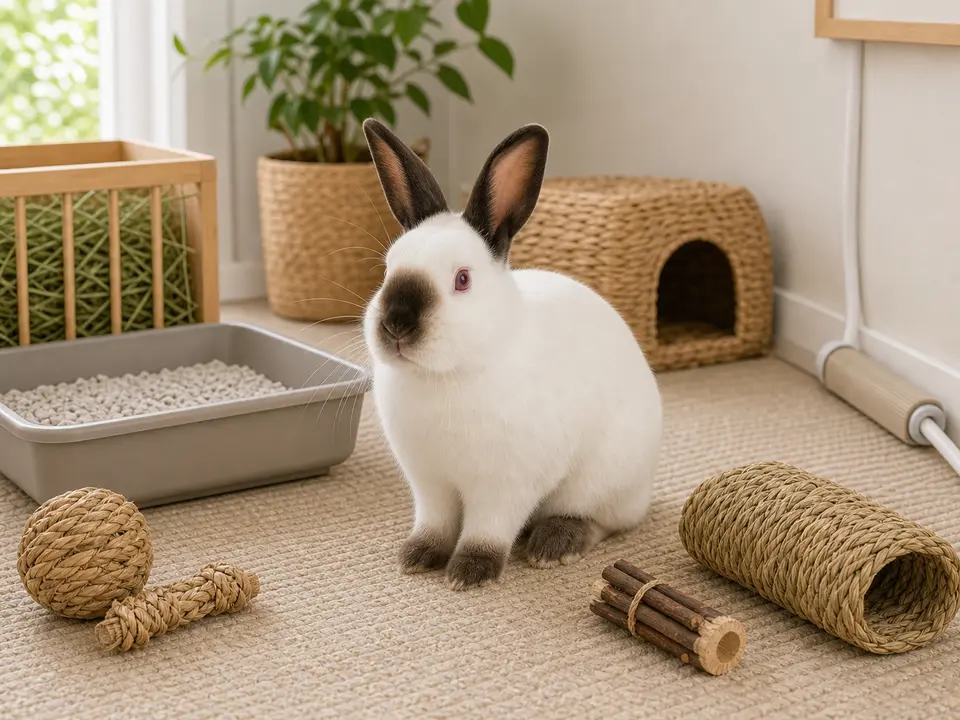
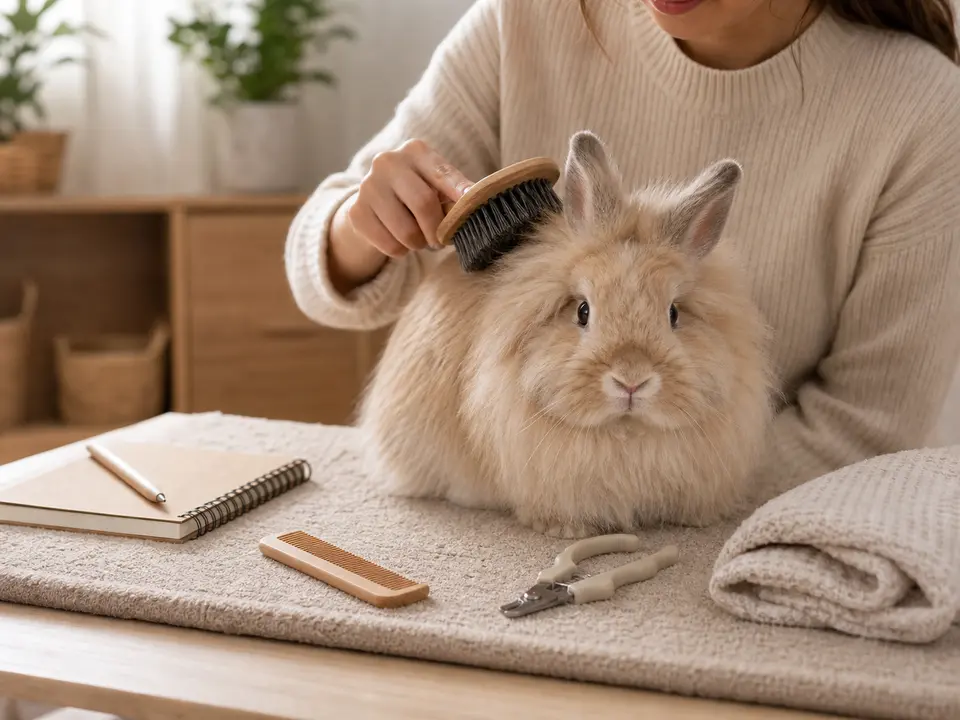
Good rabbit toys and chews give your rabbit safe ways to chew, forage, toss, dig, and explore. Start with hay-based toys, cardboard, willow, seagrass, forage mats, and simple tunnels, then watch what your rabbit actually uses. The best toy is the one that fits the daily routine safely.
Rabbit toys should not be random clutter. They should answer a real need: busy teeth, curious nose, digging paws, food searching, movement, or a better choice than the furniture leg.
Choose safe chewing textures
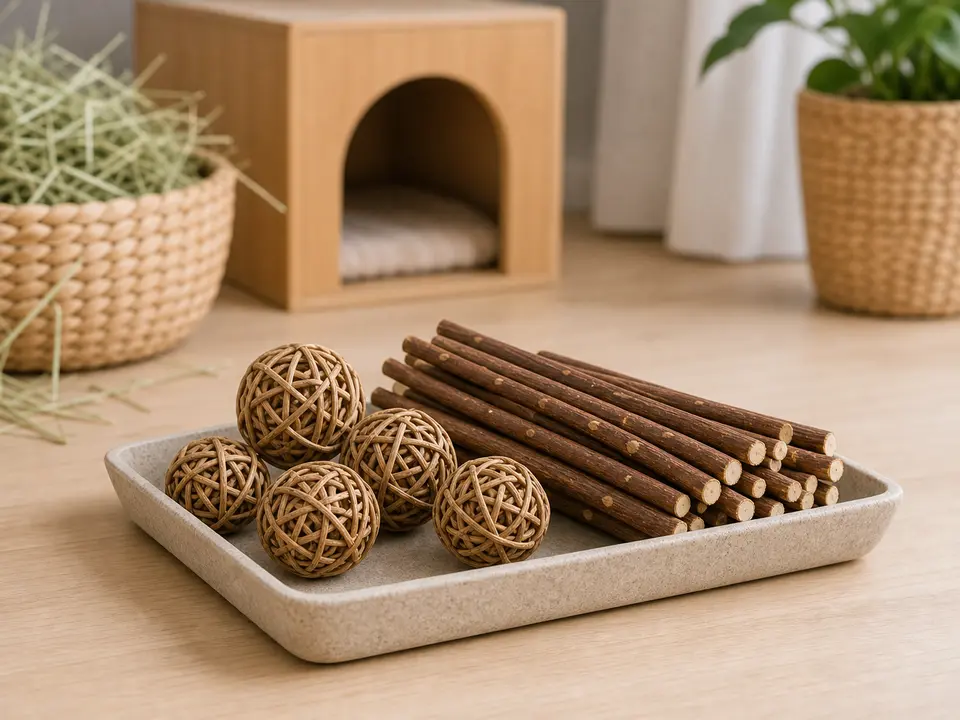
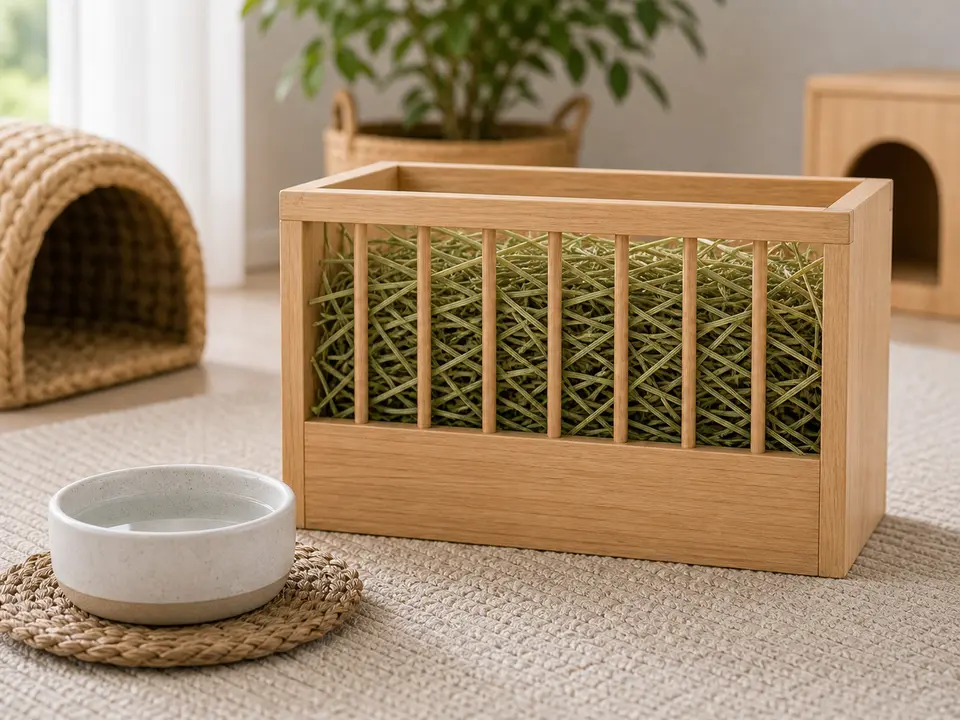
Rabbits need to chew, so offer textures that belong in the room: hay twists, willow, seagrass, cardboard, and untreated rabbit-safe wood. Avoid tiny plastic pieces, painted materials, sharp hardware, or anything your rabbit shreds and swallows in a concerning amount. Start with a few simple textures before buying a bin full of toys.
Make food searching small and useful
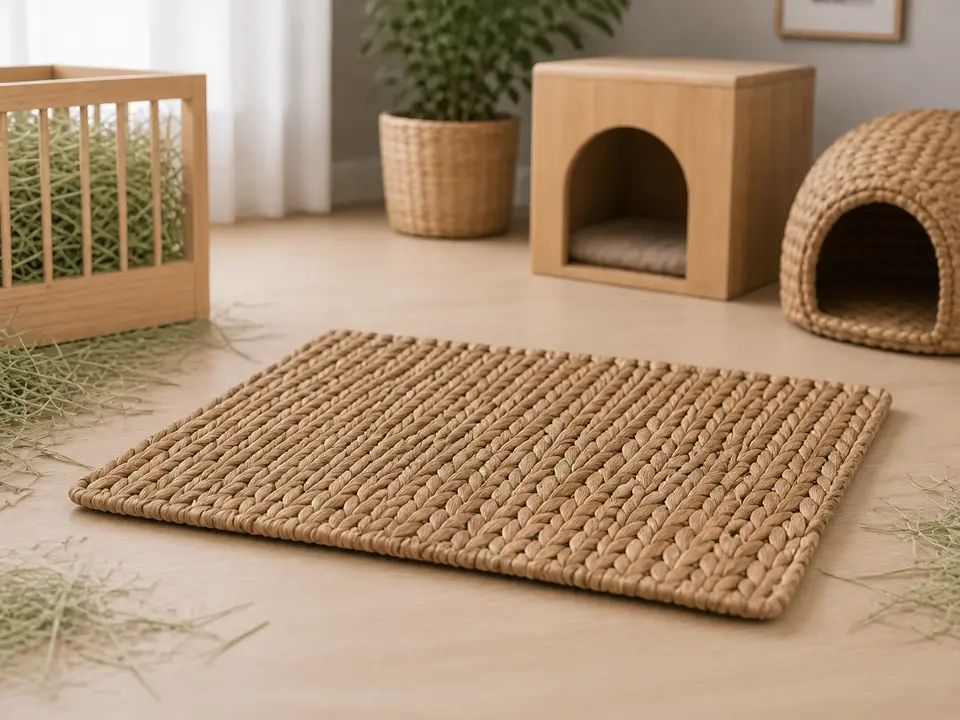
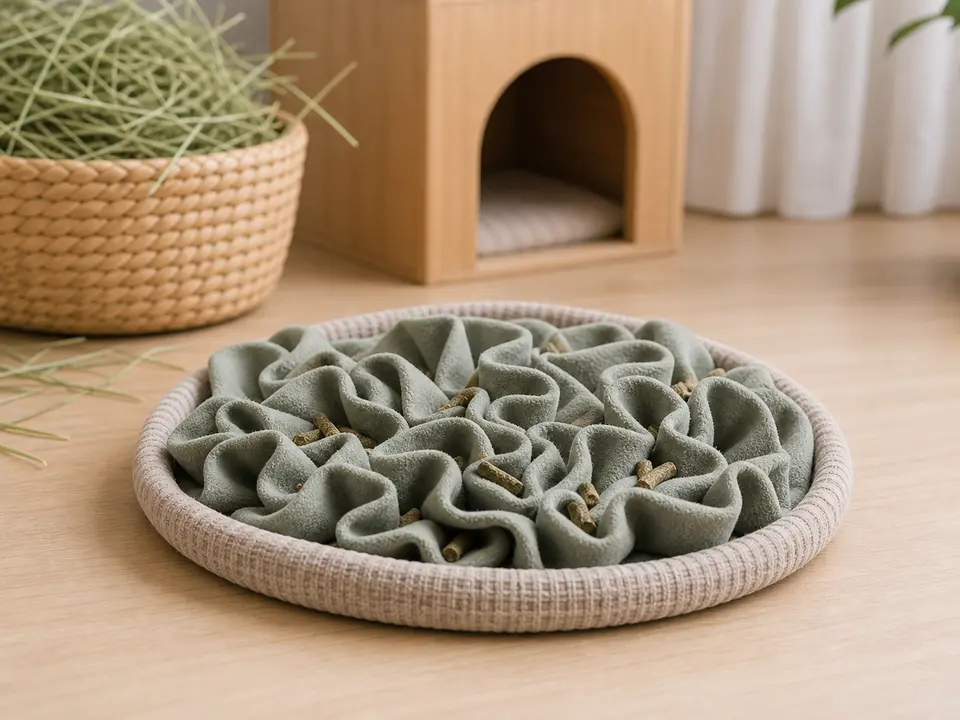
A forage mat, hay-stuffed cardboard, or scattered measured pellets can make mealtime more interesting. Keep food games modest so hay remains the main event. Enrichment should add movement and sniffing, not turn the day into a treat parade. If the game leaves your rabbit ignoring hay, simplify it.
Add digging without wrecking the floor
Some rabbits love to dig at blankets, cardboard, or safe mats. Give that behavior a place to go before your rug becomes the project. Use pieces you can clean, replace, and supervise, and remove anything that becomes stringy or unsafe.
Rotate instead of overcrowding
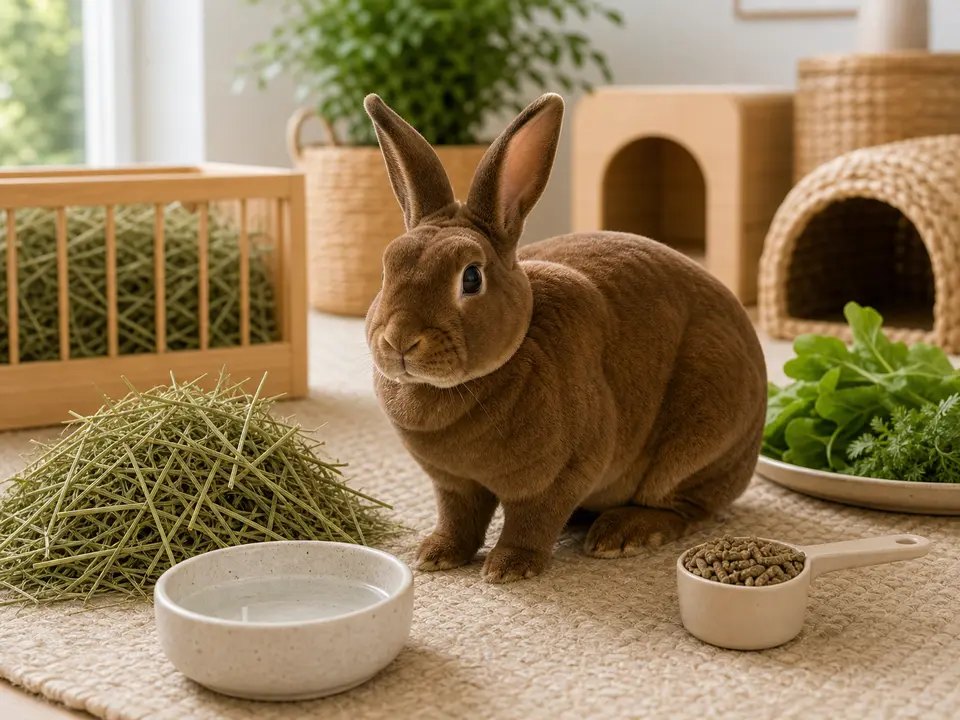
A room packed with toys can feel messy and still be boring. Keep a few useful pieces out, then rotate them when interest fades. Bring back old favorites after a break. Your rabbit's choices tell you more than the product label.
Place toys near real trouble spots
If your rabbit chews the baseboard, a toy across the room may not help. Put safe chew work near the protected problem area so the better choice is easy. Pair toys with blocking, traction, and enough floor time. The toy should be part of the room plan, not a random object dropped in the corner.
Watch wear and appetite
Remove toys that splinter, unravel, get damp, smell odd, or seem to be eaten rather than chewed. Also watch hay intake and poop. If your rabbit stops eating hay, leaves smaller poops, drools, or chews strangely, talk with a rabbit-savvy vet instead of buying harder toys. Toy changes should never hide appetite or dental clues.
Before you decide
Does the toy support chewing, foraging, digging, tossing, or exploring?
Is it made from rabbit-appropriate materials without risky small parts?
Is hay still the main daily focus?
Does the toy redirect a real behavior rather than add clutter?
Do you remove worn, damp, sharp, or unraveling pieces?
Next best moves
Start with simple hay, cardboard, willow, seagrass, and forage options.
Place safe chews near protected problem areas.
Rotate a few useful toys instead of crowding the room.
Watch appetite, poop, drooling, and chewing changes as health clues.
Toys and chews worth trying first
Choose a few safe textures and rotate them based on what your rabbit actually uses.
Affiliate links: Furball Cove may earn from qualifying purchases at no extra cost to you.