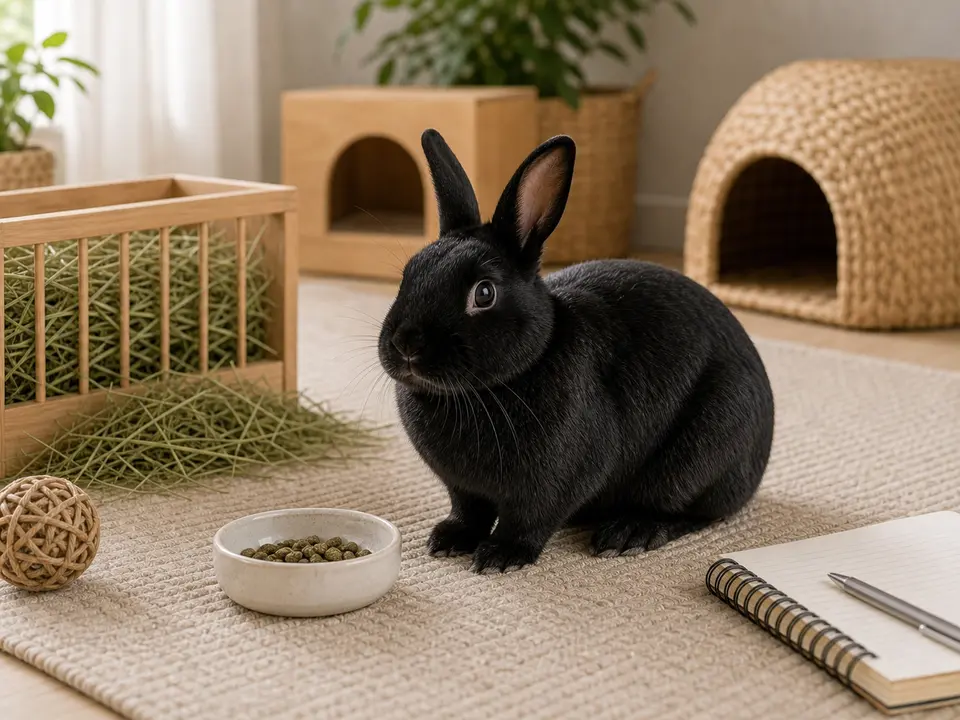
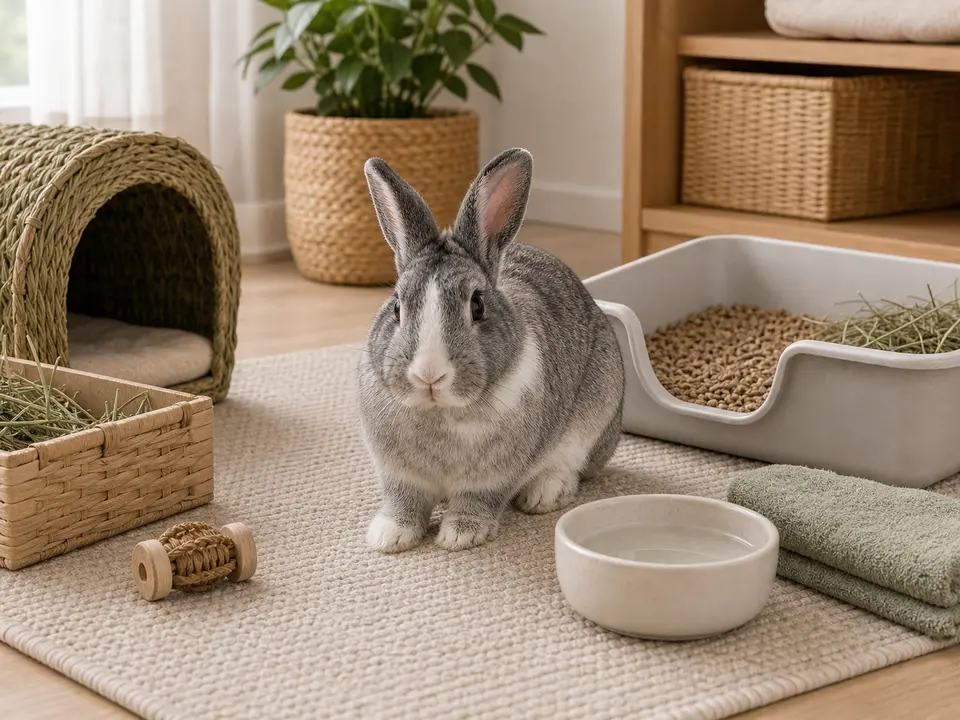
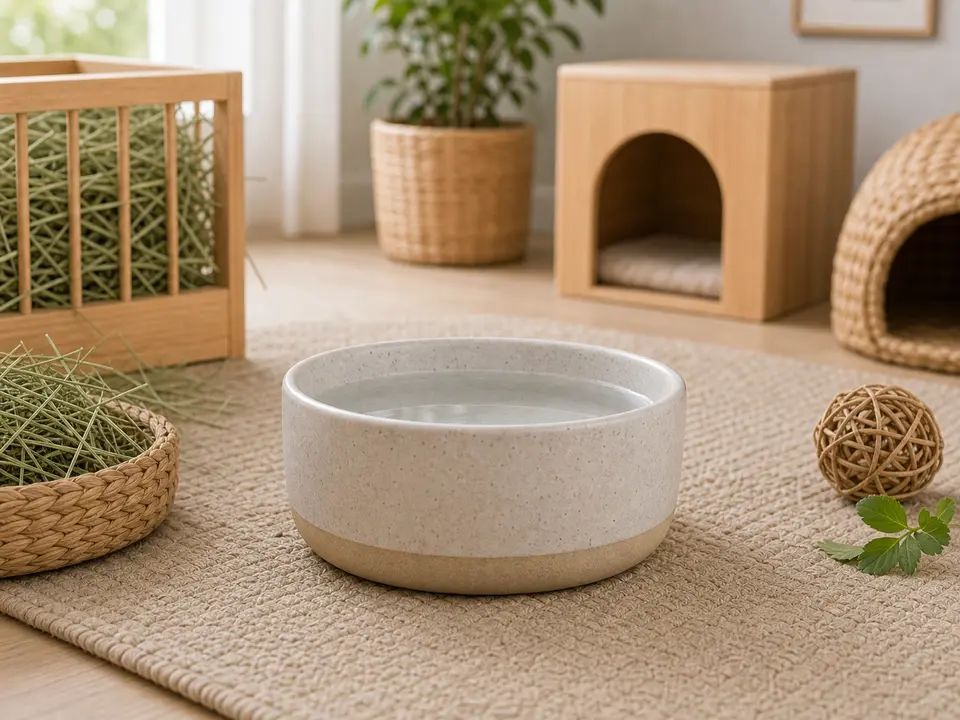
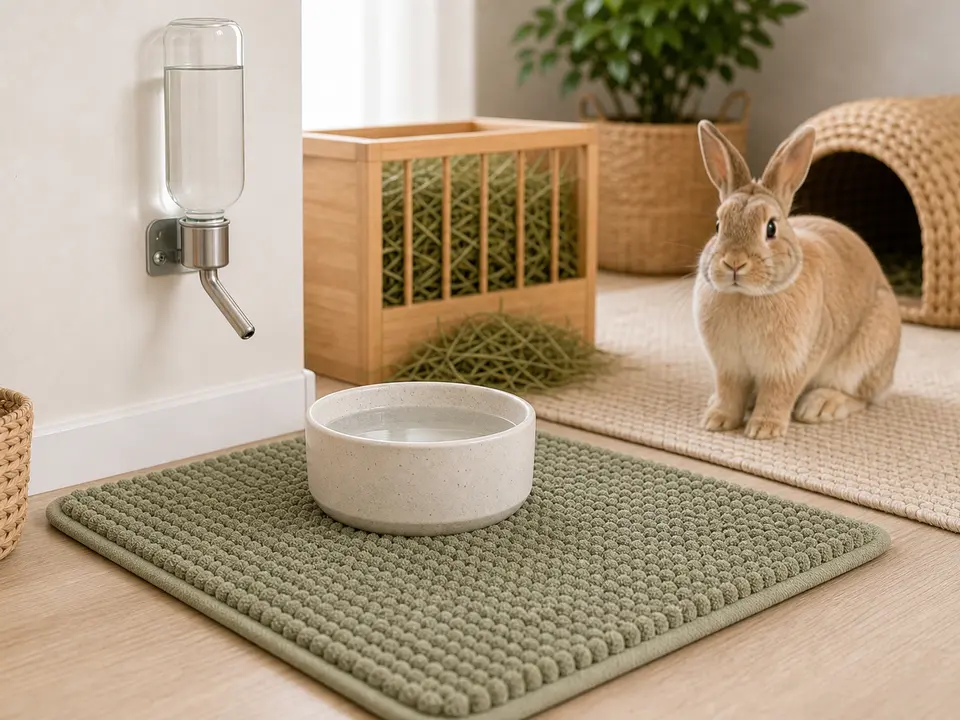
Most rabbits drink most naturally from a heavy bowl, but a bottle can work as a backup if you check that it flows every day.
A good rabbit water setup is simple: easy to reach, hard to tip, clean enough to trust, and close to the parts of the room your rabbit already uses. The goal is not a fancy station. It is a rabbit who can drink comfortably during hay time, floor time, and quiet rest.
Start with a heavy bowl
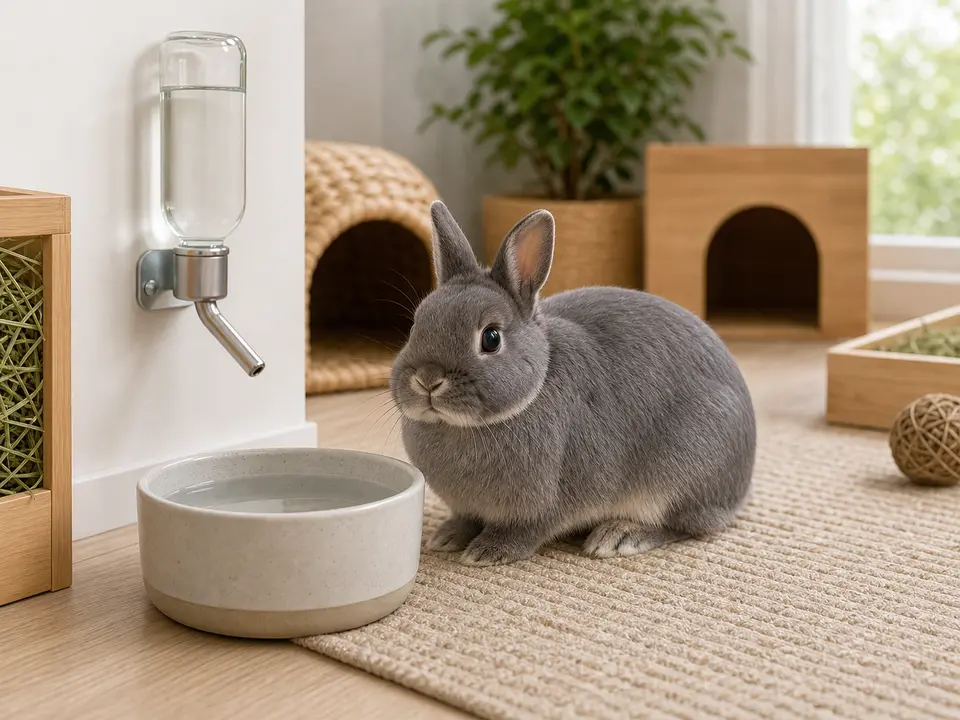
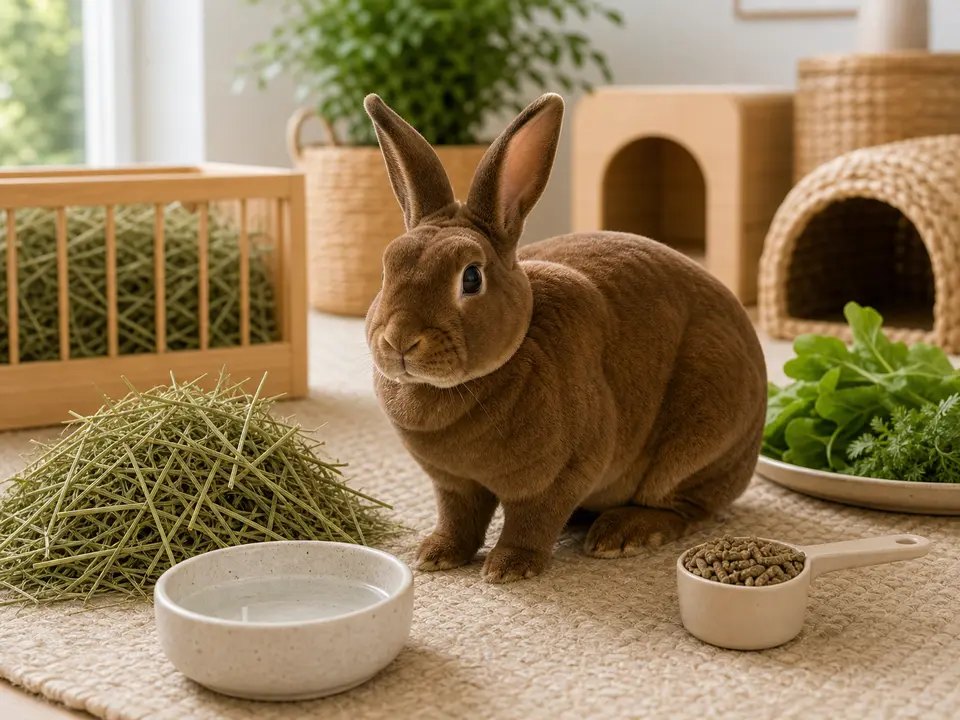
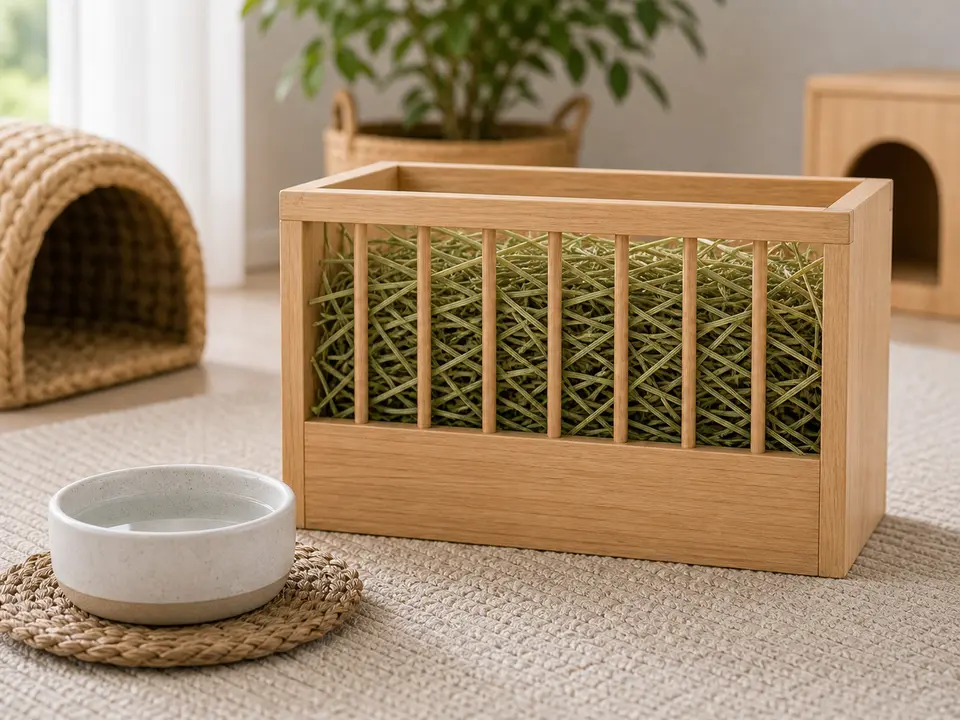
For most homes, the first water station should be a low, heavy ceramic bowl. Rabbits usually drink with a more natural head position from a bowl than from a sipper tube, and you can see at a glance whether the water is clean. Choose a bowl that is wide enough for easy drinking, heavy enough that a rabbit cannot casually flip it, and shallow enough that your rabbit does not have to stretch over a tall rim.
Use a bottle as backup, not a mystery
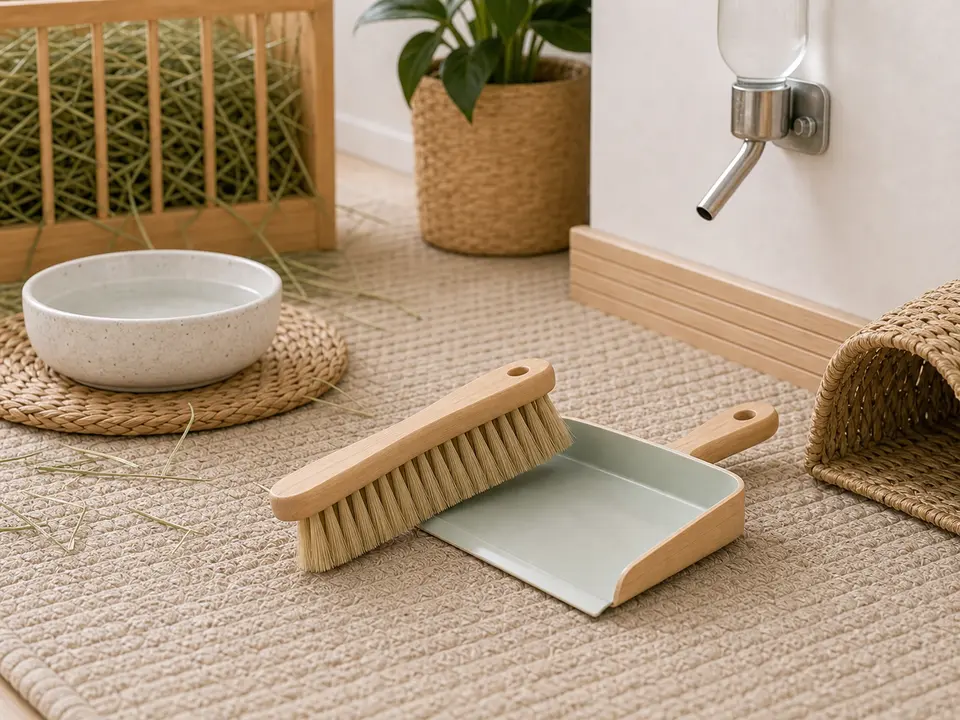
A bottle is not automatically wrong, but it should not be the only water source until you know your rabbit uses it well. Bottles can drip, clog, or stop flowing while still looking full from across the room. If you use one, keep a bowl available too, tap the metal tip every day to confirm water comes out, and watch whether your rabbit actually chooses the bottle or ignores it.
Place water where drinking already makes sense
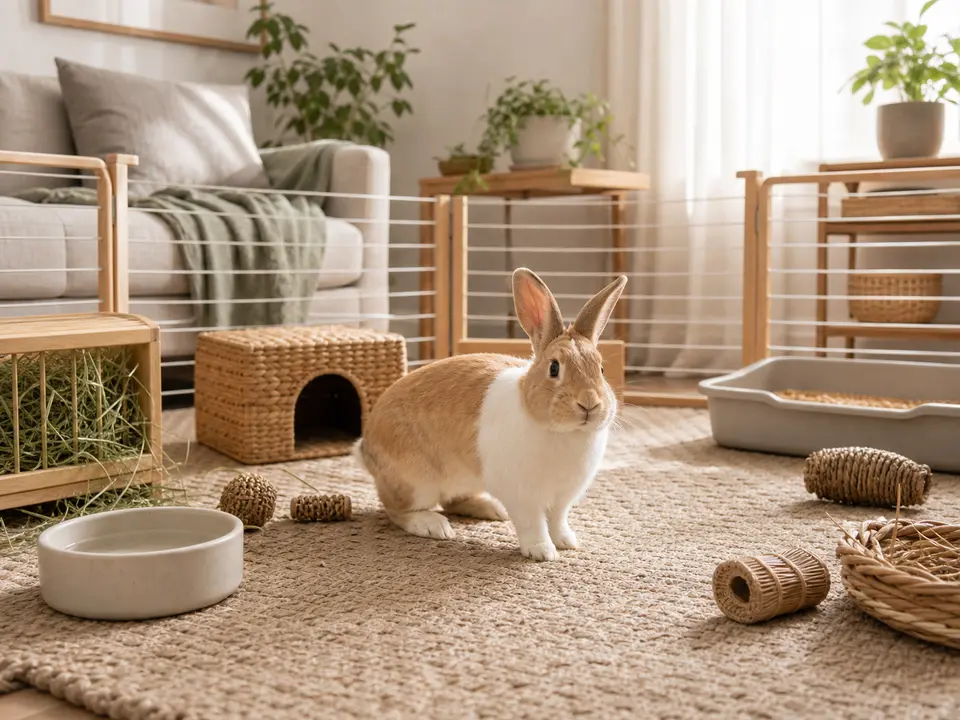
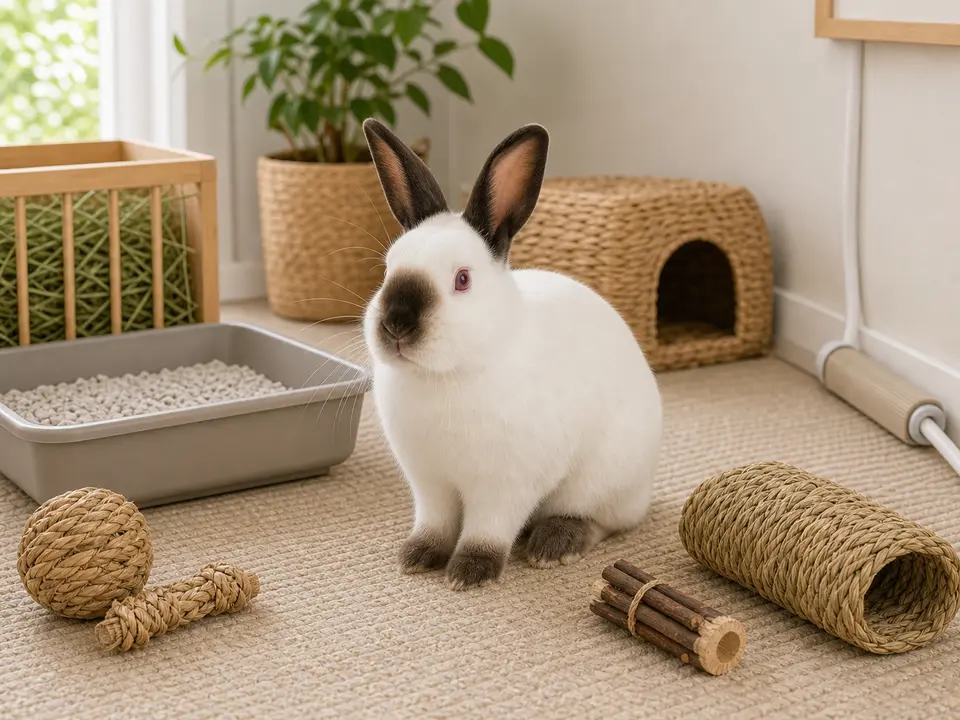
Put water near the hay area or favorite resting zone, not across the room from everything your rabbit uses. Many rabbits drink during or after eating hay, so a bowl beside the hay rack is easier than a bowl tucked in a far corner. Keep it away from the messiest part of the litter box, give free-roam rabbits a second water spot, and make sure the route to water has traction.
Clean the boring parts every day
Dump, rinse, and refill the bowl at least daily, and scrub it when the surface feels slippery. If hay, fur, pellets, or litter keep landing in the bowl, move it a few inches, use a heavier dish, or put it on a washable mat. The setup is working when fresh water is easy to provide without turning the whole pen into a puddle zone.
Watch changes without guessing
You do not need to measure every sip for a healthy rabbit, but you should notice the pattern. A bowl that suddenly stays full, empties much faster, or gets ignored can be a clue, especially if your rabbit is also eating less, peeing differently, acting quiet, or producing fewer poops. If drinking changes suddenly or pairs with appetite, poop, urine, heat, or pain signs, call a rabbit-savvy vet for guidance.
Make it easier for seniors and messy drinkers
Older rabbits, tiny rabbits, and rabbits with sore feet may need water closer to the resting spot, a lower bowl, or a mat that does not slide. If your rabbit steps into the dish, digs at it, or drops toys in it, try a heavier bowl, a second bowl in a calmer spot, or a washable mat underneath. Solve the daily annoyance without making water harder to reach.
Before you decide
Can your rabbit drink without stretching, slipping, or climbing into the bowl?
Is the main bowl heavy enough that it stays put?
If you use a bottle, did you check the tip for flow today?
Is there water near hay or the main resting area?
Would a sudden change in drinking stand out to you?
Next best moves
Start with a heavy ceramic bowl and add a bottle only as backup if it helps your setup.
Keep water close to hay and easy paths, especially for seniors or rabbits on slippery floors.
Rinse and refill daily, then scrub whenever the bowl feels slippery or collects hay.
Call a rabbit-savvy vet if drinking changes suddenly with appetite, poop, urine, heat, weakness, or pain signs.
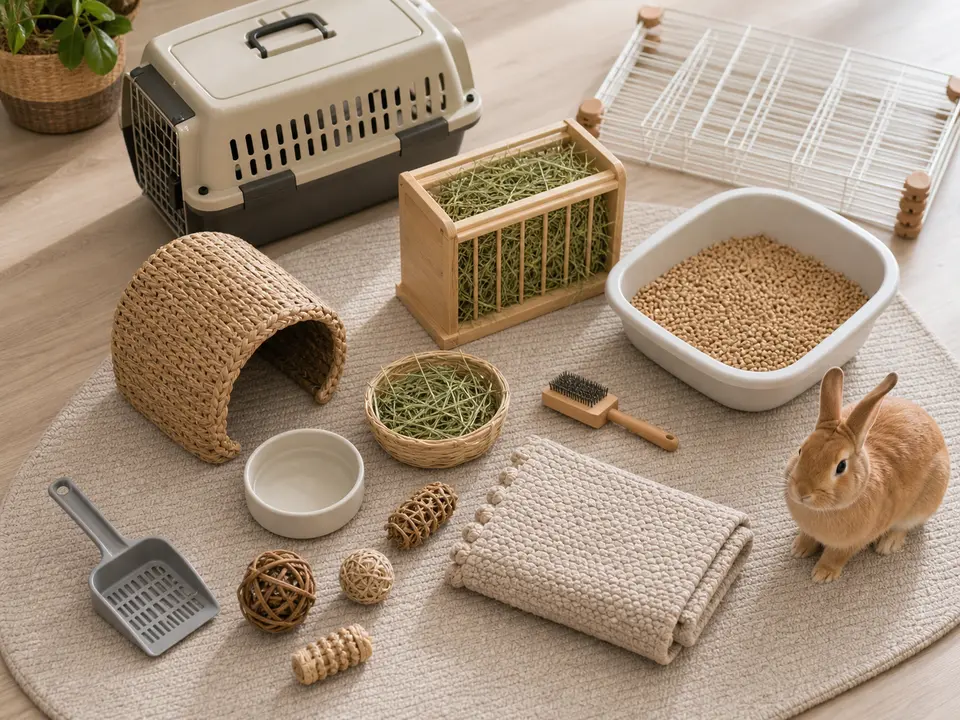
Useful pieces for a cleaner water station
Start with the bowl. The other pieces only matter if they make the water area cleaner, steadier, or easier to repeat.
Affiliate links: Furball Cove may earn from qualifying purchases at no extra cost to you.
A heavy bowl is usually the best starting point because many rabbits drink from it more naturally and you can see the water easily. A bottle can be useful as a backup, but check the tip every day and keep a bowl available unless you are sure your rabbit drinks well from the bottle.
Where should I put my rabbit's water?
Place water near hay or a favorite resting area, on flooring with good traction, and away from the messiest part of the litter box. Free-roam rabbits often do better with a second water spot in the room they use most.
How often should I change rabbit water?
Refresh it at least daily, and sooner if hay, fur, pellets, or litter get into it. Scrub the bowl when it feels slippery, and check bottles daily because a full bottle can still have a blocked tip.
What if my rabbit is drinking much less or much more?
Look at the whole pattern: appetite, poop, urine, heat, comfort, and energy. A sudden drinking change, especially with less eating, fewer poops, pain signs, or unusual urine, is a reason to call a rabbit-savvy vet.