Rabbits usually should not have full baths. If a rabbit is dirty, use the smallest local grooming cleanup that works, dry the fur carefully, and look for the reason the mess happened.
Bath questions are really cleanup and drying questions. Rabbits usually need small local grooming help, a dry resting area, and attention to why the fur got dirty, not a full bath.
For having baths: why full baths are usually the wrong cleanup
Rabbits usually should not have full baths. If a rabbit is dirty, use the smallest local grooming cleanup that works, dry the fur carefully, and look for the reason the mess happened. A full bath can make a rabbit cold, frightened, and harder to dry. Start by asking what actually needs cleaning: one dirty foot, a damp bottom, loose fur, or litter stuck to the coat. Treat having baths as both grooming and health observation: coat, fur, skin, nails, teeth, movement, and comfort can all give you useful clues.
For having baths: use a local touch-up instead
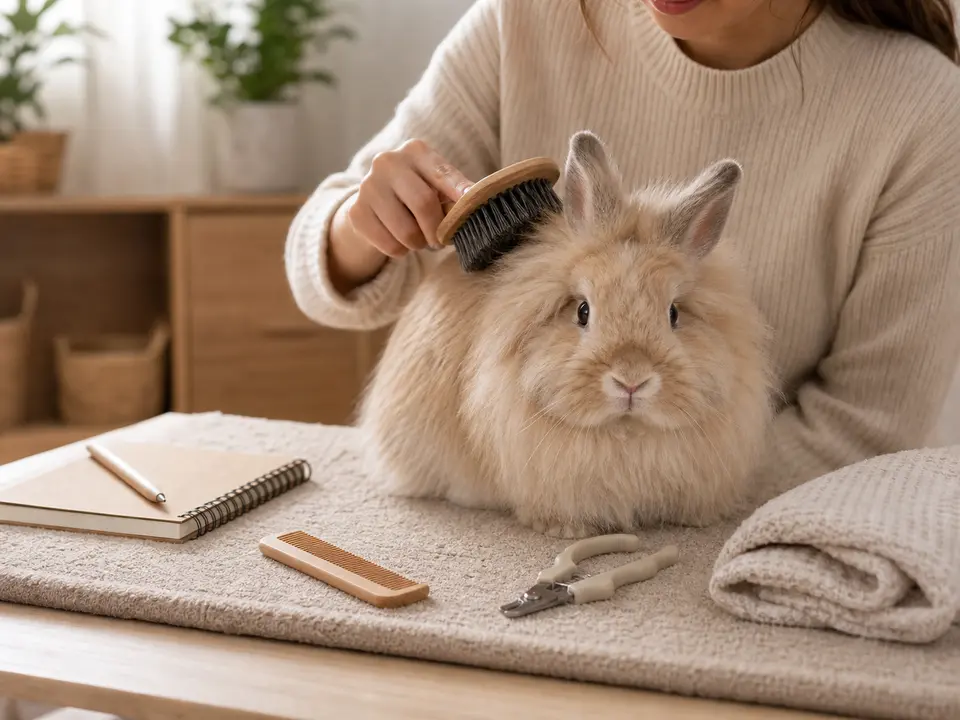
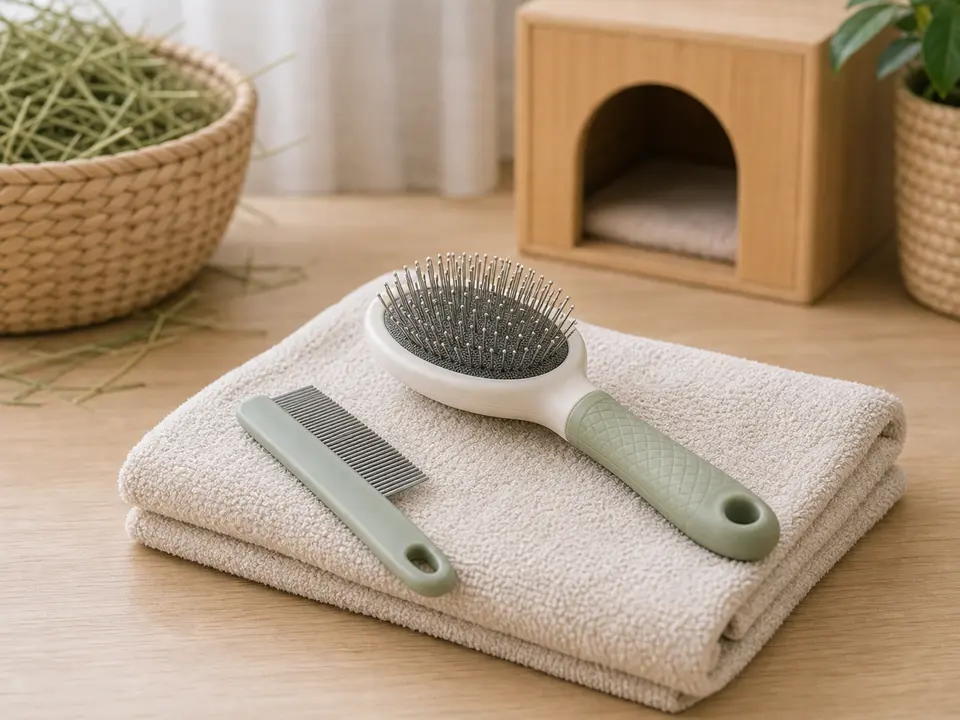
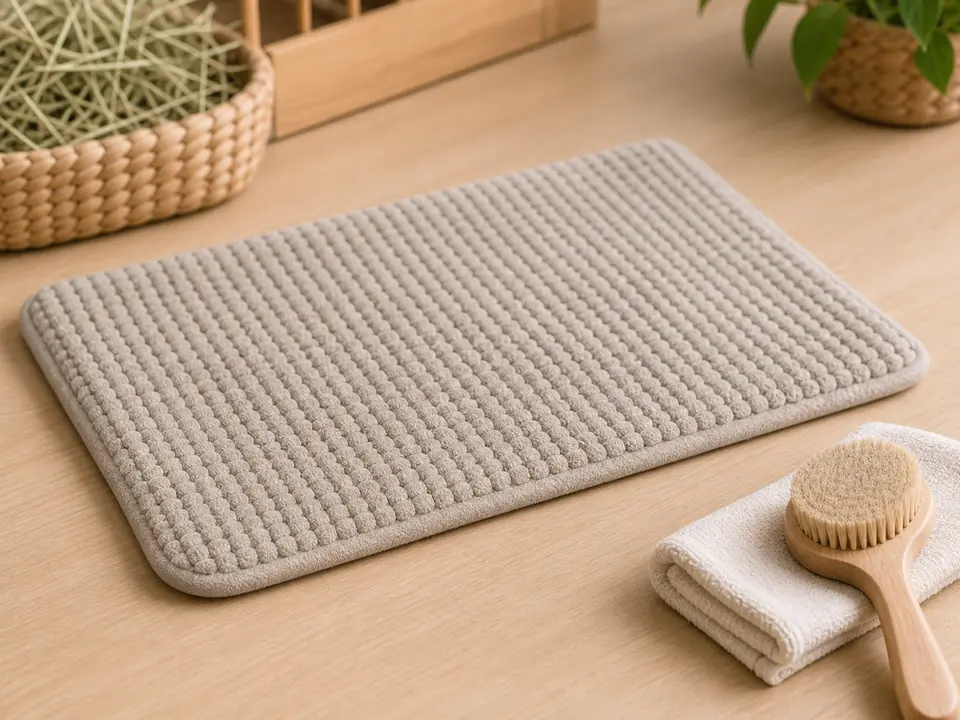
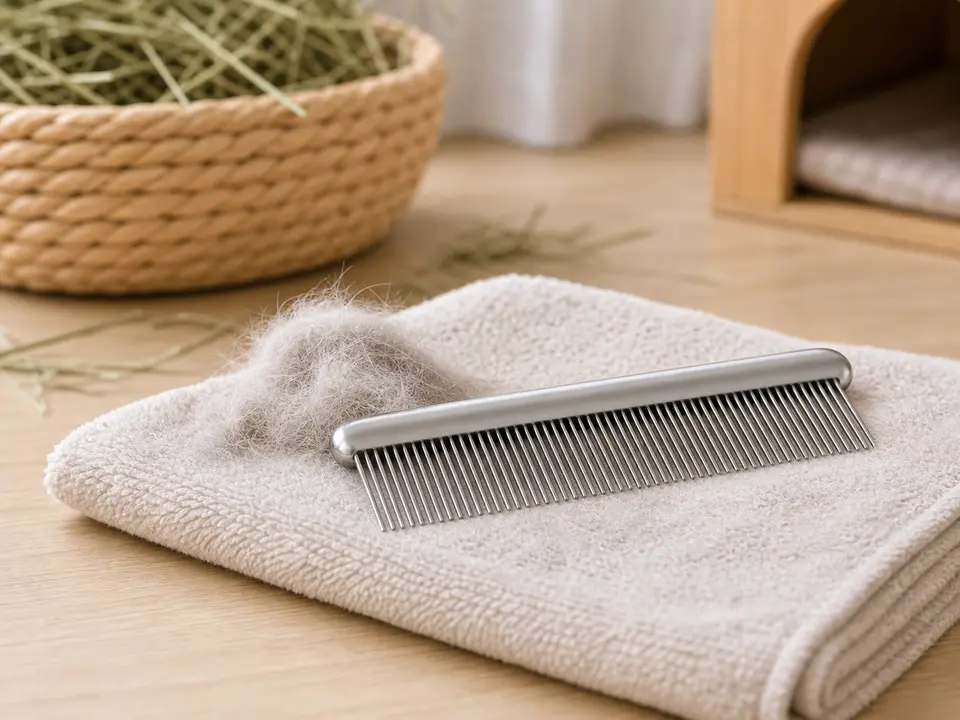
If a small area truly needs cleaning, keep the grooming cleanup local and brief. Use a soft damp cloth only where needed, keep the rabbit supported on a low non-slip surface, and dry the fur carefully before your rabbit returns to the pen. Keep the brush, comb, and coat check close to normal daily grooming so having baths feels familiar instead of like a surprise appointment. Use the same quiet spot when you can, because repetition helps you notice what changed.
For having baths: fix the damp spot in the room
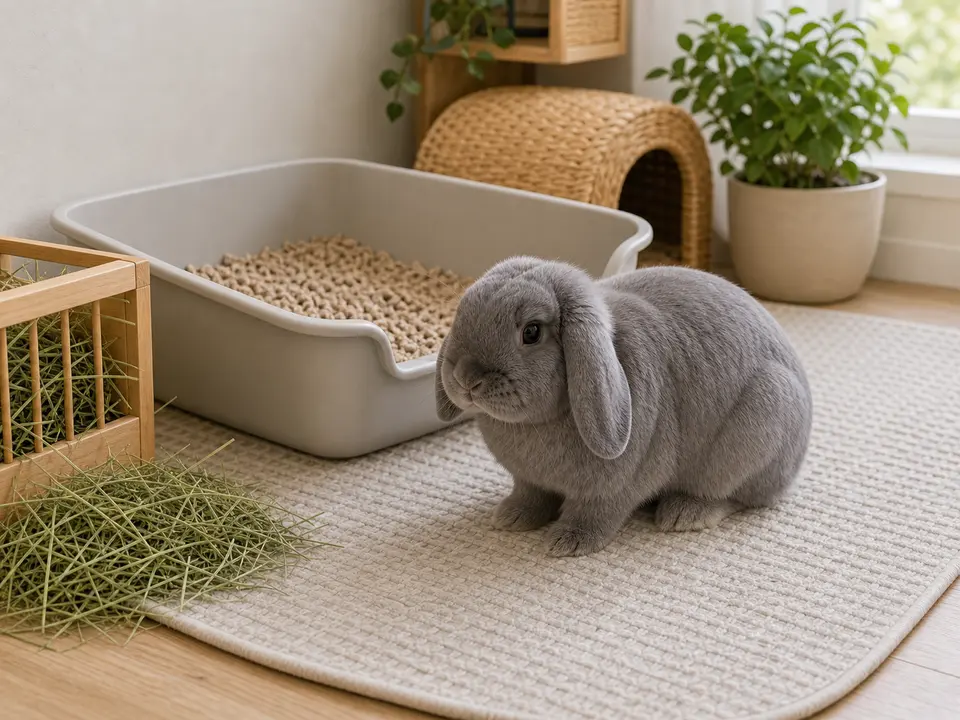
Bath questions often start with the setup: a wet litter corner, tipped water bowl, slick flooring, or bedding that stays damp. Fix that daily source so you are not cleaning the same fur again tomorrow. The litter box can explain repeated grooming mess: damp corners, soft stool, box height, hay placement, and favorite resting spots all matter.
For having baths: do not scrub sore skin
Red skin, urine scald, raw patches, stuck stool, or a rabbit who seems painful needs a gentler plan than scrubbing. Stop and get rabbit-savvy help before a cleanup becomes an injury. Use a rabbit-savvy vet when pain, appetite, poop, skin, teeth, or movement changes join the grooming problem; those clues matter more than a perfect-looking coat.
For having baths: keep the next day simple
After any local cleanup, watch hay, water, appetite, poops, and whether the fur stays dry. The win is not a squeaky-clean rabbit; it is a comfortable rabbit who does not need repeated stressful handling. Put the plan back into the daily routine: hay, water, litter, rest spots, and normal movement should still look steady after grooming.
Before you decide
What changed recently?
Can your rabbit choose a quiet retreat?
Are hay, water, litter, and footing easy?
Is this normal for your individual rabbit?
Next best moves
Make one small change.
Watch what your rabbit chooses next.
Keep the setup calm enough to repeat tomorrow.
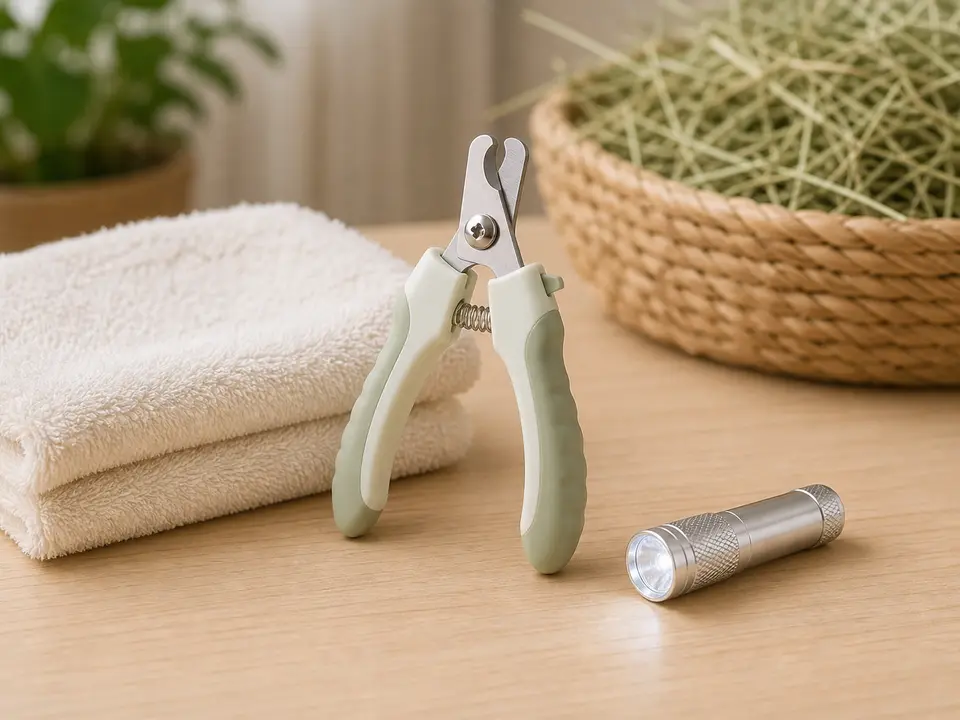
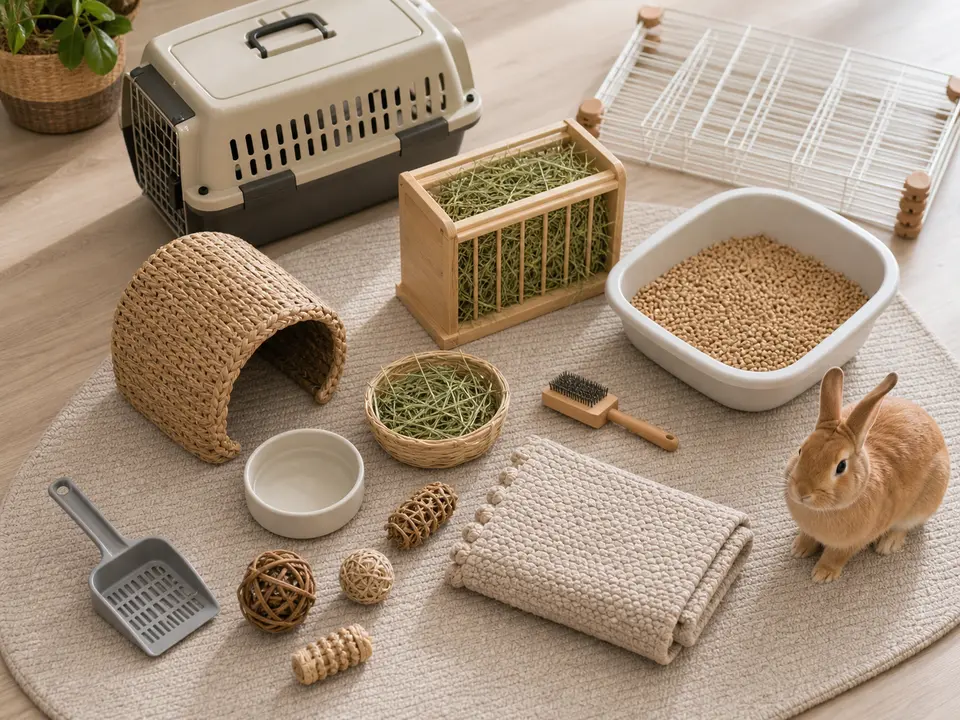
Grooming tools that stay useful
These are practical pieces for the routine, not clutter to buy all at once.
Affiliate links: Furball Cove may earn from qualifying purchases at no extra cost to you.
Rabbits usually should not have full baths. If a rabbit is dirty, use the smallest local grooming cleanup that works, dry the fur carefully, and look for the reason the mess happened.
What should I change first?
Choose one small setup change that makes the daily routine easier: closer hay, better traction, a calmer hideout, a larger box, or a shorter handling session.
When should I get extra help?
If your rabbit stops eating or pooping, seems painful, breathes strangely, or changes suddenly, call a rabbit-savvy vet. For bonding or handling problems, an experienced rabbit rescue can also help.