Some rabbits can share a home with a dog, but the rabbit needs a protected space, slow introductions, and close supervision. Start with scent, distance, and calm barriers before anyone meets face to face.
A calm-looking introduction is not permission to relax the safety setup. Use secure barriers, give the rabbit a protected home base, supervise actively, and let permanent separation remain an acceptable answer.
Treat prey drive as the deciding risk
Some rabbits can share a home with a dog, but the rabbit needs a protected space, slow introductions, and close supervision. Start with scent, distance, and calm barriers before anyone meets face to face. Sharing a home is only reasonable when the individual dog stays calm and the rabbit has secure spaces the dog cannot enter.
Breed labels and a friendly history do not guarantee safety. Watch the actual dog's staring, stalking, chasing, barking, lunging, and ability to disengage.
Begin behind a secure physical barrier
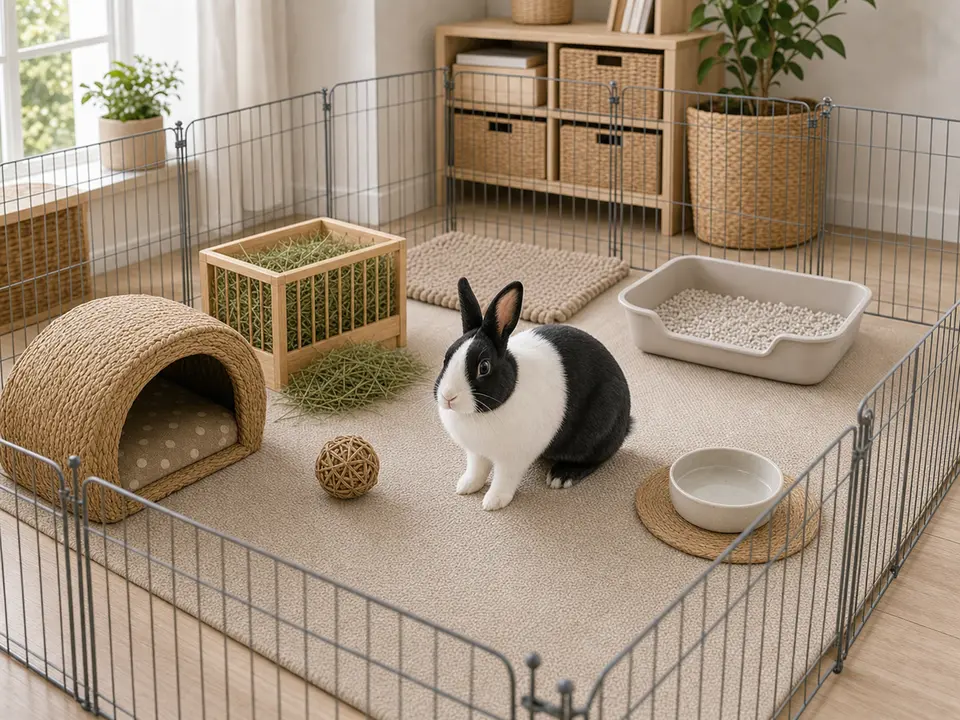
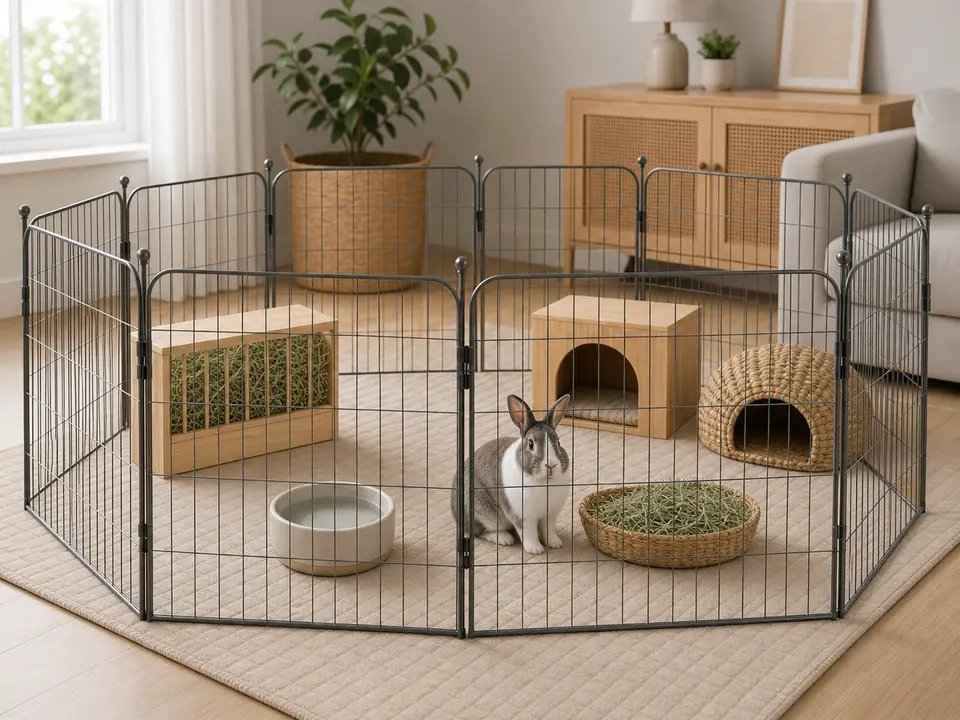
Before the rabbit and dog live in the same home, begin with the rabbit in a secure base and the dog on the other side of a solid pen or gate. The barrier must prevent a nose, paw, or jaw from reaching through.
Keep the first exposures brief. Distance is useful; there is no prize for getting the animals close on the first day.
Keep the dog leashed and calmly rewarded
Reward the dog for looking away, settling, and responding to the person handling the session. The rabbit should be able to eat hay, move normally, and retreat instead of freezing under attention.
End the session if either animal becomes fixed on the other. Rehearsing a chase or panic response makes the next introduction harder.
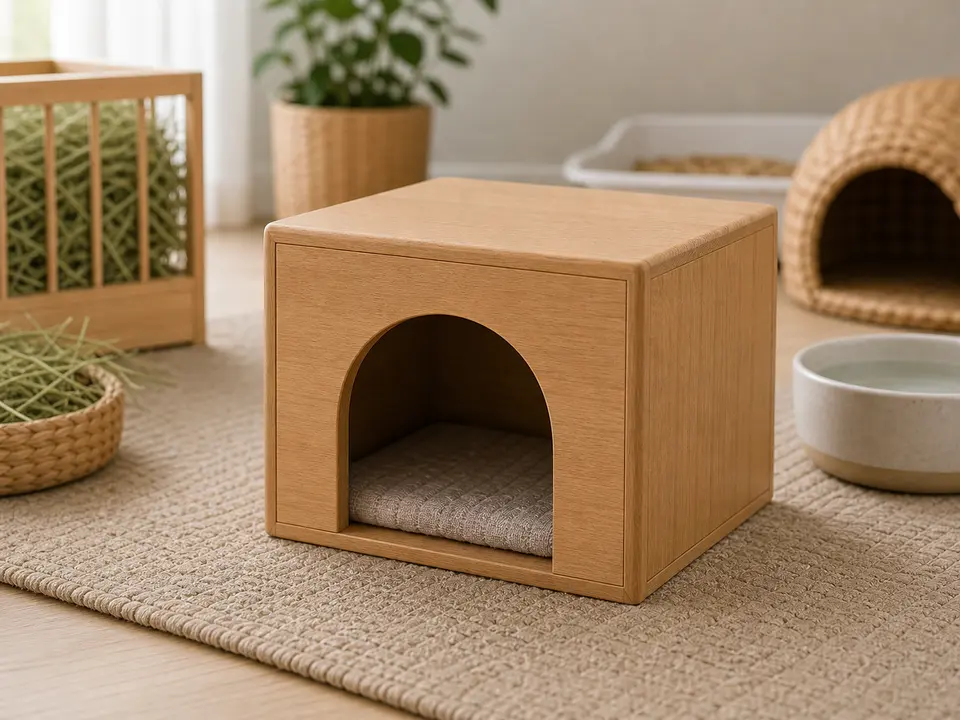
Give the rabbit a dog-free home base
Even if the rabbit and dog appear able to live calmly in one home, keep a permanent rabbit-only area. Do not leave rabbits and dogs together when no capable adult is actively watching.
Use closed doors or secure barriers during sleep, errands, and busy household moments. Management is part of a successful mixed-pet home, not a failure of friendship.
Use permanent separation when calm is not reliable
Choose permanent separation if the dog stalks, lunges, chases, guards access, or cannot settle reliably around the rabbit. One frightening incident can injure the rabbit or undo months of confidence.
Ask a qualified behavior professional who understands both species for help when you are uncertain. The rabbit's safety and ordinary appetite, movement, and rest come before the idea of the animals becoming friends.
Before you decide
What changed recently?
Can your rabbit choose a quiet retreat?
Are hay, water, litter, and footing easy?
Is this normal for your individual rabbit?
Next best moves
Make one small change.
Watch what your rabbit chooses next.
Keep the setup calm enough to repeat tomorrow.
Quiet tools for trust-building
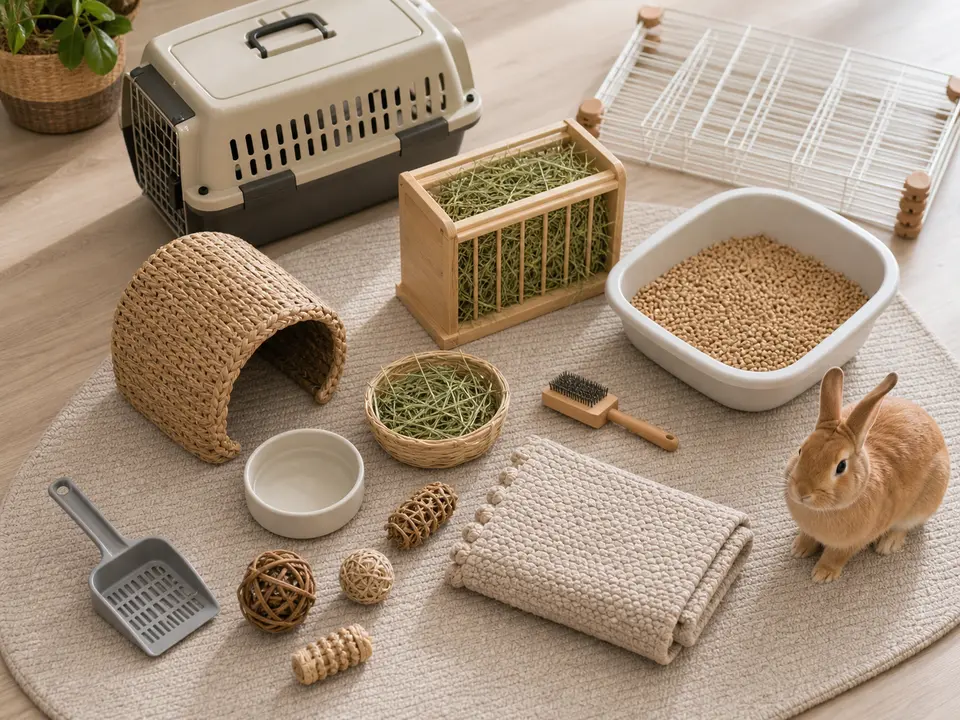
The best tools add choice, retreat space, and calm repetition instead of forcing contact.
Affiliate links: Furball Cove may earn from qualifying purchases at no extra cost to you.
Some rabbits can share a home with a dog, but the rabbit needs a protected space, slow introductions, and close supervision. Start with scent, distance, and calm barriers before anyone meets face to face.
How do I know if I moved too fast?
If your rabbit hides longer, avoids your hands, boxes, grunts, thumps repeatedly, or will not come back for food, make the next interaction shorter, lower, and easier to leave.
Should I pick my rabbit up to fix this?
Usually no. Most trust and behavior work starts better on the floor. Save picking up for necessary care, and practice it in tiny reward-based steps.