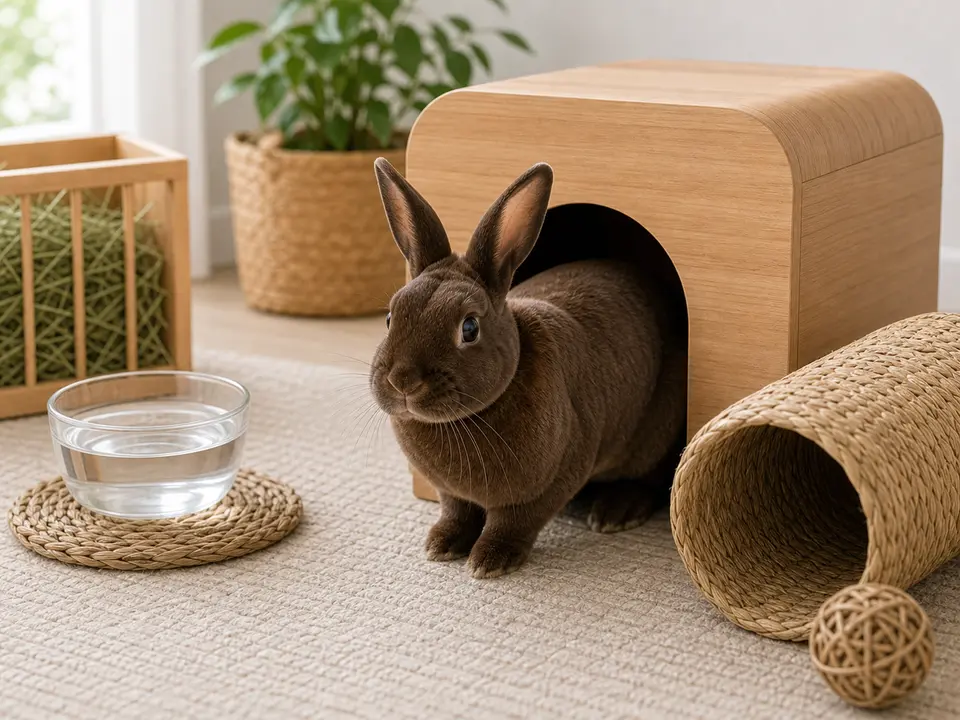
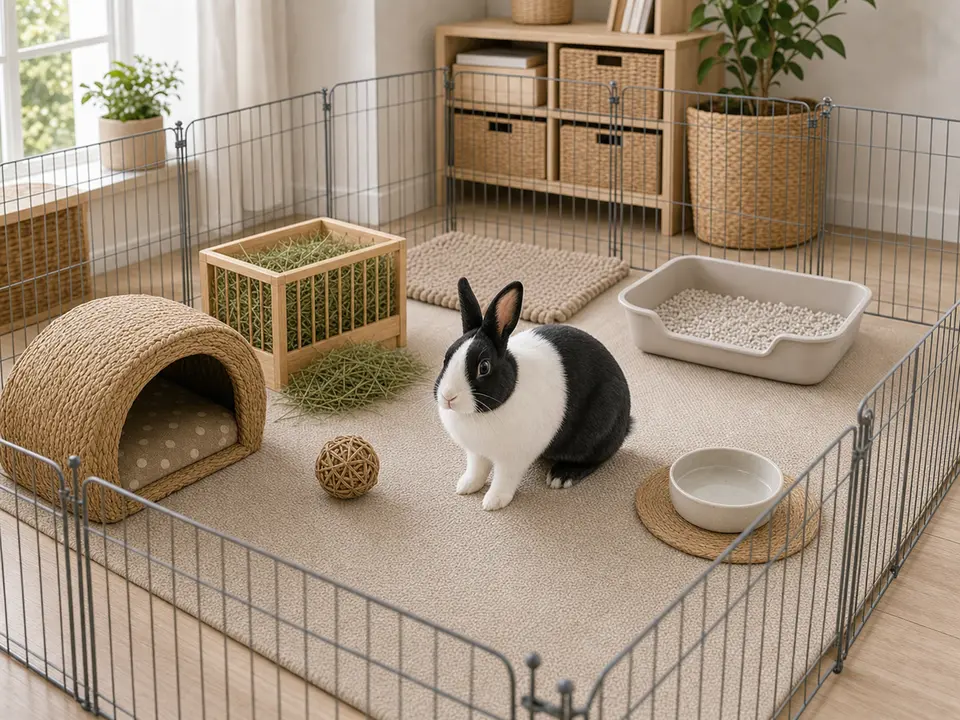
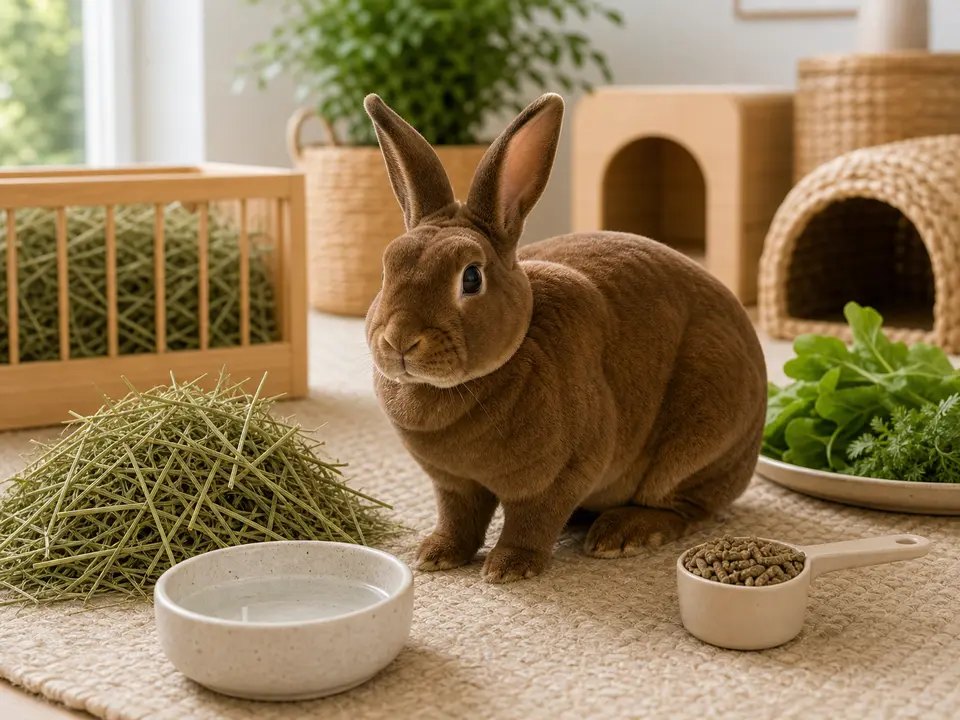
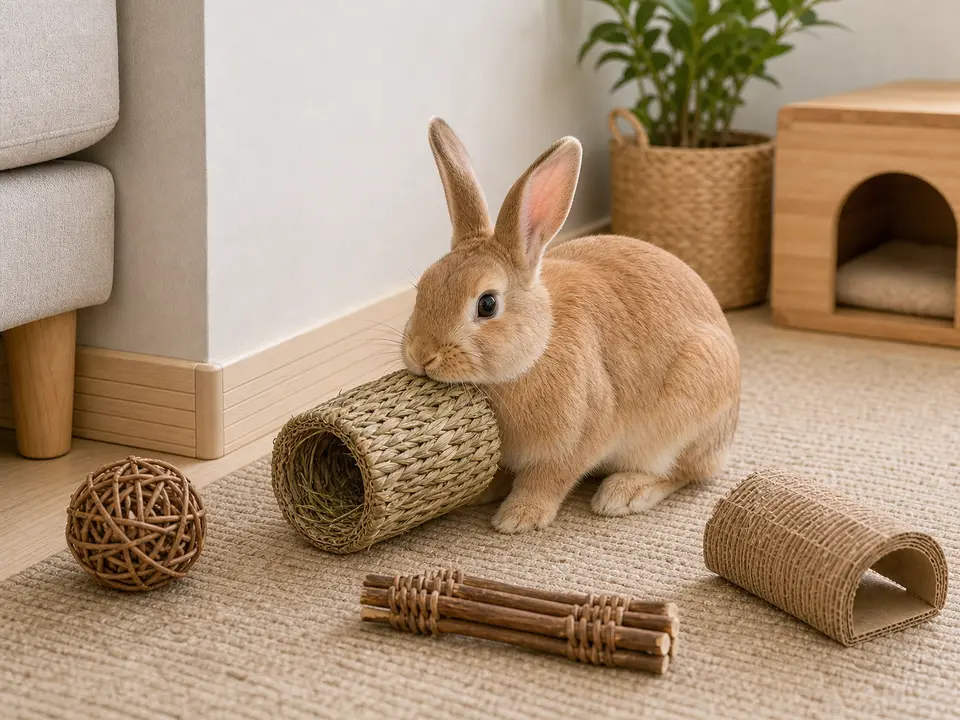
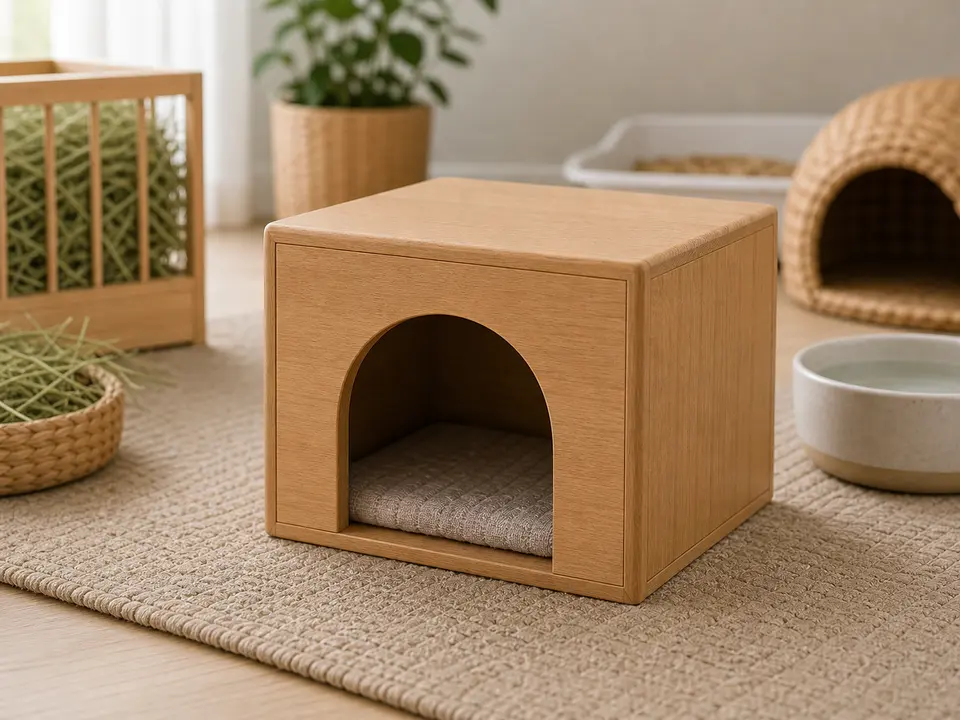
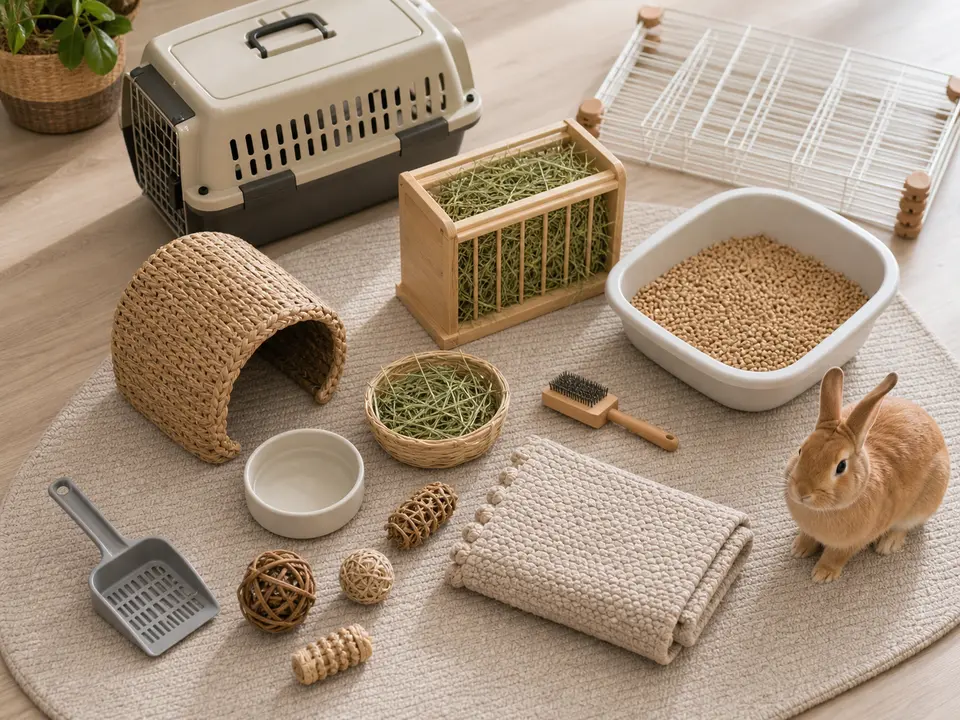
Rabbits do need a hideout. Choose one with an easy entrance, enough room to turn around, and a calm location near hay or rest so hiding feels safe instead of isolated.
Rabbit supplies should earn their space in the daily routine. The best choice is the one that makes hay, litter, traction, chewing, transport, hiding, water, or cleanup easier tomorrow.
Yes, give your rabbit a real retreat
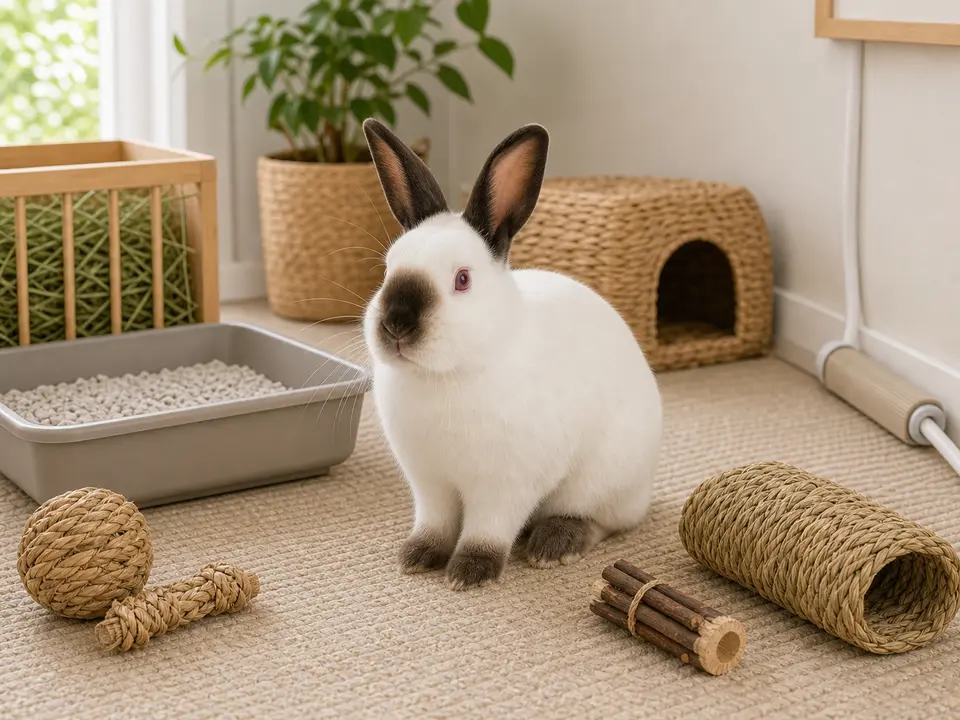
Rabbits do need a hideout. Choose one with an easy entrance, enough room to turn around, and a calm location near hay or rest so hiding feels safe instead of isolated. A hideout lets a rabbit rest without feeling watched from every side, especially in a new room or busy home.
Using the hideout is not a bonding failure. It is part of how a prey animal decides the room is safe enough to explore again.
The hideout should stay available even after your rabbit becomes confident. Choice is part of comfort, not just a new-rabbit crutch.
Choose room to turn around
The hideout should fit the rabbit's body, not just the product photo. Your rabbit should be able to enter, turn, loaf, and leave without squeezing.
For larger rabbits or bonded pairs, measure the rabbit and choose a wider retreat instead of assuming one small house fits all.
Check turning room with the rabbit's full adult size in mind. A hideout that is too tight can make a rabbit feel trapped instead of protected.
Put it near the routine
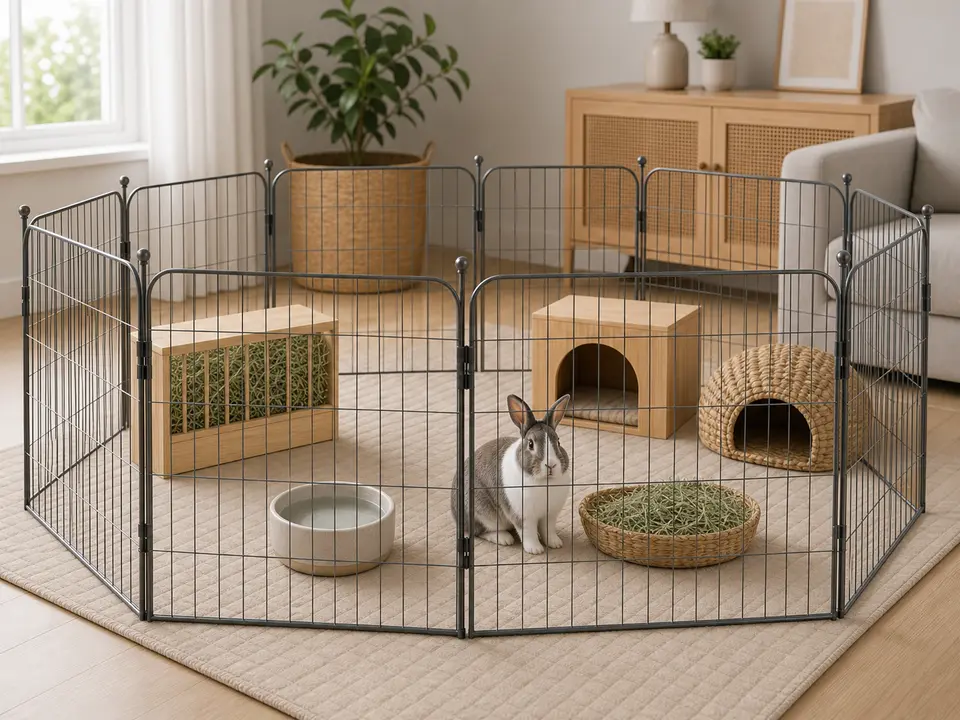
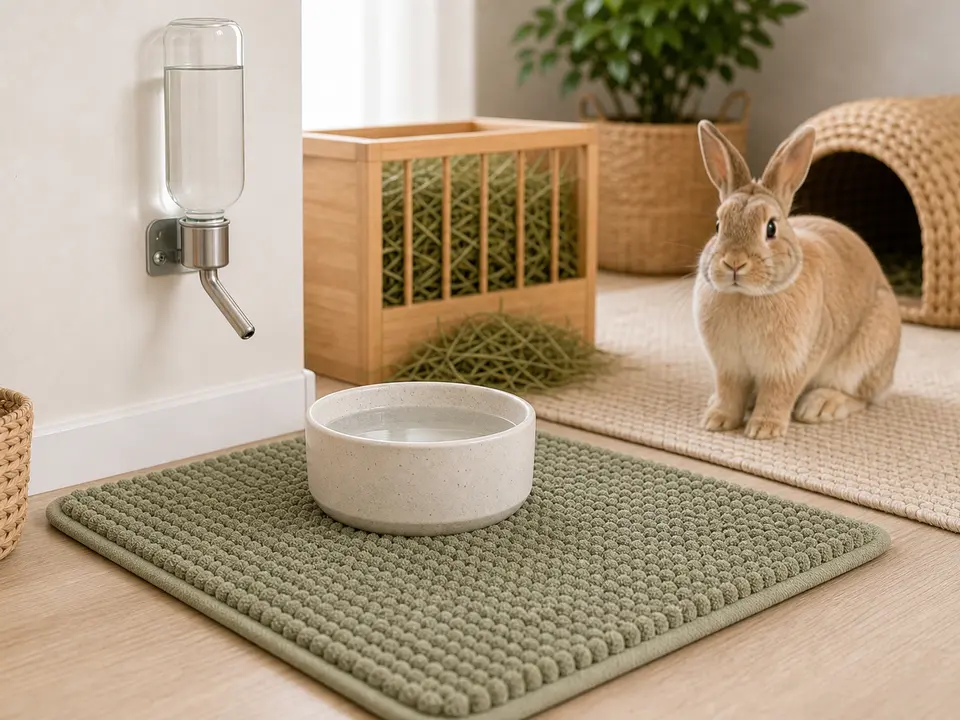
Place the hideout close enough to hay, water, and litter that your rabbit can use essentials without crossing a scary open stretch.
Do not bury the hideout in the noisiest corner or beside a door that constantly swings open.
Angle the opening so the rabbit can see the room without sitting in the traffic path. A small placement shift can make the retreat feel much safer.
Avoid unsafe chew details
Skip hideouts with sharp edges, mystery coatings, tiny glued decorations, loose fabric, or parts your rabbit can chew into dangerous pieces.
A plain cardboard, wood, or washable hideout that you can inspect often beats a cute design you cannot clean or trust.
Inspect chew marks the same way you inspect toys. Once edges become sharp, soggy, splintery, or stringy, repair or replace the hideout.
Respect the hideout boundary
Do not reach into the hideout to pull your rabbit out for petting. Keep it as a protected retreat so your rabbit learns that hiding does not make hands follow.
If your rabbit never leaves the hideout, stops eating, stops pooping, or seems weak or painful, that is different from normal caution and deserves a rabbit-savvy vet call.
Teach visitors and children the same rule. A retreat only works if everyone in the home treats it as the rabbit's no-pressure space.
Before you decide
What changed recently?
Can your rabbit choose a quiet retreat?
Are hay, water, litter, and footing easy?
Is this normal for your individual rabbit?
Next best moves
Make one small change.
Watch what your rabbit chooses next.
Keep the setup calm enough to repeat tomorrow.
Helpful rabbit supplies
These are practical pieces for the routine, not clutter to buy all at once.
Affiliate links: Furball Cove may earn from qualifying purchases at no extra cost to you.
Rabbits do need a hideout. Choose one with an easy entrance, enough room to turn around, and a calm location near hay or rest so hiding feels safe instead of isolated.
What should I change first?
Choose one small setup change that makes the daily routine easier: closer hay, better traction, a calmer hideout, a larger box, or a shorter handling session.
When should I get extra help?
If your rabbit stops eating or pooping, seems painful, breathes strangely, or changes suddenly, call a rabbit-savvy vet. For bonding or handling problems, an experienced rabbit rescue can also help.