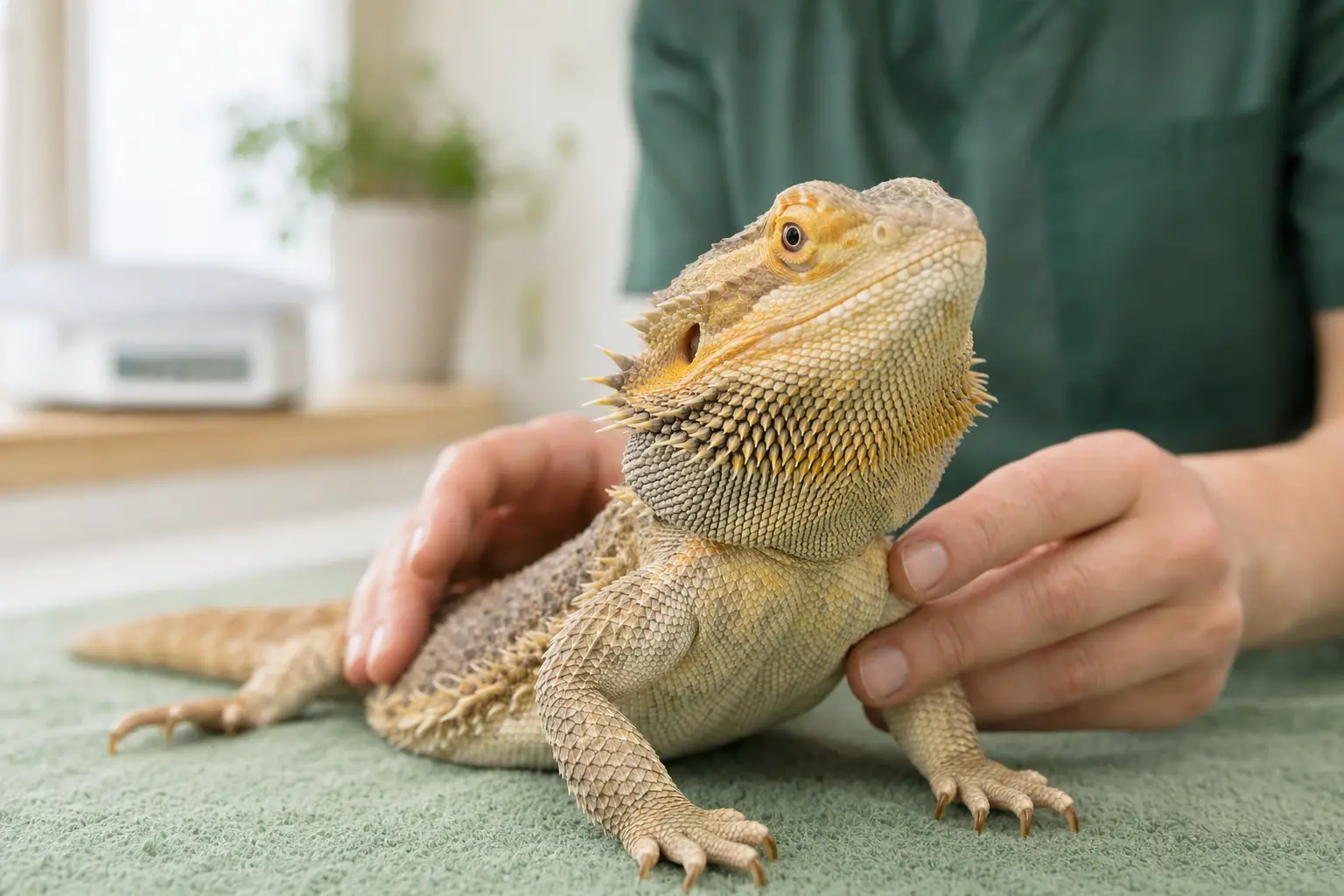
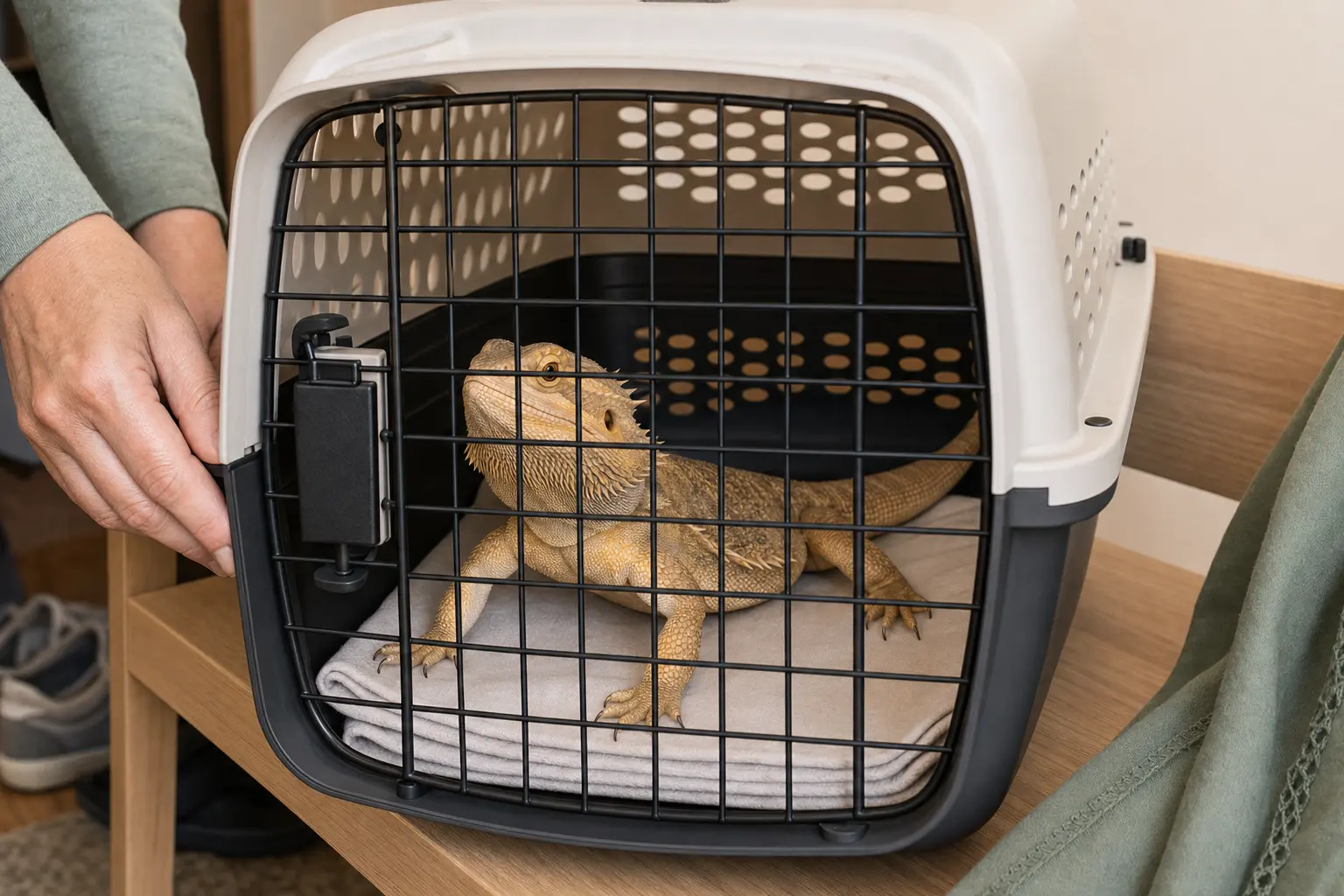
 A carrier made for them
Choose one that fits this reptile, closes securely, and has suitable ventilation.
A carrier made for them
Choose one that fits this reptile, closes securely, and has suitable ventilation.
Reptile emergency planning
Reptile Emergency Kit
Prepare a simple kit that supports safe travel to a reptile veterinarian.
Keep the kit for support and transport, not home treatment.
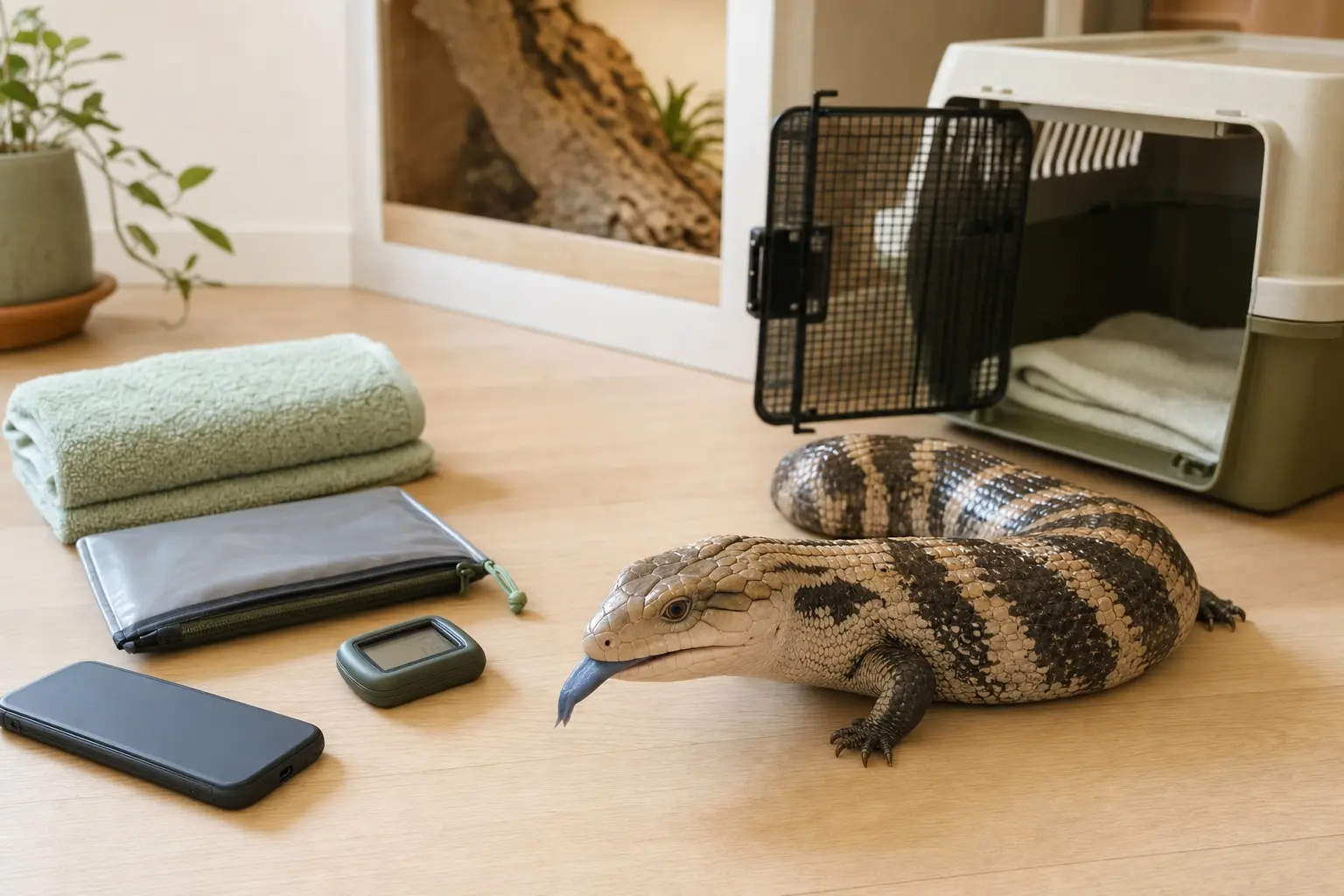
Four things to have ready
These are the pieces that make a veterinary trip safer and far less frantic.
A carrier made for them
Choose one that fits this reptile, closes securely, and has suitable ventilation.
 A clinic that sees reptiles
Save the daytime and out-of-hours numbers now.
A clinic that sees reptiles
Save the daytime and out-of-hours numbers now.
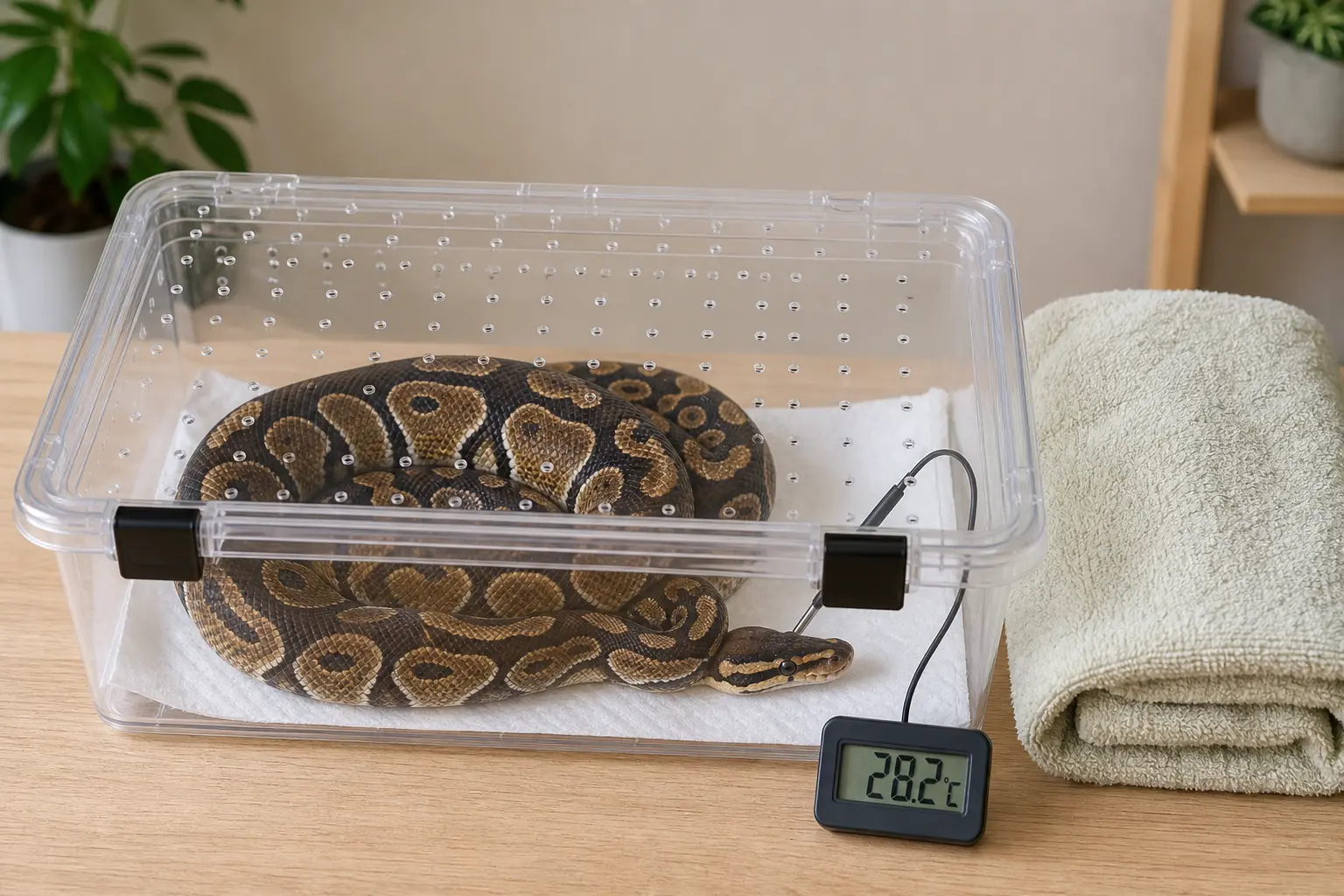 A plan for the journey
Pack a digital thermometer and ask the clinic about the weather and this species.
A plan for the journey
Pack a digital thermometer and ask the clinic about the weather and this species.
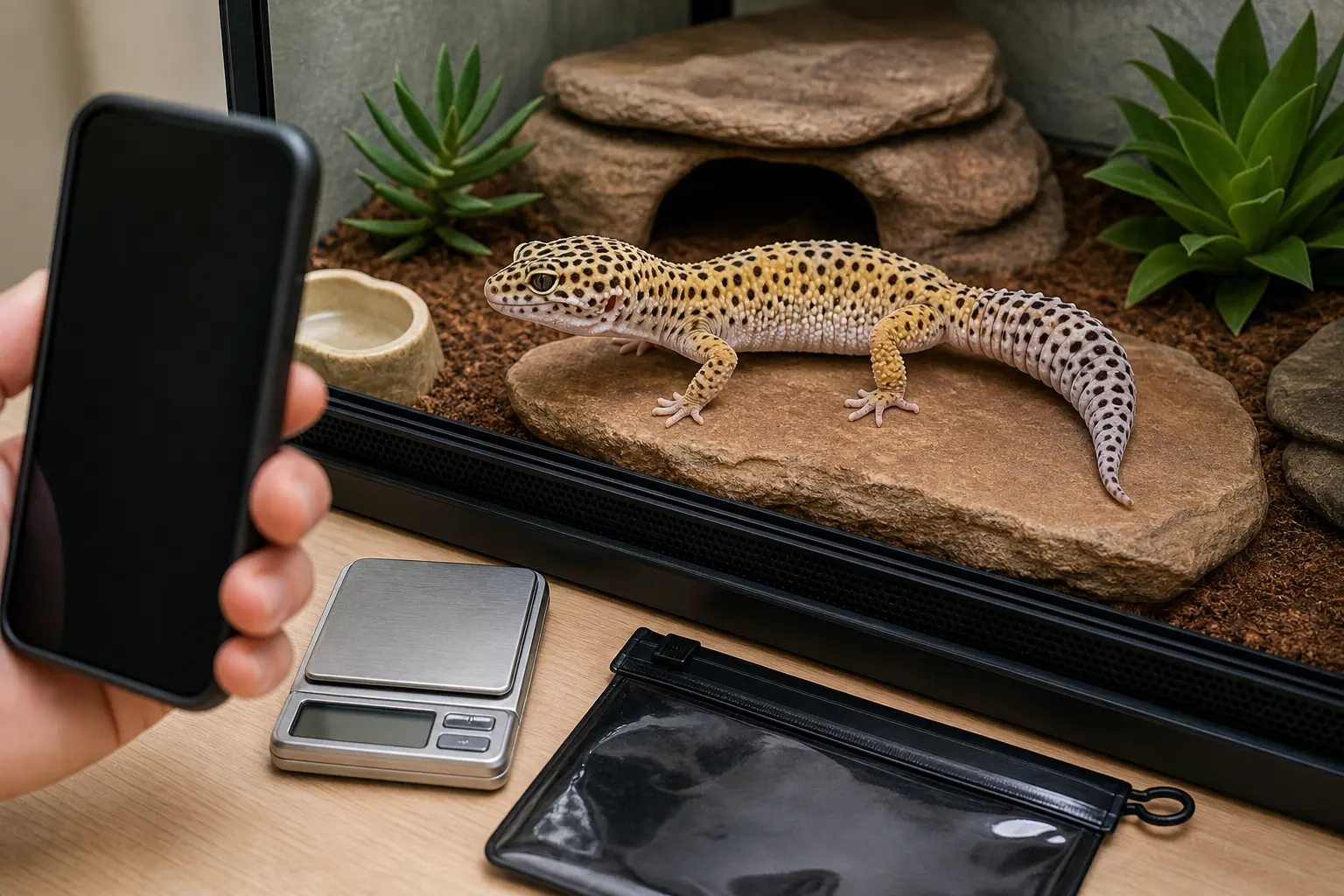 Their story, in one pouch
Keep the species, recent weight, prescribed medicine, diet, habitat readings, and recent changes together.
Their story, in one pouch
Keep the species, recent weight, prescribed medicine, diet, habitat readings, and recent changes together.
When home is not available
A power outage or evacuation needs a wider plan.
References
Practical tools for an emergency plan
These optional tools support secure transport, written observations, and faster outage awareness. They are not treatment and do not replace a species-specific emergency plan or veterinary care.
Affiliate links: Furball Cove may earn from qualifying purchases at no extra cost to you.
Secure travel carrier
A ventilated, latchable carrier for planned transport to a reptile veterinarian; pad and temperature-manage it for the species.
Check escape-proof ventilation, secure closure, and space for the whole animal. This is transport equipment, not treatment.Amazon search: compare specifications and sellers; results are not individually vetted.Compare options on AmazonPower-outage alarm
Sounds when mains power is lost so a failed circuit is noticed sooner; keep a species-specific outage plan as well.
Alerts on outage · Plan remains essentialAmazon search: compare specifications and sellers; results are not individually vetted.Compare options on Amazon