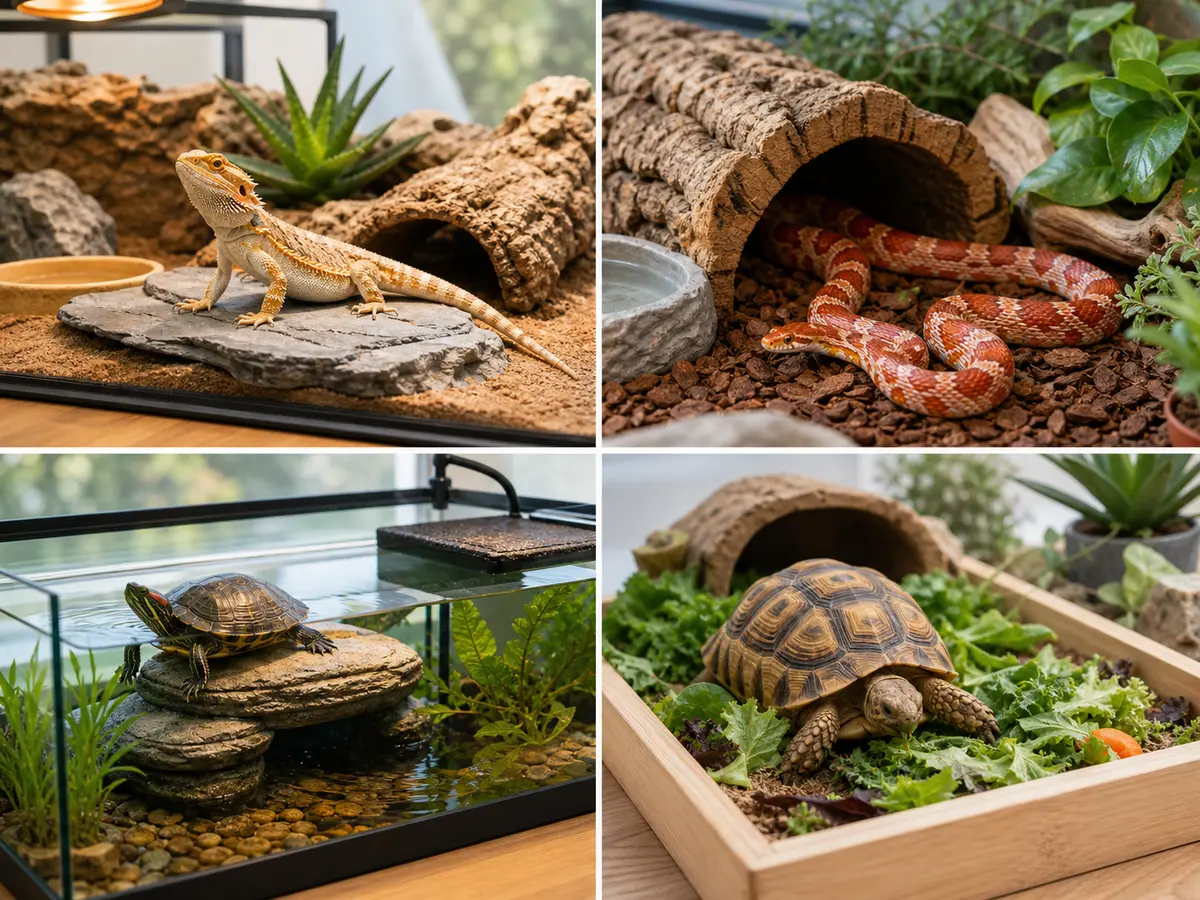
 Curiosity looks different
Normal posture, steady exploration, and choosing to approach tell you more than an animal who simply stays still.
Curiosity looks different
Normal posture, steady exploration, and choosing to approach tell you more than an animal who simply stays still.
Reptile trust & body language
Handling & Behavior
Let your reptile's behavior guide when and how you handle them.
Some reptiles are happier being observed.
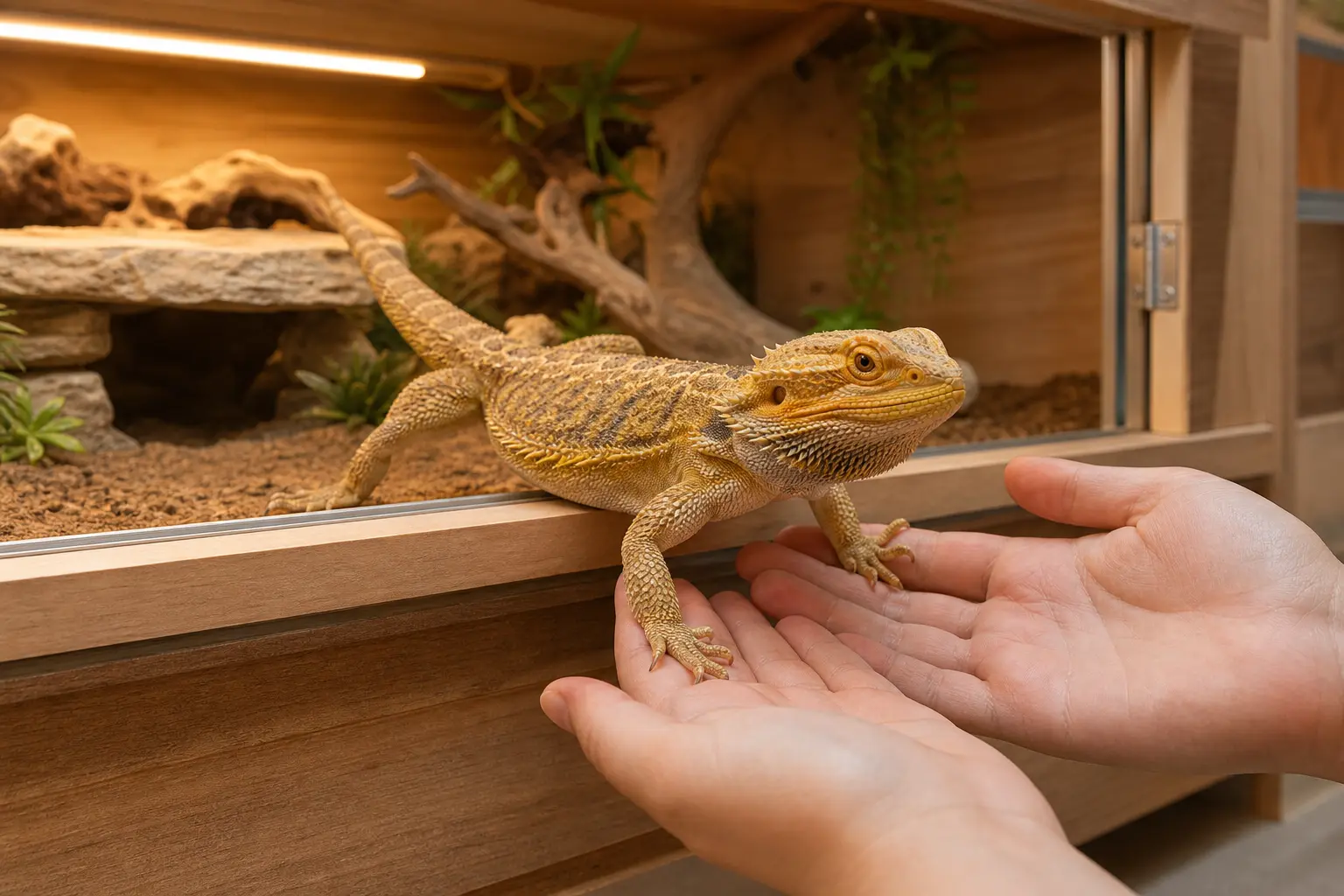
Watch first. Handle second.
Body language is species-specific, but these four ideas make every interaction kinder.
Curiosity looks different
Normal posture, steady exploration, and choosing to approach tell you more than an animal who simply stays still.
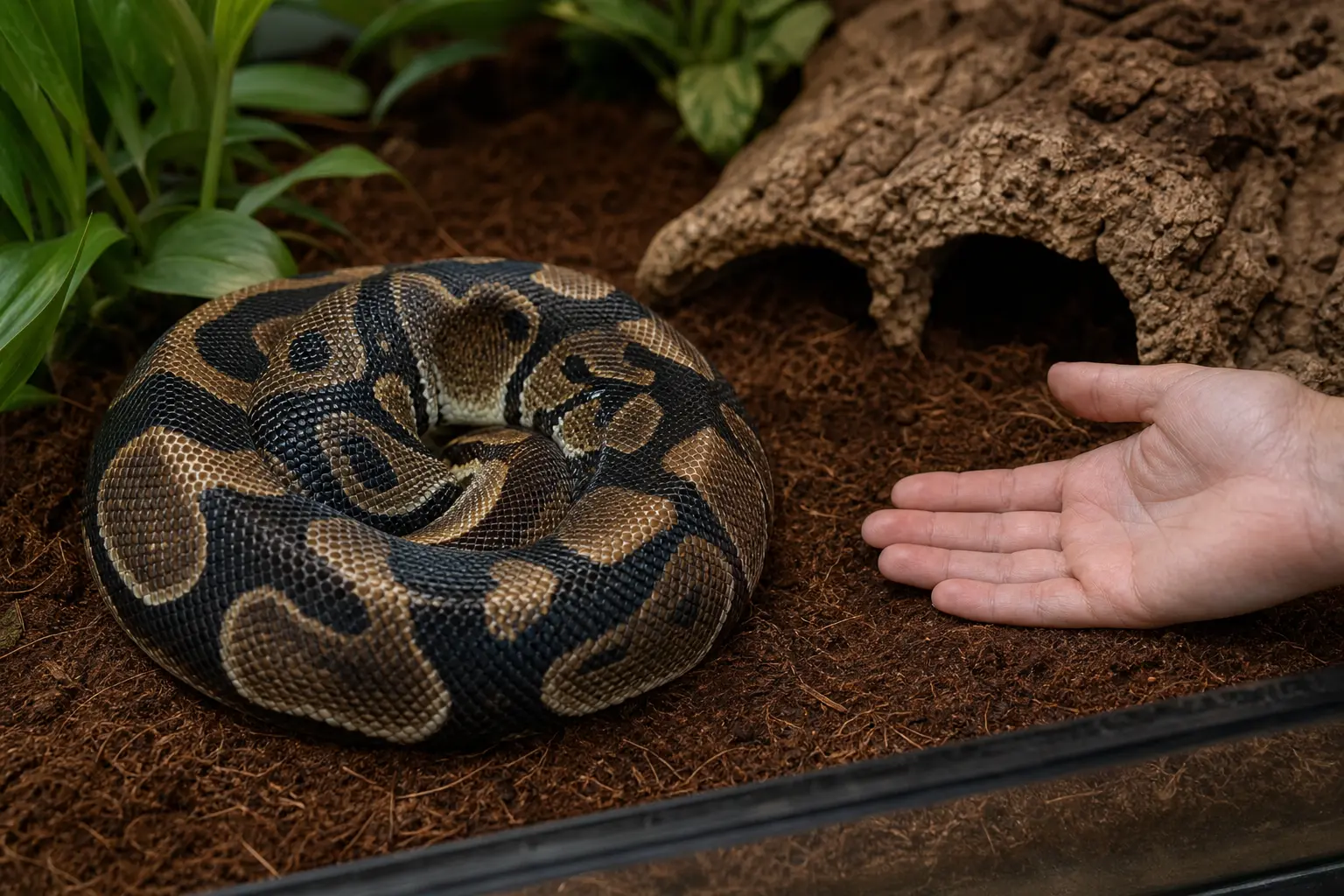 Still can mean worried
Freezing or tucking the head away can be a way of hiding in plain sight.
Still can mean worried
Freezing or tucking the head away can be a way of hiding in plain sight.
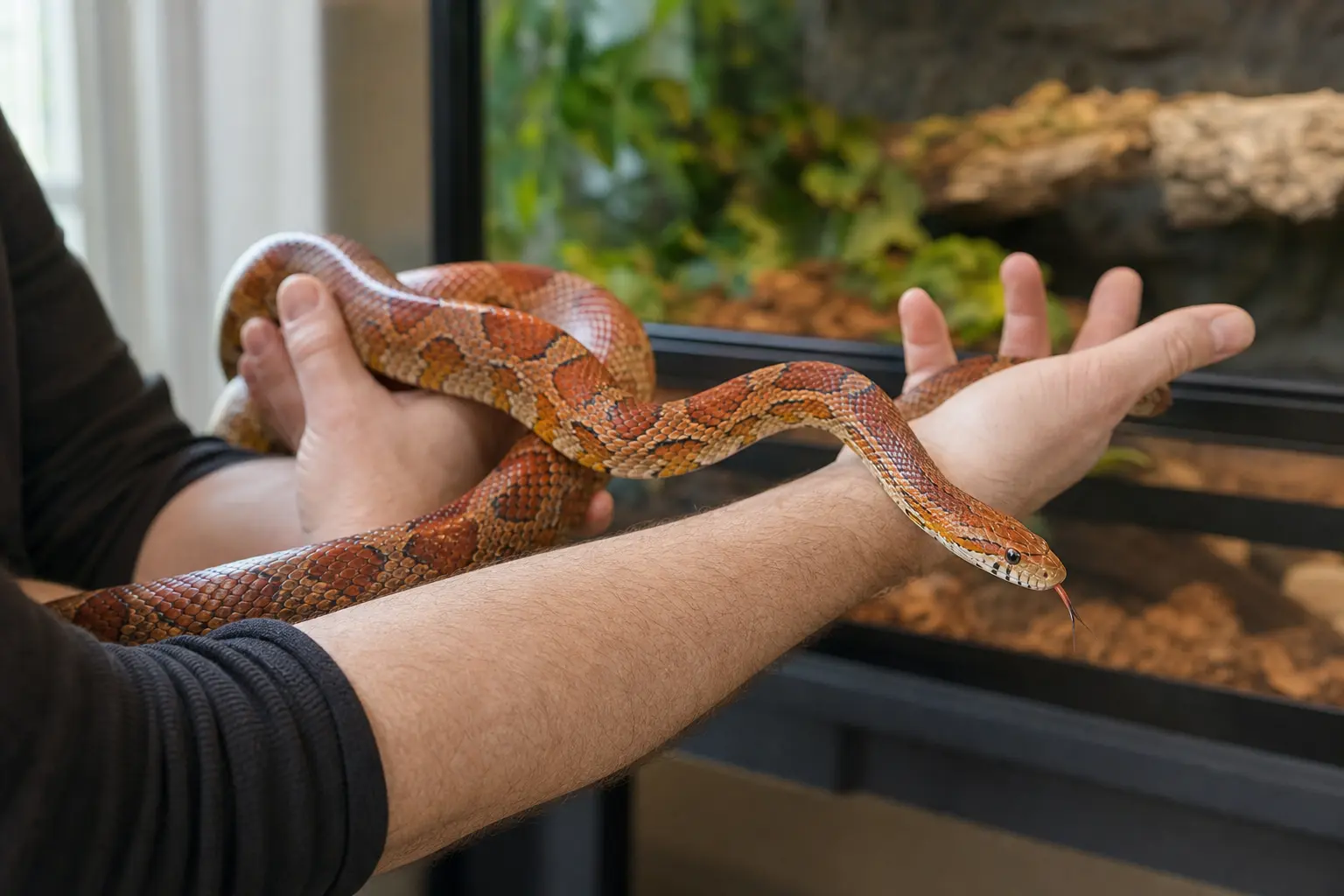
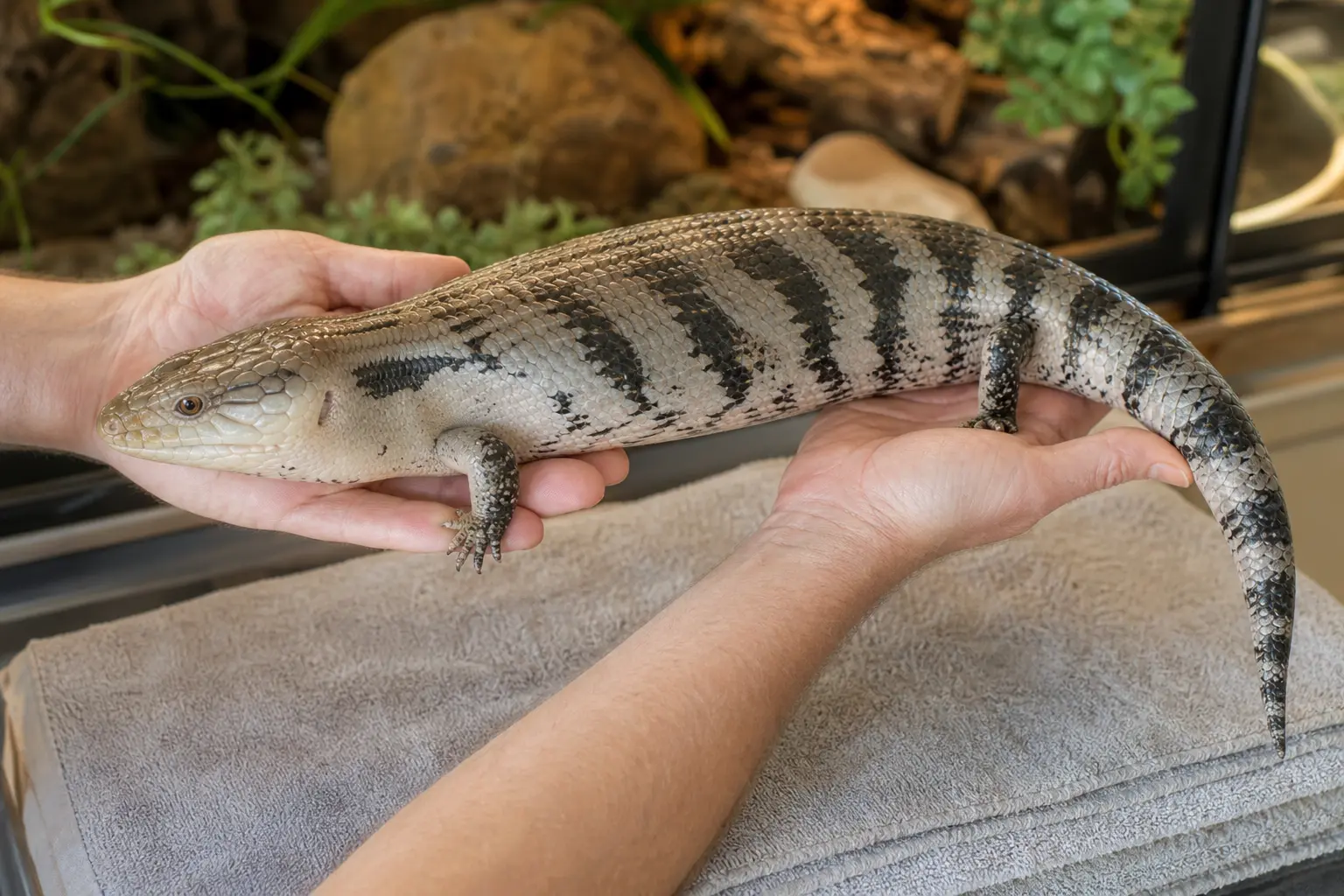 Support every inch
When a lift is welcome, use enough hands for the whole animal.
Support every inch
When a lift is welcome, use enough hands for the whole animal.
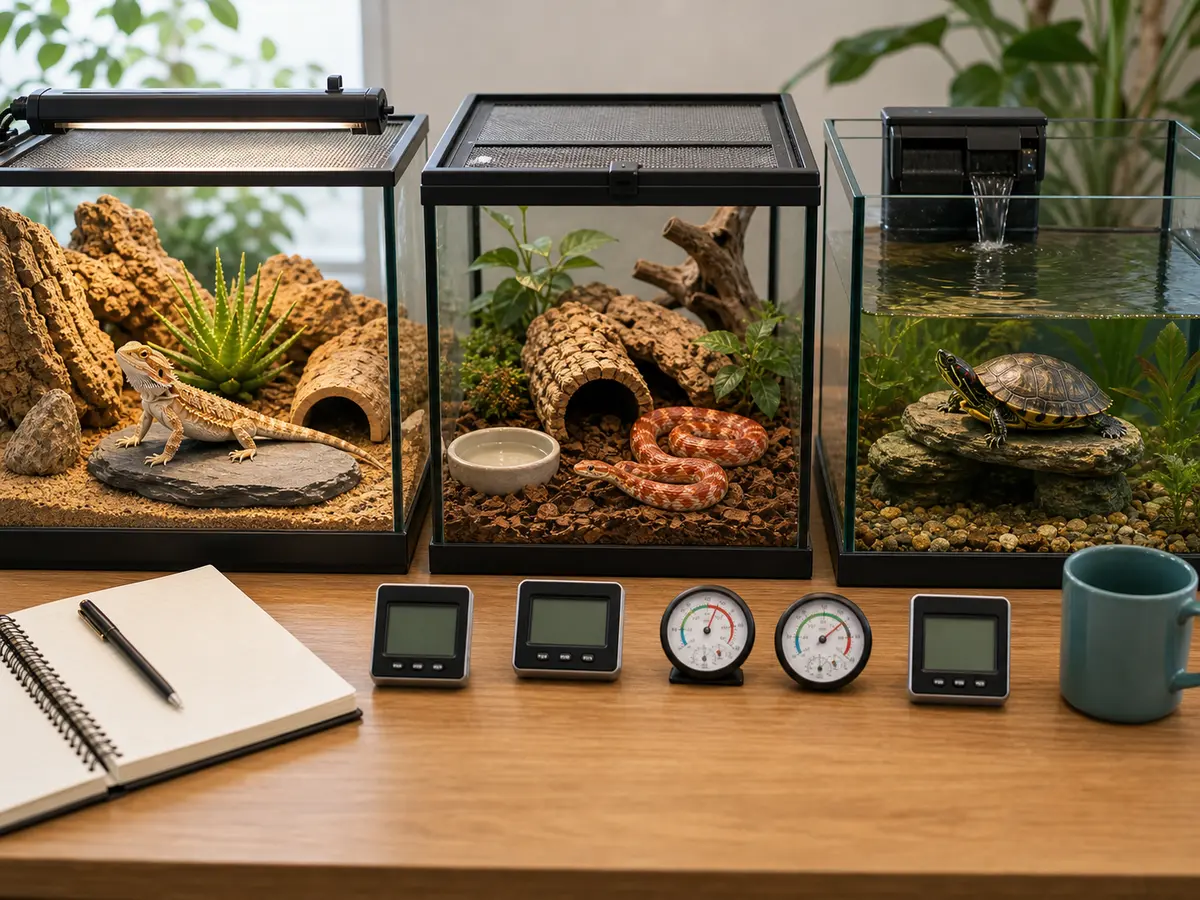
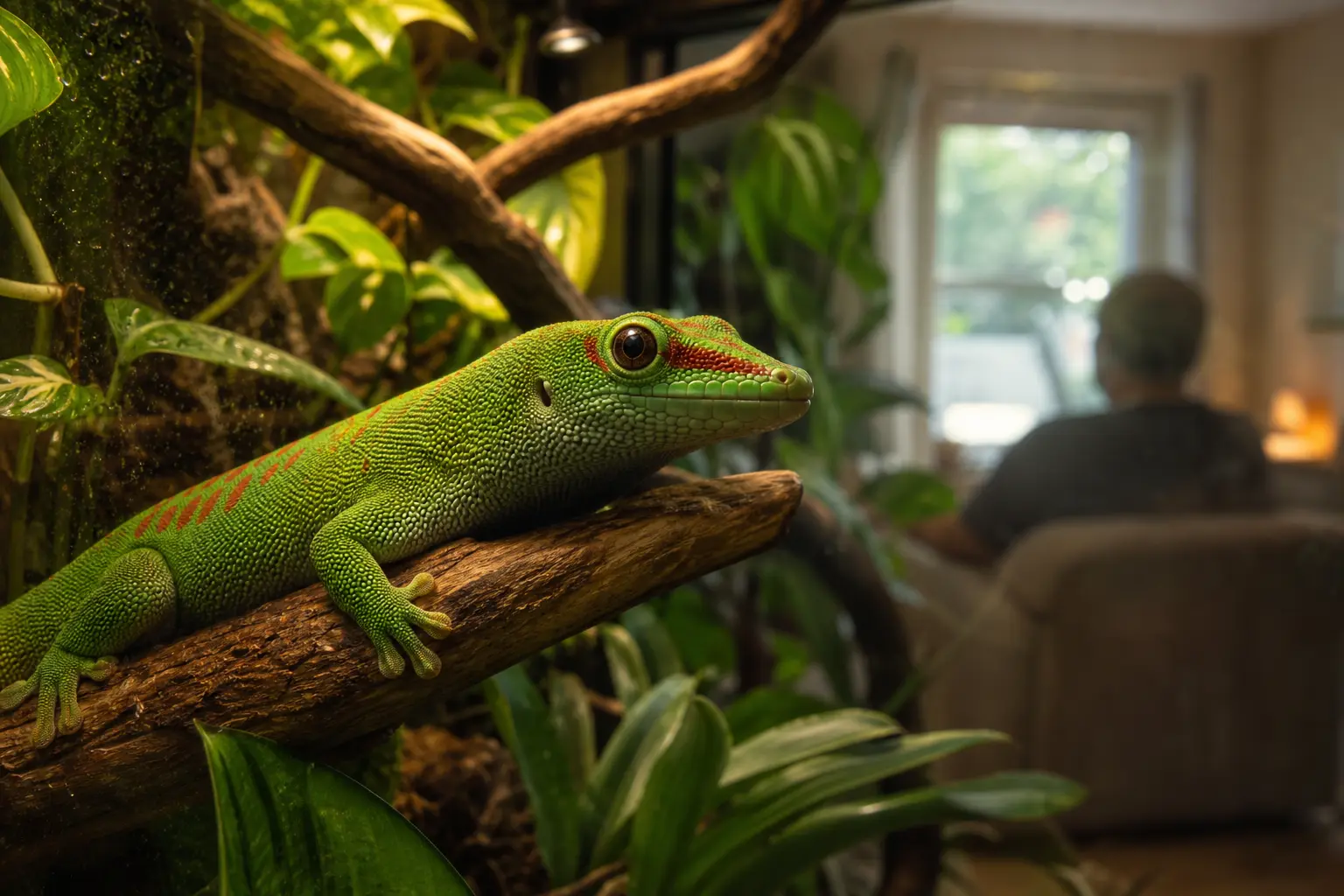 Observation counts
Some reptiles are happiest inside a beautiful, well-made habitat.
Observation counts
Some reptiles are happiest inside a beautiful, well-made habitat.
Five quiet rules
Keep the routine calm, brief, and wonderfully uneventful.