Choosing a blue-tongued skink

Is a blue-tongued skink a good beginner reptile?

Maybe—for a prepared first-time lizard keeper. Their visible daytime routine is approachable, but their large habitat and varied care are not simple.

Confirm the exact species before planning its humidity. Then decide whether the broad enclosure and decade-plus care fit your home.

Check the honest fit
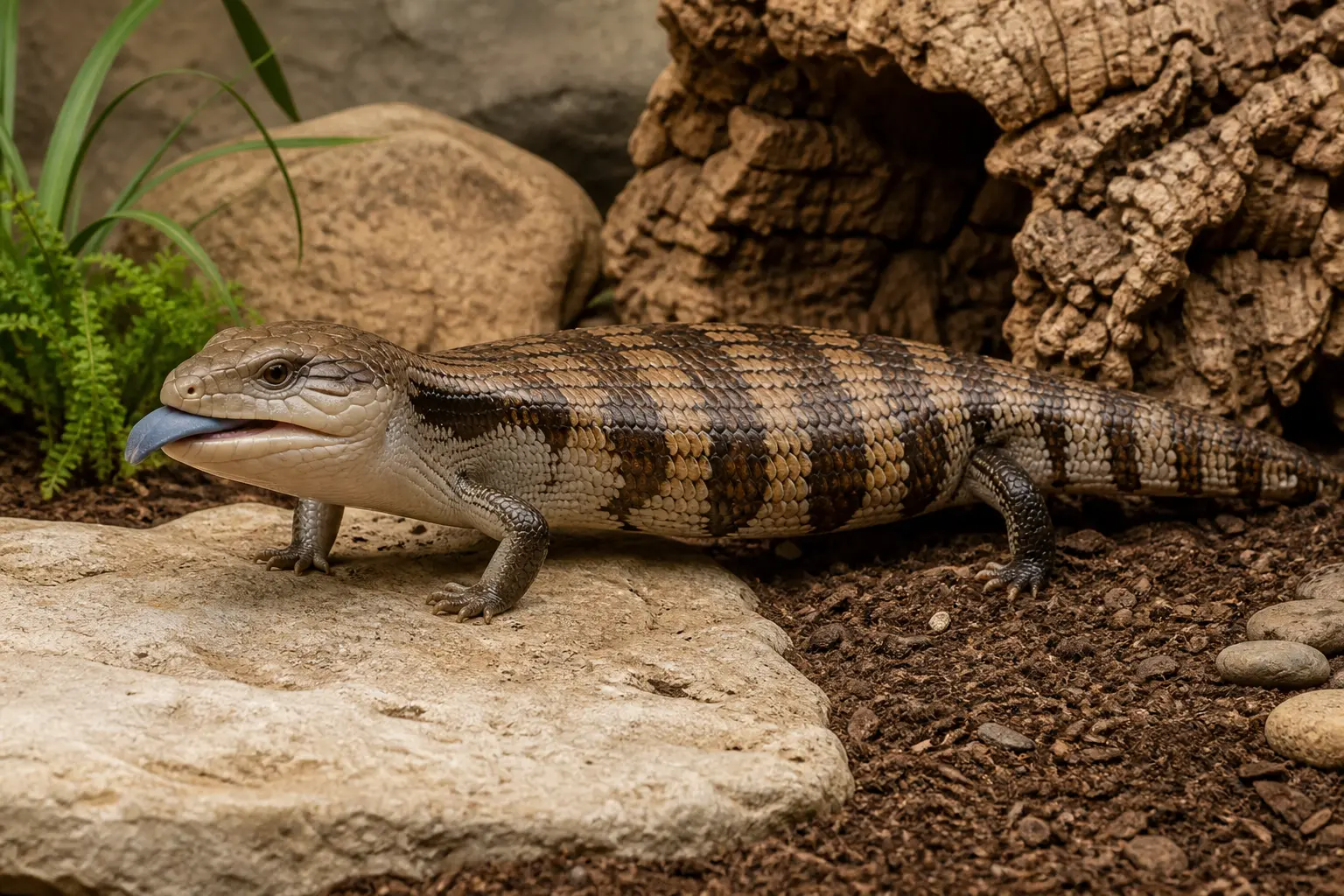
Alert adult eastern blue-tongued skink exploring a broad naturalistic habitat with its sturdy banded body, clear eye, and vivid blue tongue in view.

The short answer

Possible first lizard for a thoroughly prepared keeper

A blue-tongued skink may suit a careful beginner who can confirm the exact species, build the full adult enclosure, maintain strong measured UVB and basking heat, prepare a varied omnivorous diet, and monitor weight and humidity for many years.

Adult home
At least 120 × 75 × 75 cm (48 × 30 × 30 in)
Commitment
Longer than 10 years; often 10–20+
Daily rhythm
Awake and visible during the day
Food
A varied omnivorous menu of safe plant and animal foods
Handling
Brief, fully supported, and optional
Housing
One skink per enclosure

The honest fit

Would the adult routine work in your home?

This may suit you if…

  • You would enjoy a substantial daytime lizard that spends most of life at ground level.
  • A permanent 120 × 75 × 75 cm or larger enclosure fits comfortably in your home.
  • Preparing varied vegetables and animal foods while caring for live feeders feels manageable.
  • You will confirm the exact species or locality, measure the habitat, and use a reptile veterinarian.

Pause if…

  • You want a small enclosure because the skink has short legs.
  • Strong UVB, basking heat, deep substrate, live feeders, and food preparation do not suit your home.
  • You expect frequent handling immediately or want a pet that seeks cuddling.
  • You cannot verify the animal's identity well enough to set humidity responsibly.
01

Why they appeal to first-time keepers

Blue-tongued skinks are awake by day, often visible, and large enough that ordinary movement, basking, eating, and hiding are easy to observe. Many can become comfortable with brief, fully supported handling after settling.

Their sturdy appearance can hide the workload. If a skink huffs, flattens, gapes, or backs away, return it to the habitat and leave handling for another day.

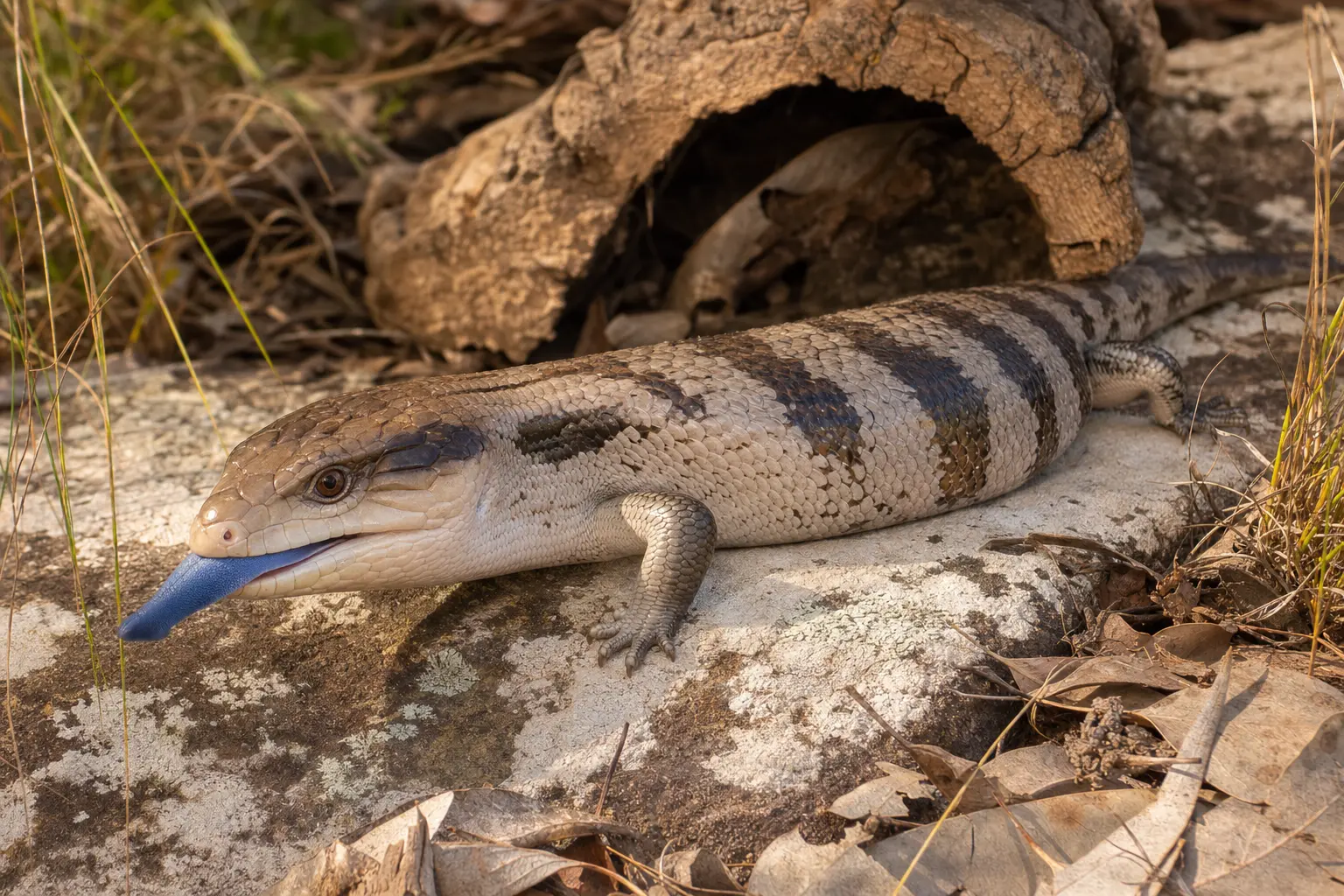
Adult eastern blue-tongued skink exploring pale stone with its broad banded body, clear eye, small sturdy limbs, and blue tongue in close view.
02

Identity and setup are the beginner tests

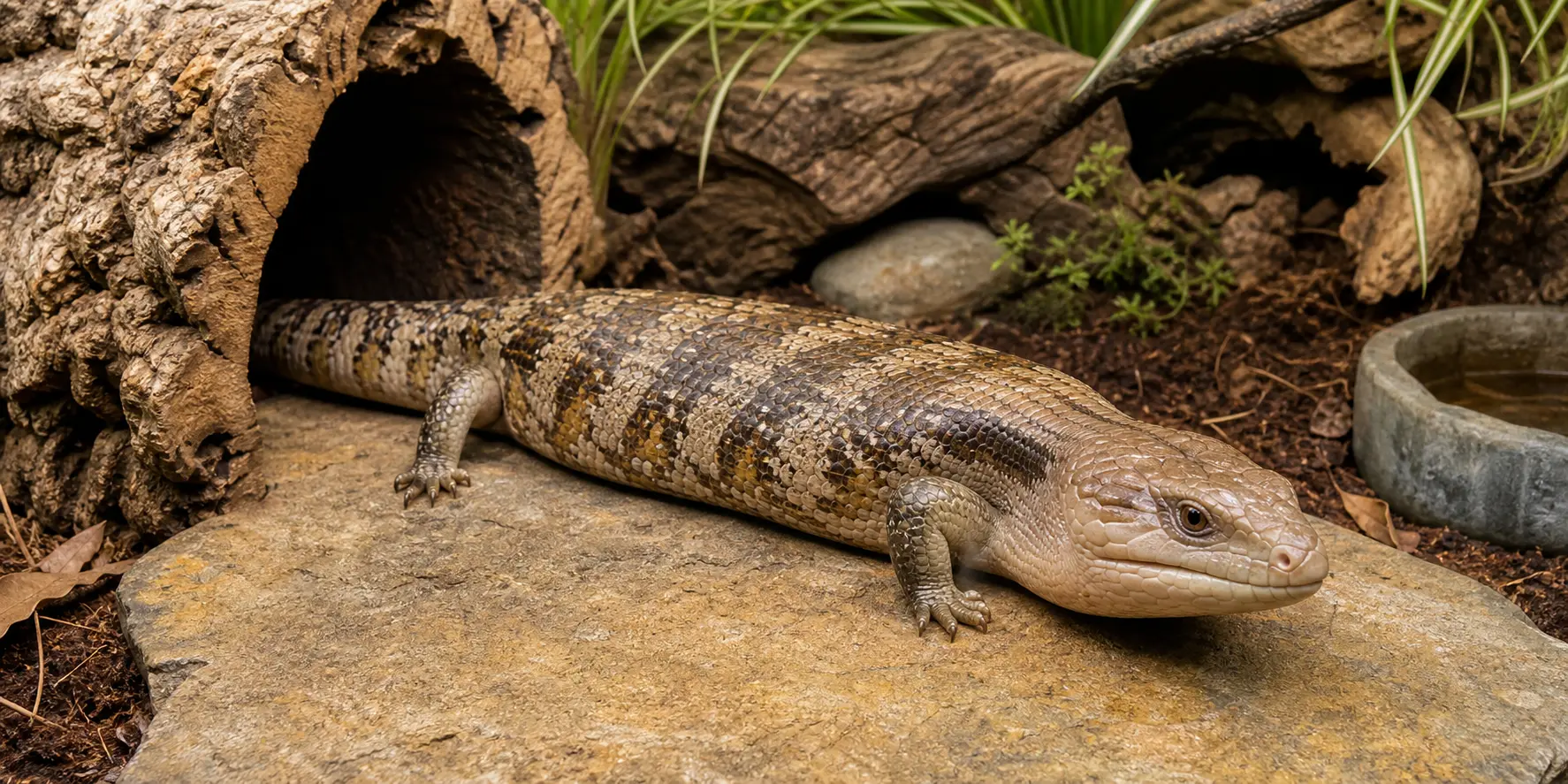
An adult needs broad floor space, deep species-matched substrate, hides at both ends, a moist retreat, a wide basking stone, clean water, ventilation, and a measured light-to-shade gradient.

Blue-tongued skinks come from different climates. Confirming the species or locality is essential because an Australian-type and an Indonesian-type animal should not inherit the same humidity plan from a generic care card.

Adult eastern blue-tongued skink in a broad enclosure with deep burrowing substrate, warm and cool hides, a wide basking stone, a moist retreat, and fresh water.
03

Picture an ordinary Tuesday

The lights come on, you check basking, cool, UVB, and humidity conditions, refresh water and appropriate food, remove wet waste, and watch movement, appetite, breathing, skin, and how the skink uses cover.

A meal might combine reviewed vegetables with a measured animal-food portion; live feeders are gut-loaded, uneaten insects and greens are removed, and supplement labels are followed without stacking powders. Record a monthly weight and call a reptile veterinarian about persistent loss, swelling, weakness, abnormal droppings, or breathing changes.


Keep deciding

See the complete care picture

Sources and further reading