Choosing a box turtle

Is a box turtle a good beginner reptile?

Usually no. A box turtle is an advanced first pet whose legal sourcing and lifelong woodland care require specialist planning.

Test the adult routine before adoption. Plan for legal sourcing, exact species, and seasonal habitat care and often 40–60 years or more.

Check the honest fit
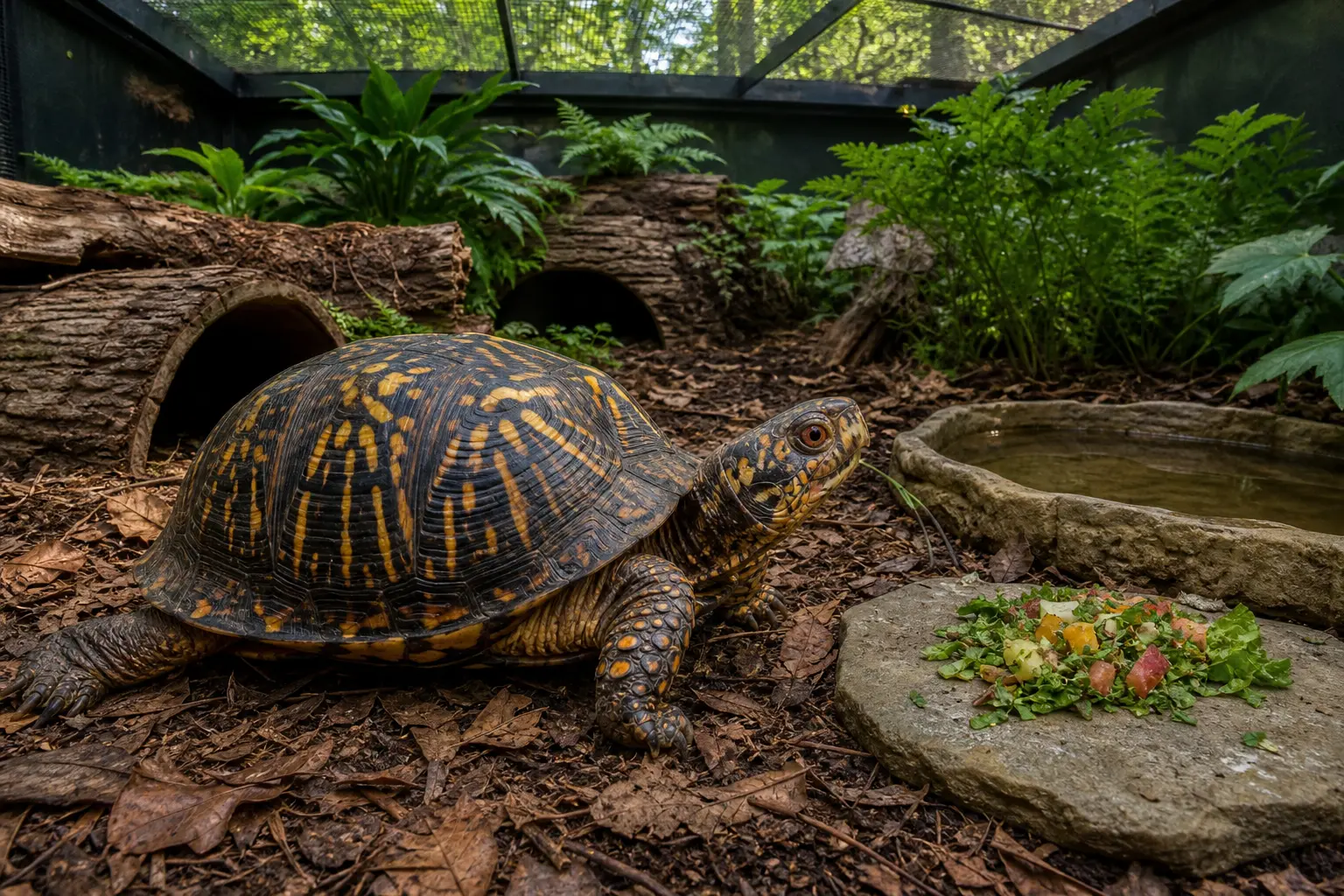
Alert adult common box turtle exploring deep woodland leaf litter with its high-domed dark shell, warm yellow-orange markings, patterned head, and sturdy legs in view.

The short answer

Specialized land turtle, rarely an easy first reptile

A box turtle may fit only when the adult home is built and tested before adoption. The keeper must maintain broad ground-level basking patch around 32–35°c (90–95°f), deep planted shade around 21–25°c (70–77°f), species-dependent, usually with deep humid soil, generous leaf litter, airflow, and a shallow clean soaking area, the exact diet, safe handling, and reptile-veterinary access for often 40–60 years or more.

Adult home
At least 240 × 120 cm (8 × 4 ft) for one adult; exact climate and layout must match the identified Terrapene species
Commitment
Often 40–60 years or more
Daily rhythm
Day-active woodland forager that digs, soaks, shelters, and explores
Food
A varied omnivorous menu of reputable invertebrates, leafy plants, vegetables, fungi, and limited fruit matched to species and age
Handling
scoop from below only when necessary, support the whole shell and plastron, keep the animal low, and return it before it cools
Before adoption
Build the adult home and locate a reptile veterinarian

The honest fit

Would the adult routine work in your home?

This may suit you if…

  • You can identify the exact Terrapene species and build a large secure planted pen around its climate.
  • The adult enclosure fits permanently: At least 240 × 120 cm (8 × 4 ft) for one adult; exact climate and layout must match the identified Terrapene species.
  • You can maintain species-dependent, usually with deep humid soil, generous leaf litter, airflow, and a shallow clean soaking area and verify it with instruments.
  • You will keep weight, food, shed, waste, and climate records and use a reptile veterinarian.

Pause if…

  • You would use an aquarium, collect a wild turtle, improvise brumation, or offer a narrow diet.
  • You would buy the animal before the full adult habitat has run successfully for a week.
  • You want frequent handling more than species-appropriate observation and choice.
  • Veterinary care, holiday cover, replacement equipment, or the full lifespan is not yet planned.
01

Why this reptile appeals

You can identify the exact Terrapene species and build a large secure planted pen around its climate.

The rewarding part is the normal routine: day-active woodland forager that digs, soaks, shelters, and explores. A calm box turtle is not permission to skip habitat, records, hygiene, or veterinary planning.

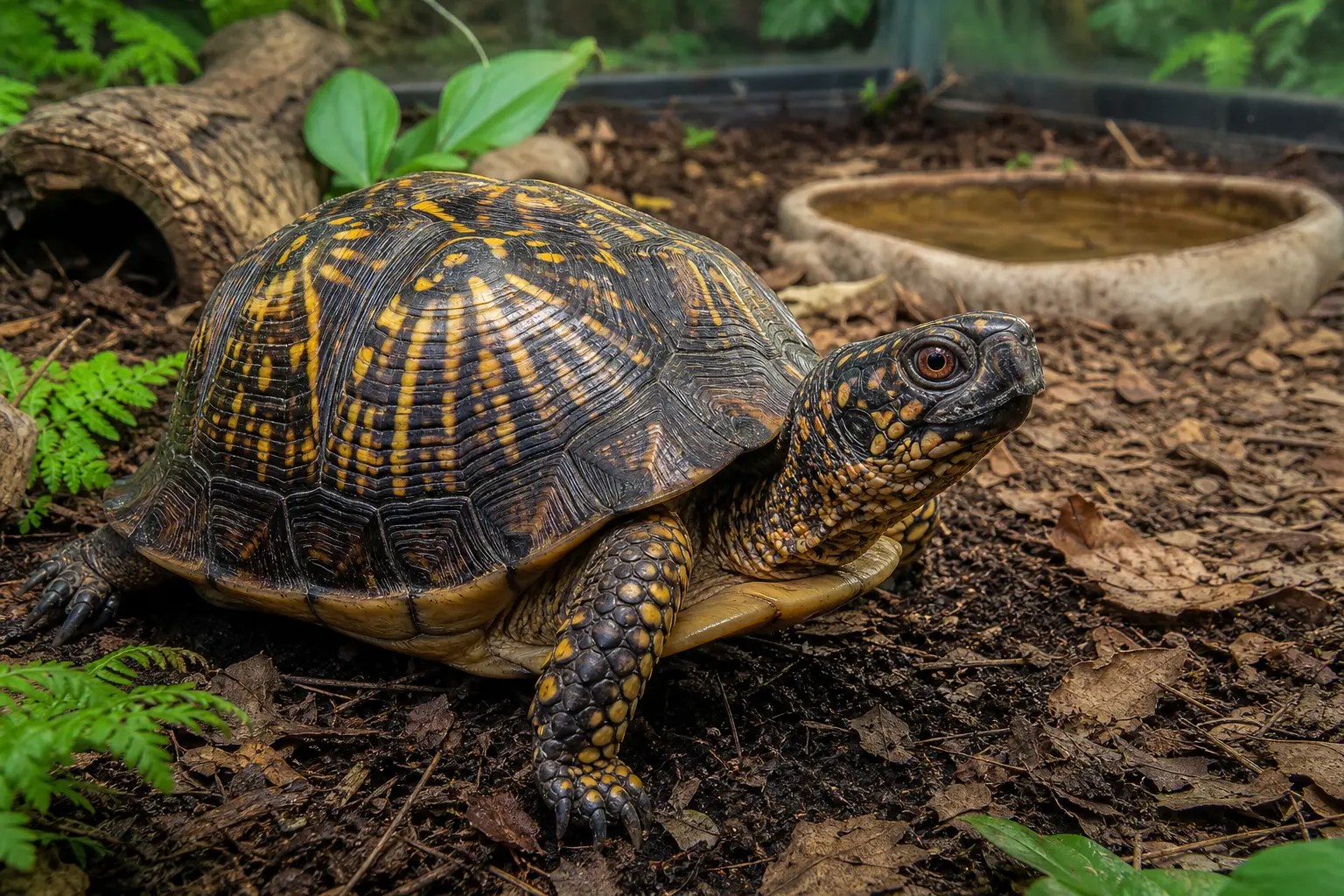
Representative adult common box turtle on woodland leaf litter with its complete high-domed dark shell, warm yellow-orange markings, patterned head, and legs in view.
02

The honest adult-care test

Start with the permanent footprint: At least 240 × 120 cm (8 × 4 ft) for one adult; exact climate and layout must match the identified Terrapene species. Before a box turtle comes home, add secure cover, water, measured warmth, UVB, humidity, and easy cleaning access.

The food plan is a varied omnivorous menu of reputable invertebrates, leafy plants, vegetables, fungi, and limited fruit matched to species and age. For a box turtle, decide whether sourcing, storage, preparation, leftovers, and separate hygiene tools remain realistic every week.

Adult common box turtle with a dark yellow-orange patterned shell and sturdy legs inside a secure adult habitat with species-appropriate cover, routes, water, and measured climate choices.
03

Picture an ordinary care week

During a box turtle care week, read the climate instruments, refresh water, inspect equipment and security, remove waste, and observe movement, breathing, eyes, skin or shell, and appetite.

Record the box turtle's weight, food, shed, and waste. Call a reptile veterinarian when the box turtle has breathing changes, burns, injury, abnormal waste, weight loss, collapse, or another urgent change. Do not experiment with home treatment.

Keep deciding

See the complete care picture

Sources and further reading