

Choosing a red-eared slider

Is a red-eared slider a good beginner reptile?

Usually no—not for someone seeking an easy first reptile. Red-eared sliders need a very large filtered aquatic system, strong heat and UVB, strict hygiene, and 30–40 years of care.

First check whether ownership is legal where you live. Then decide whether a large permanent aquatic habitat and specialist care fit your home.

Check the honest fit
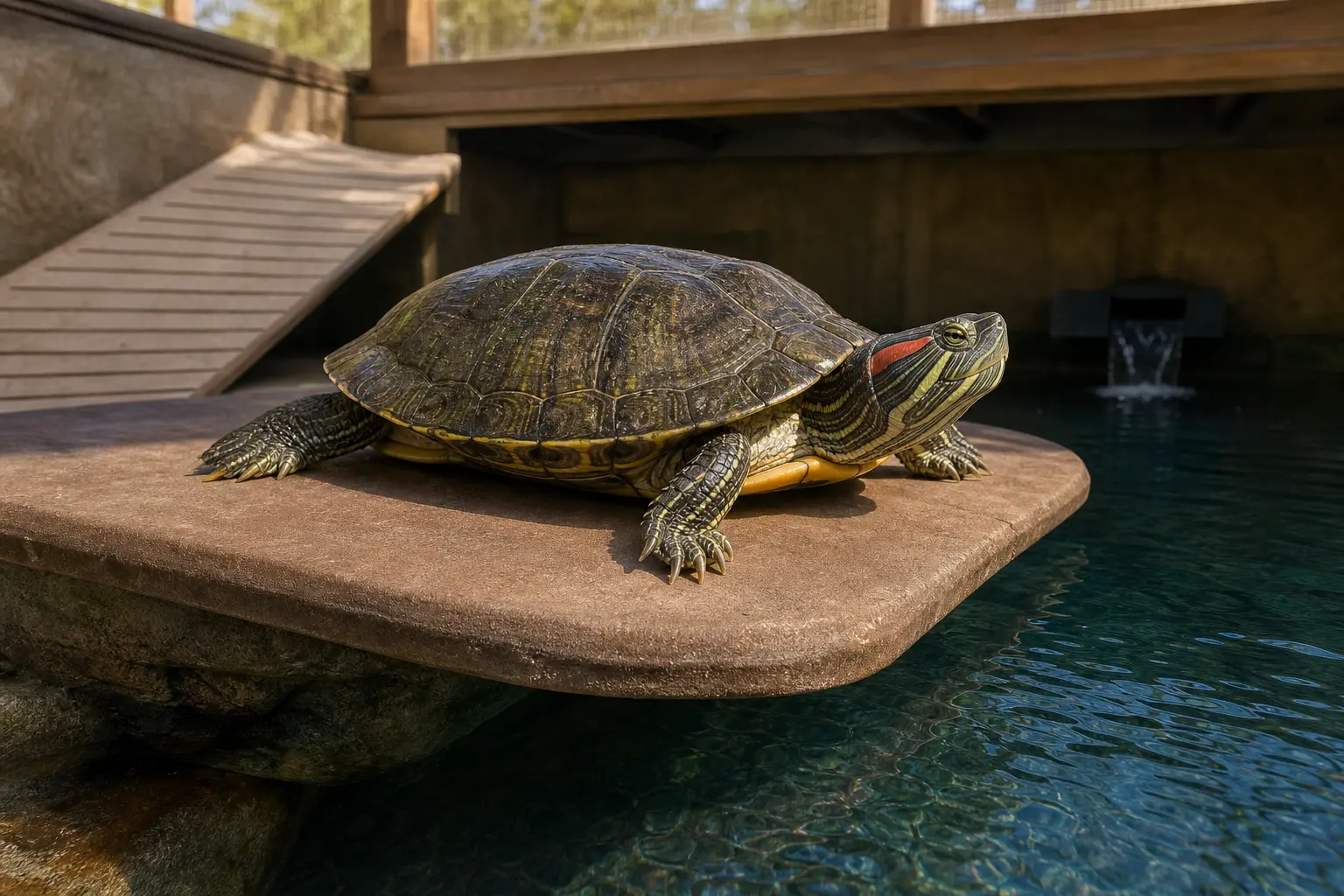
Alert adult red-eared slider on a broad dry basking platform above clean deep water with its olive shell, striped face, and red ear patch in clear view.

The short answer

Rewarding aquatic reptile, but rarely an easy beginner choice

A red-eared slider is rarely an easy beginner reptile. A prepared keeper must provide hundreds of litres of clean heated water, powerful filtration, and a fully dry basking zone. Measured UVB, a varied diet, strict tank-water hygiene, and a legal home for roughly 30–40 years must stay dependable.

Adult water
About 80 L per 5 cm of shell; roughly 400 L for a 25 cm adult
Commitment
Around 30–40 years
Daily rhythm
Day-active swimmer and basker
Food
Varied aquatic-turtle food, safe plants, and animal foods
Handling
Only when needed; secure two-handed shell support
Before adoption
Check local laws and never plan to release the turtle

The honest fit

Would the adult routine work in your home?

This may suit you if…

  • You want to maintain a substantial aquatic habitat and enjoy testing water, servicing filters, and observing swimming and basking.
  • A permanent aquatic habitat of roughly 400 litres fits in your home, with the dry platform and life-support equipment it needs.
  • You will check local ownership rules, use strict tank-water hygiene, and can reach a reptile veterinarian.
  • You can provide a legal secure home for decades and have a responsible rehoming plan that never involves release.

Pause if…

  • You expect a small aquarium, decorative bowl, or inexpensive filter to remain adequate for an adult.
  • Weekly water testing, siphoning, dechlorination, filter care, and safe electrical equipment feel burdensome.
  • You want a reptile for frequent petting, carrying, or unsupervised household roaming.
  • Ownership is restricted where you live or you are unsure how the turtle would be cared for over 30–40 years.
01

Why the small turtle is misleading

A hatchling can fit in one hand, but RSPCA guidance notes that sliders grow rapidly and adult females can reach about 25 cm. The animal needs open swimming water, not a shallow bowl scaled to its starting size.

The turtle may recognize a feeding routine and become highly visible, but that does not make carrying or petting necessary. Swimming, exploring, hiding, foraging, and fully dry basking are the meaningful daily behaviors.

Adult red-eared slider basking completely out of the water with its oval patterned shell, striped face and limbs, and distinct red ear patch in clear view.
02

The adult aquarium is the beginner test

RSPCA planning uses about 80 litres of water per 5 cm of shell length, or roughly 400 litres for a 25 cm adult. The system also needs powerful filtration, protected heating, secure ventilation, an accessible dry platform, and UVB reaching the whole basking animal.

Set the system up at least two weeks early. Cycle the filter, test ammonia and nitrite, verify water and basking temperatures, check the ramp and escape security, and make sure maintenance can happen without moving the entire habitat.

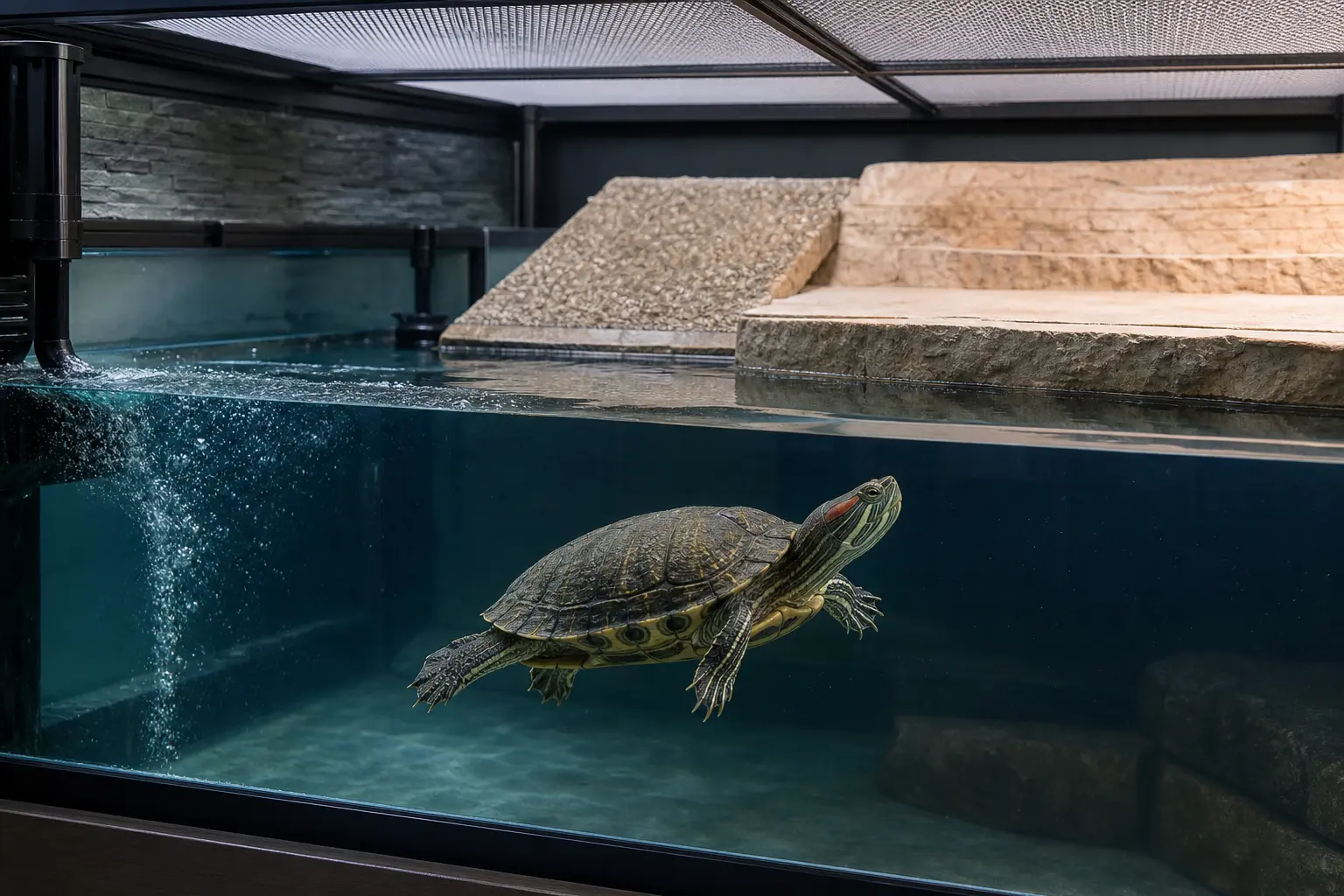
Adult red-eared slider swimming in a large clean aquarium with deep open water, powerful filtration, cover, a secure ramp, and a completely dry basking platform.
03

Picture an ordinary maintenance week

Each day you check water and basking temperatures, the animal's eyes, breathing, swimming, shell, appetite, and basking. You remove leftovers and waste, then record unusual readings or behavior.

Each week includes water tests, dechlorinated partial changes, siphoning, and filter checks. Hands are washed with soap and running water after contact with the turtle, tank water, or equipment, and aquarium tools stay out of food-preparation areas.

Keep deciding

See the complete care picture

Sources and further reading