Choosing a rosy boa

Is a rosy boa a good beginner reptile?

For many careful beginners, yes. The real question is whether decades of quiet, structured snake care feel comfortable.

Confirm the locality and likely adult length, then decide whether a secure permanent habitat and a 30-plus-year commitment fit your household.

Check the honest fit
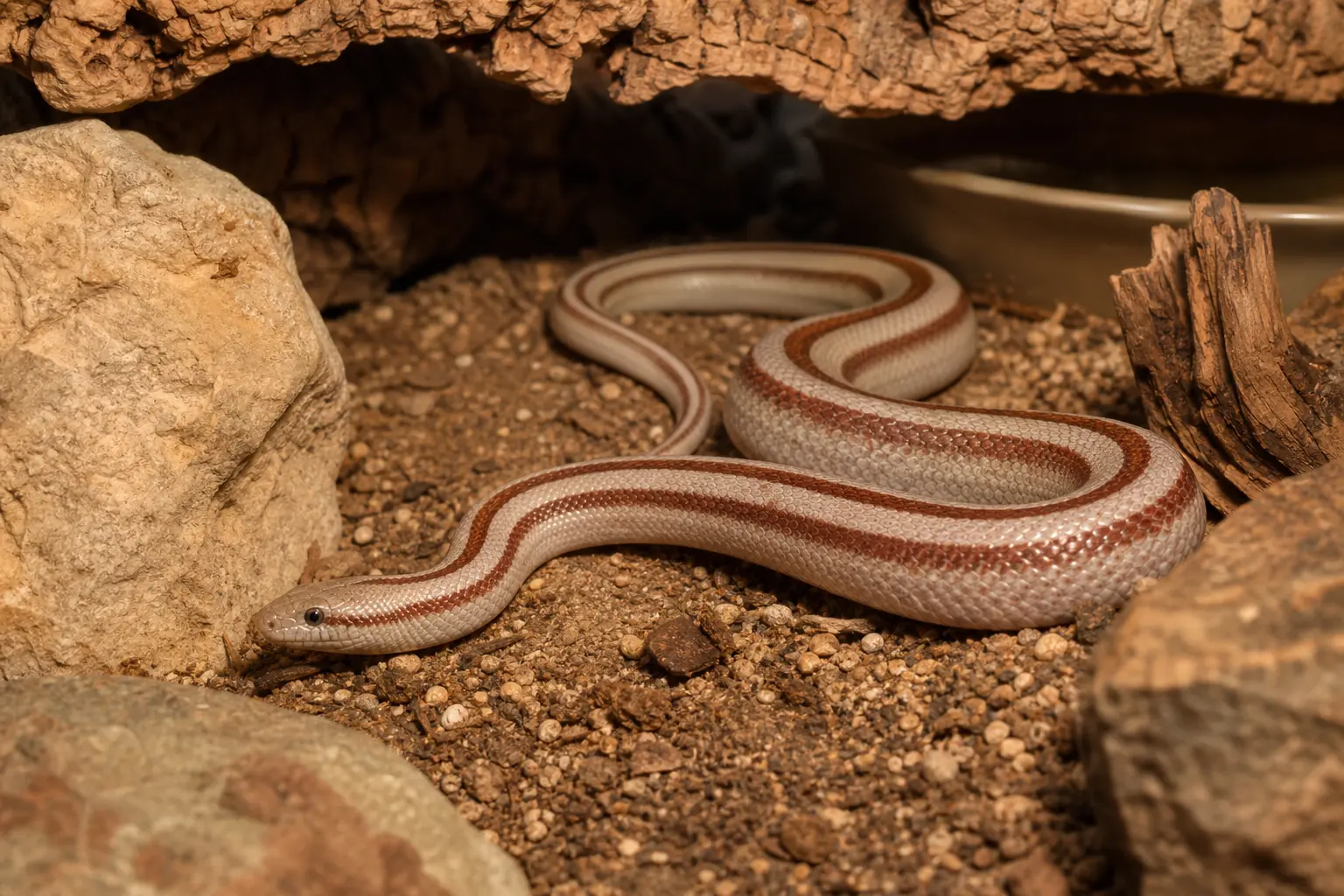
Alert adult rosy boa exploring a secure dry rocky habitat with its stout cream body, three reddish-brown lengthwise stripes, small blunt head, and smooth scales in view.

The short answer

Good first snake for a prepared long-term keeper

A rosy boa can be a rewarding first reptile when its adult-length enclosure is built and tested before adoption. Secure locks, 29–32°C basking heat, fresh water, mostly dry substrate with a humid retreat, low-level measured UVB, modest frozen-thawed meals, and reptile-veterinary planning must stay dependable for 30 years or longer.

Adult size
About 43–112 cm (17–44 in), varying by locality
Adult home
At least full snake length; often 91 × 46 × 46 cm or larger
Commitment
Thirty years or longer is possible
Daily rhythm
Slow dusk-and-night explorer
Food
Appropriately sized frozen-thawed whole rodents
Handling
Brief, low, and continuously supported

The honest fit

Would the adult routine work in your home?

This may suit you if…

  • You want a compact, deliberate snake whose most interesting activity often happens around dusk and night.
  • An escape-proof adult enclosure long enough for the expected locality size fits permanently in your home.
  • Storing, thawing, and offering whole feeder rodents with tongs is acceptable in your household.
  • A 30-plus-year care plan, regular records, and reptile-veterinary access feel realistic.
Pause if…

  • Feeding whole frozen-thawed rodents would be upsetting or impractical.
  • Your reptile room stays wet or the enclosure cannot remain ventilated and mostly dry.
  • You want a highly visible daytime pet or one that seeks frequent attention.
  • You may feed whenever the boa acts hungry instead of using weight and body condition.
01

Why they often work for a first-time keeper

Rosy boas are small, slow-moving snakes with a quiet routine: check locks, heat, humidity, and water, watch dusk exploration, feed only when due, and leave digestion undisturbed.

Many tolerate short, fully supported handling after settling. That reputation does not cancel body language; a firm retreat, defensive S posture, shed, recent meal, or health concern means leave the snake alone.

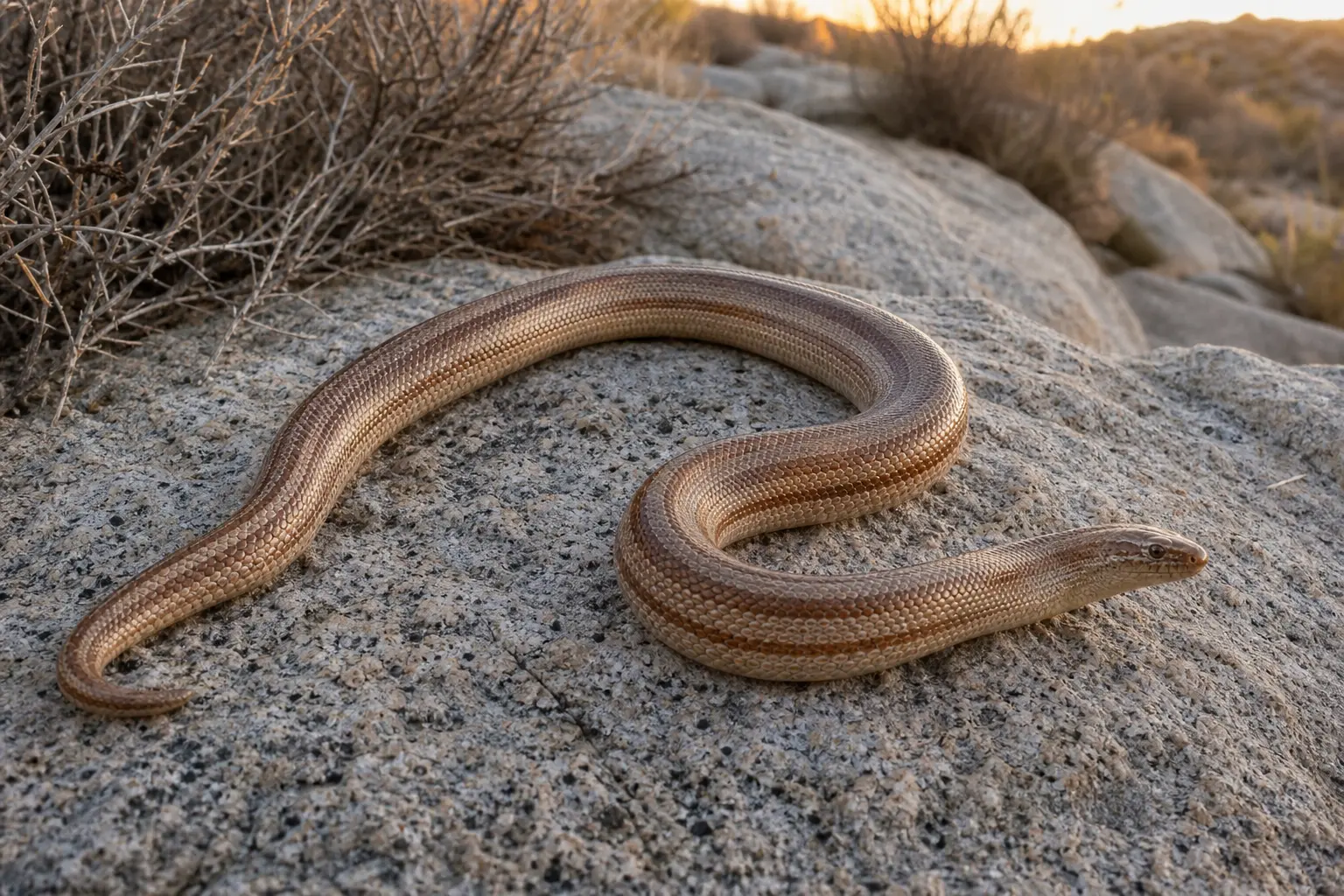
Adult rosy boa resting across pale desert granite with its complete sturdy gray-tan body, three muted rosy stripes, and small blunt head in clear view.
02

The enclosure and prey are the real tests

Adult size varies by genetics and locality. ReptiFiles uses a minimum based on full snake length by half-length width and height, from a compact adult home to about 120 × 60 × 60 cm for a 112 cm animal.

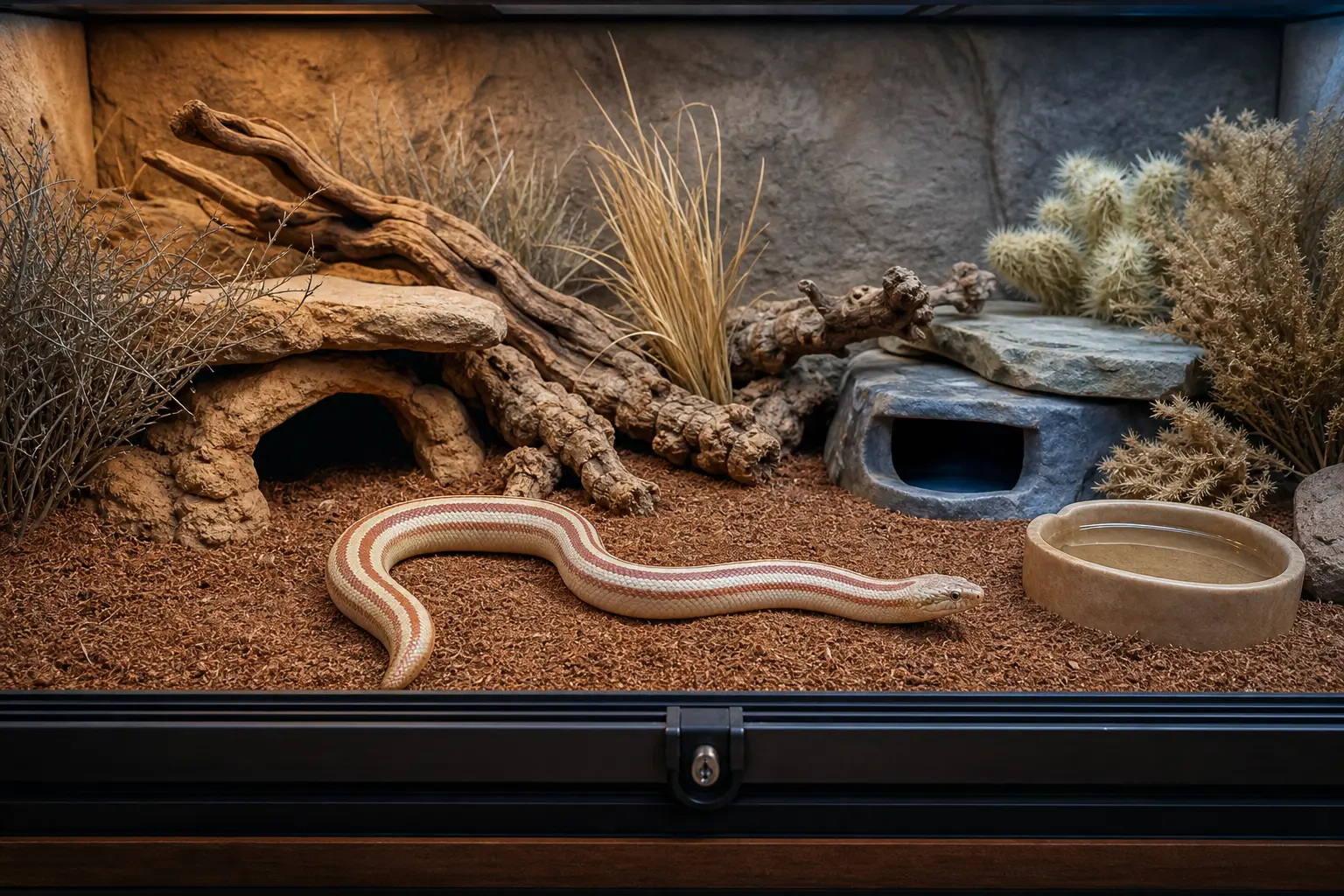
The enclosure needs snug hides at both ends, dry burrowing substrate, low ledges and cover, a clean humid retreat, fresh water, ventilation, dependable locks, and a measured 29–32°C basking surface. Food is fully thawed whole prey, never a routine live rodent.

Adult rosy boa exploring a secure adult-length enclosure with snug warm and cool hides, low branches, deep burrowing substrate, a humid retreat, and fresh water.
03

Picture an ordinary feeding fortnight

You read the warm and cool probes, check that ambient humidity remains below 60%, refresh water, inspect locks, and notice breathing, posture, skin, waste, and hide use.

A juvenile may eat every 5–7 days while an adult often eats every 10–14 days. You record the prey and weight, then leave at least 24 hours without handling. Regurgitation, wheezing, swelling, injury, or a downward weight trend needs a reptile veterinarian.

Keep deciding

See the complete care picture

Sources and further reading