Do this
- Match the schedule to age and body condition.
- Track weight and actual intake instead of guessing from appetite.
- Keep fresh water and monitor rosy boa behavior every day.
- Record changes so a reptile veterinarian receives useful evidence.
Rosy boa · Feeding rhythm
Juveniles about every 5–7 days and adults about every 10–14 days, adjusted from weight, body condition, locality, activity, and veterinary advice.
Rosy boas have slow metabolisms and may accept more food than they need, so a written schedule protects long-term condition.
Use the practical checks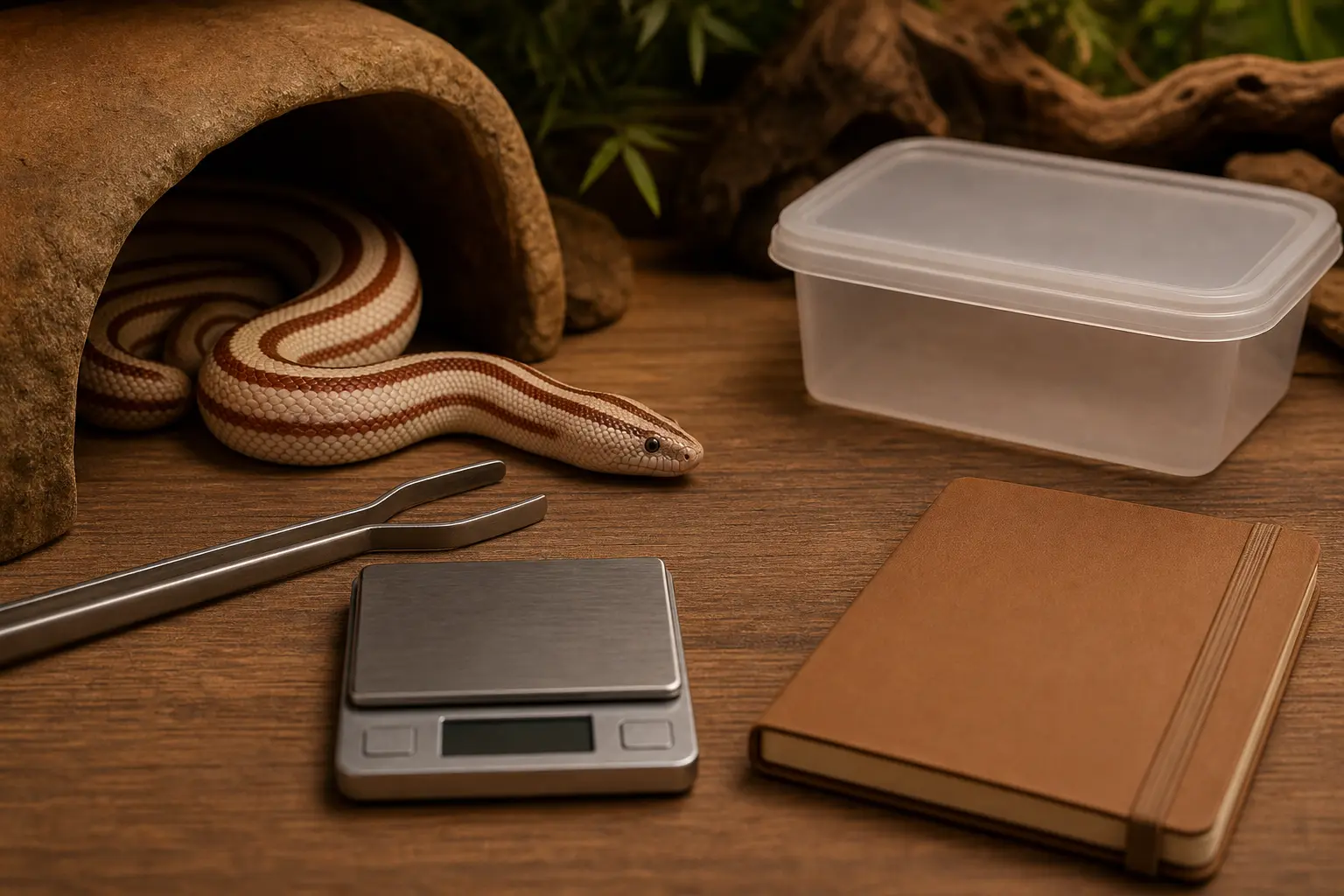
Put it into practice
The practical starting point is: juveniles about every 5–7 days and adults about every 10–14 days, adjusted from weight, body condition, locality, activity, and veterinary advice. Prey size, locality, growth, recovery, reproductive status, seasonal change, and individual condition can alter the interval.
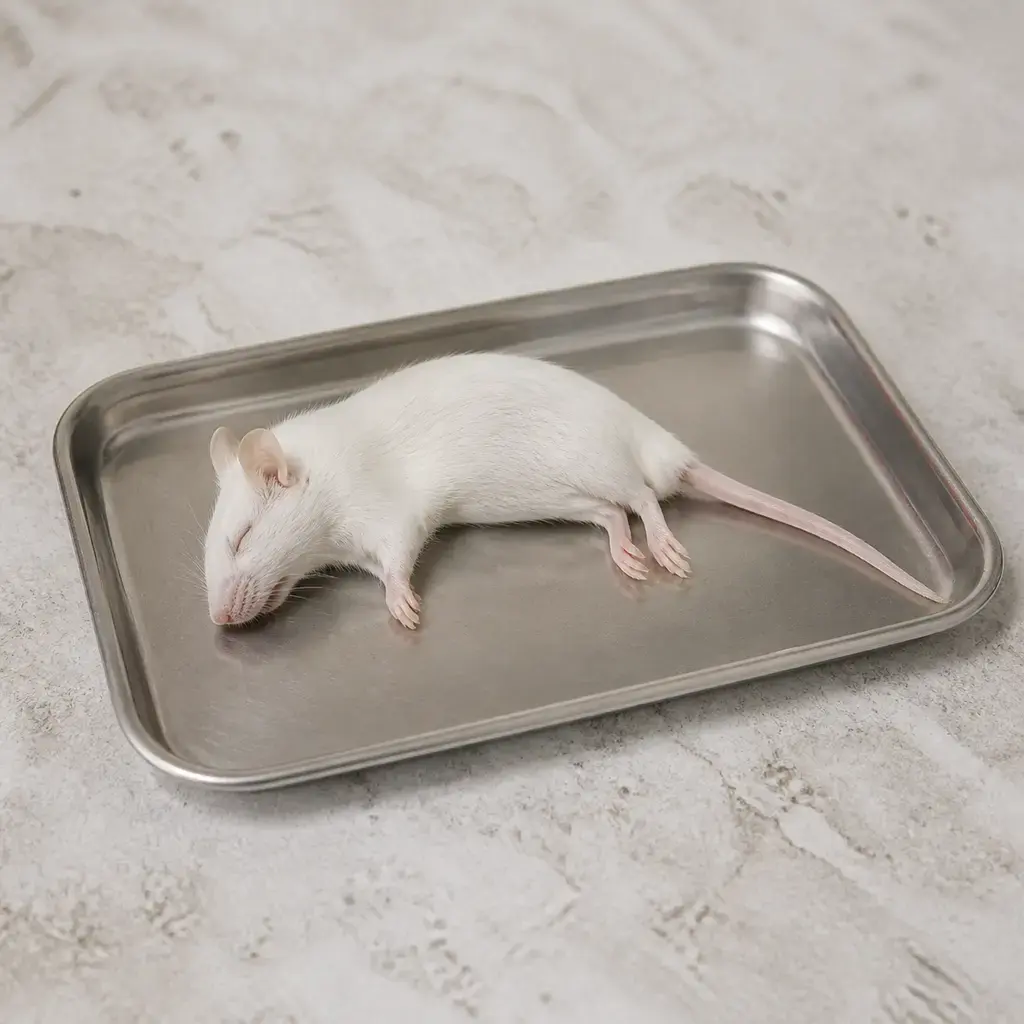
Offer one fully thawed meal when due, remove rejected prey promptly, and pause handling for at least 24 hours afterward. Fresh water remains available every day.
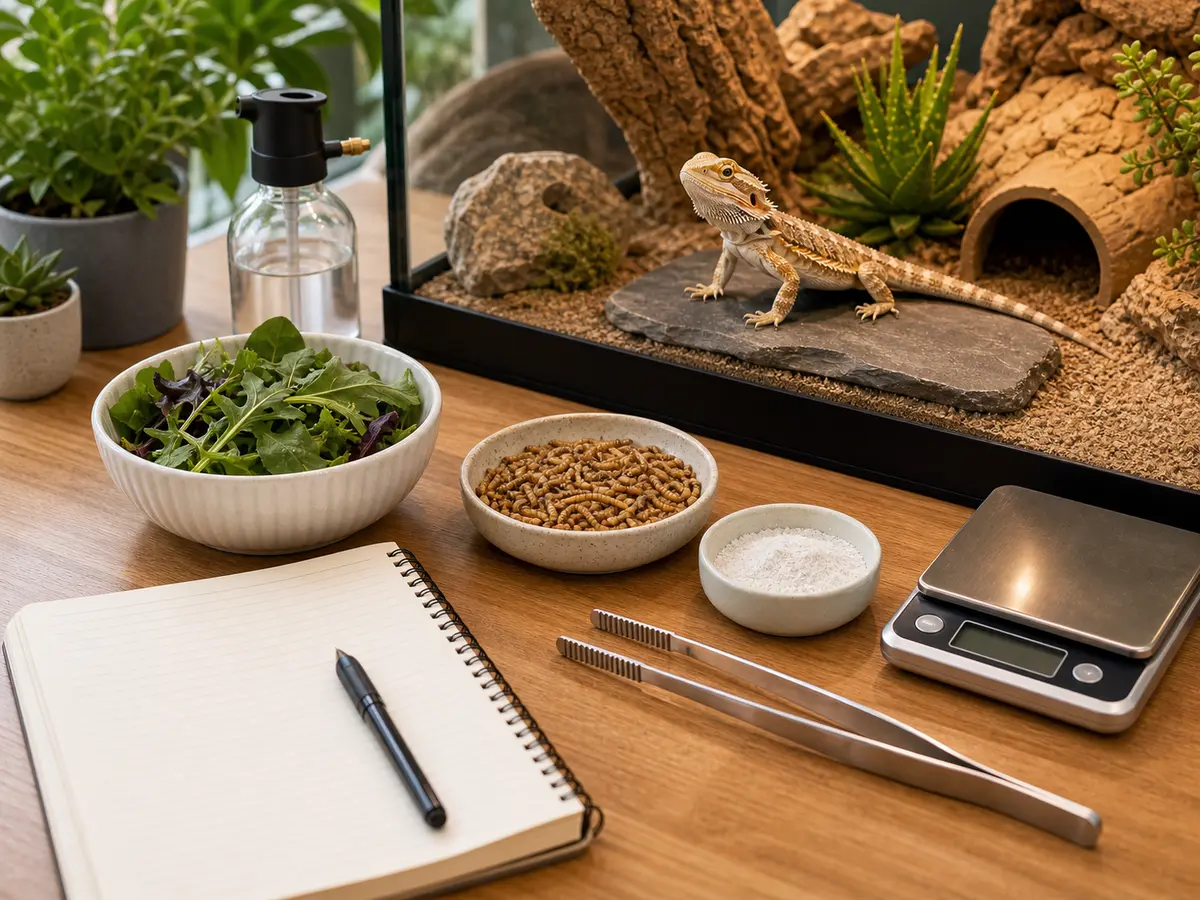
Use the same gram scale at a consistent interval and assess muscle tone and body contour with the trend. An eager feeding response does not prove that a shorter interval is appropriate.
Frequent or oversized meals can promote obesity. Ask a reptile veterinarian to assess condition before aggressive restriction, major prey changes, or assisted feeding.
Review basking and cool temperatures, humidity, cover, security, shedding stage, prey temperature, and recent handling before assuming a skipped meal is stubbornness.
Call a reptile veterinarian for refusal with a continuing downward weight trend, repeated regurgitation, diarrhea, swelling, breathing or mouth changes, or weakness.
Optional tools for this feeding routine. Use suitable equipment you already own; confirm the species' diet before buying food or supplements.
Affiliate links: Furball Cove may earn from qualifying purchases at no extra cost to you.