Red-footed tortoise · Daily diet

What should I feed a red-footed tortoise?

Feed a red-footed tortoise the species diet below. Keep fresh water available, prepare each meal cleanly, and remove leftovers promptly.

The right menu must fit the tortoise's age and body condition while delivering balanced nutrition safely.

Use the practical checks
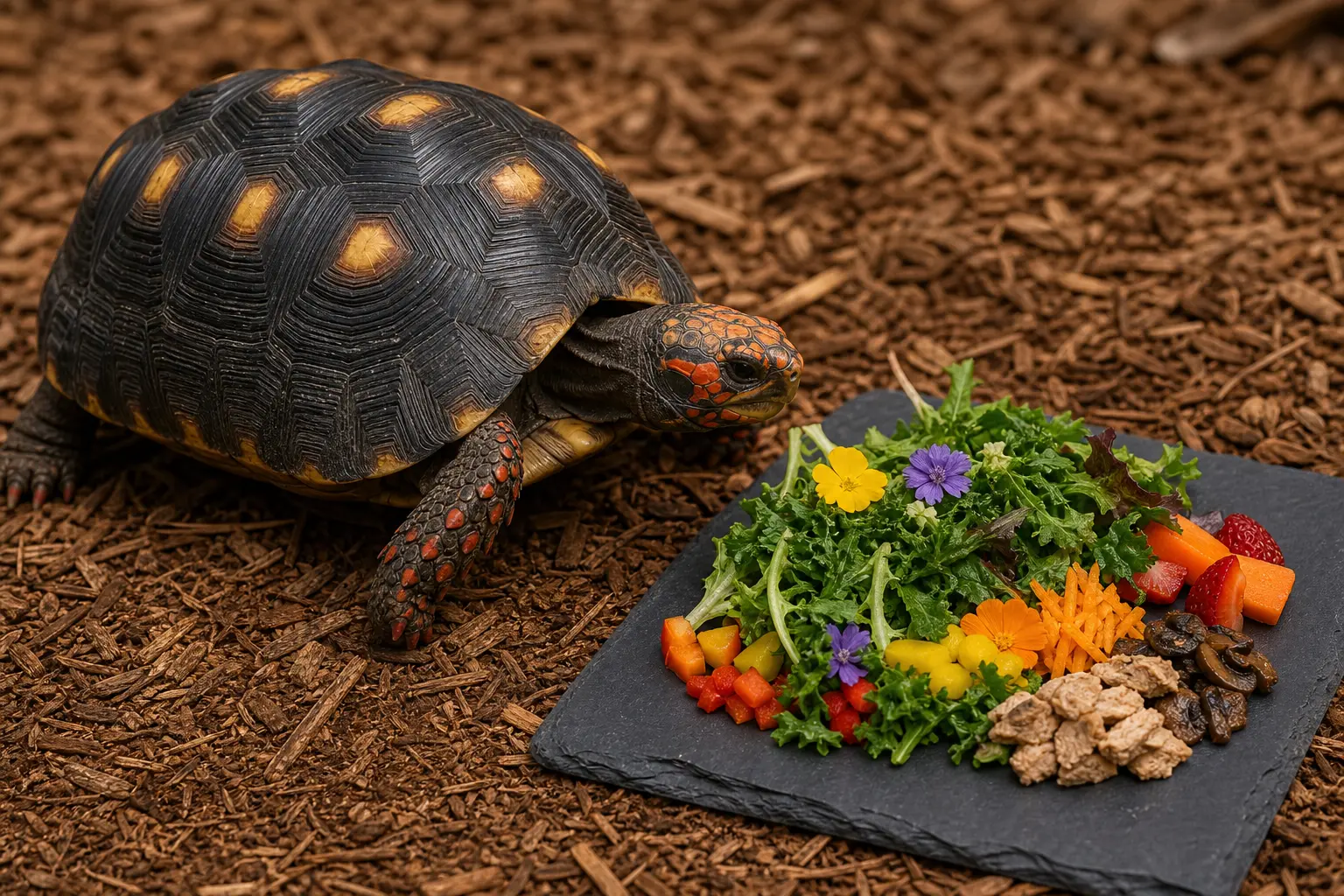
Adult red-footed tortoise with a yellow-centred dark shell and red-orange face and legs approaching a varied species-appropriate measured meal prepared on a clean feeding surface.

The short answer

Use the species diet, not a generic reptile menu for red-footed tortoises

Feed a red-footed tortoise the species diet below. Keep fresh water available, prepare each meal cleanly, and remove leftovers promptly.

Adult home
At least 300 × 150 cm (10 × 5 ft) for one adult, with a secure warm humid outdoor pen where climate permits
Warm zone
Broad shell-sized basking zone around 32–35°C (90–95°F)
Cool and night
Shaded retreat around 24–28°C (75–82°F); All visible lights off; keep the tropical shelter safely warm and avoid an unplanned cold drop
Humidity
About 70–90% indoors, balanced with airflow, deep humid soil, clean water, shade, and a drier basking choice
UVB
Measured strong UVB over open basking ground, with complete deep shade and product-specific distance guidance
Food
A varied omnivorous rotation dominated by safe leaves, flowers, vegetables, grasses, and fruit, with limited reviewed animal foods

The honest fit

Would the adult routine work in your home?

Do this

  • Use the exact species diet and a reviewed supplement plan.
  • Remove spoilable food and wilted food and rejected prey promptly.
  • Keep fresh water and monitor red-footed tortoise behavior every day.
  • Record changes so a reptile veterinarian receives useful evidence.
Avoid this

  • Do not make one fruit, vegetable, or protein item the entire diet.
  • Do not combine supplements without checking the instructions.
  • Do not copy another reptile species' setup.
  • Do not treat a persistent health change as a shopping problem.
01

Build the correct menu

For a red-footed tortoise, build meals around a varied rotation dominated by safe leaves, flowers, vegetables, grasses, and fruit with a small reviewed share of animal foods. Portion food for the tortoise in front of you rather than treating treats or one favored feeder as the whole diet.

Follow the formulated-food or supplement instructions carefully. Vitamin and mineral products can be overdosed, so do not stack powders or add extra vitamin D without a reviewed plan.

Adult red-footed tortoise on South American forest litter with its complete dark shell, yellow scute centres, and vivid red-orange head and leg scales in view.
02

Prepare feeders properly

When feeding insects to a red-footed tortoise, buy captive-bred species, keep them well fed and hydrated, gut-load them before use, and offer prey the tortoise can safely take.

Dust immediately before feeding according to the reviewed schedule. Remove uneaten live insects promptly because they can hide, stress, or bite a resting tortoise.

Alert adult red-footed tortoise exploring humid forest-floor cover with its dark shell, yellow scute centres, and red-orange face and leg scales in view.
03

Use appetite as one data point

Serve fresh food in a clean dish, replace water daily, and wash hands and tools afterward. Keep reptile equipment away from human food-preparation areas.

Track body weight, body condition, droppings, appetite, and activity together. A sudden appetite change with weight loss, weakness, abnormal stool, swelling, or poor temperatures needs more than a different flavor or feeder.

Sources and further reading

Useful tools for this feeding routine

Three optional picks matched to this species' feeding style. Confirm foods and supplements in the exact care plan before buying.

Affiliate links: Furball Cove may earn from qualifying purchases at no extra cost to you.

Set of small stainless preparation bowls on a clean dedicated surface.

Stainless prep bowl set

Separate ingredients and keep a measured serving contained during preparation.

Check current options
Low digital food scale with a removable weighing tray on a clean prep surface.

Washable platform kitchen scale

Weigh larger produce portions or sealed food containers on an easy-clean platform.

Check current options
Heavy low-profile ceramic food dish on a clean feeding surface.

Heavy ceramic food dish

A stable, washable dish keeps a species-appropriate meal off loose substrate.

Check current options