Blue-tongued skink · Gentle handling

How do I handle a blue-tongued skink safely?

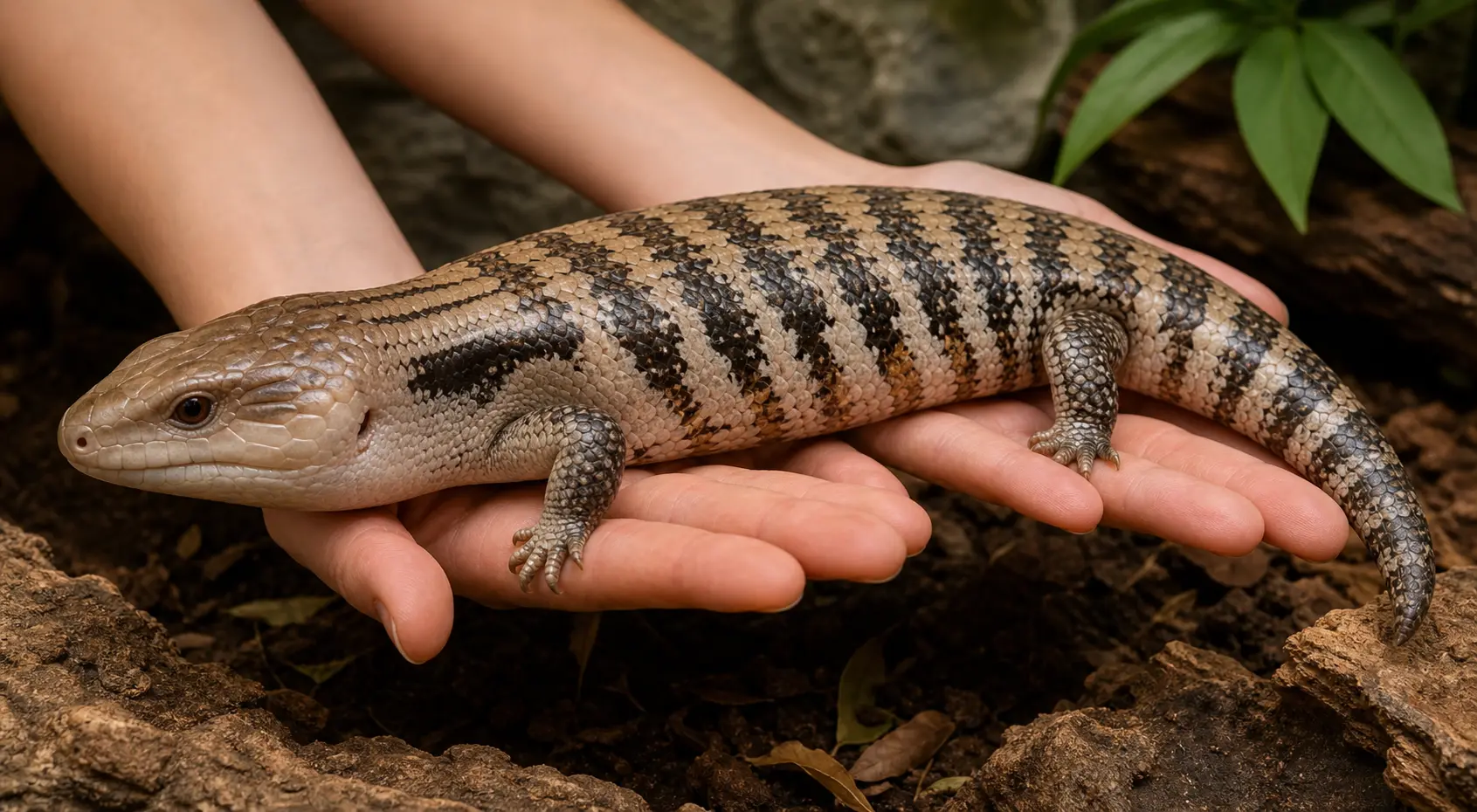
Scoop a blue-tongued skink from below with two hands and support its heavy body and all four legs. Keep the session brief and stop when it backs away, huffs, flattens, or gapes.

A sturdy-looking skink can still be frightened or injured by a poor lift. Support and body language decide whether handling continues.

Use the practical checks
Adult eastern blue-tongued skink resting calmly across two open hands with its heavy body and all four short legs supported.

The short answer

Support the whole skink and stop at the first clear no for blue-tongued skinks

Scoop a blue-tongued skink from below with two hands and support its heavy body and all four legs. Keep the session brief and stop when it backs away, huffs, flattens, or gapes.

Adult home
At least 120 × 75 × 75 cm (48 × 30 × 30 in) for one adult, with broad usable floor space
Warm zone
Adult basking zone about 30–32°C (86–90°F)
Cool and night
Cool end about 22–25°C (72–77°F); All visible lights off; any needed non-light heat remains thermostat controlled
Humidity
Match the confirmed species and locality; use a cool-end hygrometer and provide a clean measured moist hide
UVB
A measured UVI gradient of 3.0–5.0 at the basking zone down to zero in shade
Food
A varied omnivorous diet with both safe plant foods and appropriately prepared animal matter

The honest fit

Would the adult routine work in your home?

Do this

  • Work over a low soft surface after the skink has settled.
  • Scoop from below and support the body and all four legs.
  • Keep fresh water and monitor blue-tongued skink behavior every day.
  • Record changes so a reptile veterinarian receives useful evidence.

Avoid this

  • Do not chase, pin, grab a leg, or lift by the tail.
  • Do not continue after backing away or frantic escape attempts.
  • Do not copy another reptile species' setup.
  • Do not treat a persistent health change as a shopping problem.
01

Start after settling

Give a new blue-tongued skink at least the first week to establish basking, hiding, eating, and normal daytime movement. Begin only when the enclosure and routine are stable.

Wash and dry your hands, close the room, remove other pets, and work over a low soft surface. Approach from the side instead of dropping a hand over the head.

Adult eastern blue-tongued skink exploring pale stone with its broad banded body, clear eye, small sturdy limbs, and blue tongue in close view.
02

Lift the whole animal

For this species, scoop from below with both hands, support the heavy body and all four short legs, keep sessions brief, and stop when the skink backs away, huffs, flattens, or gapes. Bring both hands under the body before lifting instead of pulling one leg or using the tail as a handle.

Keep early sessions around 10 minutes depending on room temperature. Return the skink while it remains calm and before repeated huffing, flattening, gaping, struggling, or escape attempts.


Alert adult eastern blue-tongued skink exploring a broad naturalistic habitat with its sturdy banded body, clear eye, and vivid blue tongue in view.
03

Let trust stay optional

Short handling can support calm interaction and health checks, but roaming on floors or furniture adds fall, escape, chilling, and hygiene risks.

Pain, weakness, limping, poor grip, swelling, an injury, or sudden new defensiveness is a reason to stop and consider reptile-veterinary advice.

Keep deciding

See the complete care picture

Sources and further reading