

Box turtle · Gentle handling

How do I handle a box turtle safely?

Let a box turtle step onto fully supporting hands, then keep the session short. Stop at the first sign it wants to leave.

Begin with choice and finish before the turtle struggles. Quiet observation is often the better interaction.

Use the practical checks
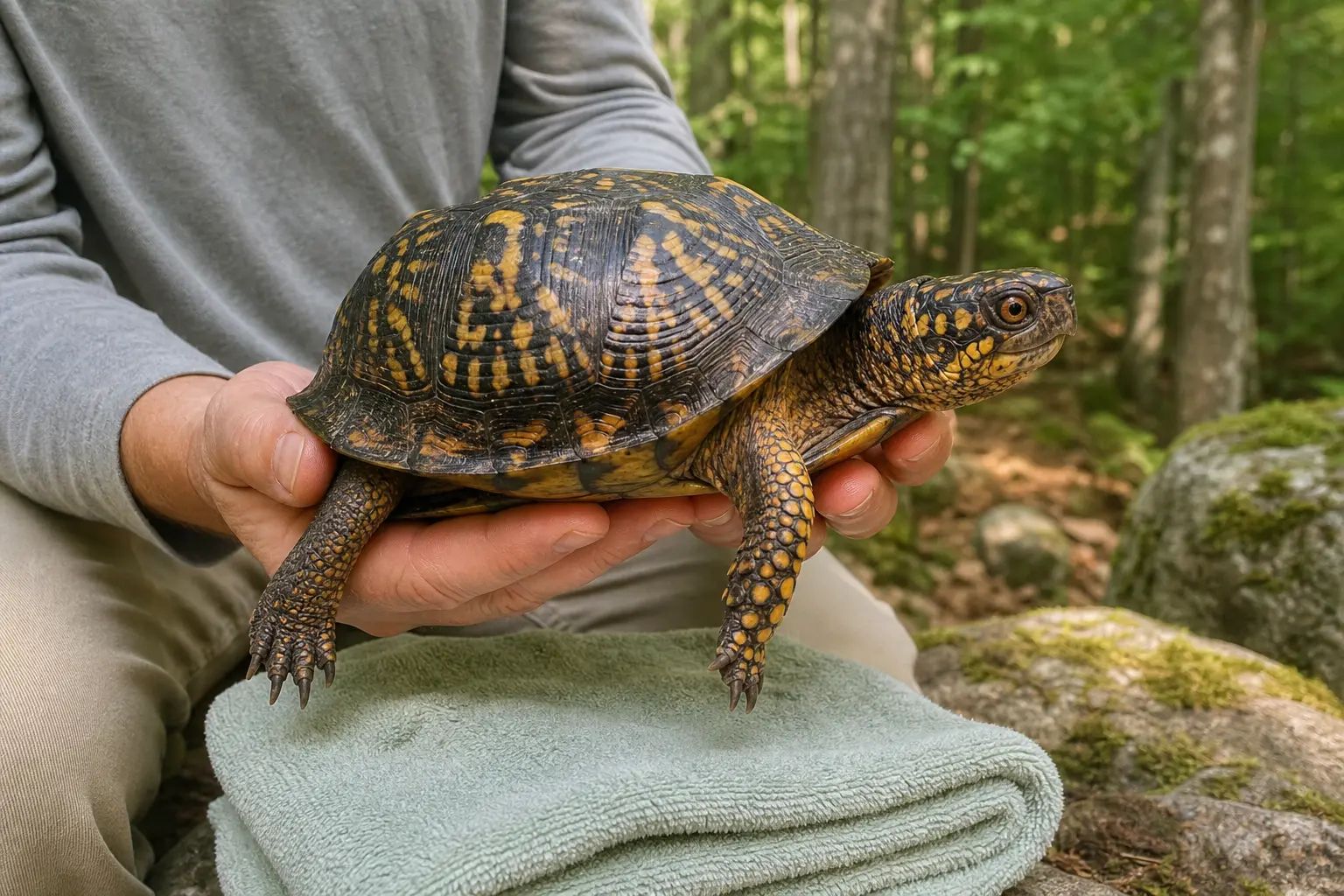
Adult common box turtle with a dark yellow-orange patterned shell and sturdy legs fully supported low over a clean towel during a brief calm handling session.

The short answer

Support the whole body and stop at the first clear no for box turtles

Let a box turtle step onto fully supporting hands, then keep the session short. Stop at the first sign it wants to leave.

Adult home
At least 240 × 120 cm (8 × 4 ft) for one adult; exact climate and layout must match the identified Terrapene species
Warm zone
Broad ground-level basking patch around 32–35°C (90–95°F)
Cool and night
Deep planted shade around 21–25°C (70–77°F); All visible lights off; seasonal cooling or brumation only under an exact-species and veterinary plan
Humidity
Species-dependent, usually with deep humid soil, generous leaf litter, airflow, and a shallow clean soaking area
UVB
Measured moderate UVB over basking ground, grading into complete leafy shade
Food
A varied omnivorous menu of reputable invertebrates, leafy plants, vegetables, fungi, and limited fruit matched to species and age

The honest fit

Would the adult routine work in your home?

Do this

  • Work over a low soft surface after the turtle has settled.
  • Lift only when useful and support the shell and plastron with both hands.
  • Keep fresh water and monitor box turtle behavior every day.
  • Record changes so a reptile veterinarian receives useful evidence.

Avoid this

  • Do not lift by a limb or tail, tip the shell, or let the body dangle.
  • Do not continue after backing away or frantic escape attempts.
  • Do not copy another reptile species' setup.
  • Do not treat a persistent health change as a shopping problem.
01

Start after settling

Give a new box turtle at least the first week to learn the habitat, find food, and establish hiding places. Begin only when routine behavior and appetite are steady.

Wash and dry your hands, close the room, remove other pets, and work over a low soft surface. Approach slowly from the side rather than dropping a hand from above like a predator.

Representative adult common box turtle on woodland leaf litter with its complete high-domed dark shell, warm yellow-orange markings, patterned head, and legs in view.
02

Let support do the work

For this species, scoop from below only when necessary, support the whole shell and plastron, keep the animal low, and return it before it cools. Keep sessions around 10 minutes at first and return the turtle before its body cools or behavior changes.

Never chase repeatedly through the habitat or pin the body. Stop if the turtle backs away, jumps, squeaks, bites, freezes, or repeatedly tries to escape. Let it settle before another attempt.

Alert adult common box turtle exploring deep woodland leaf litter with its high-domed dark shell, warm yellow-orange markings, patterned head, and sturdy legs in view.
03

Protect the tail and the fall

A fall can seriously injure a turtle, so keep the entire shell low and supported. Keep hands close together, move slowly, and maintain a clear landing surface without gaps or hard edges.

Use handling mainly for voluntary interaction and brief health checks. Pain, weakness, poor grip, swelling, an injury, or sudden new defensiveness is a reason to stop and consider veterinary advice.

Keep deciding

See the complete care picture

Sources and further reading