

Do this
- Work over a low soft surface after the snake has settled.
- Let the animal step onto fully supporting hands.
- Keep fresh water and monitor Kenyan sand boa behavior every day.
- Record changes so a reptile veterinarian receives useful evidence.
Kenyan sand boa · Gentle handling
Support a Kenyan sand boa's short heavy body across two hands and keep handling brief. Do not repeatedly dig it up for entertainment, and pause after feeding and during shed.
Respecting the boa's hidden life matters as much as supporting it correctly once lifted.
Use the practical checks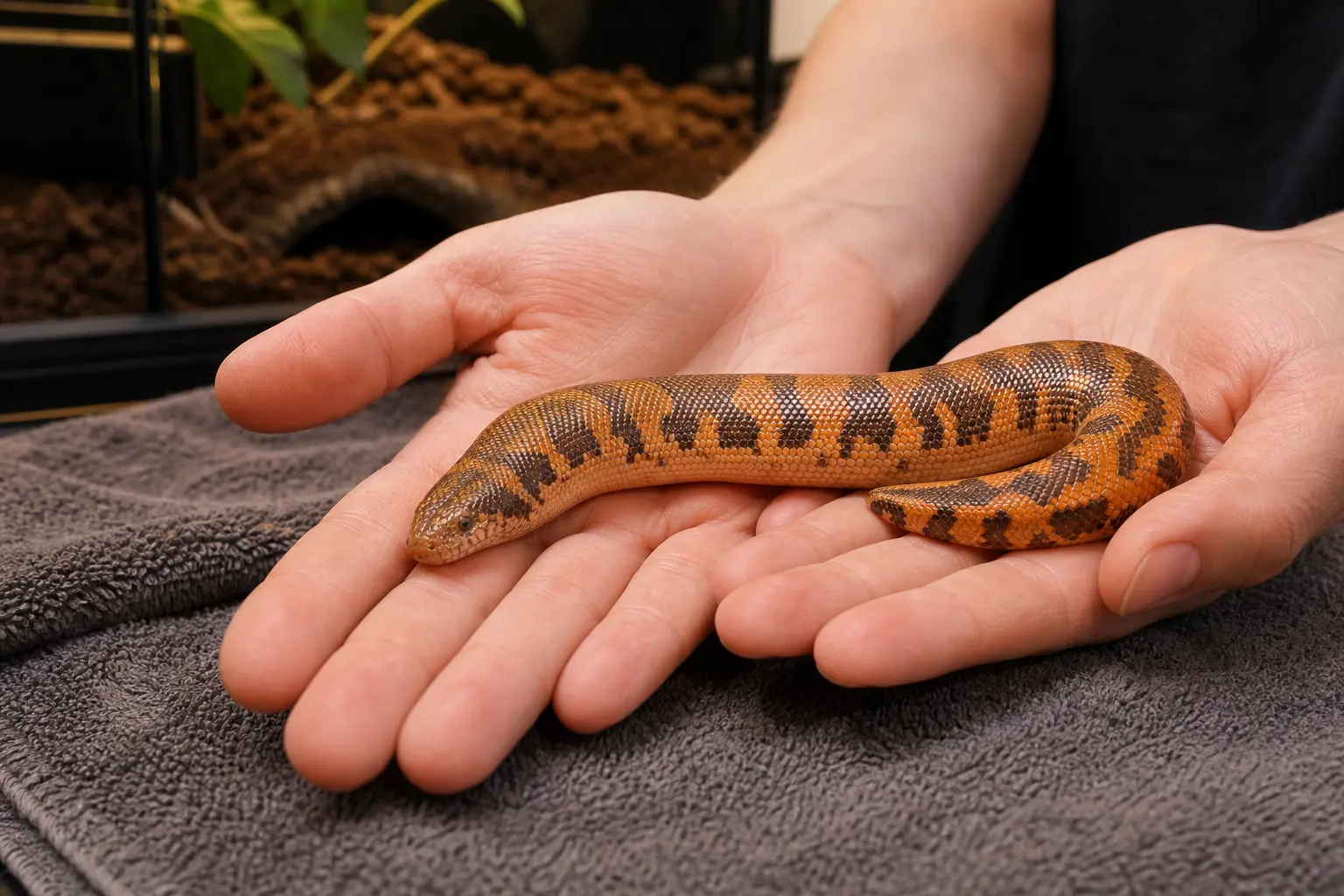
Put it into practice
Give a new Kenyan sand boa at least the first week to establish burrowing, drinking, waste, and normal dusk activity. Begin only when the habitat is stable and the snake is not digesting or entering shed.
Wash and dry your hands, remove prey scent, close the room, exclude other pets, and work over a low soft surface. A defensive S posture means leave the snake alone.
For this species, lift from below with two points of support, keep the short heavy body low, avoid feeding and shed windows, and never excavate the snake merely for entertainment. Let the stout body move through your hands instead of gripping the neck, tail, or coils.
Keep sessions brief and return the snake before it cools. Never let the body dangle, and never probe through substrate with a tool to find it.
Wait at least 24–48 hours after a meal and avoid unnecessary handling during shed. Use planned checks, weights, sheds, waste, and feeding records instead of daily excavation.
Pain, weakness, poor muscle tone, wheezing, swelling, injury, or sudden persistent defensiveness is a reason to stop and seek qualified advice.
Keep deciding