

Kenyan sand boa · Safe heat

How do I heat a Kenyan sand boa enclosure safely?

Kenyan sand boa heat should be thermostat-controlled across the warm, cool, and nighttime ranges below. Verify animal-level readings with separate digital thermometers.

Safe heat gives a Kenyan sand boa guarded warmth, cooler cover, and a genuine nighttime cycle.

Use the practical checks
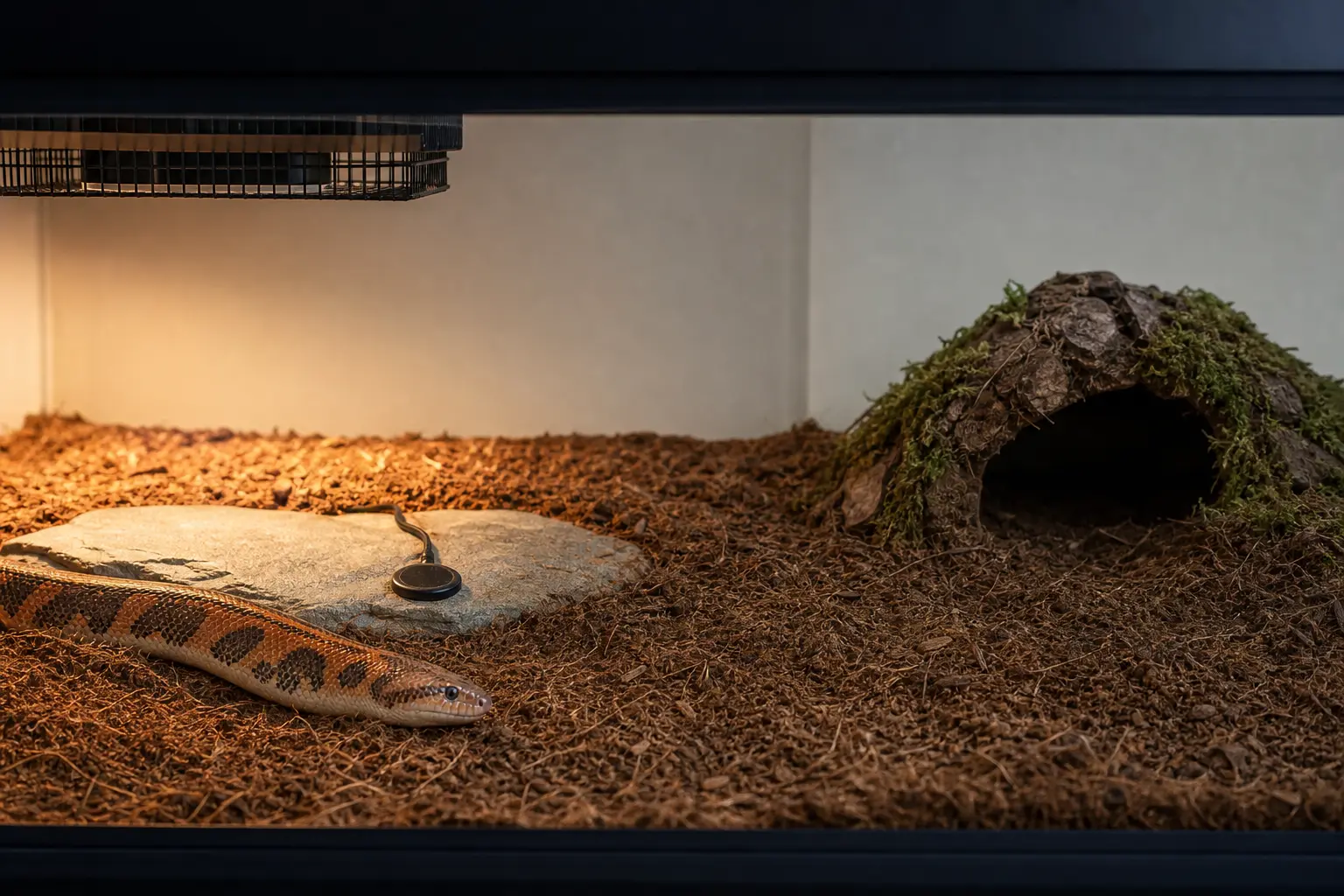
Adult female Kenyan sand boa partly surfaced near guarded overhead heat with fixed probes, a warm retreat, and a deep shaded cool burrow.

The short answer

Control every heater and verify both ends for Kenyan sand boas

Kenyan sand boa heat should be thermostat-controlled across the warm, cool, and nighttime ranges below. Verify animal-level readings with separate digital thermometers.

Adult home
Plan about 91 × 46 × 46 cm (36 × 18 × 18 in) for one adult, with at least 8–10 cm of safe tunnel-holding substrate and every heavy object anchored
Warm zone
Measured basking surface around 35°C (95°F)
Cool and night
Deep covered retreat around 24–27°C (75–80°F); All visible lights off; nighttime temperatures around 21–24°C (70–75°F)
Humidity
A mostly dry, ventilated enclosure with fresh water and a clean cool humid hide around 50–60% during shed
UVB
Low-intensity linear UVB over part of the warm side, with deep substrate and complete shaded escape
Food
Appropriately sized frozen-thawed whole prey offered with long tongs; never use live prey as the routine plan

The honest fit

Would the adult routine work in your home?

Do this

  • Control every heater with the correct thermostat.
  • Verify the warm and cool zones with separate digital thermometers.
  • Keep fresh water and monitor kenyan sand boa behavior every day.
  • Record changes so a reptile veterinarian receives useful evidence.

Avoid this

  • Do not trust the thermostat setting as a thermometer.
  • Do not use heat rocks or colored night lamps.
  • Do not copy another reptile species' setup.
  • Do not treat a persistent health change as a shopping problem.
01

Build a usable gradient

Aim for measured basking surface around 35°C (95°F) with deep covered retreat around 24–27°C (75–80°F). Place several secure retreats across that range so the snake can regulate temperature without sitting exposed.

Choose the heater from the room, enclosure material, ventilation, and required temperature difference. The goal is the measured result at animal level, not a particular wattage copied from another home.

Adult female Kenyan sand boa partly emerging from sand with its short stout orange-and-brown body and tiny blunt head in clear view.
02

Put control before heat

Connect each heat source to the correct thermostat, keep probes fixed, and guard any source the snake could touch. A thermostat controls power; separate digital thermometers confirm what actually happened.

Check the warm surface and cool air every day while the setup is new, after seasonal room changes, and after moving a probe or furnishing. Never use a heat rock or a red or blue night lamp.

Alert adult female Kenyan sand boa emerging from deep sandy soil with her short stout orange-and-brown patterned body, tiny wedge-shaped head, and smooth scales in view.
03

Let night be night

The nighttime plan is all visible lights off; nighttime temperatures around 21–24°C (70–75°F). All visible lights should switch off so the snake receives a clear day-night cycle.

If readings suddenly rise or fall, protect the snake from the unsafe zone and diagnose the equipment before compensating with random extra heaters. Burns, weakness, or abnormal posture deserve reptile-veterinary advice.

Keep deciding

See the complete care picture

Sources and further reading