

Do this
- Control every heater with the correct thermostat.
- Verify the warm and cool zones with separate digital thermometers.
- Keep fresh water and monitor rosy boa behavior every day.
- Record changes so a reptile veterinarian receives useful evidence.
Rosy boa · Safe heat
Basking surface about 29–32°C (85–90°F).
Safe heat gives a rosy boa guarded warmth, cooler cover, and a genuine nighttime cycle.
Use the practical checks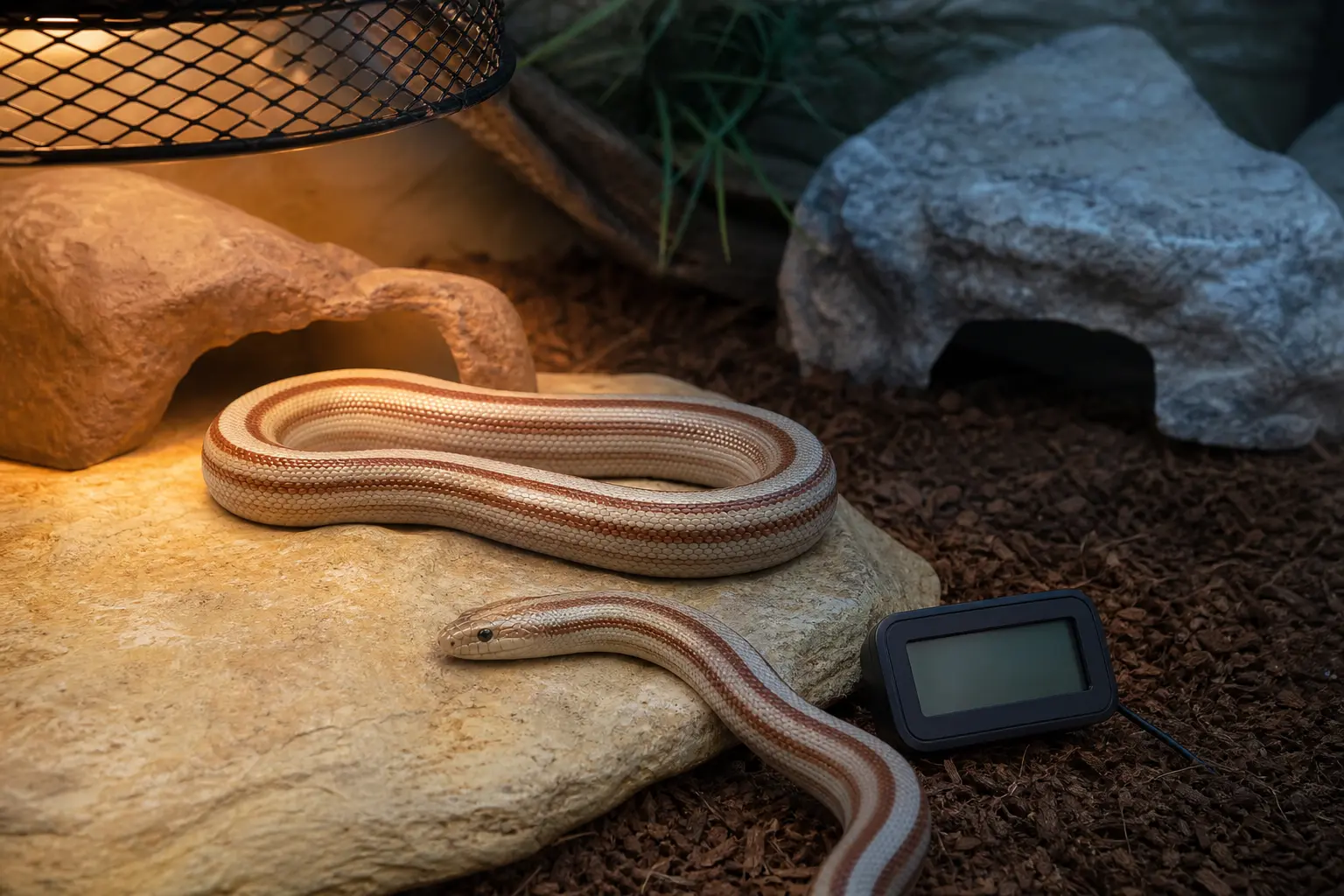
Put it into practice
Aim for basking surface about 29–32°C (85–90°F) with cool zone about 24–27°C (75–80°F), with a sheltered cooler retreat. Place several secure retreats across that range so the snake can regulate temperature without sitting exposed.
Choose the heater from the room, enclosure material, ventilation, and required temperature difference. The goal is the measured result at animal level, not a particular wattage copied from another home.
Connect each heat source to the correct thermostat, keep probes fixed, and guard any source the snake could touch. A thermostat controls power; separate digital thermometers confirm what actually happened.
Check the warm surface and cool air every day while the setup is new, after seasonal room changes, and after moving a probe or furnishing. Never use a heat rock or a red or blue night lamp.
The nighttime plan is all visible lights and routine heat off; a healthy animal can tolerate a measured drop toward 16°C (60°F). All visible lights should switch off so the snake receives a clear day-night cycle.
If readings suddenly rise or fall, protect the snake from the unsafe zone and diagnose the equipment before compensating with random extra heaters. Burns, weakness, or abnormal posture deserve reptile-veterinary advice.
Optional equipment matched to this topic. Confirm the species' target temperatures, UV Index, fixture distances, and thermostat requirements before buying.
Affiliate links: Furball Cove may earn from qualifying purchases at no extra cost to you.
Controls a compatible heat source from a probe reading, with dimming or pulse modes selected for the equipment.
Match the controller's operating mode and load rating to the heater manufacturer's instructions. Check temperatures with a separate thermometer.Amazon search: compare specifications and sellers; results are not individually vetted.Compare options on AmazonTracks the warm and cool ends at the same time so the enclosure gradient is easier to verify.
Use fixed probes at the animal's warm and cool zones. A thermometer measures temperature; it does not control a heater.Amazon search: compare specifications and sellers; results are not individually vetted.Compare options on AmazonKeep deciding