

Do this
- Read a hygrometer before adding water.
- Keep ventilation open and the wet area clean.
- Keep fresh water and monitor blue-tongued skink behavior every day.
- Record changes so a reptile veterinarian receives useful evidence.
Blue-tongued skink · Humidity control
Match the confirmed species and locality. Use a cool-end hygrometer and provide a clean measured moist hide.
The blue-tongued skink trade includes animals from different climates, so identification comes before choosing a target number.
Use the practical checks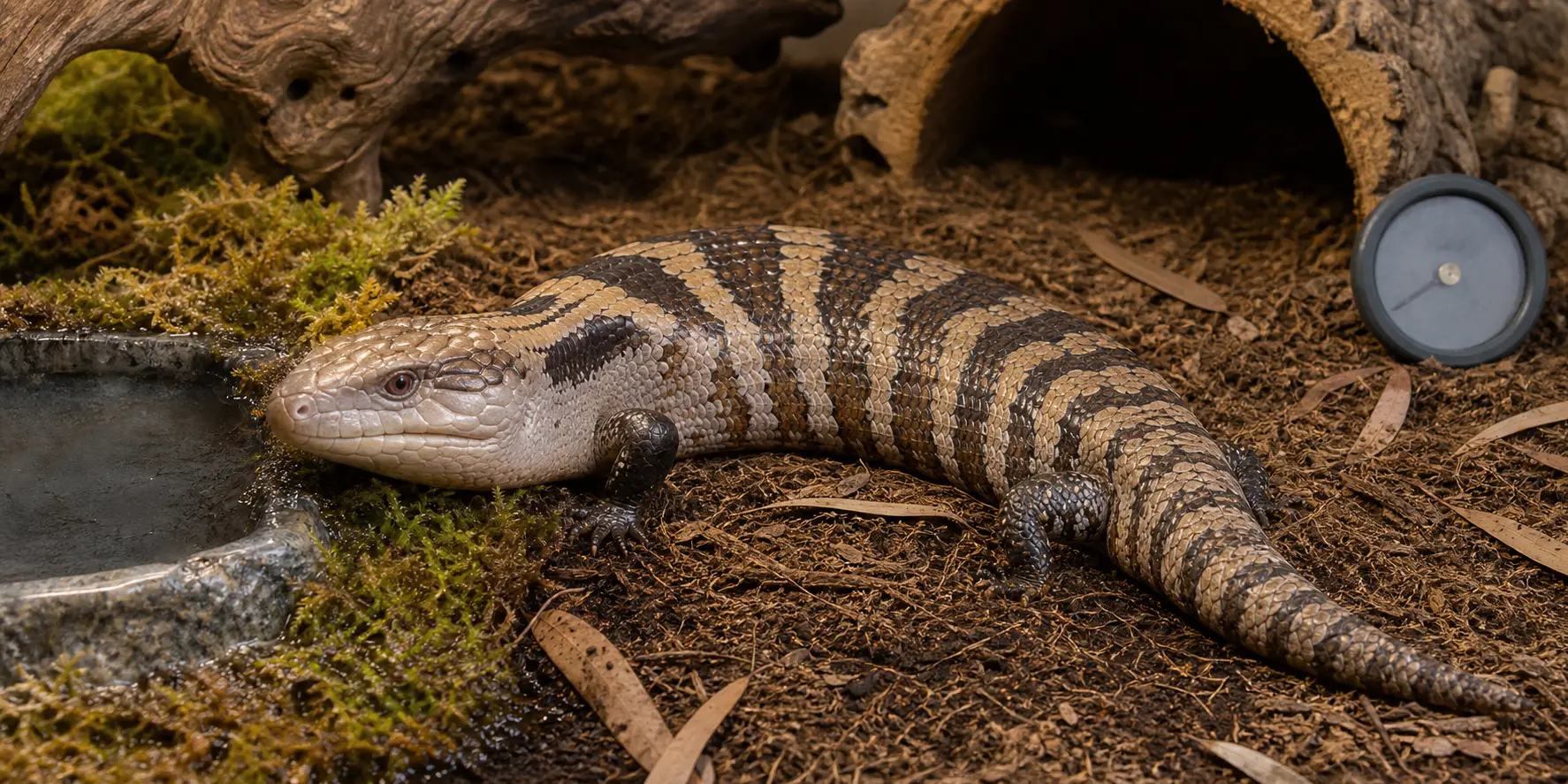
Put it into practice
For a blue-tongued skink, use confirmation of the exact species or locality, a cool-end hygrometer, a measured moist hide, species-matched substrate, clean water, and ventilation adjusted from real readings. Ask the breeder, rescue, or reptile veterinarian to help confirm the scientific identity and origin rather than assuming every blue tongue shares one humidity target.
Place a digital hygrometer at the cool end where the skink actually uses the substrate. Keep a second check on the moist retreat so a useful humid pocket does not become a soaked enclosure.
Use species-matched burrowing substrate, fresh water, and careful clean-water spraying only when readings support it. Keep vents open and remove wet droppings, spoiled food, and sour material promptly.
Australian and Indonesian-type skinks can need very different moisture patterns. If the identification is uncertain, preserve clean choices and get qualified help instead of chasing a generic percentage.
Shed quality, skin, breathing, appetite, movement, and use of the moist hide help show whether the plan works. Record changes alongside the measured humidity.
Repeated poor sheds, wheezing, open-mouth breathing, blisters, skin inflammation, or persistent avoidance of an entire zone call for a husbandry review and reptile-veterinary advice.
Optional equipment for measuring and managing the enclosure. The target range, ventilation, drainage, and drying cycle remain species-specific.
Affiliate links: Furball Cove may earn from qualifying purchases at no extra cost to you.
Keep deciding