Box turtle · Stuck shed

Why is my box turtle having stuck shed?

Box turtle shed problems need a gentle response. Correct hydration and humidity, never pull skin, and call a reptile veterinarian about tight toe bands or repeated trouble.

Loose skin on a box turtle differs from a tight retained band. Protect its new skin while improving the enclosure.

Use the practical checks
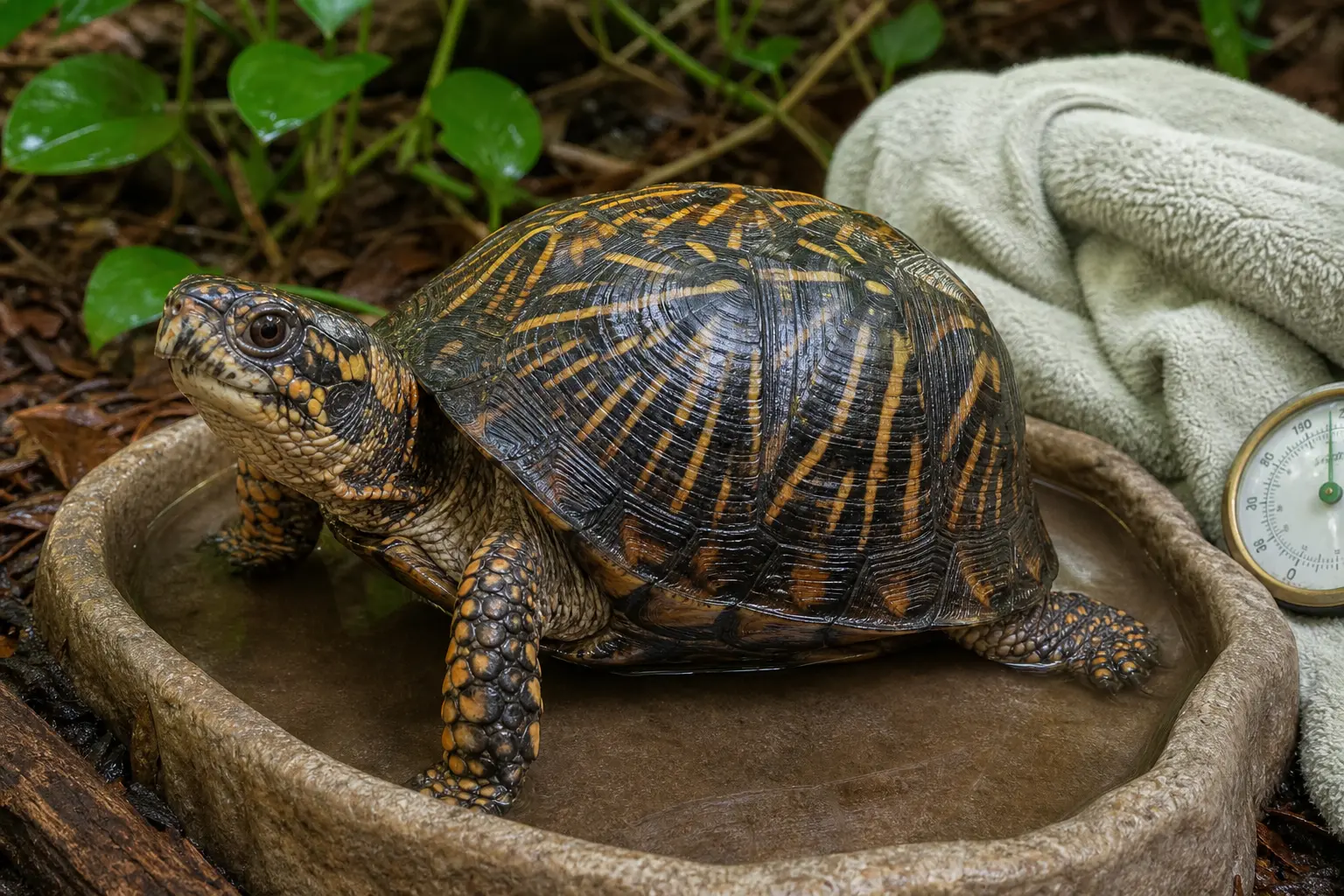
Adult common box turtle with a dark yellow-orange patterned shell and sturdy legs during a calm post-shed visual check without pulling skin or shell material.

The short answer

Fix the conditions and protect delicate toes for box turtles

Box turtle shed problems need a gentle response. Correct hydration and humidity, never pull skin, and call a reptile veterinarian about tight toe bands or repeated trouble.

Adult home
At least 240 × 120 cm (8 × 4 ft) for one adult; exact climate and layout must match the identified Terrapene species
Warm zone
Broad ground-level basking patch around 32–35°C (90–95°F)
Cool and night
Deep planted shade around 21–25°C (70–77°F); All visible lights off; seasonal cooling or brumation only under an exact-species and veterinary plan
Humidity
Species-dependent, usually with deep humid soil, generous leaf litter, airflow, and a shallow clean soaking area
UVB
Measured moderate UVB over basking ground, grading into complete leafy shade
Food
A varied omnivorous menu of reputable invertebrates, leafy plants, vegetables, fungi, and limited fruit matched to species and age

The honest fit

Would the adult routine work in your home?

Do this

  • Inspect the skin, limbs, tail, and shell margins after a shed.
  • Correct temperature, hydration, and the species moisture pattern.
  • Keep fresh water and monitor box turtle behavior every day.
  • Record changes so a reptile veterinarian receives useful evidence.

Avoid this

  • Do not pull firmly attached skin.
  • Do not use oils, tape, hot baths, or tools near the eyes.
  • Do not copy another reptile species' setup.
  • Do not treat a persistent health change as a shopping problem.
01

Inspect without peeling

After a shed, look closely at eyes, beak, neck and leg skin, tail, shell seams, plastron, and any soft, swollen, discolored, or foul area. Use bright neutral light and let the turtle stand naturally so tight rings, swollen tissue, or reduced grip are easier to notice.

Do not tear or tug at skin that does not release with almost no resistance. Pulling can damage fresh skin, eyes, toe pads, or circulation, especially on a small animal.

Representative adult common box turtle on woodland leaf litter with its complete high-domed dark shell, warm yellow-orange markings, patterned head, and legs in view.
02

Correct the shed environment

Review species-dependent, usually with deep humid soil, generous leaf litter, airflow, and a shallow clean soaking area, fresh water, diet, temperatures, and clean textured surfaces. For this species, use a hygrometer, deep moisture-retentive soil, leaf litter, clean shallow soaking water, airflow, and species-specific dry and humid choices.

A clean humid retreat can help loosen a small remnant. Avoid hot baths, oils, adhesive tape, forceps near eyes, and prolonged restraint; repeated trouble may have a medical cause rather than a misting-only solution.


Alert adult common box turtle exploring deep woodland leaf litter with its high-domed dark shell, warm yellow-orange markings, patterned head, and sturdy legs in view.
03

Know when not to wait

Call a reptile veterinarian when retained skin on a box turtle circles a limb, tail tip, or shell margin, involves the eye, causes swelling or color change, or returns across several sheds.

Bring recent weight, feeding, humidity, and temperature records. A qualified reptile veterinarian can use them to investigate parasites, infection, nutrition problems, dehydration, or another underlying condition.

Keep deciding

See the complete care picture

Sources and further reading