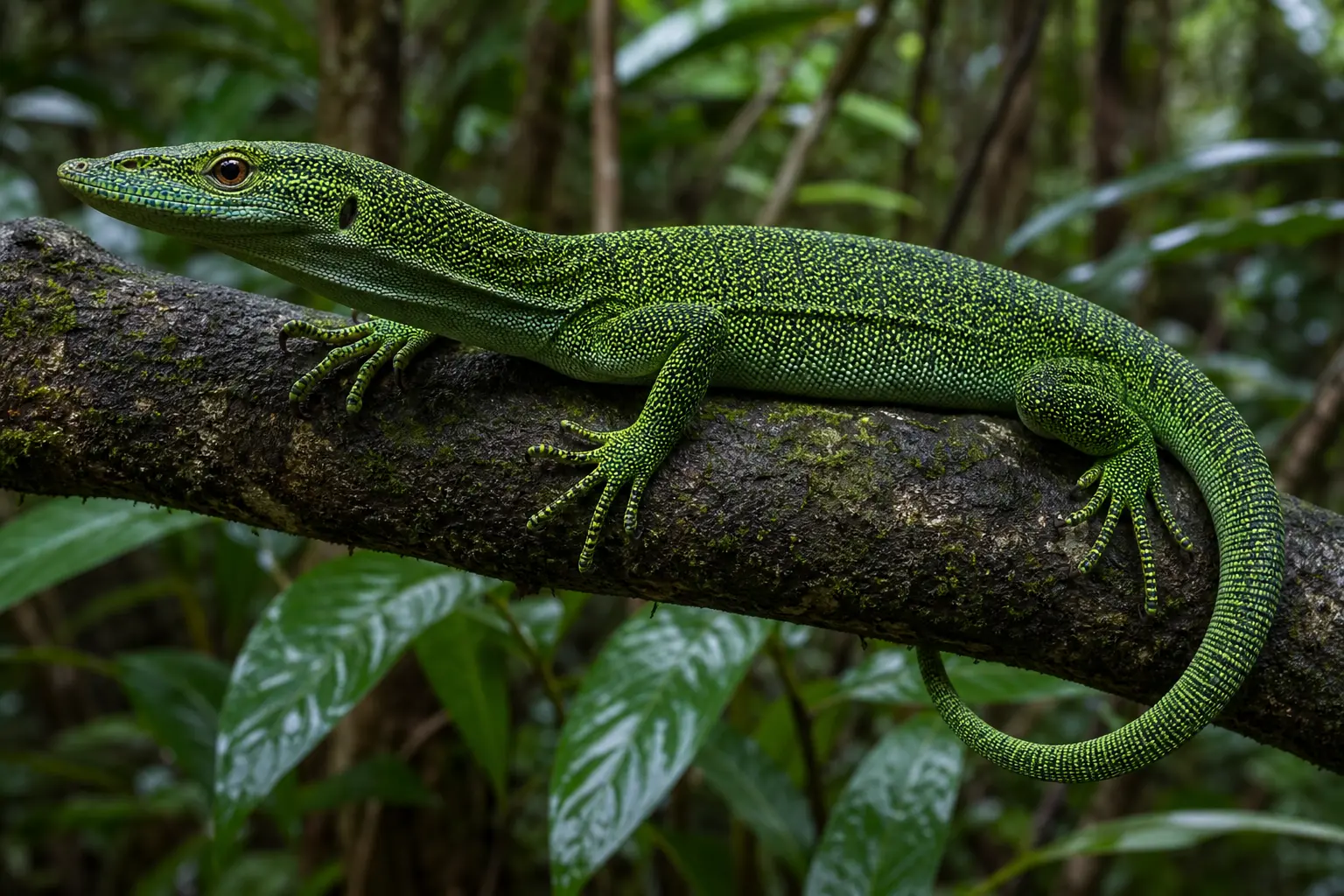
Black-headed monitor · Varanus tristis
The black-headed monitor, in focus.
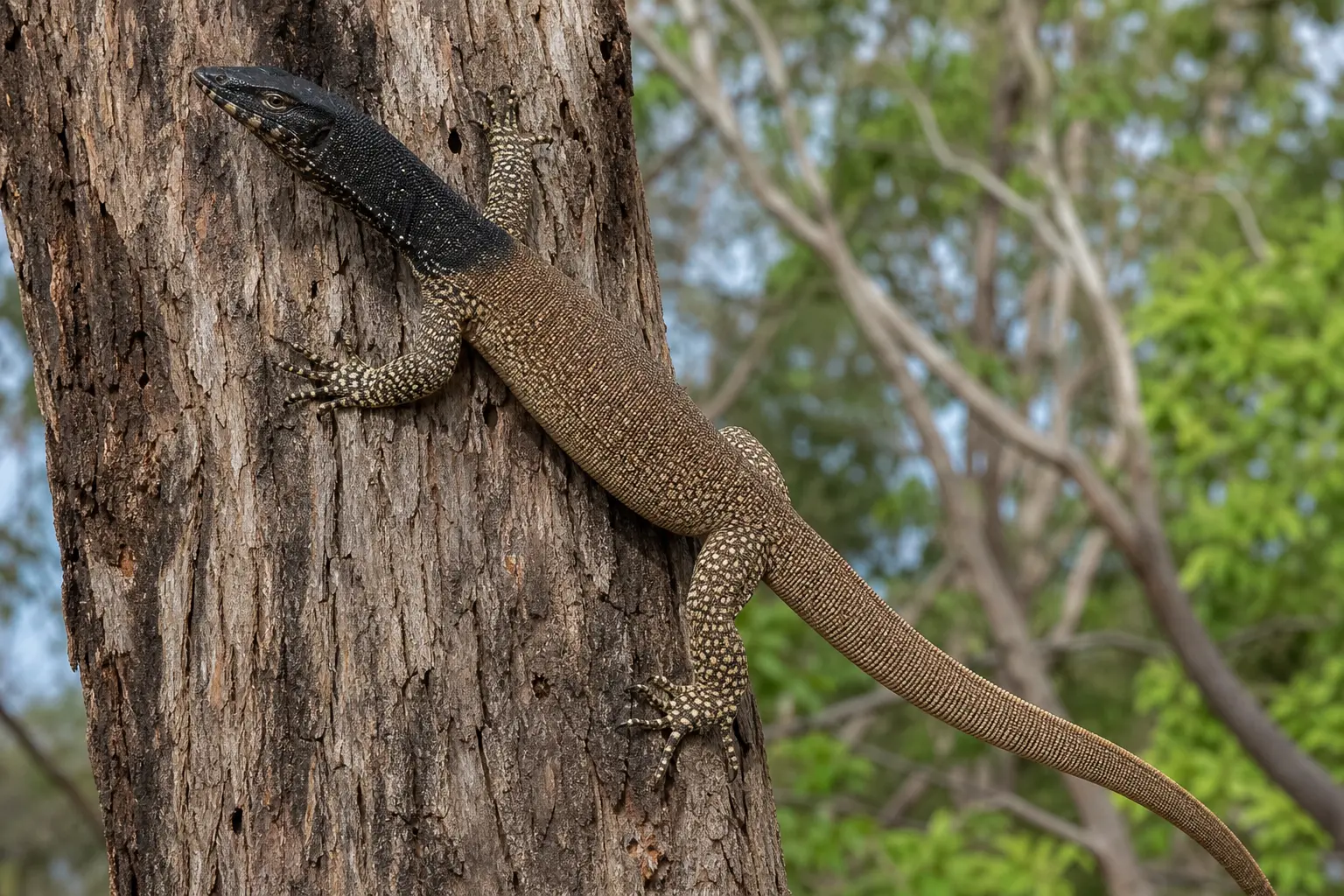
A black-headed monitor is a lean Australian climber with a dark head and an exceptionally long tail.
Localities vary in colour, size, and how arboreal they are.
See what they needBefore you decide
Could a black-headed monitor thrive in your home?
Picture the full-grown animal, the permanent enclosure, and the ordinary care you would still be happy to give years from now.
The honest fit
Would their everyday rhythm suit you?
Think about an ordinary week, including the days when you are tired, busy, or away from home.
Life together may suit you if…
- You want an athletic semi-arboreal monitor
- You can provide six feet of length and height
- You enjoy target training and construction
- You can verify locality and parent size
Pause if…
- You plan to use an ordinary floor-only monitor enclosure
- You cannot install elevated secure hides
- You want frequent hands-on restraint
- You hope to keep a pair
A comfortable home
Build the home around their choices.
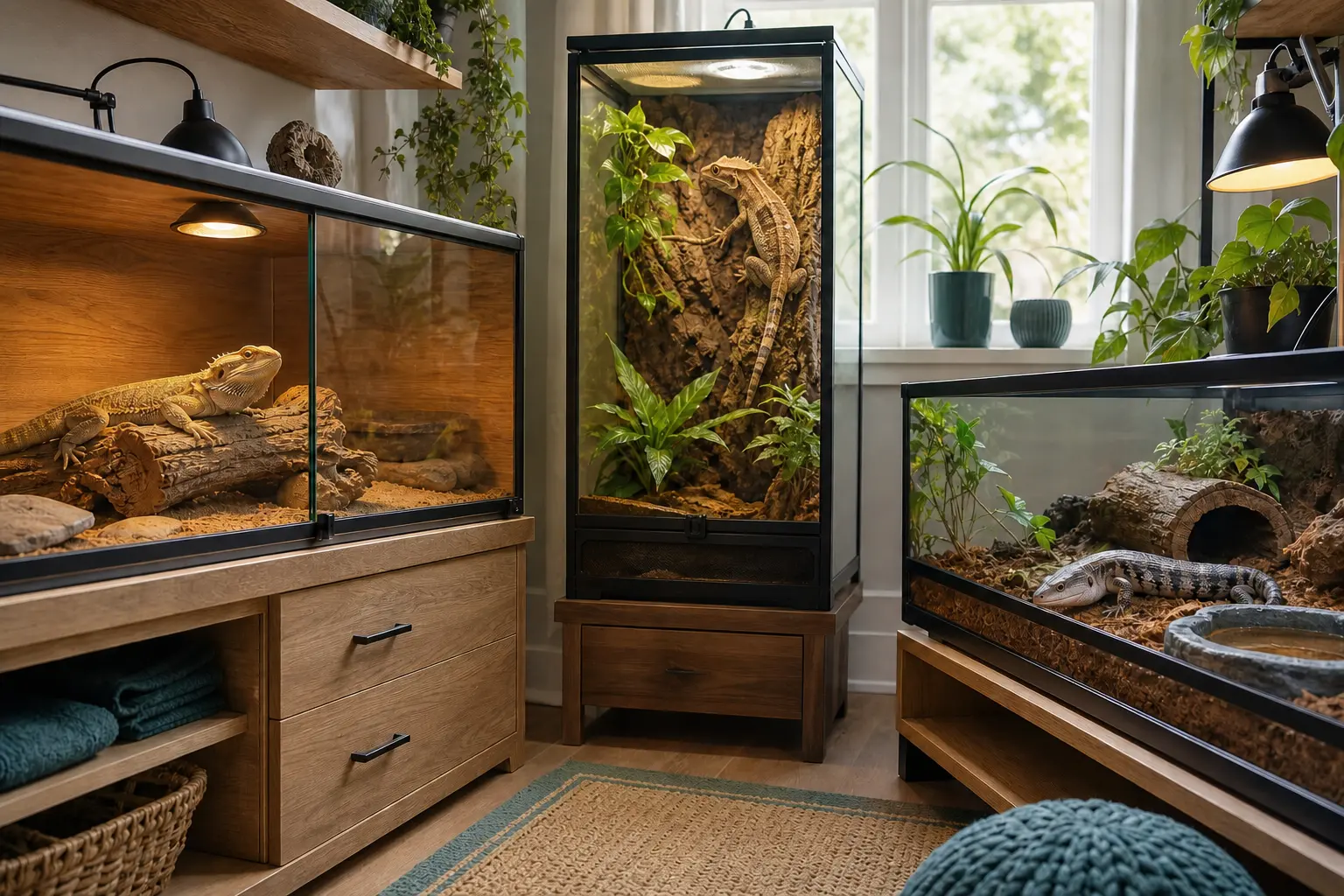
Build a tall, long locked enclosure with full-height trunks, elevated cork hollows, broad shelves, deep compactable soil, fixed rock crevices, a whole-body basking platform, fresh water, intense visible light, guarded heat, measured UVB, and external service access.
Measure where the animal actually rests
A real retreat from the warm side
Use a digital hygrometer and watch ventilation
Build light and shade as a gradient
The rhythm
What an ordinary week asks of you.
Inspect the vertical territory
Check basking shelf, cool retreats, UVB, water, locks, body condition, and every overhead anchor.
Move the target through space
Guide the monitor across trunks and shelves, then offer measured prey or a scent puzzle away from the door.
Load-test the canopy
Pull, twist, and inspect branches, cork, guards, and fasteners before the monitor’s speed finds a weakness.
Care with tenderness
Learn what is normal for your black-headed monitor.
Locality belongs in the care record
Ask for parent size, origin, subspecies or locality information, and adult examples before finalizing heat and enclosure structure.
Height needs safe landing
Use broad branches, textured shelves, secure anchors, and clear routes rather than a few narrow decorative sticks.
Do not invade the sleeping hollow
Elevated hides are security. Train stationing elsewhere for checks and service instead of dragging the monitor out.
Call for warning signs
Weight change, soft jaw, weak limbs, nose rub, burns, swelling, stuck toe shed, or repeated refusal need a reptile veterinarian.
Good to know
Common questions, answered.
Open any question for a short, practical answer.
Life together
Could a black-headed monitor suit a first-time keeper?
This may suit you if you want an athletic semi-arboreal monitor. Pause if you plan to use an ordinary floor-only monitor enclosure. Build and test the habitat before deciding.
How large do black-headed monitors get?
Usually 60–80 cm (24–31 in), with locality variation
How long do black-headed monitors live?
Often 12–20 years. Individual lifespan varies, so plan around the longer end.
When are black-headed monitors active?
A highly active daytime climber, crevice user, and visual hunter
Do black-headed monitors enjoy handling?
Target-trained voluntary contact; respect elevated retreats. Watch the animal's posture and movement, support the whole body, and stop when it tries to leave.
Can two black-headed monitors live together?
House alone
What do black-headed monitors eat?
Varied gut-loaded invertebrates with occasional appropriate whole prey
How large should a black-headed monitor's enclosure be?
Start with at least 180 × 90 × 180 cm for one adult. More usable room is valuable when it creates better gradients, cover, and movement choices.
Home and health
What temperatures does a black-headed monitor need?
Provide a broad elevated surface around 50–60°C (122–140°F), with a sheltered zone around 24–28°C (75–82°F). Measure both where the animal actually spends time and control every heater appropriately.
Does a black-headed monitor need UVB?
The reviewed plan calls for measured high UVB across the basking route, with shade. Fixture, reflector, mesh, distance, lamp age, and shade all change what reaches the animal.
What humidity does a black-headed monitor need?
Often 40–60%, with humid crevices and locality-aware adjustment. Check it with a digital hygrometer. Keep fresh air moving through the enclosure, and let the animal choose between damp shelter and dry ground.
What should be inside the enclosure?
Build a tall, long locked enclosure with full-height trunks, elevated cork hollows, broad shelves, deep compactable soil, fixed rock crevices, a whole-body basking platform, fresh water, intense visible light, guarded heat, measured UVB, and external service access.
What substrate works for a black-headed monitor?
Deep compactable soil-and-sand below a dense network of secure climbing structure
What does ordinary cleaning involve?
Remove waste and leftovers daily, refresh water, inspect every branch anchor, hide, claw, tail, lamp guard, and lock.
What should I arrange before bringing a black-headed monitor home?
Build and test the complete adult habitat, verify the readings over several days, identify a reptile veterinarian, check local and rental rules, and choose a responsible captive source or rescue.
Can a healthy-looking black-headed monitor carry Salmonella?
Yes. Reptiles can carry Salmonella without looking ill, so handwashing and keeping habitat water, food, and cleaning equipment away from kitchens are part of ordinary care.
Still thinking about black-headed monitors?
Put this animal beside the others on your shortlist. Then build and test the complete adult habitat before anyone comes home.
Compare reptilesSources and care boundaries
Exact targets depend on the measured location, equipment, animal, and veterinary context. This profile keeps source disagreements visible instead of blending them into one number.