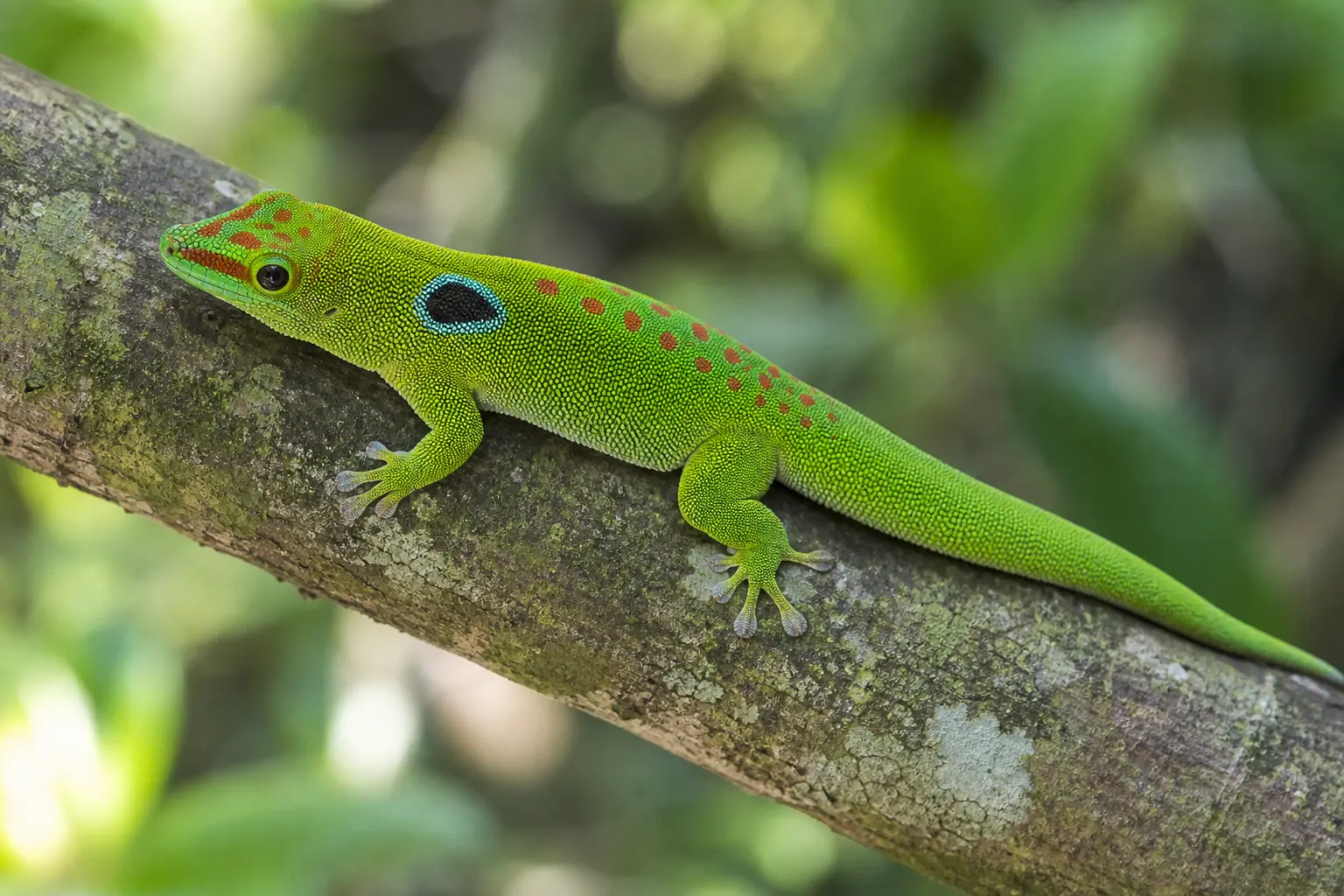
Blue-tailed day gecko · Phelsuma cepediana
Get to know the blue-tailed day gecko.
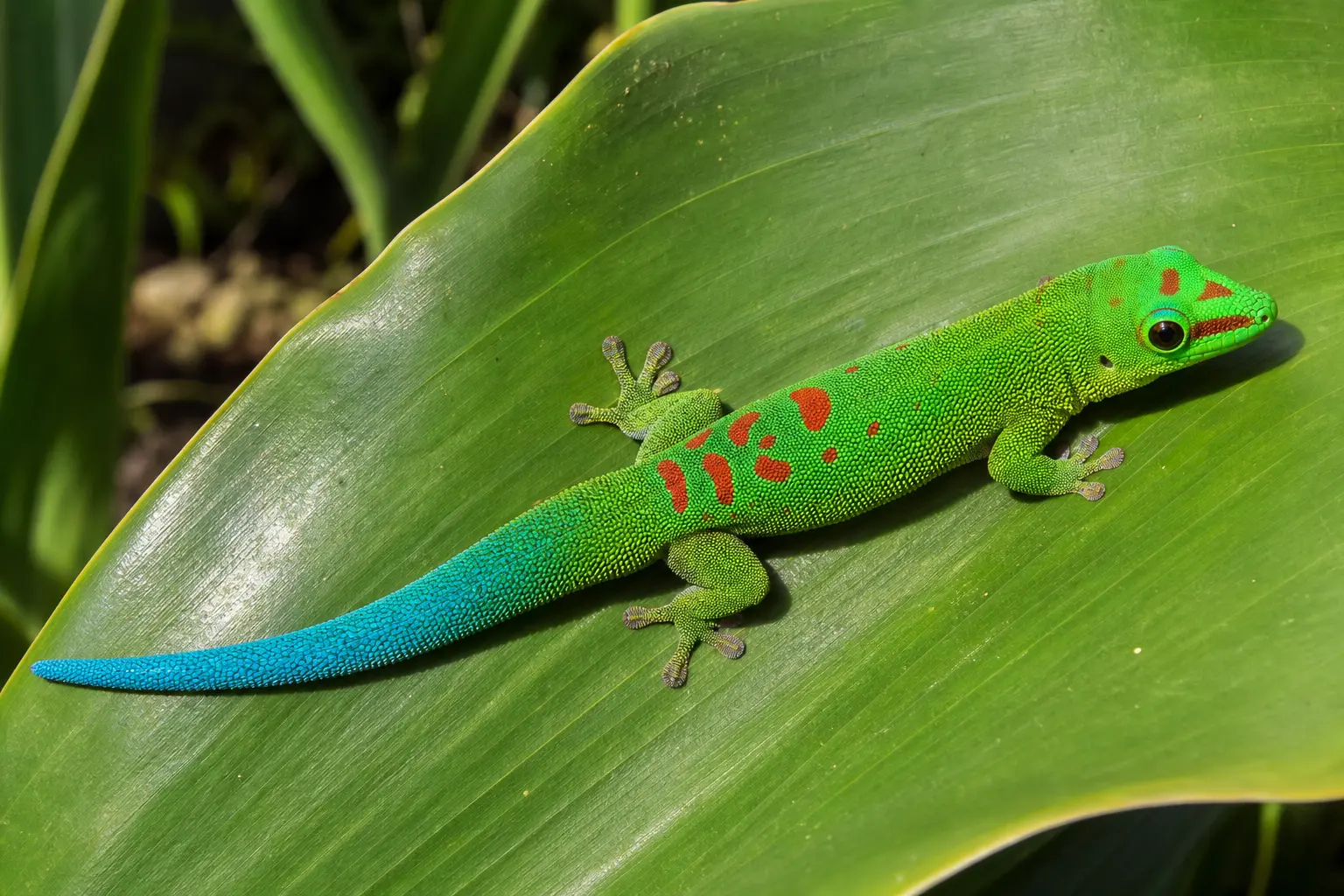
A blue-tailed day gecko is a small Mauritius climber with a bright green body and an electric-blue tail.
Its colour is matched by a busy daylight life among leaves, flowers, and smooth trunks.
See what they needBefore you decide
Could a blue-tailed day gecko thrive in your home?
Picture the full-grown animal, the permanent enclosure, and the ordinary care you would still be happy to give years from now.
The honest fit
Would their everyday rhythm suit you?
Think about an ordinary week, including the days when you are tired, busy, or away from home.
Life together may suit you if…
- You want vivid colour and daytime behaviour
- You enjoy a planted display enclosure
- You can measure heat, UVB, and humidity precisely
- You are content with a hands-off gecko
Pause if…
- You want a gecko to hold
- Your setup has an exposed hot mesh ceiling
- You cannot provide fresh humid air and drying cycles
- The animal is wild-caught or poorly documented
A comfortable home
Build the home around their choices.
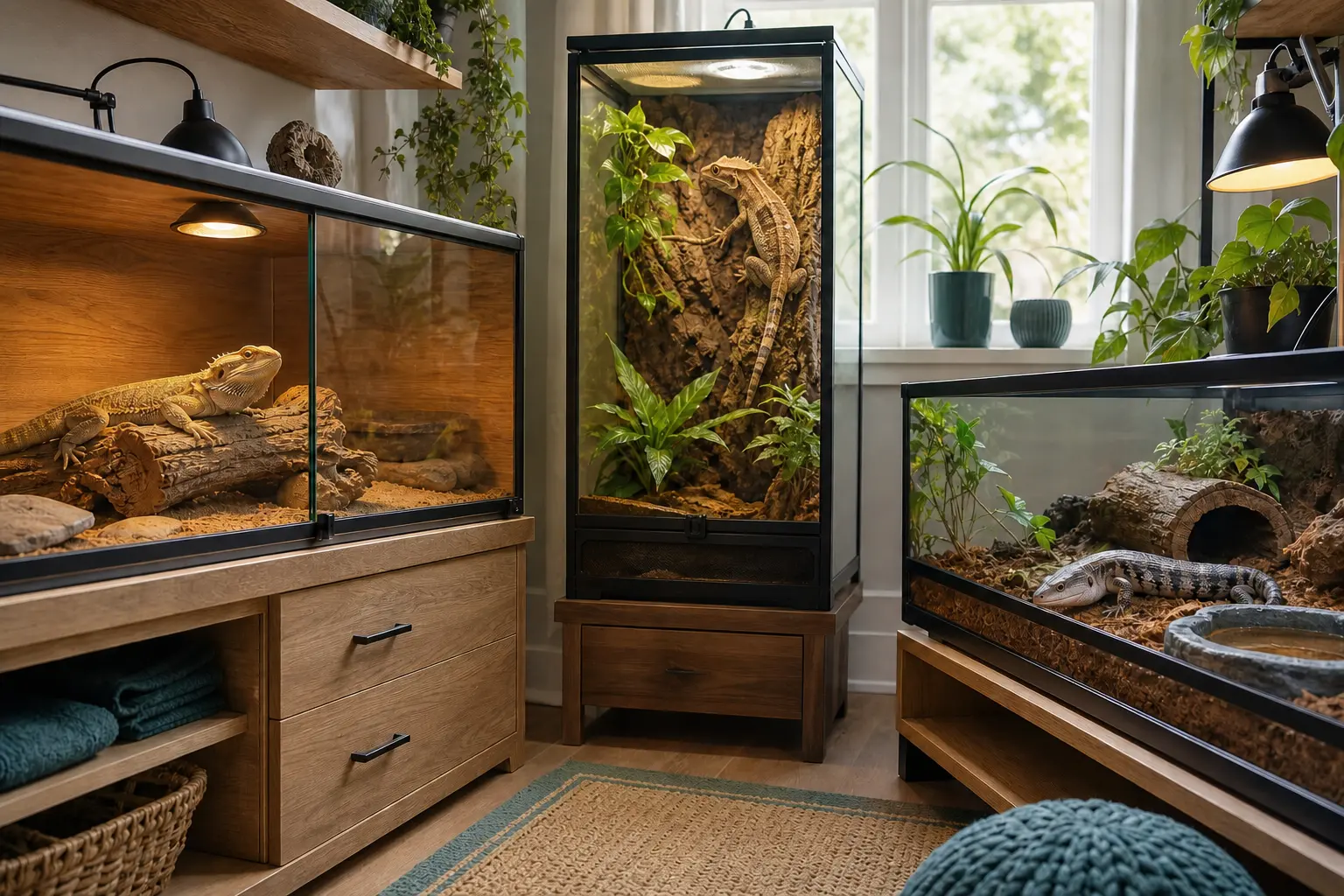
Build a tall planted canopy with broad leaves, smooth vertical stems, cork hollows, feeding ledges, shade at every height, cross-ventilation, drainage, guarded heat above the mesh, measured UVB, and escape-proof doors.
Measure where the animal actually rests
A real retreat from the warm side
Use a digital hygrometer and watch ventilation
Build light and shade as a gradient
The rhythm
What an ordinary week asks of you.
Light the island canopy
Check basking, shade, UVB, humidity trend, drainage, eyes, toes, skin, tail, and door seals.
Feed the jewel
Offer a tiny measured meal at a leafy ledge and watch the gecko hunt without opening the whole canopy.
Keep leaves clean
Remove old diet, rinse foliage in sections, flush drains, test stems, and clear blocked vents.
Care with tenderness
Learn what is normal for your blue-tailed day gecko.
Never grab day-gecko skin
The skin and tail can tear when restrained. Guide the gecko into a secure container instead.
Guard the ceiling heat
Day geckos climb mesh upside down; keep hot lamps at a safe measured distance.
Humidity needs fresh air
Wet stagnant conditions are not tropical care. Let upper leaves dry while lower cover stays humid.
Call for warning signs
Sunken eyes, weak grip, skin damage, swollen jaw, burns, weight loss, or appetite change need a reptile veterinarian.
Good to know
Common questions, answered.
Open any question for a short, practical answer.
Life together
Could a blue-tailed day gecko suit a first-time keeper?
This may suit you if you want vivid colour and daytime behaviour. Pause if you want a gecko to hold. Build and test the habitat before deciding.
How large do blue-tailed day geckos get?
Usually 9.5–14 cm (3.75–5.5 in)
How long do blue-tailed day geckos live?
Up to 15 years or more. Individual lifespan varies, so plan around the longer end.
When are blue-tailed day geckos active?
A fast daytime climber, basker, nectar feeder, and insect hunter
Do blue-tailed day geckos enjoy handling?
Delicate display gecko; use a container for essential transfers. Watch the animal's posture and movement, support the whole body, and stop when it tries to leave.
Can two blue-tailed day geckos live together?
House alone
What do blue-tailed day geckos eat?
Complete day-gecko diet plus varied small live invertebrates
How large should a blue-tailed day gecko's enclosure be?
Start with at least 45 × 45 × 60 cm for one adult. More usable room is valuable when it creates better gradients, cover, and movement choices.
Home and health
What temperatures does a blue-tailed day gecko need?
Provide a perch around 29–32°C (84–90°F), with dense lower foliage around 22–27°C (72–81°F). Measure both where the animal actually spends time and control every heater appropriately.
Does a blue-tailed day gecko need UVB?
The reviewed plan calls for measured moderate UVB over upper perches, with complete shade. Fixture, reflector, mesh, distance, lamp age, and shade all change what reaches the animal.
What humidity does a blue-tailed day gecko need?
Near 80% on average, with night rises, airflow, and daytime drying. Check it with a digital hygrometer. Keep fresh air moving through the enclosure, and let the animal choose between damp shelter and dry ground.
What should be inside the enclosure?
Build a tall planted canopy with broad leaves, smooth vertical stems, cork hollows, feeding ledges, shade at every height, cross-ventilation, drainage, guarded heat above the mesh, measured UVB, and escape-proof doors.
What substrate works for a blue-tailed day gecko?
Drained tropical soil and leaf litter beneath living plants
What does ordinary cleaning involve?
Remove waste, old food, dead prey, and shed promptly; inspect eyes, toes, skin, tail, weight, perches, drains, and doors.
What should I arrange before bringing a blue-tailed day gecko home?
Build and test the complete adult habitat, verify the readings over several days, identify a reptile veterinarian, check local and rental rules, and choose a responsible captive source or rescue.
Can a healthy-looking blue-tailed day gecko carry Salmonella?
Yes. Reptiles can carry Salmonella without looking ill, so handwashing and keeping habitat water, food, and cleaning equipment away from kitchens are part of ordinary care.
Still thinking about blue-tailed day geckos?
Put this animal beside the others on your shortlist. Then build and test the complete adult habitat before anyone comes home.
Compare reptilesSources and care boundaries
Exact targets depend on the measured location, equipment, animal, and veterinary context. This profile keeps source disagreements visible instead of blending them into one number.