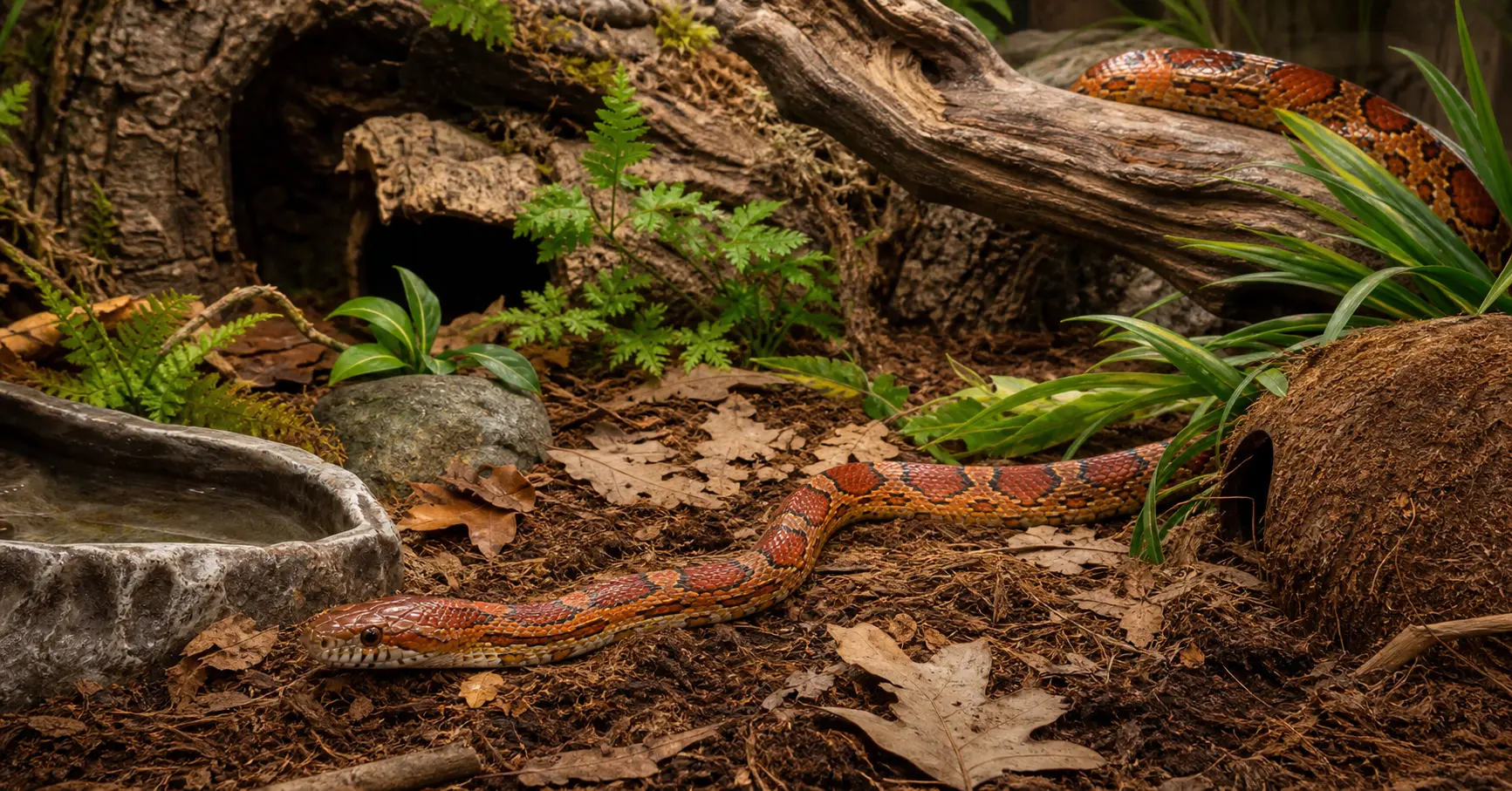
Corn snake · Pantherophis guttatus
The surprising life of the corn snake.
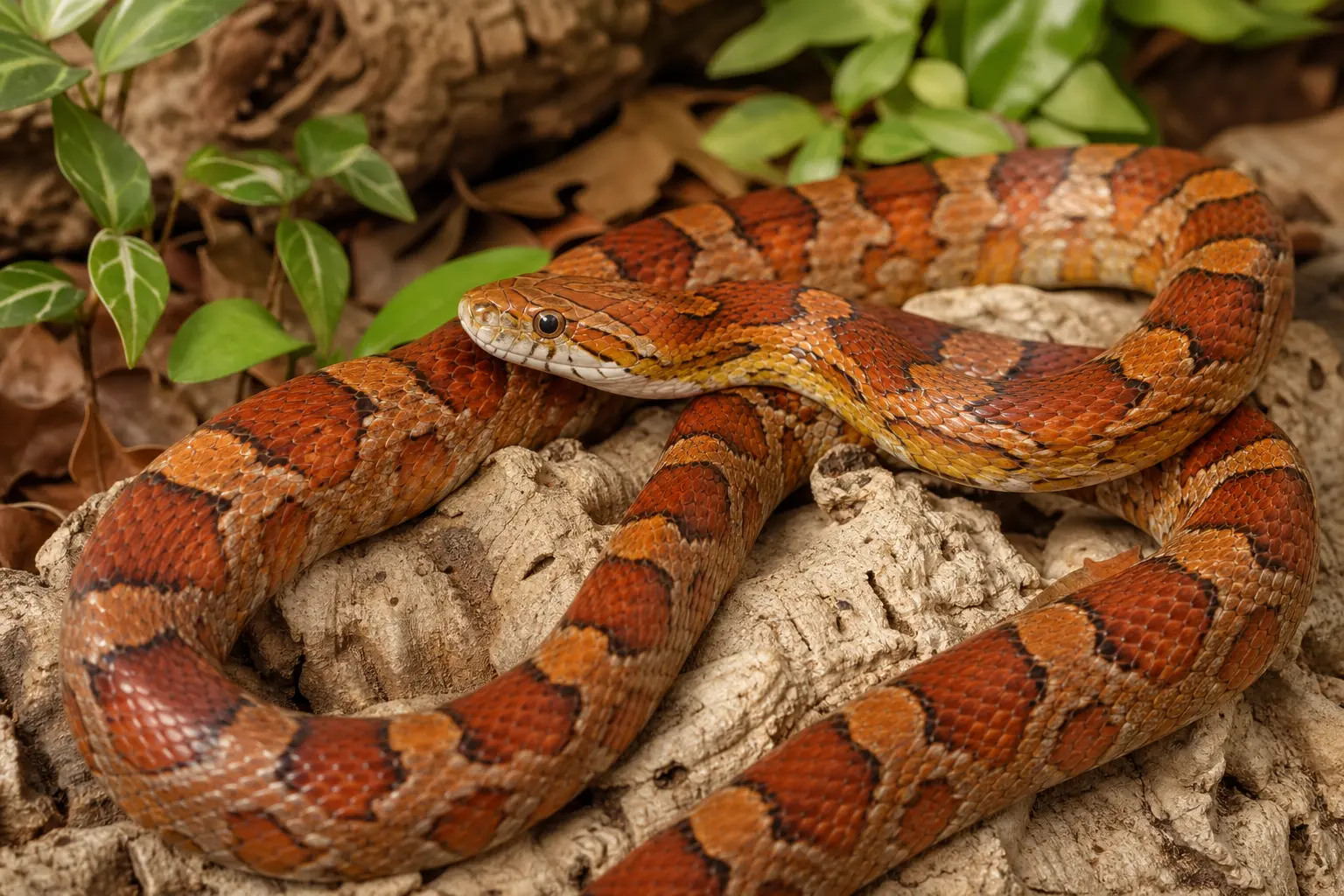
Corn snakes are graceful, curious explorers.
They ask for less attention than many pets, but their secure, carefully measured world still matters every day.
See what they needBefore you decide
Could a corn snake thrive in your home?
Picture the full-grown animal, the permanent enclosure, and the ordinary care you would still be happy to give years from now.
The honest fit
Would their everyday rhythm suit you?
Think about an ordinary week, including the days when you are tired, busy, or away from home.
Life together may suit you if…
- You would enjoy a quiet reptile whose most interesting moments often happen around dawn and dusk
- A secure enclosure long enough for the adult snake to stretch out fits permanently in your home
- Keeping frozen prey and offering it with feeding tongs feels manageable
- You are comfortable checking temperature, humidity, lighting, water, sheds, and body condition
Pause if…
- Feeding whole dead mice would be upsetting or impractical in your household
- The adult enclosure would need to stay smaller than the snake or rely on temporary locks
- You want a pet that seeks frequent touch or daytime interaction
- A reptile veterinarian and safe reptile hygiene are not realistically available
A comfortable home
Build the home around their choices.
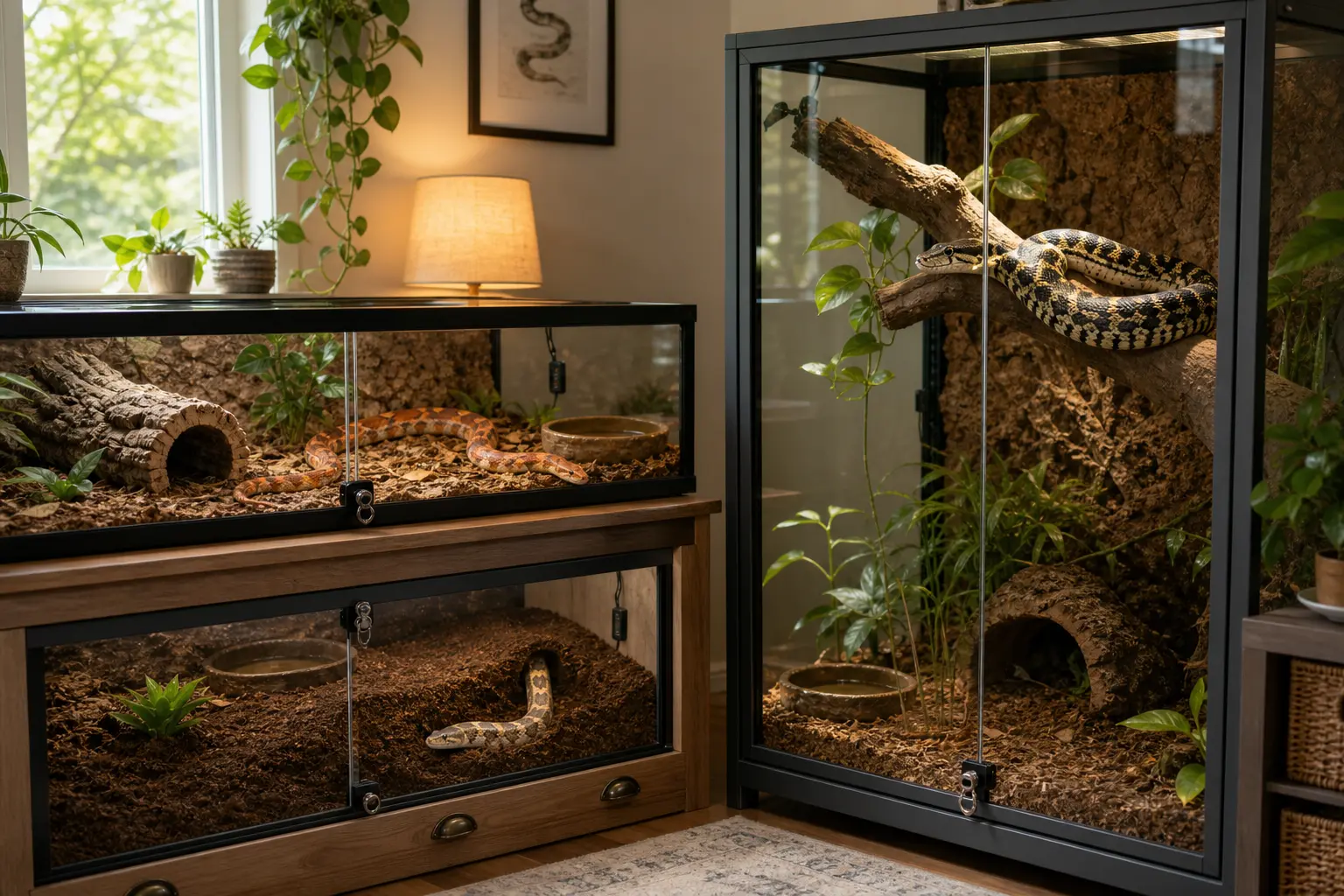
Give the snake room to stretch fully, snug hides at both ends, secure climbing choices, a humid retreat, fresh water, good ventilation, and doors that truly lock.
Measure where the animal actually rests
A real retreat from the warm side
Use a digital hygrometer and watch ventilation
Build light and shade as a gradient
The rhythm
What an ordinary week asks of you.
Check the little world
Read the warm and cool probes, refresh water, and notice where your snake chose to rest.
Watch them begin to explore
Look for smooth movement, tongue-flicking, clear breathing, and normal use of hides and branches. Feed only when due.
Leave a peaceful dark night
Spot-clean anything soiled, secure every door, make a note of changes, and switch off all visible light.
Care with tenderness
Learn what is normal for your corn snake.
Let handling stay optional
Scoop rather than grab, support the body with both hands, and stop if the neck draws into a defensive S shape. Wait at least 48 hours after feeding.
Keep a simple record
A dated log of weight, meals, sheds, droppings, temperatures, humidity, and unusual hiding makes small changes easier to see.
Know who you will call
Arrange a reptile veterinarian before adoption. Seek advice for breathing changes, burns, wounds, regurgitation, retained eye caps, weight loss, swelling, or marked weakness.
Keep reptile care out of the kitchen
Wash hands after touching the snake, water, food, waste, or enclosure equipment, and clean reptile supplies away from food-preparation areas.
Good to know
Common questions, answered.
Open any question for a short, practical answer.
Life together
Are corn snakes good first reptiles?
They can suit a well-prepared first-time snake keeper. The easygoing reputation does not replace an adult-length enclosure, secure locks, measured heat and UVB, frozen prey, and reptile-veterinarian access.
How large do corn snakes get?
They can reach around 150 cm (5 ft), with males often smaller. Plan the adult home before choosing a hatchling.
How long do corn snakes live?
Plan for roughly 10–15 years. Individual lifespan varies, so adoption should still be treated as a long commitment.
When are corn snakes active?
They are mainly active around dawn and dusk, although an individual may explore at other quiet times.
Do corn snakes like being held?
Many become accustomed to short, gentle handling. Support the whole body and let defensive posture, struggling, feeding, and shedding change the plan.
Can two corn snakes live together?
Plan one enclosure per snake. Solitary housing also makes meals, sheds, waste, weight, and health easier to monitor.
What do corn snakes eat?
RSPCA guidance uses appropriately sized dead mice as the main captive diet, with occasional suitable variety. Offer prey with tongs and track body condition.
Should I feed live prey?
Pre-killed prey avoids preventable bites and other injuries. Ask a reptile veterinarian for help if a snake repeatedly refuses an appropriate feeding plan.
Home and health
How large should the enclosure be?
The snake should be able to stretch out fully. RSPCA gives 150 × 50 × 50 cm as the minimum example for a 150 cm adult.
What temperatures do corn snakes need?
RSPCA recommends a 28–30°C basking zone and a 20–24°C cool end. Measure both daily; every heater needs suitable thermostatic control.
Do corn snakes need UVB?
RSPCA recommends a light-to-shade gradient reaching UVI 1.0 at the basking zone and zero in shade, with a lower maximum for light-sensitive morphs such as albinos.
What humidity do corn snakes need?
Aim for about 40–50% in the main enclosure and provide a humid hide. Use a hygrometer and improve ventilation rather than guessing when the enclosure stays too damp.
What should be inside the enclosure?
Provide snug hides at warm and cool ends, secure climbing branches, burrowing opportunity, fresh water, a humid retreat, shade, and enough cover to move without feeling exposed.
How should I handle a corn snake?
Approach calmly, scoop with one hand nearer the head and one nearer the tail, and support the whole body. Keep sessions short and wait at least 48 hours after a meal.
How do I prepare before bringing one home?
Run the finished enclosure for a week, confirm the readings, test every lock and cable opening, identify a reptile veterinarian, and check local and rental rules.
Can corn snakes carry Salmonella?
Yes. A healthy-looking reptile can carry Salmonella, so handwashing and keeping habitat equipment away from kitchens are part of ordinary care.
Still thinking about corn snakes?
Put this animal beside the others on your shortlist. Then build and test the complete adult habitat before anyone comes home.
Compare reptilesSources and care boundaries
Exact targets depend on the measured location, equipment, animal, and veterinary context. This profile keeps source disagreements visible instead of blending them into one number.