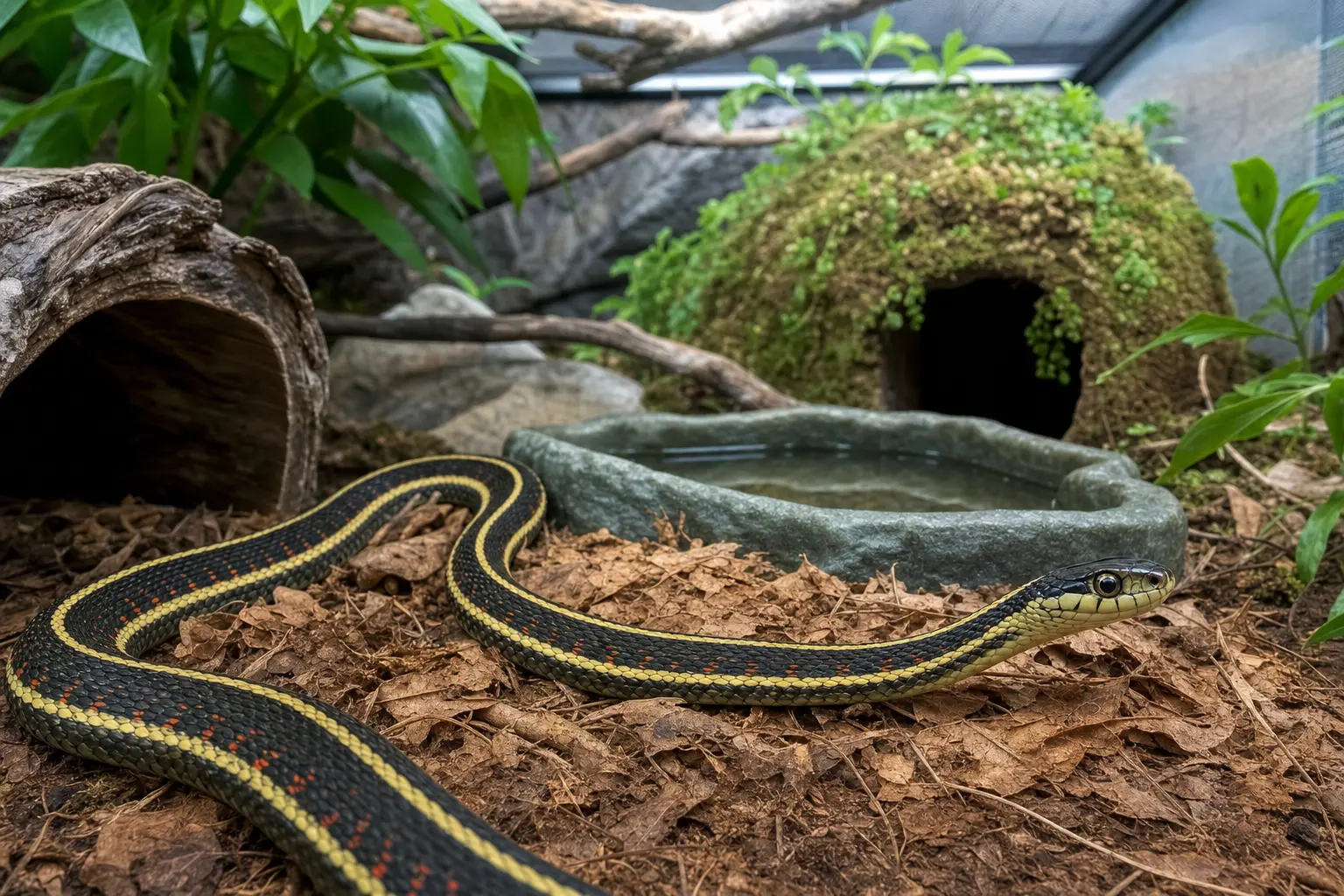
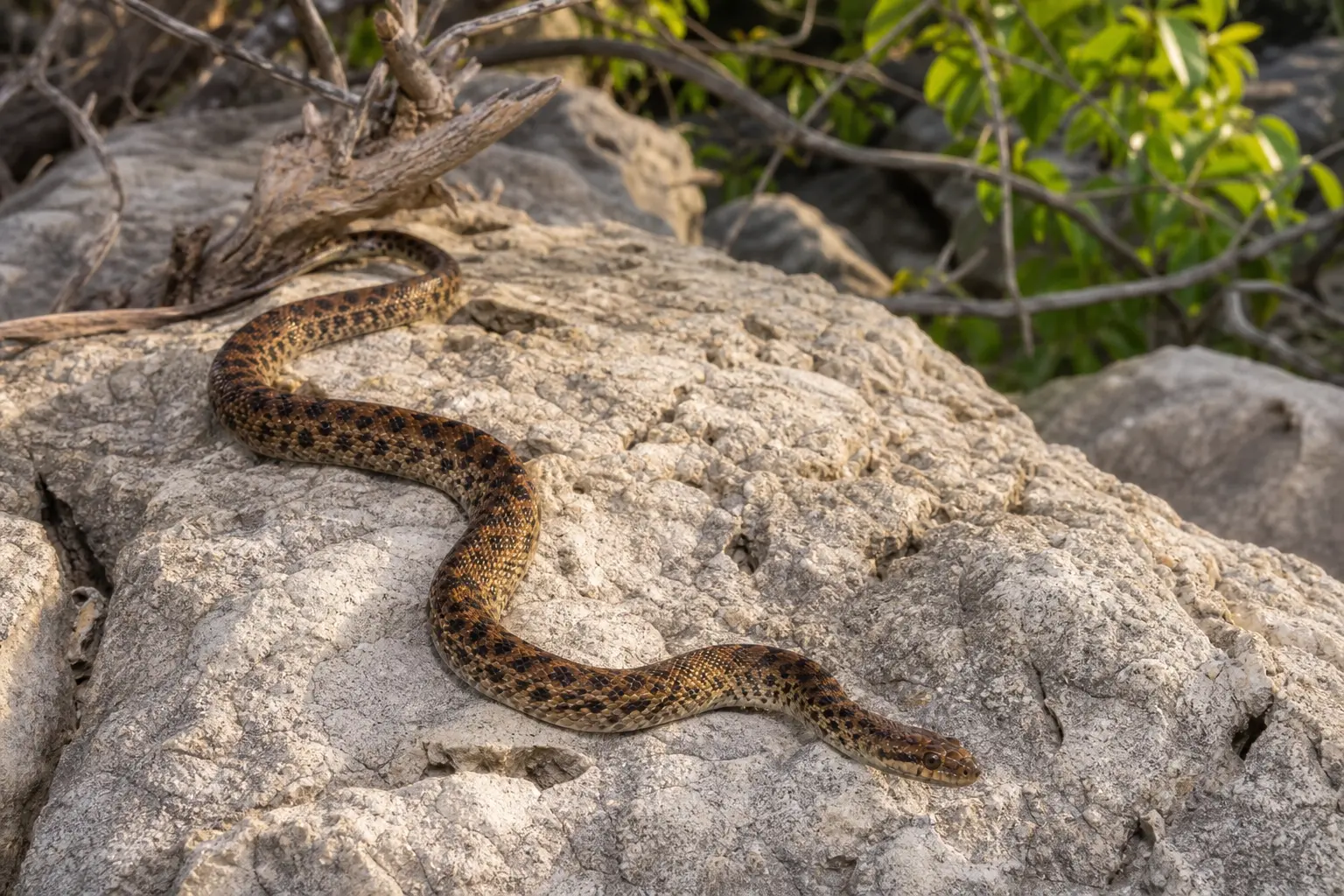
Garter snake · Thamnophis spp.
A day with the garter snake.
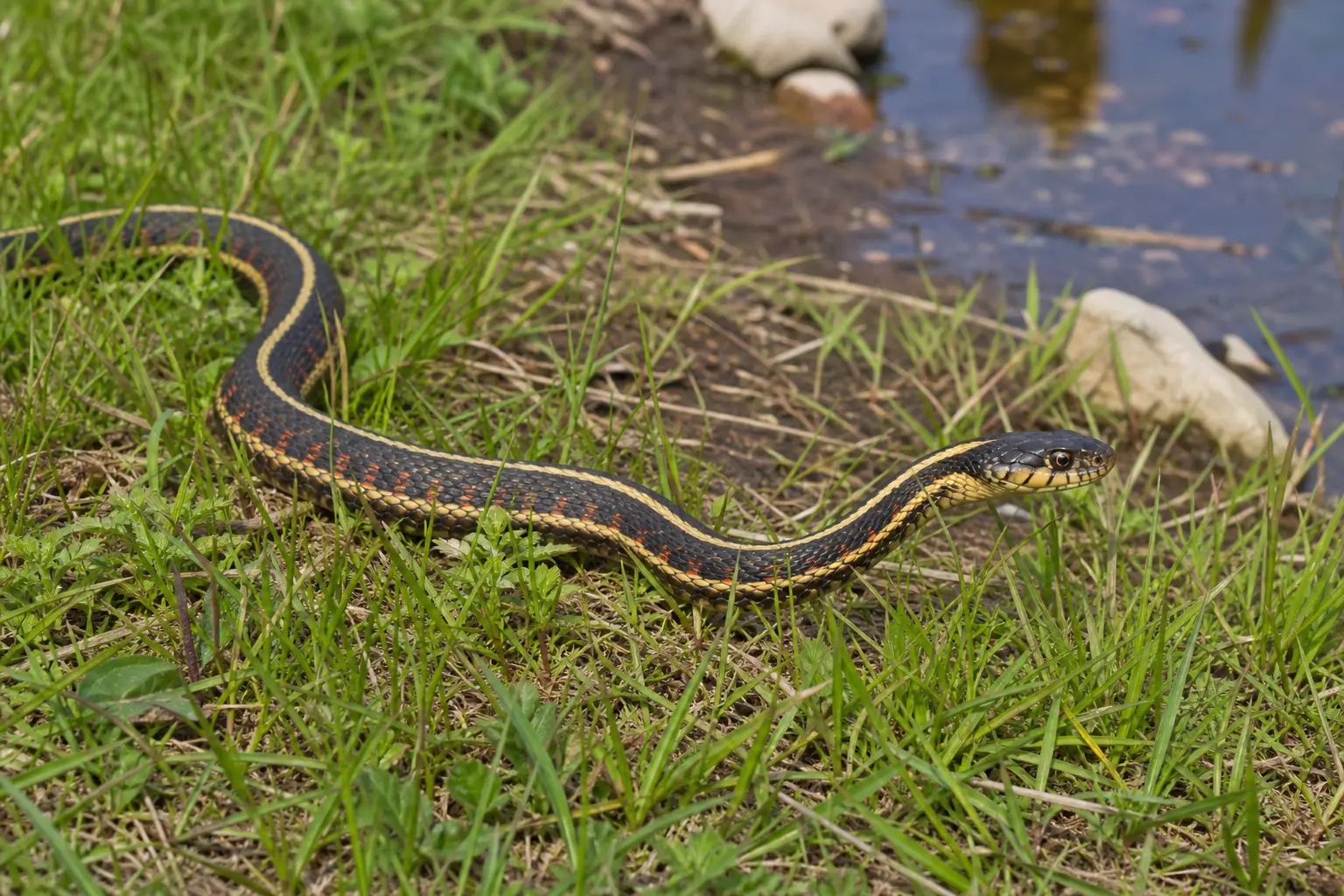
Garter snakes are bright-eyed, busy little hunters.
Their daytime energy is the joy—and the responsibility.
See what they needBefore you decide
Could a garter snake thrive in your home?
Picture the full-grown animal, the permanent enclosure, and the ordinary care you would still be happy to give years from now.
The honest fit
Would their everyday rhythm suit you?
Think about an ordinary week, including the days when you are tired, busy, or away from home.
Life together may suit you if…
- You want an alert daytime snake with swimming, climbing, and foraging behaviour
- You can offer more floor space and enrichment than its slender body suggests
- Sourcing a safe varied diet and monitoring weight feel manageable
- You are content with brief handling and occasional defensive musk
Pause if…
- You want a slow snake that spends most of the day resting in your hands
- You plan to feed only fish fillet, feeder goldfish, or live food collected outdoors
- A large, frequently changed water bowl and dry land area are impractical
- You want a group before mastering the care and sexing of one animal
A comfortable home
Build the home around their choices.
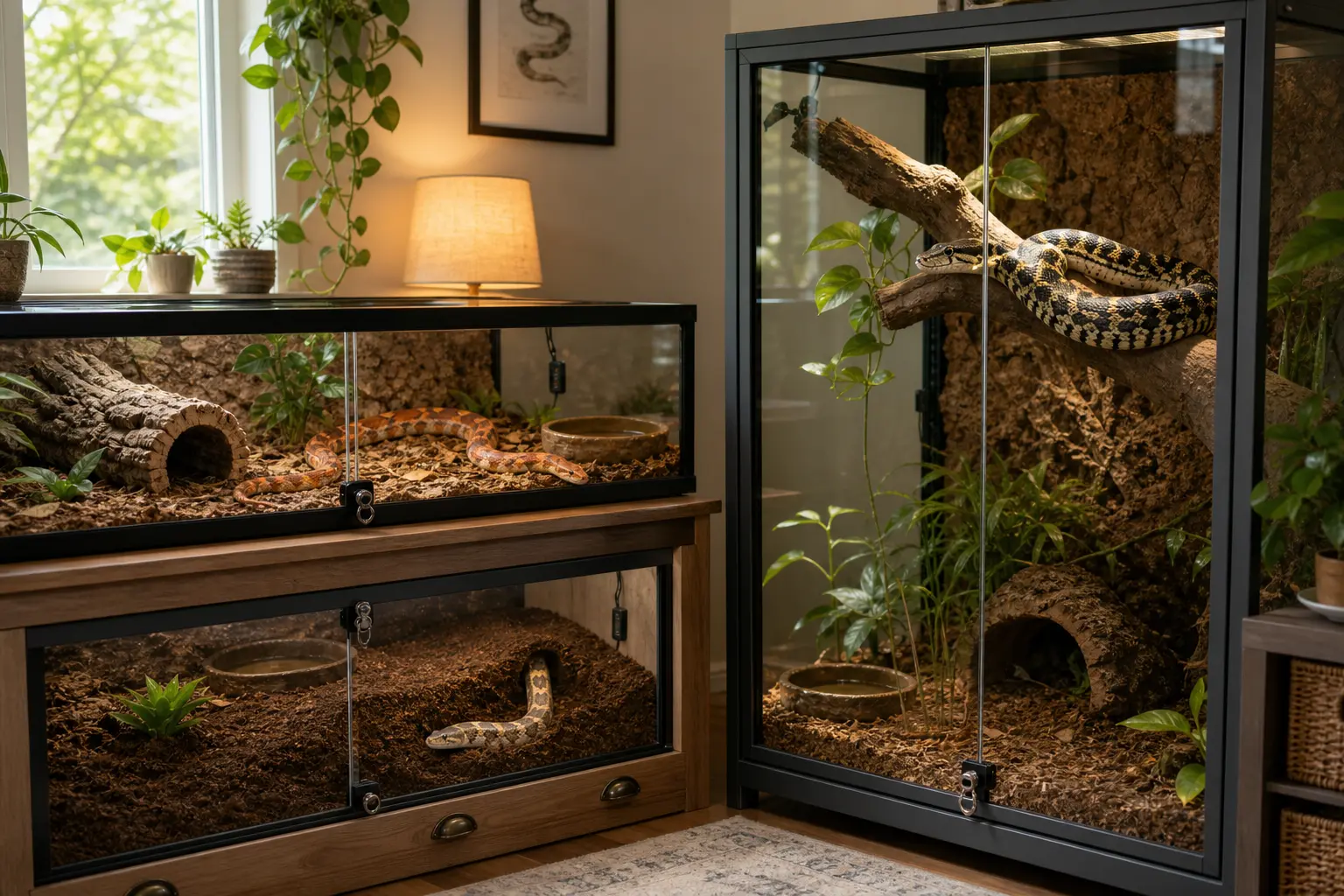
Give this active snake room to stretch, climb, burrow, and fully submerge. Use a locked ventilated enclosure, several snug hides, dry land, deep natural substrate, sturdy branches, and a water dish that is easy to disinfect.
Measure where the animal actually rests
A real retreat from the warm side
Use a digital hygrometer and watch ventilation
Build light and shade as a gradient
The rhythm
What an ordinary week asks of you.
Open the riverside
Check the basking and cool zones, change the water, remove waste, and watch for clear eyes, smooth movement, and an eager tongue.
Give the energy a path
Scatter safe scent trails or several small food items on feeding day, rotate climbing cover, and keep the land dry while water stays clean.
Count everyone home
For a group, visually confirm every snake, check each hide and feeding record, secure all openings, and let the enclosure go dark.
Care with tenderness
Learn what is normal for your garter snake.
Build the diet, do not improvise it
Some fish destroy vitamin B1 and fillets lack the bones and organs a snake needs. Confirm species, prey variety, and any supplement plan with a reptile veterinarian.
Keep water clean and land dry
Garters may soak, but constantly wet substrate can damage skin. Use a removable bathing dish and ventilation that lets the rest of the habitat dry.
Cohabitation adds work
A group needs compatible, similarly sized animals, more space, many identical resources, separate feeding oversight, and a ready spare enclosure if bullying or illness appears.
Respond to the small signs
Blisters, mites, swelling, mouth changes, abnormal droppings, weight loss, wheezing, or retained eye caps need a reptile veterinarian.
Good to know
Common questions, answered.
Open any question for a short, practical answer.
Life together
Could a garter snake suit a first-time keeper?
This may suit you if you want an alert daytime snake with swimming, climbing, and foraging behaviour. Pause if you want a slow snake that spends most of the day resting in your hands. Build and test the habitat before deciding.
How large do garter snakes get?
Most pet species reach about 60–100 cm (2–3.3 ft)
How long do garter snakes live?
Ten years or longer. Individual lifespan varies, so plan around the longer end.
When are garter snakes active?
Active and visible during the day
Do garter snakes enjoy handling?
Short, fully supported sessions; many would rather explore. Watch the animal's posture and movement, support the whole body, and stop when it tries to leave.
Can two garter snakes live together?
Can live alone; groups require expert planning and duplicated resources
What do garter snakes eat?
A varied whole-prey diet built around safe rodents, fish, and earthworms
How large should a garter snake's enclosure be?
Start with at least the snake’s full length, with one-third that length in width and height. More usable room is valuable when it creates better gradients, cover, and movement choices.
Home and health
What temperatures does a garter snake need?
Provide a measured 28–32°C (82–90°F) zone, with a retreat around 22–24°C (72–75°F). Measure both where the animal actually spends time and control every heater appropriately.
Does a garter snake need UVB?
The reviewed plan calls for UVI about 1.0 at the basking zone, grading to zero in shade. Fixture, reflector, mesh, distance, lamp age, and shade all change what reaches the animal.
What humidity does a garter snake need?
About 50–60%, with a humid hide and dry land underfoot. Check it with a digital hygrometer. Keep fresh air moving through the enclosure, and let the animal choose between damp shelter and dry ground.
What should be inside the enclosure?
Give this active snake room to stretch, climb, burrow, and fully submerge. Use a locked ventilated enclosure, several snug hides, dry land, deep natural substrate, sturdy branches, and a water dish that is easy to disinfect.
What substrate works for a garter snake?
A clean reptile-safe soil and sand mix with leaf cover, kept dry outside the humid retreat
What does ordinary cleaning involve?
Change water daily or whenever fouled, remove waste promptly, and disinfect the enclosure and decor about monthly.
What should I arrange before bringing a garter snake home?
Build and test the complete adult habitat, verify the readings over several days, identify a reptile veterinarian, check local and rental rules, and choose a responsible captive source or rescue.
Can a healthy-looking garter snake carry Salmonella?
Yes. Reptiles can carry Salmonella without looking ill, so handwashing and keeping habitat water, food, and cleaning equipment away from kitchens are part of ordinary care.
Still thinking about garter snakes?
Put this animal beside the others on your shortlist. Then build and test the complete adult habitat before anyone comes home.
Compare reptilesSources and care boundaries
Exact targets depend on the measured location, equipment, animal, and veterinary context. This profile keeps source disagreements visible instead of blending them into one number.