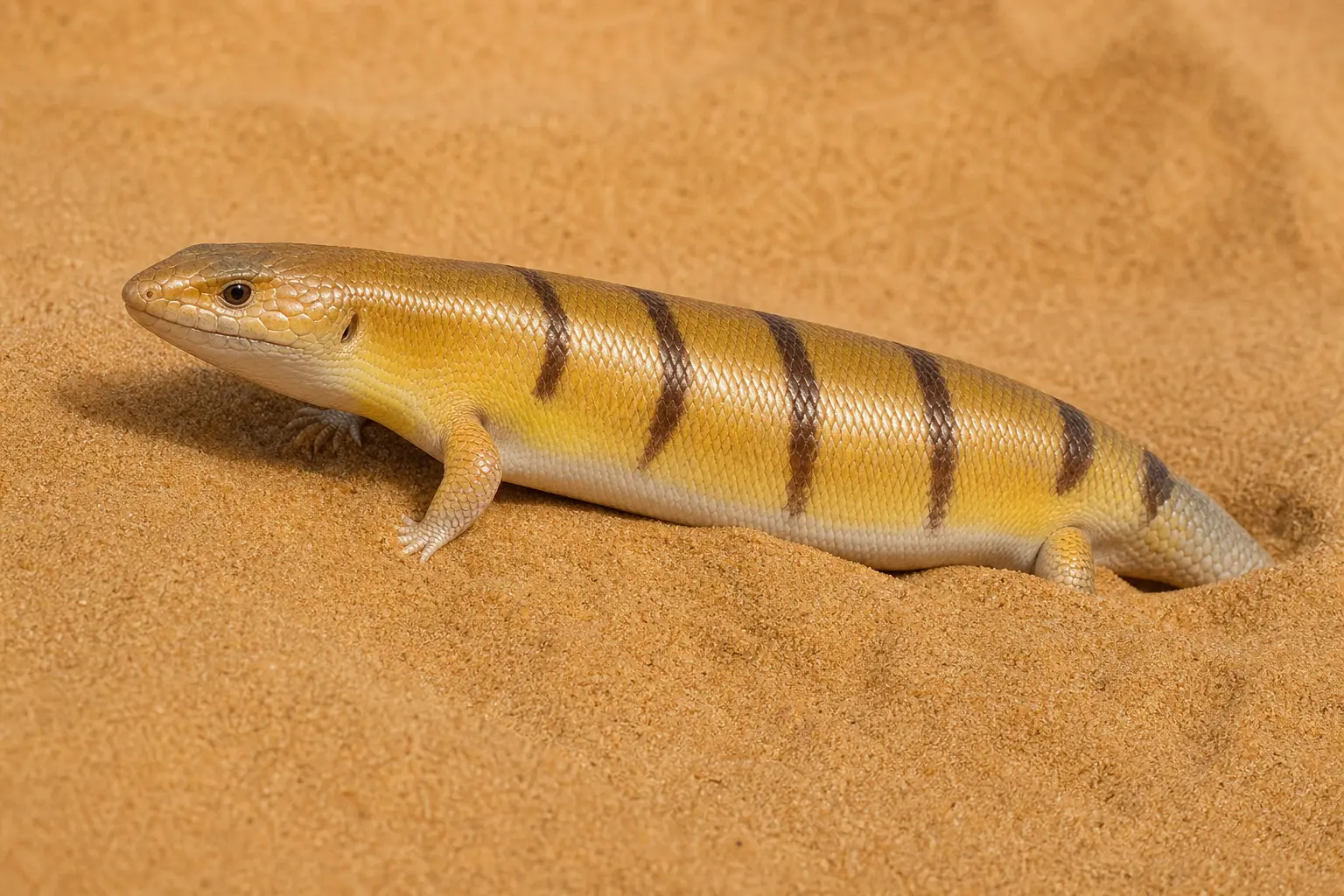
Gidgee skink · Egernia stokesii
The gidgee skink, in focus.
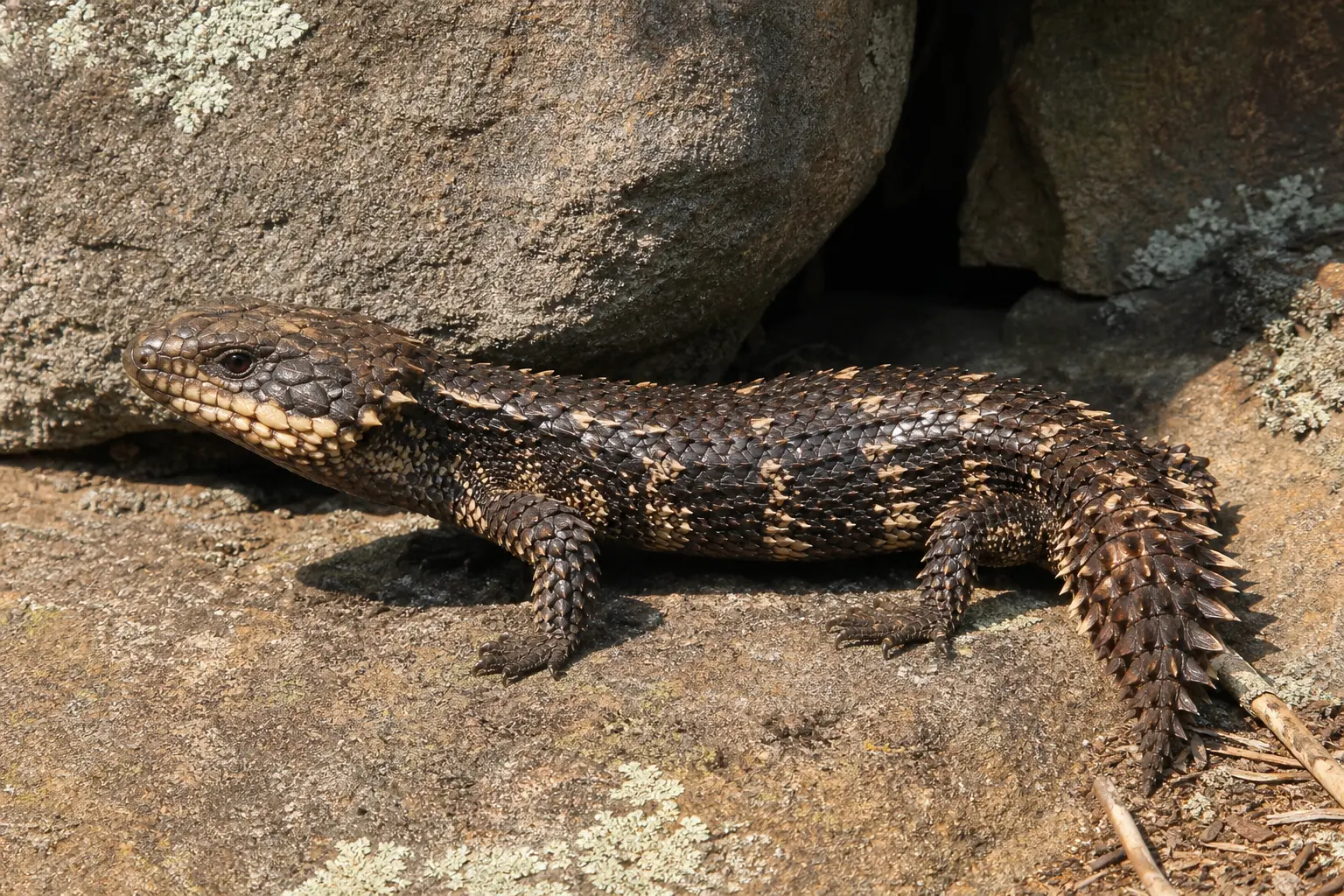
The gidgee skink is a sturdy Australian rock dweller with shining scales, a spiny tail, and an unusually social life built around shared crevices.
That family life is fascinating, but it does not make unfamiliar skinks automatic roommates.
See what they needBefore you decide
Could a gidgee skink thrive in your home?
Picture the full-grown animal, the permanent enclosure, and the ordinary care you would still be happy to give years from now.
The honest fit
Would their everyday rhythm suit you?
Think about an ordinary week, including the days when you are tired, busy, or away from home.
Life together may suit you if…
- You love watching a confident rock-dwelling skink
- You can build stable crevices rather than a decorative rock pile
- You want a long-lived display reptile with daytime activity
- You can obtain traceable captive-bred stock
Pause if…
- You plan to introduce unrelated skinks casually
- You want to lift the animal out for frequent handling
- Your rocks rest loosely on deep substrate
- A seller cannot document lawful captive origin
A comfortable home
Build the home around their choices.
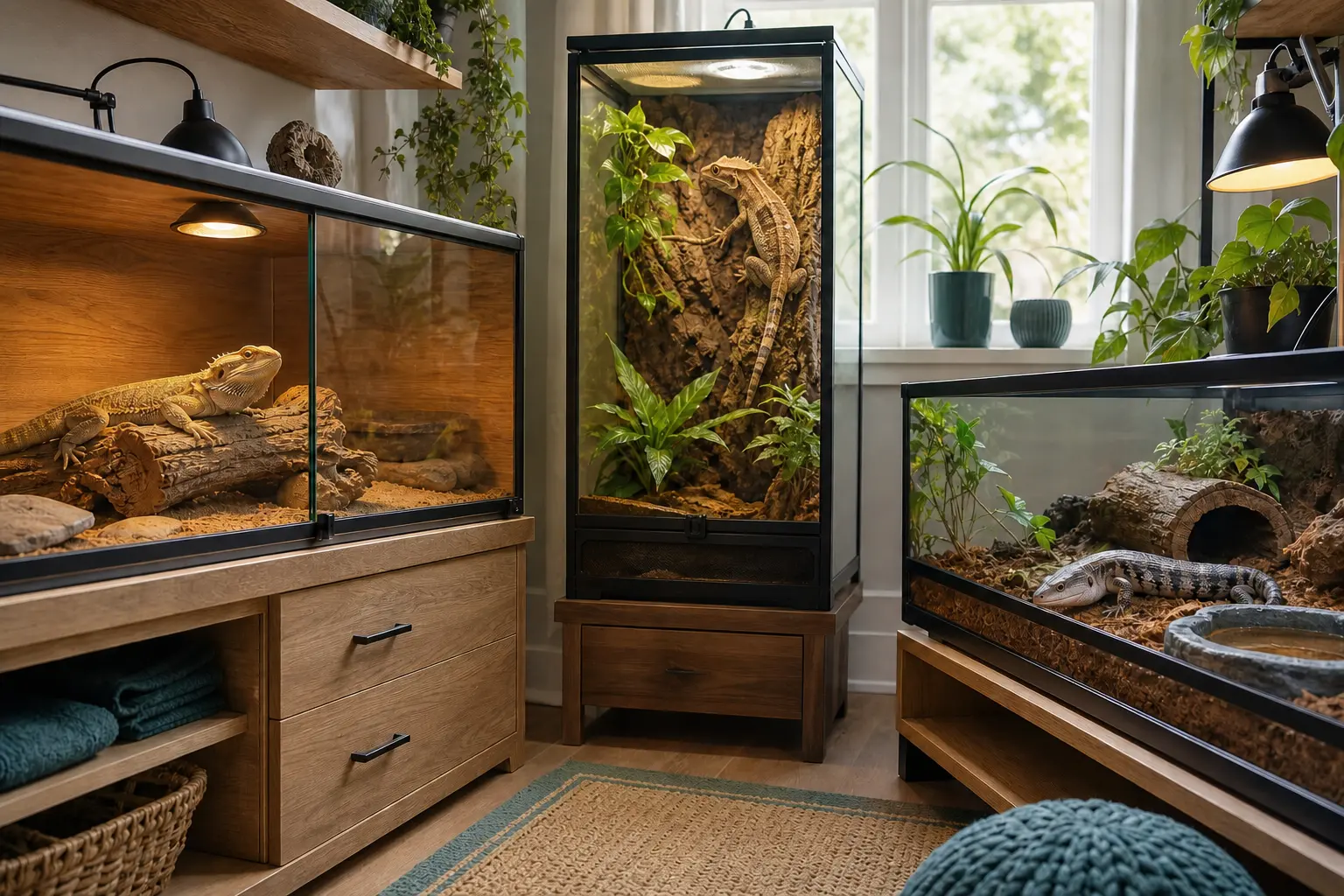
Create a dry, bright rockscape with several fixed narrow crevices, broad basking shelves, cooler retreats, deep diggable pockets, bright visible light, measured UVB, guarded heat, and enough duplicate resources that no animal can control every good spot.
Measure where the animal actually rests
A real retreat from the warm side
Use a digital hygrometer and watch ventilation
Build light and shade as a gradient
The rhythm
What an ordinary week asks of you.
Warm the rock face
Check basking, cool cracks, UVB, the humid retreat, water, gait, jaw, toes, tail, and each skink's access to heat.
Scatter a measured forage
Place greens and small prey at several stations so a group cannot guard the whole meal.
Inspect the refuge
Clean accessible shelves, check every support and gap, refresh diggable pockets, and review weights and group behaviour.
Care with tenderness
Learn what is normal for your gidgee skink.
Social does not mean simple
Wild family bonds do not guarantee peaceful introductions. Separate immediately for chasing, bites, blocked basking, or weight loss.
Never dismantle a refuge around the skink
Use a removable service section or voluntary transfer. Pulling from a crack can injure the animal and destroy trust.
Support every rock from below
Heavy furniture belongs on fixed supports, not loose substrate that can be excavated from underneath.
Call for warning signs
Weak limbs, swollen jaw, poor grip, burns, wounds, repeated hiding, weight loss, or appetite change need a reptile veterinarian.
Good to know
Common questions, answered.
Open any question for a short, practical answer.
Life together
Could a gidgee skink suit a first-time keeper?
This may suit you if you love watching a confident rock-dwelling skink. Pause if you plan to introduce unrelated skinks casually. Build and test the habitat before deciding.
How large do gidgee skinks get?
Usually 25–30 cm (10–12 in)
How long do gidgee skinks live?
Often 15–25 years. Individual lifespan varies, so plan around the longer end.
When are gidgee skinks active?
A watchful daytime basker that slips rapidly into narrow rock cracks
Do gidgee skinks enjoy handling?
Allow voluntary step-ups; never pull a hiding skink from a crevice. Watch the animal's posture and movement, support the whole body, and stop when it tries to leave.
Can two gidgee skinks live together?
One is simplest; established family groups need expert planning and close observation
What do gidgee skinks eat?
A measured omnivorous mix of leafy plants, vegetables, flowers, and varied invertebrates
How large should a gidgee skink's enclosure be?
Start with at least 120 × 60 × 60 cm for one adult, with more room for a professionally planned group. More usable room is valuable when it creates better gradients, cover, and movement choices.
Home and health
What temperatures does a gidgee skink need?
Provide a broad rock surface around 38–43°C (100–109°F), with a shaded crevice area around 23–27°C (73–81°F). Measure both where the animal actually spends time and control every heater appropriately.
Does a gidgee skink need UVB?
The reviewed plan calls for measured strong UVB over open basking rock, with deep crevice shade. Fixture, reflector, mesh, distance, lamp age, and shade all change what reaches the animal.
What humidity does a gidgee skink need?
Mostly 30–50%, with a secure humid retreat and seasonal variation. Check it with a digital hygrometer. Keep fresh air moving through the enclosure, and let the animal choose between damp shelter and dry ground.
What should be inside the enclosure?
Create a dry, bright rockscape with several fixed narrow crevices, broad basking shelves, cooler retreats, deep diggable pockets, bright visible light, measured UVB, guarded heat, and enough duplicate resources that no animal can control every good spot.
What substrate works for a gidgee skink?
Packed soil, clay, and sand with excavatable pockets beneath securely supported stone
What does ordinary cleaning involve?
Remove waste and leftovers promptly, refresh water, inspect toes, jaw, tail, skin, body condition, crevice access, rock stability, lamps, and any group tension.
What should I arrange before bringing a gidgee skink home?
Build and test the complete adult habitat, verify the readings over several days, identify a reptile veterinarian, check local and rental rules, and choose a responsible captive source or rescue.
Can a healthy-looking gidgee skink carry Salmonella?
Yes. Reptiles can carry Salmonella without looking ill, so handwashing and keeping habitat water, food, and cleaning equipment away from kitchens are part of ordinary care.
Still thinking about gidgee skinks?
Put this animal beside the others on your shortlist. Then build and test the complete adult habitat before anyone comes home.
Compare reptilesSources and care boundaries
Exact targets depend on the measured location, equipment, animal, and veterinary context. This profile keeps source disagreements visible instead of blending them into one number.