Gray-banded kingsnake · Lampropeltis alterna
The character of the gray-banded kingsnake.
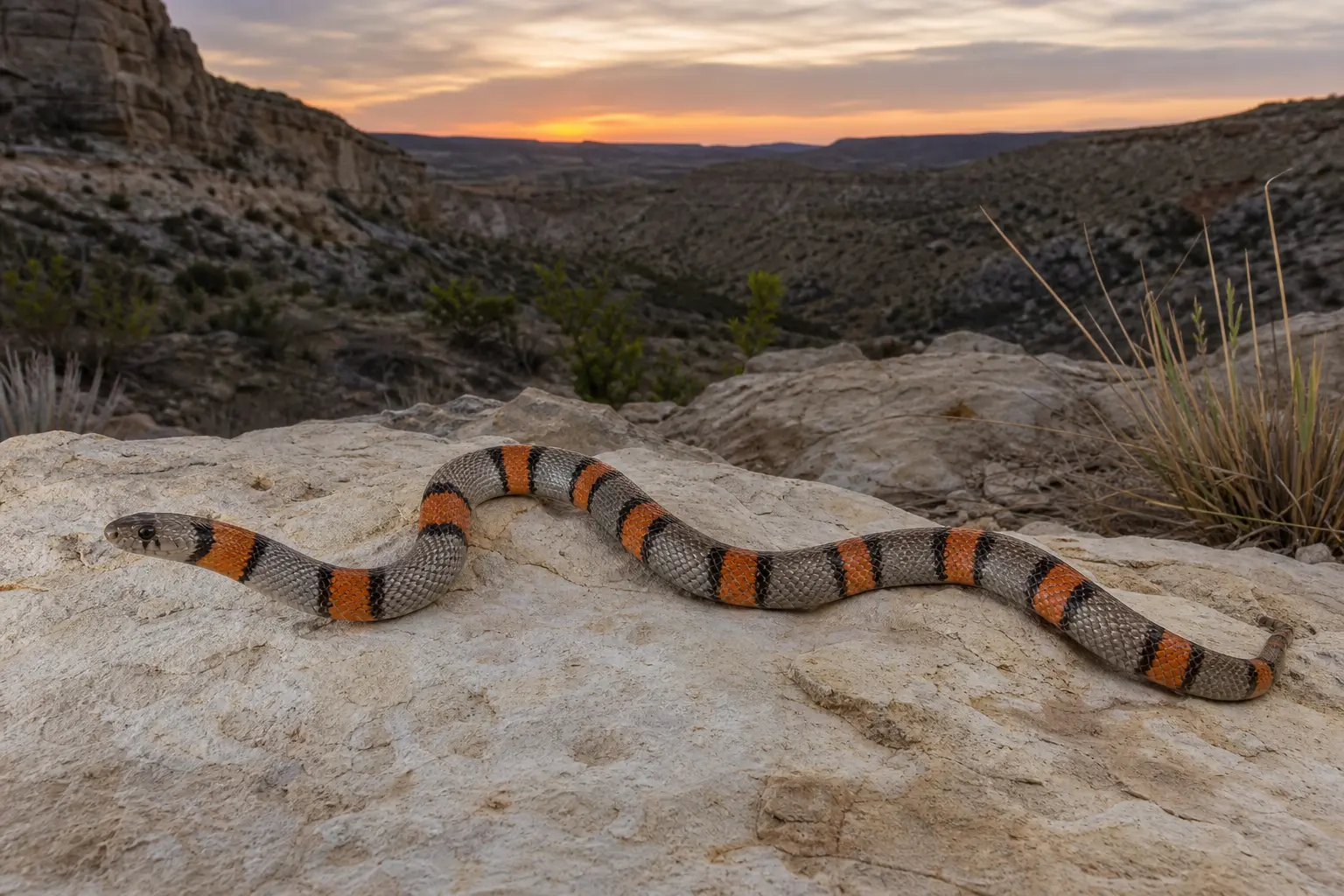
Small, secretive, and painted in soft gray with orange saddles, the gray-banded kingsnake feels like a piece of West Texas canyon brought gently indoors.
It suits a patient keeper better than someone wanting a constant display animal.
See what they needBefore you decide
Could a gray-banded kingsnake thrive in your home?
Picture the full-grown animal, the permanent enclosure, and the ordinary care you would still be happy to give years from now.
The honest fit
Would their everyday rhythm suit you?
Think about an ordinary week, including the days when you are tired, busy, or away from home.
Life together may suit you if…
- You love a small, beautifully understated kingsnake
- You are happy observing after dusk
- You can be patient with a shy feeder
- A carefully built rocky landscape appeals to you
Pause if…
- You want a snake that is visible all day
- You expect every juvenile to take rodents immediately
- You plan to stack loose rocks
- You hope to keep more than one snake together
A comfortable home
Build the home around their choices.
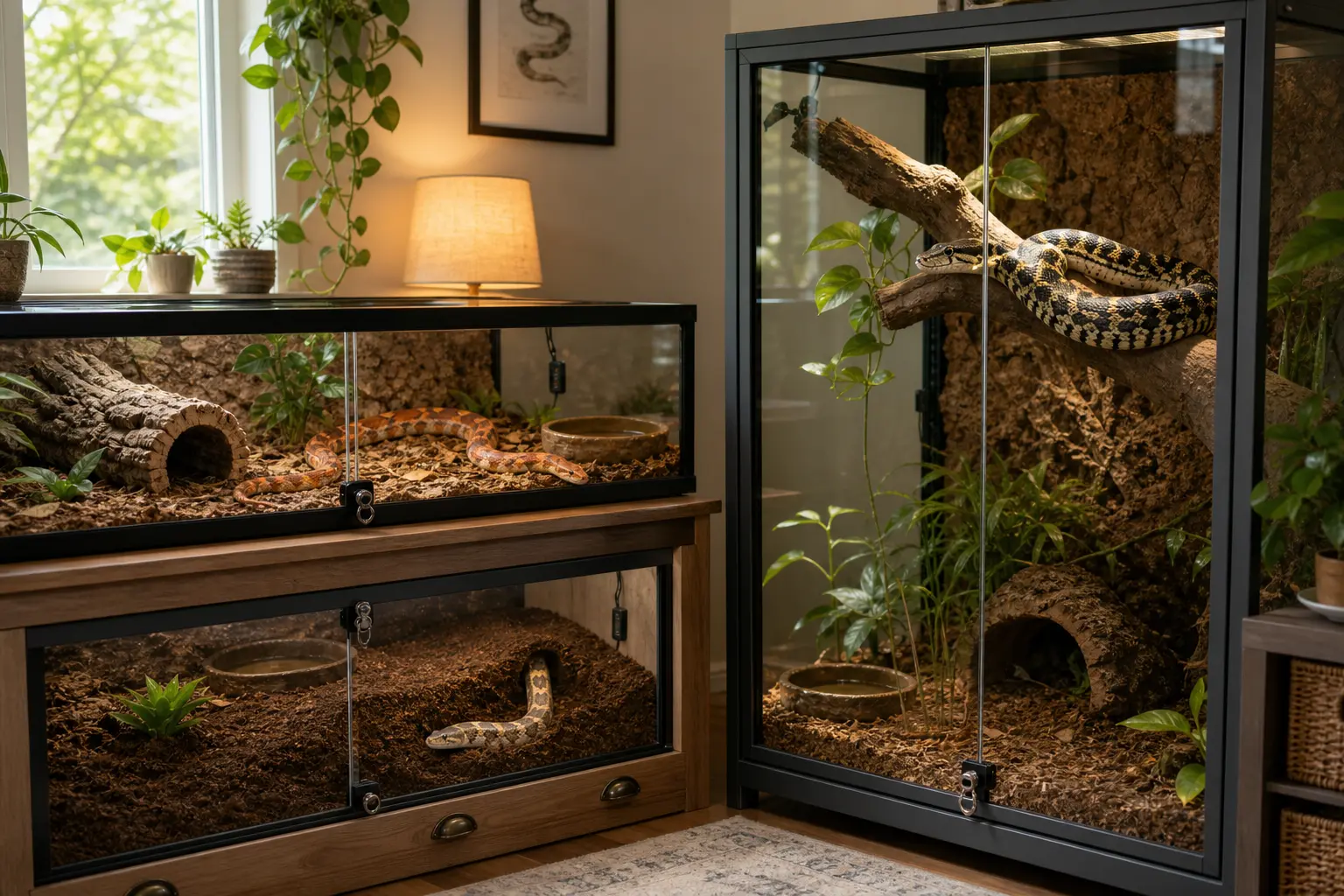
Build a locked, well-ventilated home with secure rock-style crevices, snug hides at both ends, modest digging depth, fresh water, guarded heat, and no heavy stone that can shift.
Measure where the animal actually rests
A real retreat from the warm side
Use a digital hygrometer and watch ventilation
Build light and shade as a gradient
The rhythm
What an ordinary week asks of you.
Check without dismantling
Read the probes, refresh water, scan for waste and shed, and leave secure crevices intact.
Watch the canyon wake
Dim the room and look for a small head at the edge of a crevice before offering quiet enrichment.
Keep it calm
Offer the planned thawed prey at dusk, record the response, and avoid repeated presentations that add stress.
Care with tenderness
Learn what is normal for your gray-banded kingsnake.
Buy an established feeder
Some young gray-banded kingsnakes prefer lizard prey. Choose a captive-bred animal already taking the food you can provide.
Support every stone
Heavy decor must rest on the enclosure floor or a fixed platform, never on loose digging substrate.
Do not chase visibility
A hidden snake is often behaving normally. More secure cover usually creates more confident appearances.
Call for warning signs
Repeated refusals with weight loss, wheezing, bubbles, burns, mites, swelling, or regurgitation need a reptile veterinarian.
Good to know
Common questions, answered.
Open any question for a short, practical answer.
Life together
Could a gray-banded kingsnake suit a first-time keeper?
This may suit you if you love a small, beautifully understated kingsnake. Pause if you want a snake that is visible all day. Build and test the habitat before deciding.
How large do gray-banded kingsnakes get?
Usually 60–90 cm (2–3 ft)
How long do gray-banded kingsnakes live?
Often 15–20 years. Individual lifespan varies, so plan around the longer end.
When are gray-banded kingsnakes active?
A shy dusk-and-night crevice hunter
Do gray-banded kingsnakes enjoy handling?
Brief, supported sessions when the snake is calm. Watch the animal's posture and movement, support the whole body, and stop when it tries to leave.
Can two gray-banded kingsnakes live together?
Always house alone
What do gray-banded kingsnakes eat?
Appropriately sized frozen-thawed rodents from an established feeder
How large should a gray-banded kingsnake's enclosure be?
Start with at least 90–120 cm long, with layered rocky cover. More usable room is valuable when it creates better gradients, cover, and movement choices.
Home and health
What temperatures does a gray-banded kingsnake need?
Provide a measured surface around 30–31°C (86–88°F), with a sheltered retreat around 22–25°C (72–77°F). Measure both where the animal actually spends time and control every heater appropriately.
Does a gray-banded kingsnake need UVB?
The reviewed plan calls for low-level UVB over one warm zone, with deep shade. Fixture, reflector, mesh, distance, lamp age, and shade all change what reaches the animal.
What humidity does a gray-banded kingsnake need?
Generally 30–50%, with a humid shed hide. Check it with a digital hygrometer. Keep fresh air moving through the enclosure, and let the animal choose between damp shelter and dry ground.
What should be inside the enclosure?
Build a locked, well-ventilated home with secure rock-style crevices, snug hides at both ends, modest digging depth, fresh water, guarded heat, and no heavy stone that can shift.
What substrate works for a gray-banded kingsnake?
A dry soil-and-sand mix beneath securely supported rock and cork
What does ordinary cleaning involve?
Spot-clean promptly, change water daily, and lift decor only after the snake’s location is known.
What should I arrange before bringing a gray-banded kingsnake home?
Build and test the complete adult habitat, verify the readings over several days, identify a reptile veterinarian, check local and rental rules, and choose a responsible captive source or rescue.
Can a healthy-looking gray-banded kingsnake carry Salmonella?
Yes. Reptiles can carry Salmonella without looking ill, so handwashing and keeping habitat water, food, and cleaning equipment away from kitchens are part of ordinary care.
Still thinking about gray-banded kingsnakes?
Put this animal beside the others on your shortlist. Then build and test the complete adult habitat before anyone comes home.
Compare reptilesSources and care boundaries
Exact targets depend on the measured location, equipment, animal, and veterinary context. This profile keeps source disagreements visible instead of blending them into one number.