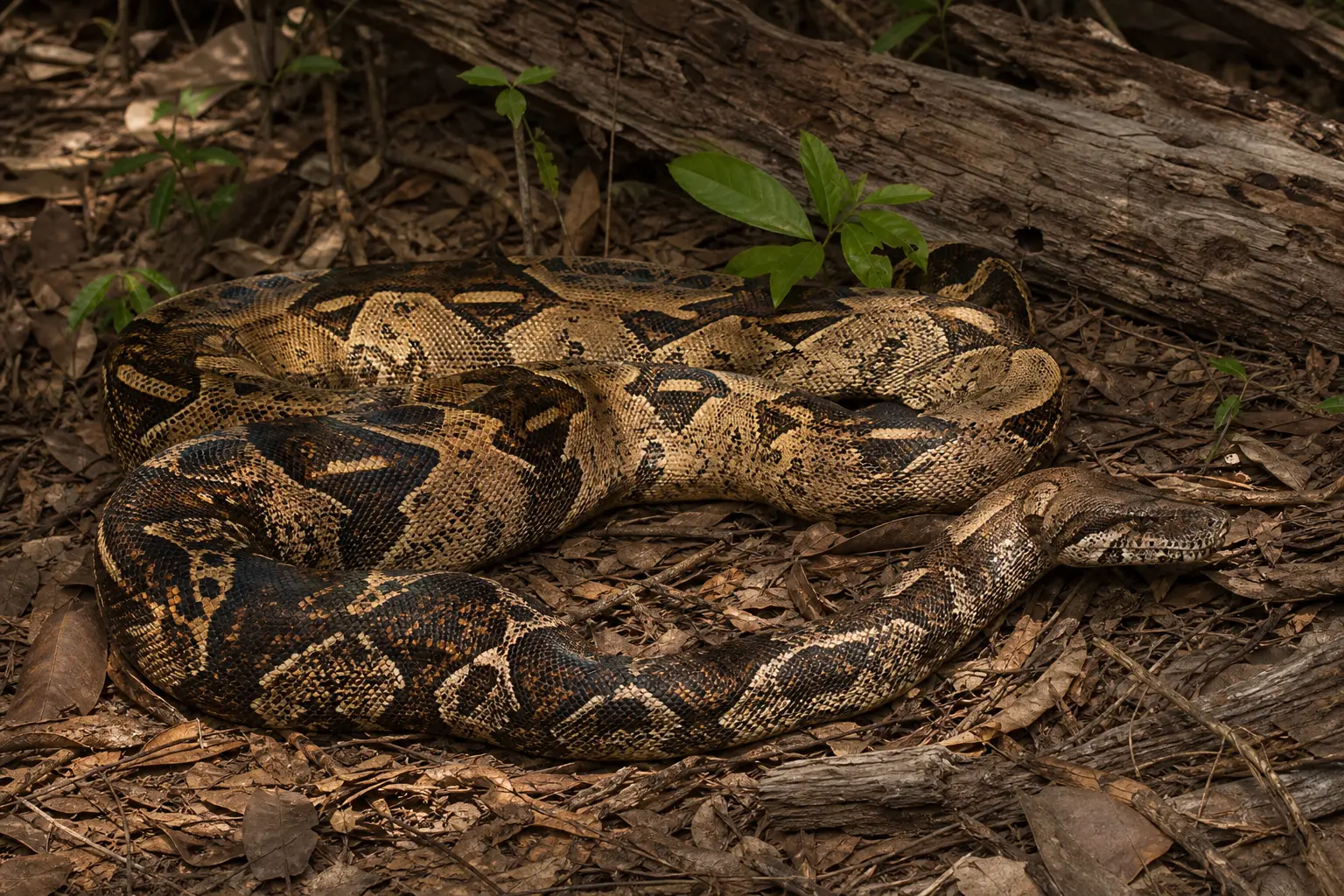
Hog Island boa · Boa imperator
The hog Island boa, beyond first impressions.
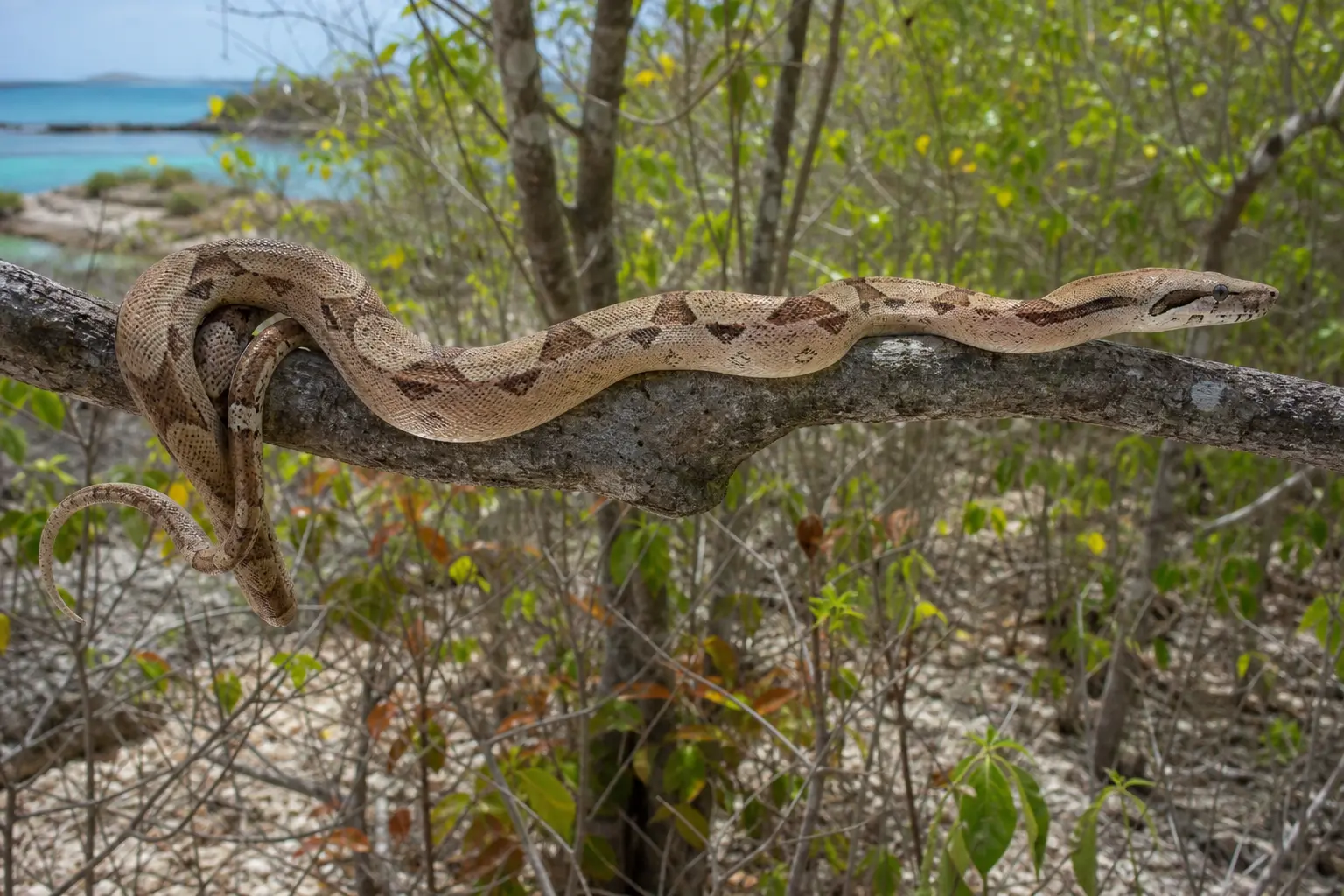
Hog Island boas carry an island softness: pale gray and tan, washed with peach, on a body often slimmer than a mainland common boa.
This is a protected locality of Boa imperator, not a separate designer colour.
See what they needBefore you decide
Could a hog Island boa thrive in your home?
Picture the full-grown animal, the permanent enclosure, and the ordinary care you would still be happy to give years from now.
The honest fit
Would their everyday rhythm suit you?
Think about an ordinary week, including the days when you are tired, busy, or away from home.
Life together may suit you if…
- You want a naturally pale, relatively athletic boa locality
- You can verify and preserve authentic Cayos Cochinos lineage
- A large adult enclosure and 20-year commitment fit
- You understand that smaller than some boas still means powerful
Pause if…
- You are buying by colour with no locality documentation
- You expect a permanent 120 cm enclosure for every adult
- You plan to breed or sell without transparent lineage records
- You cannot arrange safe adult handling and veterinary care
A comfortable home
Build the home around their choices.
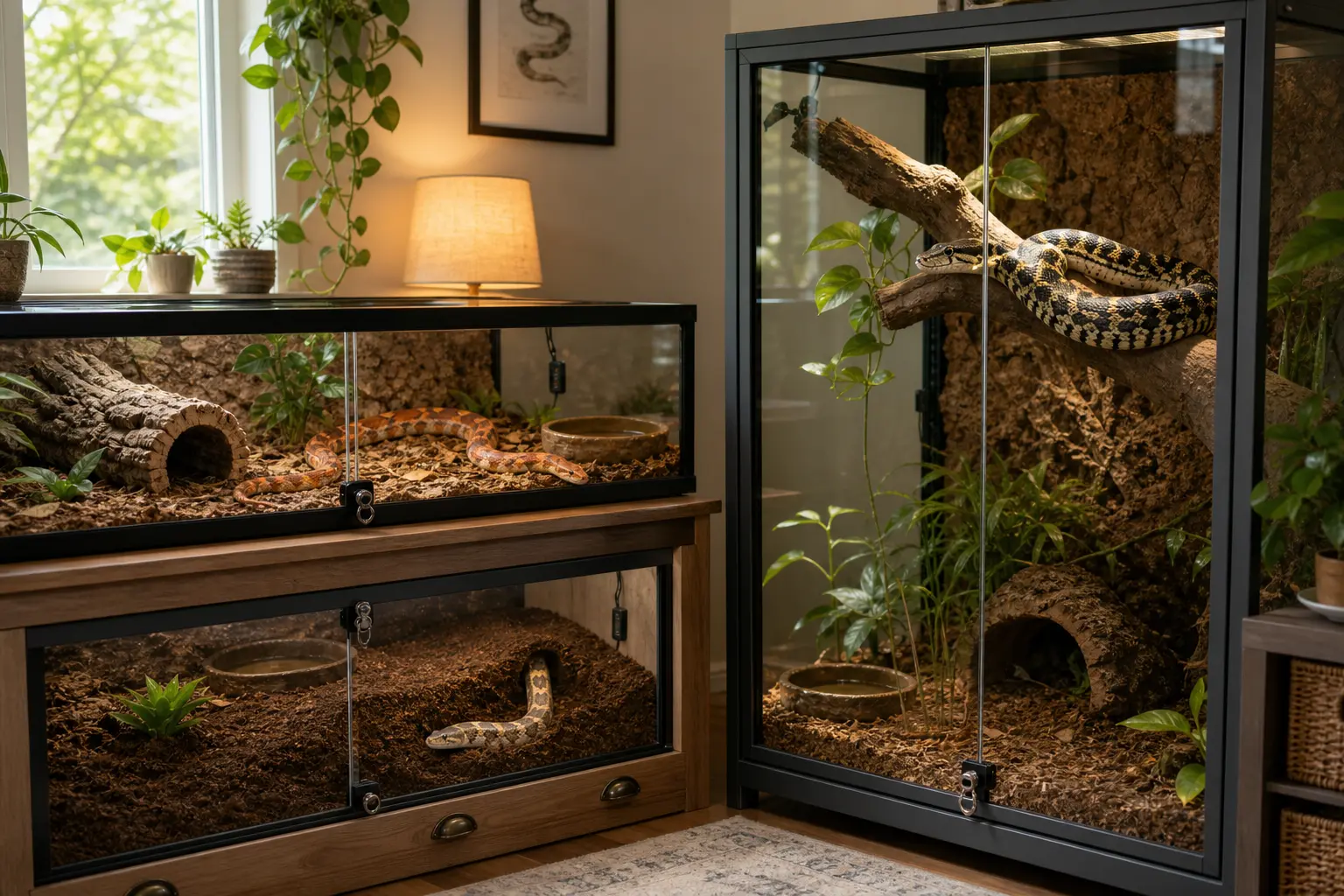
Give the adult full-body length, sturdy low branches, snug hides at both ends, leafy visual cover, moisture-buffering substrate, a soaking bowl, cross-ventilation, positive locks, and room for a pale agile boa to climb.
Measure where the animal actually rests
A real retreat from the warm side
Use a digital hygrometer and watch ventilation
Build light and shade as a gradient
The rhythm
What an ordinary week asks of you.
Find the pale island boa
Check warm and cool probes, water, locks, waste, skin, breathing, and the chosen branch or hide.
Let the dry forest move
Dim the room and offer a changed route, leaf pocket, or scent while leaving secure cover intact.
Protect the athletic shape
Offer the scheduled thawed prey with long tongs, record it, secure the enclosure, and leave digestion quiet.
Care with tenderness
Learn what is normal for your hog Island boa.
Provenance is part of the animal
Ask for breeder records, parent information, and locality history. A pale common boa without documentation should not be represented as Hog Island.
Use large-boa rules
Never place the boa around the neck. Bring another capable adult for difficult handling, transport, or enclosure work as size requires.
Keep humidity airy
Provide water and humid retreats without wet floors or stagnant air. The island climate includes breeze as well as moisture.
Call early for change
Wheezing, bubbles, burns, mites, swelling, regurgitation, weight change, or poor sheds need a reptile veterinarian.
Good to know
Common questions, answered.
Open any question for a short, practical answer.
Life together
Could a hog Island boa suit a first-time keeper?
This may suit you if you want a naturally pale, relatively athletic boa locality. Pause if you are buying by colour with no locality documentation. Build and test the habitat before deciding.
How large do hog Island boas get?
Often 1.2–1.8 m (4–6 ft), with females larger
How long do hog Island boas live?
More than 20 years. Individual lifespan varies, so plan around the longer end.
When are hog Island boas active?
A dusk-and-night ground and low-branch explorer
Do hog Island boas enjoy handling?
Supported sessions with large-boa safety as the animal grows. Watch the animal's posture and movement, support the whole body, and stop when it tries to leave.
Can two hog Island boas live together?
House separately
What do hog Island boas eat?
Appropriately sized frozen-thawed whole prey
How large should a hog Island boa's enclosure be?
Start with at least the snake’s full length; commonly 1.5–1.8 m long. More usable room is valuable when it creates better gradients, cover, and movement choices.
Home and health
What temperatures does a hog Island boa need?
Provide a controlled warm area around 30–32°C (86–90°F), with a broad retreat around 24–27°C (75–81°F). Measure both where the animal actually spends time and control every heater appropriately.
Does a hog Island boa need UVB?
The reviewed plan calls for low-level UVB across one warm route, with shade. Fixture, reflector, mesh, distance, lamp age, and shade all change what reaches the animal.
What humidity does a hog Island boa need?
Usually 60–75%, with airflow and dry resting choices. Check it with a digital hygrometer. Keep fresh air moving through the enclosure, and let the animal choose between damp shelter and dry ground.
What should be inside the enclosure?
Give the adult full-body length, sturdy low branches, snug hides at both ends, leafy visual cover, moisture-buffering substrate, a soaking bowl, cross-ventilation, positive locks, and room for a pale agile boa to climb.
What substrate works for a hog Island boa?
A clean forest and dry-leaf mix that buffers humidity without staying wet
What does ordinary cleaning involve?
Spot-clean promptly, refresh water, and secure the boa in a locked transfer container for major work.
What should I arrange before bringing a hog Island boa home?
Build and test the complete adult habitat, verify the readings over several days, identify a reptile veterinarian, check local and rental rules, and choose a responsible captive source or rescue.
Can a healthy-looking hog Island boa carry Salmonella?
Yes. Reptiles can carry Salmonella without looking ill, so handwashing and keeping habitat water, food, and cleaning equipment away from kitchens are part of ordinary care.
Still thinking about hog Island boas?
Put this animal beside the others on your shortlist. Then build and test the complete adult habitat before anyone comes home.
Compare reptilesSources and care boundaries
Exact targets depend on the measured location, equipment, animal, and veterinary context. This profile keeps source disagreements visible instead of blending them into one number.