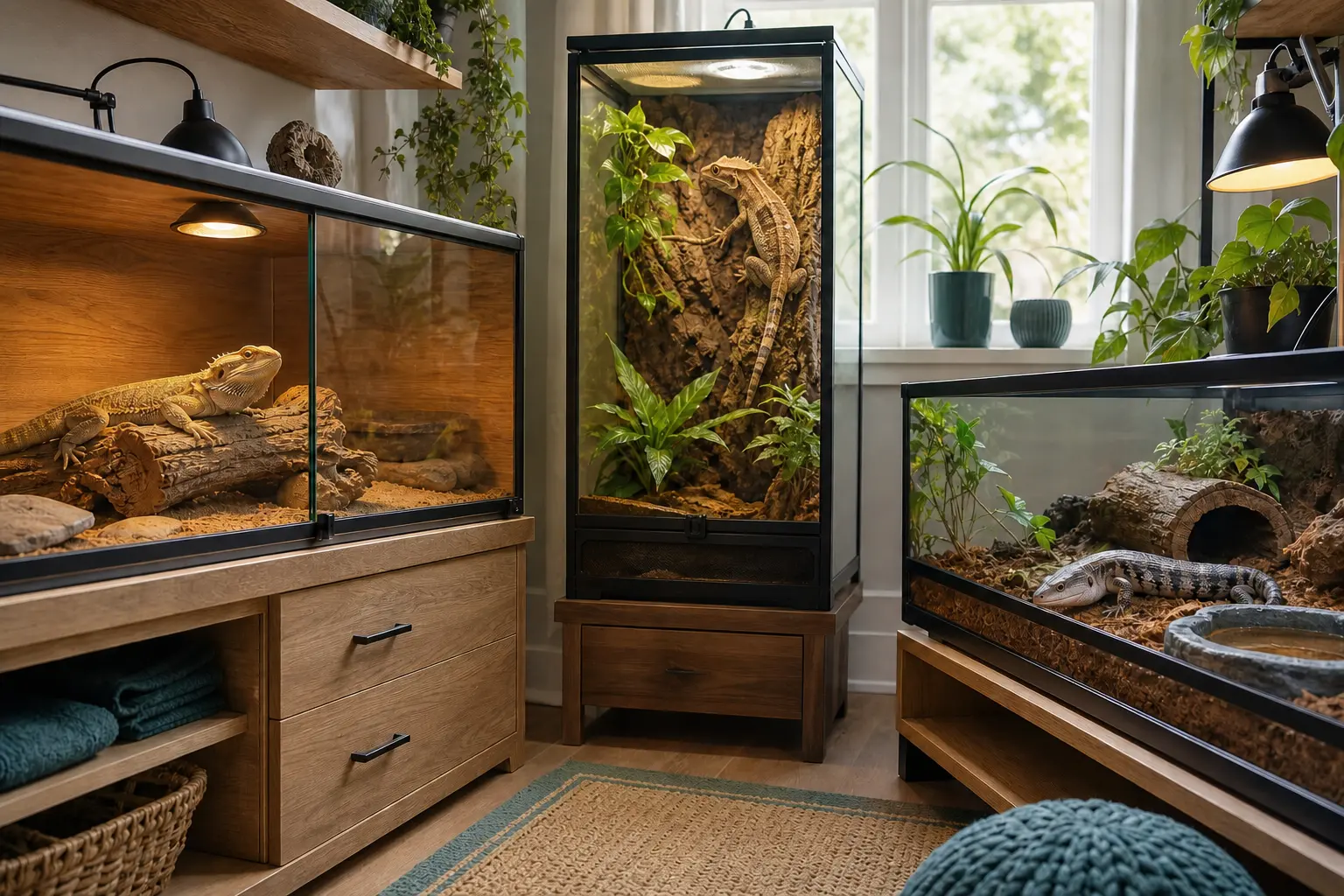
Savannah monitor · Varanus exanthematicus
Inside the world of the savannah monitor.
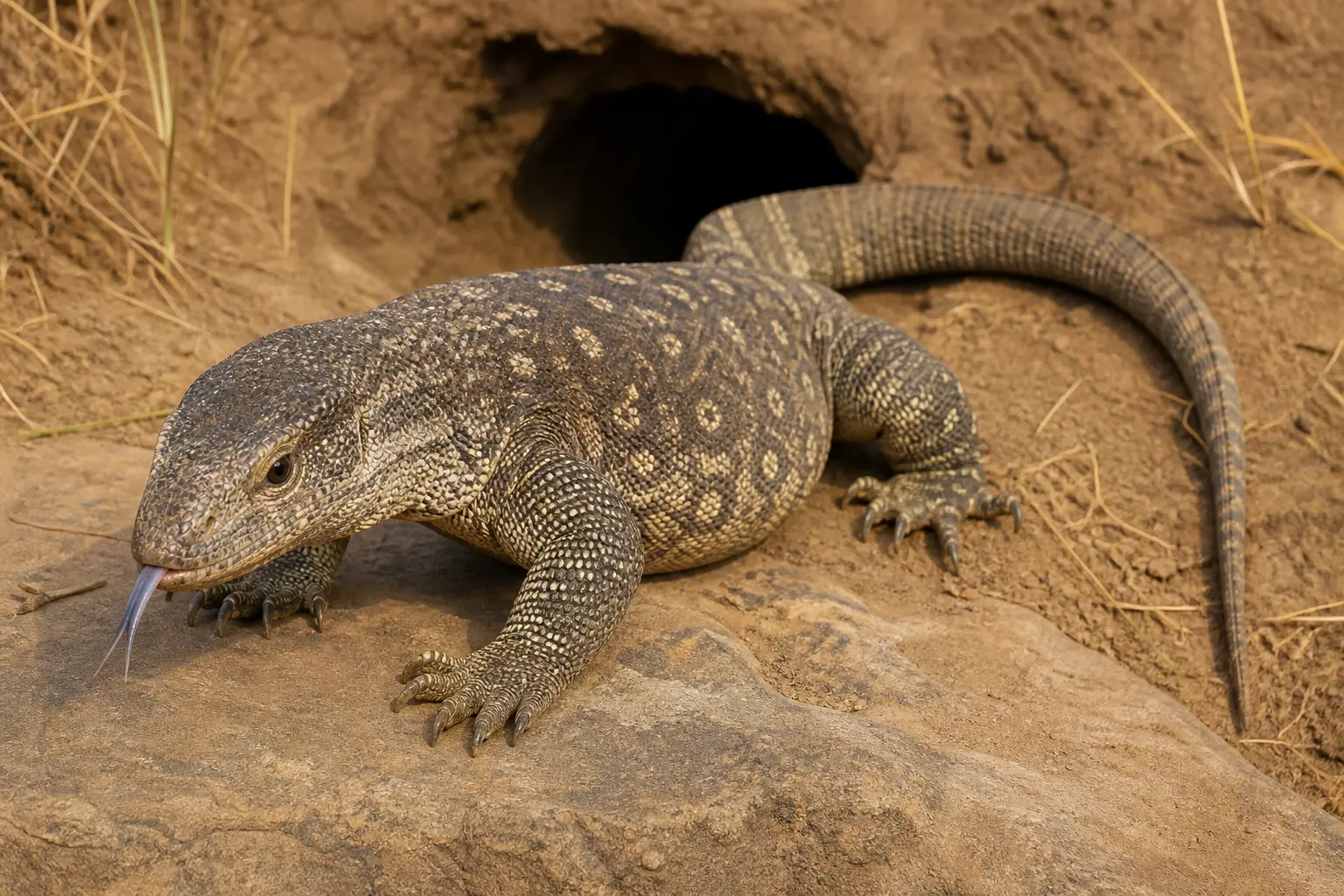
Savannah monitors are powerful ground explorers that spend much of their time investigating and searching for small prey.
A low purchase price hides a large commitment: room-scale housing, deep earth, specialist feeding, and safe handling.
See what they needBefore you decide
Could a savannah monitor thrive in your home?
Picture the full-grown animal, the permanent enclosure, and the ordinary care you would still be happy to give years from now.
The honest fit
Would their everyday rhythm suit you?
Think about an ordinary week, including the days when you are tired, busy, or away from home.
Life together may suit you if…
- You have meaningful experience with large, intelligent reptiles
- A custom enclosure around 8 × 4 × 4 ft with deep substrate can remain permanently in your home
- Keeping a varied colony of feeder insects and monitoring body condition feels realistic
- A monitor-experienced veterinarian can help reconcile conflicting heat and habitat guidance
Pause if…
- The appealing baby or low purchase price is driving the choice
- A 6-foot commercial enclosure without deep substrate is the largest possible home
- You want easy handling or a predictable lap pet
- Room-scale heating, UVB, insect care, soaking-water cleanup, strong locks, and specialist veterinary bills would strain the household
A comfortable home
Build the home around their choices.
Build for distance and depth: broad floor space, deep packed earth that holds a burrow, a wide whole-body basking platform supported from the floor, secure hides, sturdy climbing, soaking water, strong ventilation, and locks built for claws and leverage.
Measure where the animal actually rests
A real retreat from the warm side
Use a digital hygrometer and watch ventilation
Build light and shade as a gradient
The rhythm
What an ordinary week asks of you.
Wake a large system
Check basking surface and air, cool retreats, humid burrow, UVB, water, locks, and the monitor's first movement.
Make room for work
Offer foraging and food when due, then watch walking, digging, climbing, tongue-flicking, appetite, droppings, breathing, and body condition.
Restore the habitat
Remove leftovers and waste, clean soiled water, inspect structures, log changes, and let the enclosure become dark.
Care with tenderness
Learn what is normal for your savannah monitor.
Trust is not tameness
Patient routine can reduce fear, but an adult monitor always deserves two-handed support, an escape-safe room, and respect for teeth, claws, tail, and strength.
Keep disagreements visible
Published basking and enclosure advice varies sharply. Record whether a target describes surface or air, show the whole setup to a monitor-experienced veterinarian, and adjust from measured behaviour and health.
Watch body condition closely
Call a reptile veterinarian for weight change, poor appetite, swelling, weakness, mouth or nose discharge, breathing changes, abnormal stool, wounds, burns, or difficulty moving.
Ask where the animal came from
Many savannah monitors in trade are wild-caught or imported. Prefer traceable captive-bred animals or reputable rescues and arrange parasite testing.
Good to know
Common questions, answered.
Open any question for a short, practical answer.
Life together
Could a savannah monitor suit a first-time keeper?
This may suit you if you have meaningful experience with large, intelligent reptiles. Pause if the appealing baby or low purchase price is driving the choice. Build and test the habitat before deciding.
How large do savannah monitors get?
Commonly about 90–120 cm (3–4 ft), with some veterinary sources reporting a wider range
How long do savannah monitors live?
Roughly 10–15 years with good care. Individual lifespan varies, so plan around the longer end.
When are savannah monitors active?
An active daytime walker and powerful digger
Do savannah monitors enjoy handling?
Experienced, trust-based interaction; every adult can bite, scratch, and struggle powerfully. Watch the animal's posture and movement, support the whole body, and stop when it tries to leave.
Can two savannah monitors live together?
House adults singly
What do savannah monitors eat?
A varied, low-fat, insect-forward carnivorous diet with rodents only occasional
How large should a savannah monitor's enclosure be?
Start with a large custom build; plan around roughly 240 × 120 × 120 cm (8 × 4 × 4 ft) and deep substrate, then fit it to the adult. More usable room is valuable when it creates better gradients, cover, and movement choices.
Home and health
What temperatures does a savannah monitor need?
Provide published veterinary sheets use 34–38°C (94–100°F); modern keeper guidance often uses hotter measured surfaces, so confirm the target and measurement method with a monitor-experienced veterinarian, with a broad warm-to-cool gradient, not one enclosure temperature. Measure both where the animal actually spends time and control every heater appropriately.
Does a savannah monitor need UVB?
The reviewed plan calls for strong full-spectrum reptile UVB over the basking area with accessible shade. Fixture, reflector, mesh, distance, lamp age, and shade all change what reaches the animal.
What humidity does a savannah monitor need?
About 40–50% ambient in the veterinary sheet, plus a genuinely humid burrow or retreat. Check it with a digital hygrometer. Keep fresh air moving through the enclosure, and let the animal choose between damp shelter and dry ground.
What should be inside the enclosure?
Build for distance and depth: broad floor space, deep packed earth that holds a burrow, a wide whole-body basking platform supported from the floor, secure hides, sturdy climbing, soaking water, strong ventilation, and locks built for claws and leverage.
What substrate works for a savannah monitor?
Deep packed soil-based substrate that can hold a safe burrow; heavy rocks and basking structures must be supported from the enclosure floor
What does ordinary cleaning involve?
Remove waste and leftover prey promptly, clean food and soaking water daily, and maintain the deep substrate without allowing contaminated wet pockets.
What should I arrange before bringing a savannah monitor home?
Build and test the complete adult habitat, verify the readings over several days, identify a reptile veterinarian, check local and rental rules, and choose a responsible captive source or rescue.
Can a healthy-looking savannah monitor carry Salmonella?
Yes. Reptiles can carry Salmonella without looking ill, so handwashing and keeping habitat water, food, and cleaning equipment away from kitchens are part of ordinary care.
Still thinking about savannah monitors?
Put this animal beside the others on your shortlist. Then build and test the complete adult habitat before anyone comes home.
Compare reptilesSources and care boundaries
Exact targets depend on the measured location, equipment, animal, and veterinary context. This profile keeps source disagreements visible instead of blending them into one number.