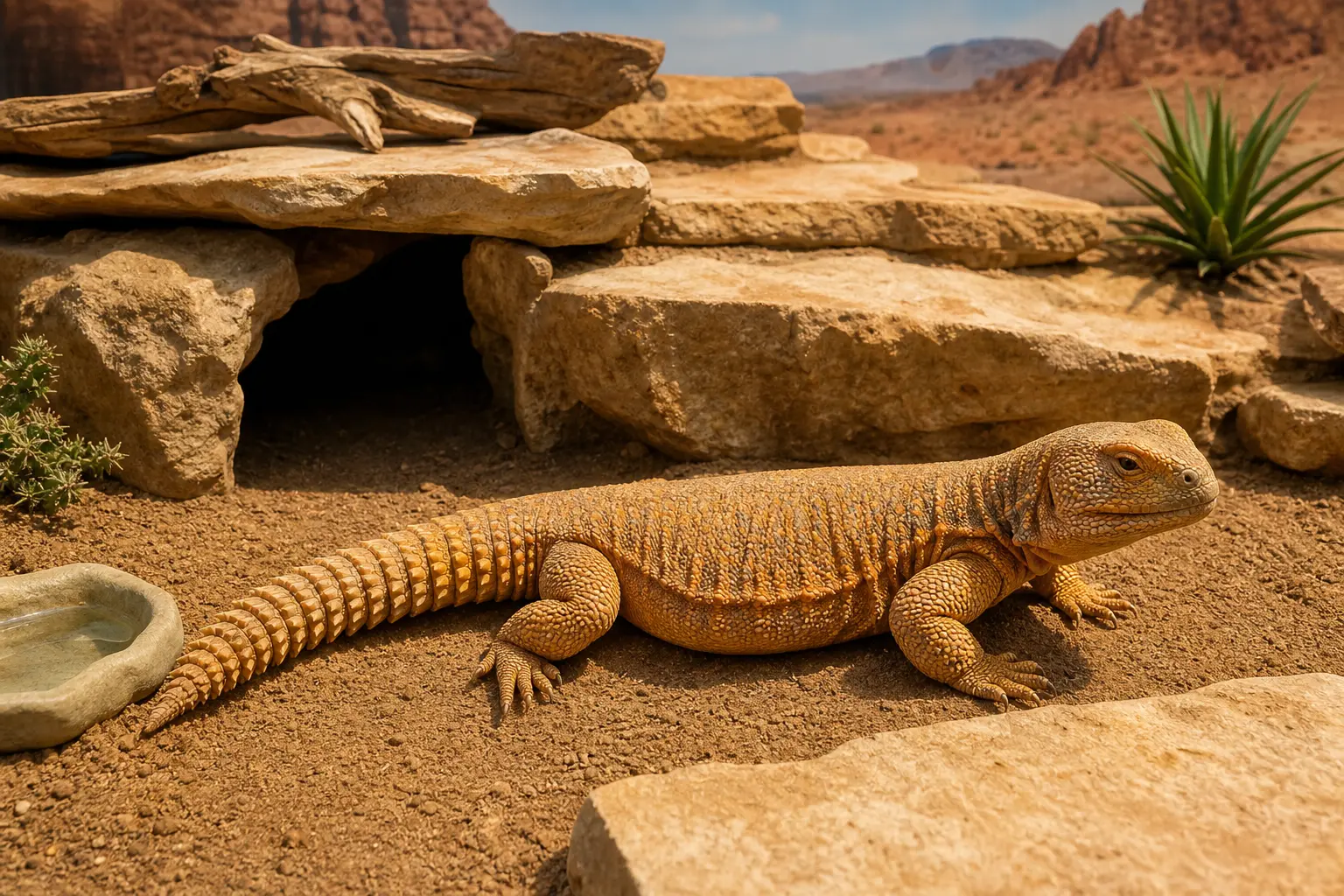
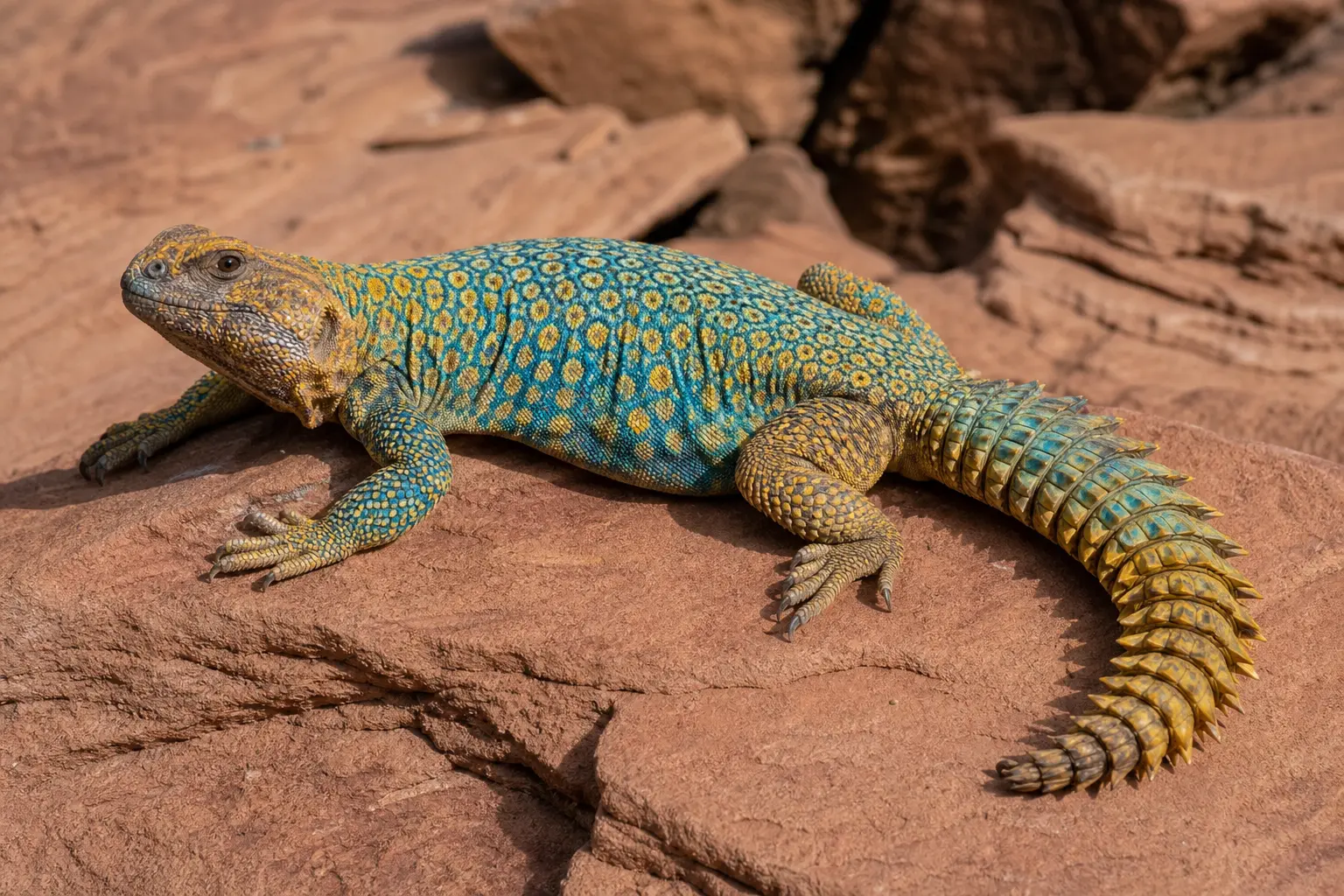
Uromastyx · Uromastyx spp.
Uromastyx, up close.
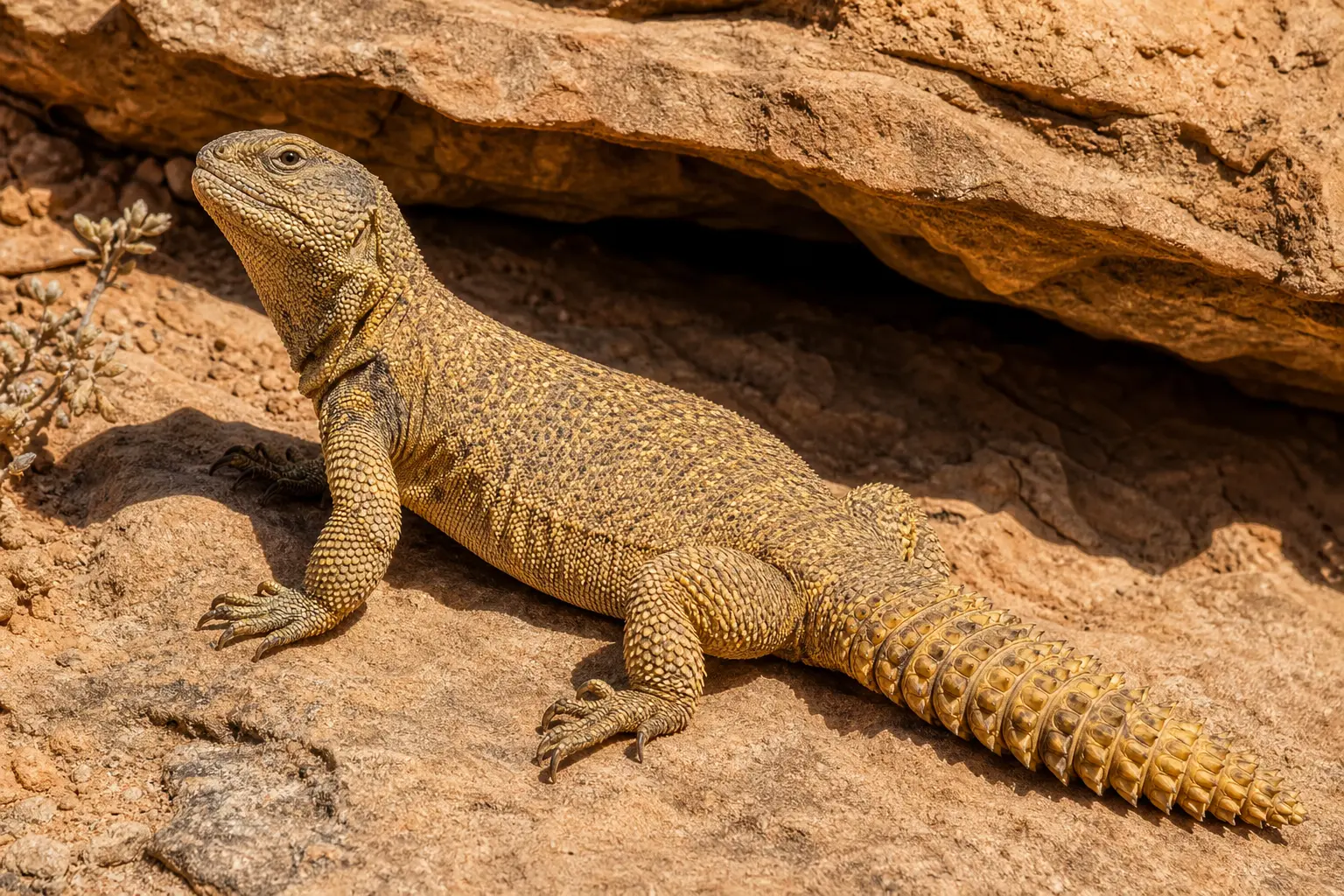
Uromastyx are bright-eyed desert baskers with sturdy little bodies and unmistakable armour-plated tails.
This is a group guide.
See what they needBefore you decide
Could a uromastyx thrive in your home?
Picture the full-grown animal, the permanent enclosure, and the ordinary care you would still be happy to give years from now.
The honest fit
Would their everyday rhythm suit you?
Think about an ordinary week, including the days when you are tired, busy, or away from home.
Life together may suit you if…
- You want a colourful, visible daytime lizard whose normal life revolves around basking and foraging
- You will confirm the exact species before choosing enclosure size or climate
- Preparing a fresh plant-led menu feels enjoyable
- You are comfortable measuring intense heat and UVB while preserving true shade
Pause if…
- The seller cannot provide a reliable scientific identity or captive-breeding history
- A compact tank is the only adult space available
- Powerful lamps, fire-safe installation, dry-air control, and daily fresh food feel difficult
- You expect one generic uromastyx care sheet to fit Egyptian, Moroccan, and ornate animals equally
A comfortable home
Build the home around their choices.
First identify the exact uromastyx. Then build a long, bright enclosure with a whole-body basking area, deep secure retreats at different temperatures, very dry ventilation, safe digging opportunity, and a heater system engineered against burns and fire.
Measure where the animal actually rests
A real retreat from the warm side
Use a digital hygrometer and watch ventilation
Build light and shade as a gradient
The rhythm
What an ordinary week asks of you.
Begin a bright desert day
Check the basking surface, cool retreat, UVB, humidity, lamp guards, and how the lizard warms before offering fresh greens.
Watch them bask and forage
Notice appetite, posture, movement, droppings, breathing, and whether the animal can move freely between intense light and deep shade.
Clear the food and cool the room
Remove wilted food and waste, record changes, secure the habitat, and let light and temperature fall on the planned schedule.
Care with tenderness
Learn what is normal for your uromastyx.
Start with the scientific name
A Moroccan, ornate, or Egyptian uromastyx can differ dramatically in adult size and care. Do not build from the shop label alone.
Respect desert heat
Powerful lamps can burn the lizard or start a fire. Guard every fixture, use the right thermostat or dimming control, measure surfaces and air separately, and preserve a cooler escape.
Watch weight and appetite
Call a reptile veterinarian for sustained appetite loss, weight change, weakness, swelling, breathing changes, poor sheds, wounds, or a lizard that cannot bask or move normally.
Choose captive-bred when possible
Ask about origin and records. Wild-caught animals may arrive stressed, dehydrated, underweight, and carrying parasites, so arrange a reptile-veterinarian examination and fecal testing.
Good to know
Common questions, answered.
Open any question for a short, practical answer.
Life together
Could a uromastyx suit a first-time keeper?
This may suit you if you want a colourful, visible daytime lizard whose normal life revolves around basking and foraging. Pause if the seller cannot provide a reliable scientific identity or captive-breeding history. Build and test the habitat before deciding.
How large do uromastyx get?
About 25–76 cm (10–30 in), depending on the exact species
How long do uromastyx live?
About 15–20 years. Individual lifespan varies, so plan around the longer end.
When are uromastyx active?
A highly visible daytime basker
Do uromastyx enjoy handling?
Often calm once settled, but handling remains brief and the powerful tail is never a handle. Watch the animal's posture and movement, support the whole body, and stop when it tries to leave.
Can two uromastyx live together?
Plan individual housing unless an experienced specialist approves and monitors a group
What do uromastyx eat?
A plant-led diet of varied dark greens, grasses, vegetables, seeds or pulses, with fruit and insects only as species-appropriate extras
How large should a uromastyx's enclosure be?
Start with an enclosure built around the exact species and adult length; the veterinary baseline begins at 227 L (60 gal), with larger strongly preferred. More usable room is valuable when it creates better gradients, cover, and movement choices.
Home and health
What temperatures does a uromastyx need?
Provide about 49°C (120°F); some current veterinary material uses 49–54.5°C (120–130°F), with a broad daytime gradient around 27–38°C (80–100°F). Measure both where the animal actually spends time and control every heater appropriately.
Does a uromastyx need UVB?
The reviewed plan calls for strong full-spectrum reptile UVB overlapping the broad basking zone, with measured shade. Fixture, reflector, mesh, distance, lamp age, and shade all change what reaches the animal.
What humidity does a uromastyx need?
Usually 10–40%, with exact needs confirmed by species. Check it with a digital hygrometer. Keep fresh air moving through the enclosure, and let the animal choose between damp shelter and dry ground.
What should be inside the enclosure?
First identify the exact uromastyx. Then build a long, bright enclosure with a whole-body basking area, deep secure retreats at different temperatures, very dry ventilation, safe digging opportunity, and a heater system engineered against burns and fire.
What substrate works for a uromastyx?
There is no one safe answer for the whole genus; choose a diggable, low-dust plan with the reptile veterinarian after species identity, diet, age, and health are known
What does ordinary cleaning involve?
Remove waste and wilted food promptly, refresh water if offered, and clean the dry habitat without leaving damp pockets or chemical residue.
What should I arrange before bringing a uromastyx home?
Build and test the complete adult habitat, verify the readings over several days, identify a reptile veterinarian, check local and rental rules, and choose a responsible captive source or rescue.
Can a healthy-looking uromastyx carry Salmonella?
Yes. Reptiles can carry Salmonella without looking ill, so handwashing and keeping habitat water, food, and cleaning equipment away from kitchens are part of ordinary care.
Still thinking about uromastyx?
Put this animal beside the others on your shortlist. Then build and test the complete adult habitat before anyone comes home.
Compare reptilesSources and care boundaries
Exact targets depend on the measured location, equipment, animal, and veterinary context. This profile keeps source disagreements visible instead of blending them into one number.