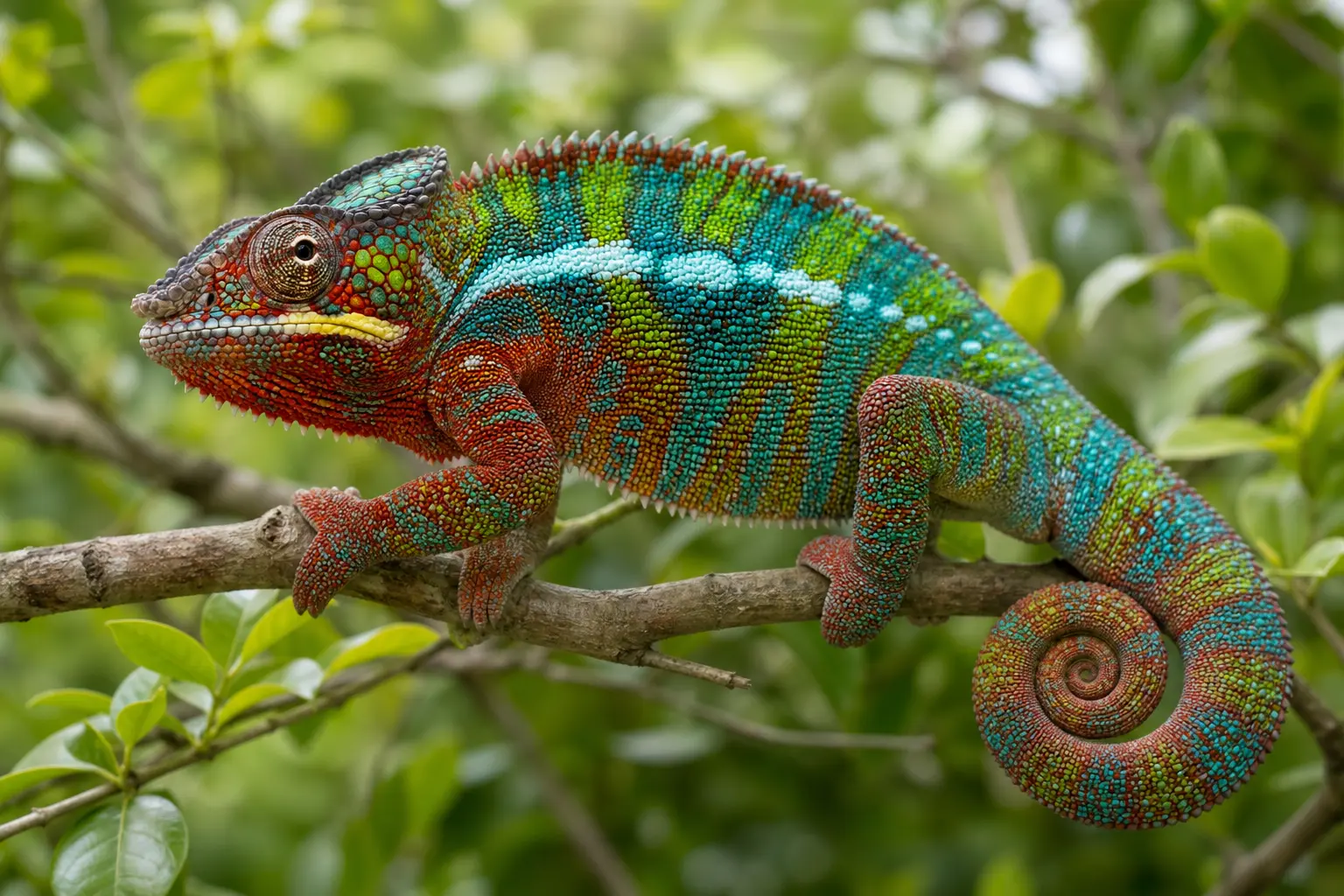
Veiled chameleon · Chamaeleo calyptratus
Life with the veiled chameleon.
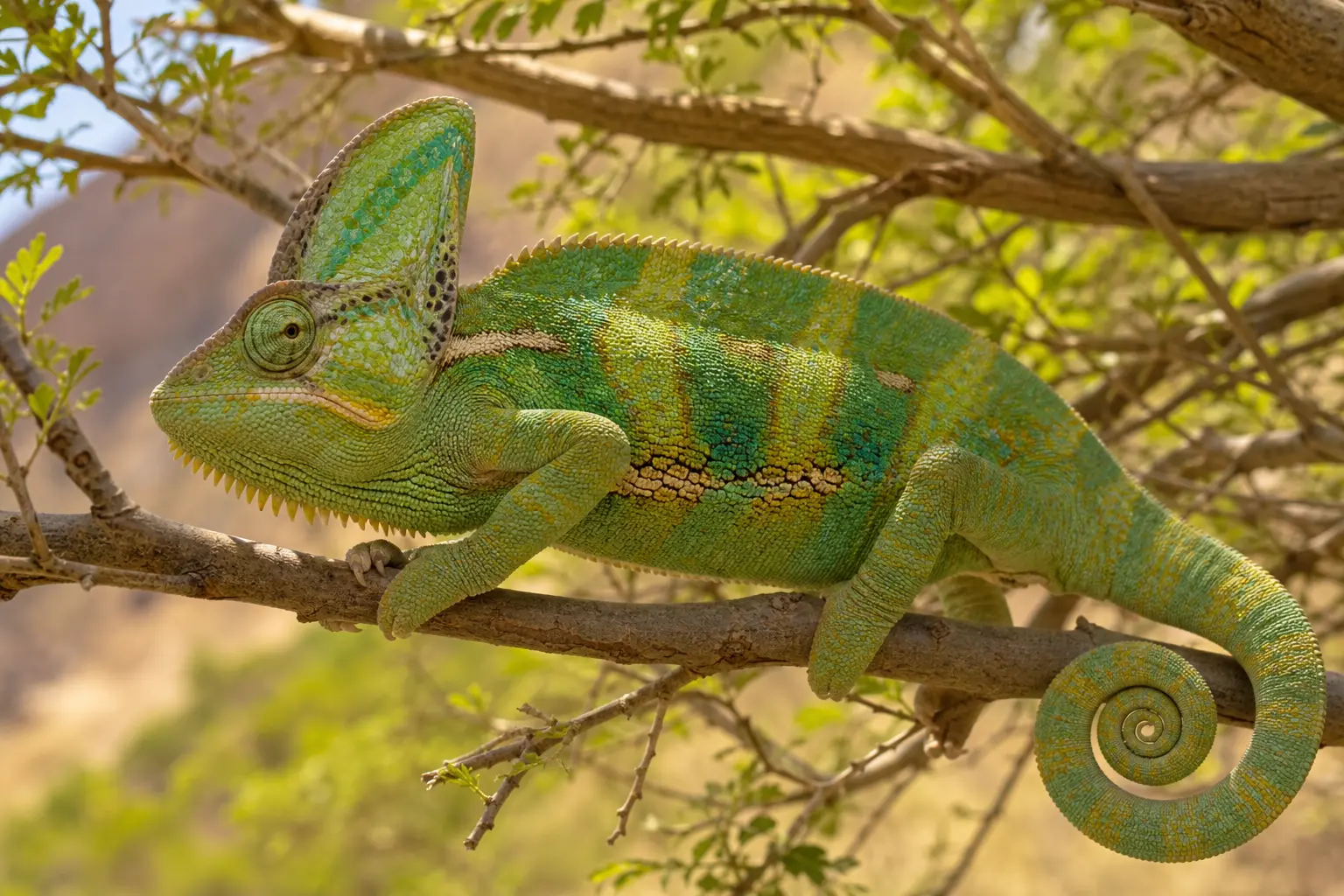
A veiled chameleon turns a planted canopy into a quiet little world.
This is a beautiful animal to observe, not a pet who needs cuddles.
See what they needBefore you decide
Could a veiled chameleon thrive in your home?
Picture the full-grown animal, the permanent enclosure, and the ordinary care you would still be happy to give years from now.
The honest fit
Would their everyday rhythm suit you?
Think about an ordinary week, including the days when you are tired, busy, or away from home.
Life together may suit you if…
- You would love a vivid daytime animal whose natural behaviour is the main attraction
- A tall, planted enclosure with excellent drainage and ventilation fits your home
- You are comfortable keeping live feeders and measuring heat, humidity, and UVB
- You can let the chameleon choose distance instead of expecting regular handling
Pause if…
- You want a reptile who enjoys frequent holding or busy family interaction
- Misting, drainage, live insects, supplements, and lamp monitoring feel like too much
- You plan to house two chameleons together or keep the enclosure visually exposed
- You do not yet have access to an experienced reptile veterinarian
A comfortable home
Build the home around their choices.
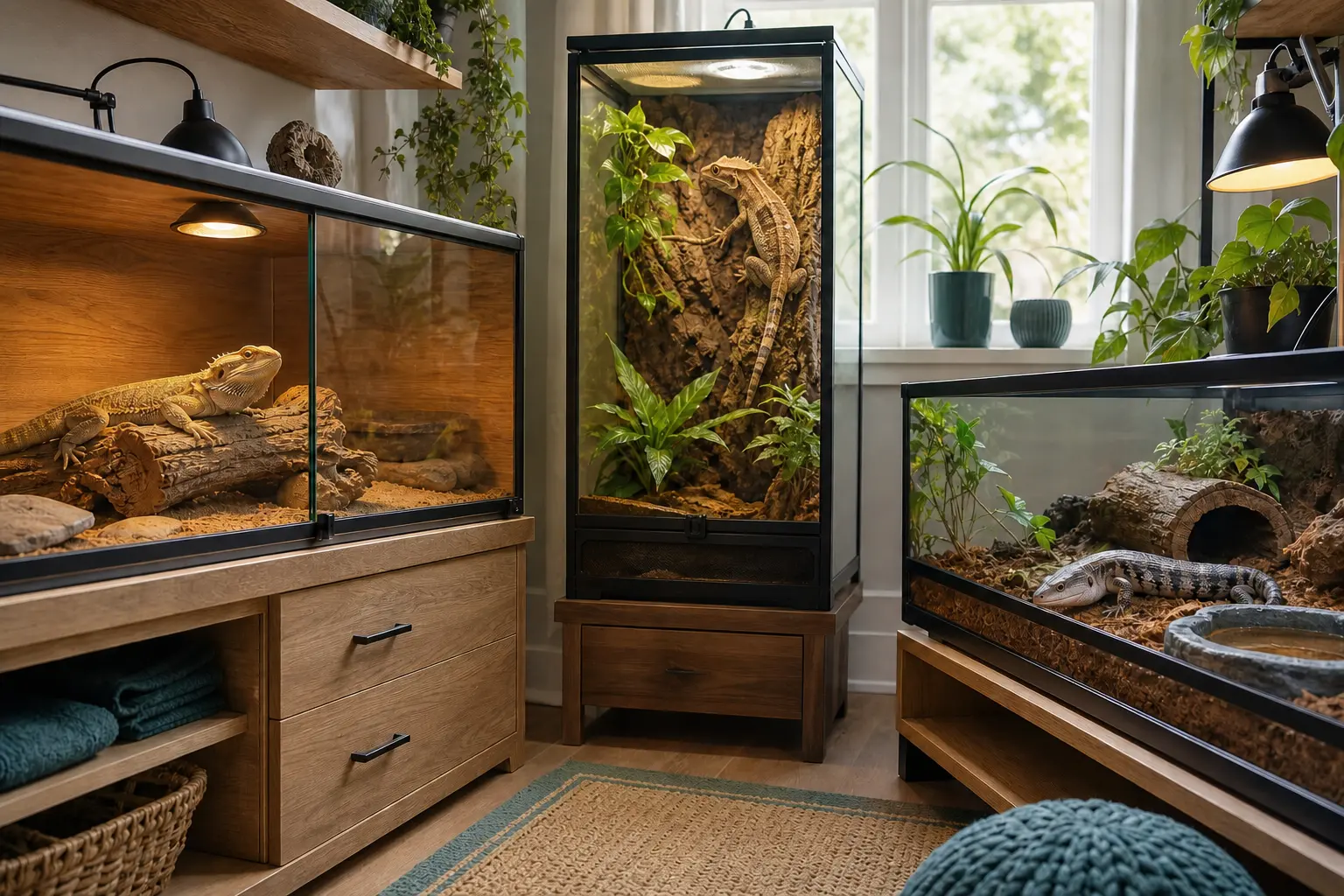
Build upward with a tall, airy enclosure, safe live plants, many horizontal branches, hidden routes, and clear choices between light, shade, warmth, and cover. Measure conditions where the chameleon actually perches.
Measure where the animal actually rests
A real retreat from the warm side
Use a digital hygrometer and watch ventilation
Build light and shade as a gradient
The rhythm
What an ordinary week asks of you.
Wake the canopy
Let the lights and basking heat come on, check readings at perch height, and provide a clean shower of droplets before the enclosure dries back.
Watch them choose
Offer the planned feeders, remove uneaten insects, and notice colour, grip, aim, appetite, droppings, and which branches feel comfortable today.
Leave the leaves quiet
Clear waste, check drainage, and switch off every visible light. A peaceful, cooler night is part of the habitat.
Care with tenderness
Learn what is normal for your veiled chameleon.
Let trust be optional
Offer a branch or open hand and wait. Chasing, peeling feet from a perch, or forcing daily handling turns a calm observer into a frightened animal.
Give one chameleon one home
House veiled chameleons separately. Opaque cover and dense planting also reduce the stress of seeing people, pets, or another chameleon all day.
Know the female question
Females can produce eggs without a male and need species-specific laying provision and veterinary guidance. Ask about sex and reproductive care before bringing one home.
Read small changes early
Closed eyes by day, weak grip, falls, swelling, poor aim, persistent dark colour, wheezing, or loss of appetite deserve prompt reptile-veterinary attention.
Good to know
Common questions, answered.
Open any question for a short, practical answer.
Life together
Could a veiled chameleon suit a first-time keeper?
This may suit you if you would love a vivid daytime animal whose natural behaviour is the main attraction. Pause if you want a reptile who enjoys frequent holding or busy family interaction. Build and test the habitat before deciding.
How large do veiled chameleons get?
Males about 45–60 cm (18–24 in); females up to 35 cm (14 in)
How long do veiled chameleons live?
Usually 3–6 years; males may reach 6–7. Individual lifespan varies, so plan around the longer end.
When are veiled chameleons active?
Awake and watchable during the day
Do veiled chameleons enjoy handling?
Occasional and choice-led; many prefer not to be handled. Watch the animal's posture and movement, support the whole body, and stop when it tries to leave.
Can two veiled chameleons live together?
House separately
What do veiled chameleons eat?
Varied, gut-loaded live insects, with safe leaves and blossoms as enrichment
How large should a veiled chameleon's enclosure be?
Start with at least 61 × 61 × 91 cm; taller and larger is better. More usable room is valuable when it creates better gradients, cover, and movement choices.
Home and health
What temperatures does a veiled chameleon need?
Provide a measured overhead basking area within a 20–35°C (70–95°F) daytime gradient, with leafy retreats around 20–24°C (68–75°F). Measure both where the animal actually spends time and control every heater appropriately.
Does a veiled chameleon need UVB?
The reviewed plan calls for full-spectrum linear UVB over safe basking branches, with shade below. Fixture, reflector, mesh, distance, lamp age, and shade all change what reaches the animal.
What humidity does a veiled chameleon need?
About 40–60%, paired with drinking droplets and strong ventilation. Check it with a digital hygrometer. Keep fresh air moving through the enclosure, and let the animal choose between damp shelter and dry ground.
What should be inside the enclosure?
Build upward with a tall, airy enclosure, safe live plants, many horizontal branches, hidden routes, and clear choices between light, shade, warmth, and cover. Measure conditions where the chameleon actually perches.
What substrate works for a veiled chameleon?
An easy-to-clean, well-drained floor that cannot be swallowed with prey
What does ordinary cleaning involve?
Remove waste and dead insects promptly, refresh drainage and water equipment, and keep misting lines clean.
What should I arrange before bringing a veiled chameleon home?
Build and test the complete adult habitat, verify the readings over several days, identify a reptile veterinarian, check local and rental rules, and choose a responsible captive source or rescue.
Can a healthy-looking veiled chameleon carry Salmonella?
Yes. Reptiles can carry Salmonella without looking ill, so handwashing and keeping habitat water, food, and cleaning equipment away from kitchens are part of ordinary care.
Still thinking about veiled chameleons?
Put this animal beside the others on your shortlist. Then build and test the complete adult habitat before anyone comes home.
Compare reptilesSources and care boundaries
Exact targets depend on the measured location, equipment, animal, and veterinary context. This profile keeps source disagreements visible instead of blending them into one number.