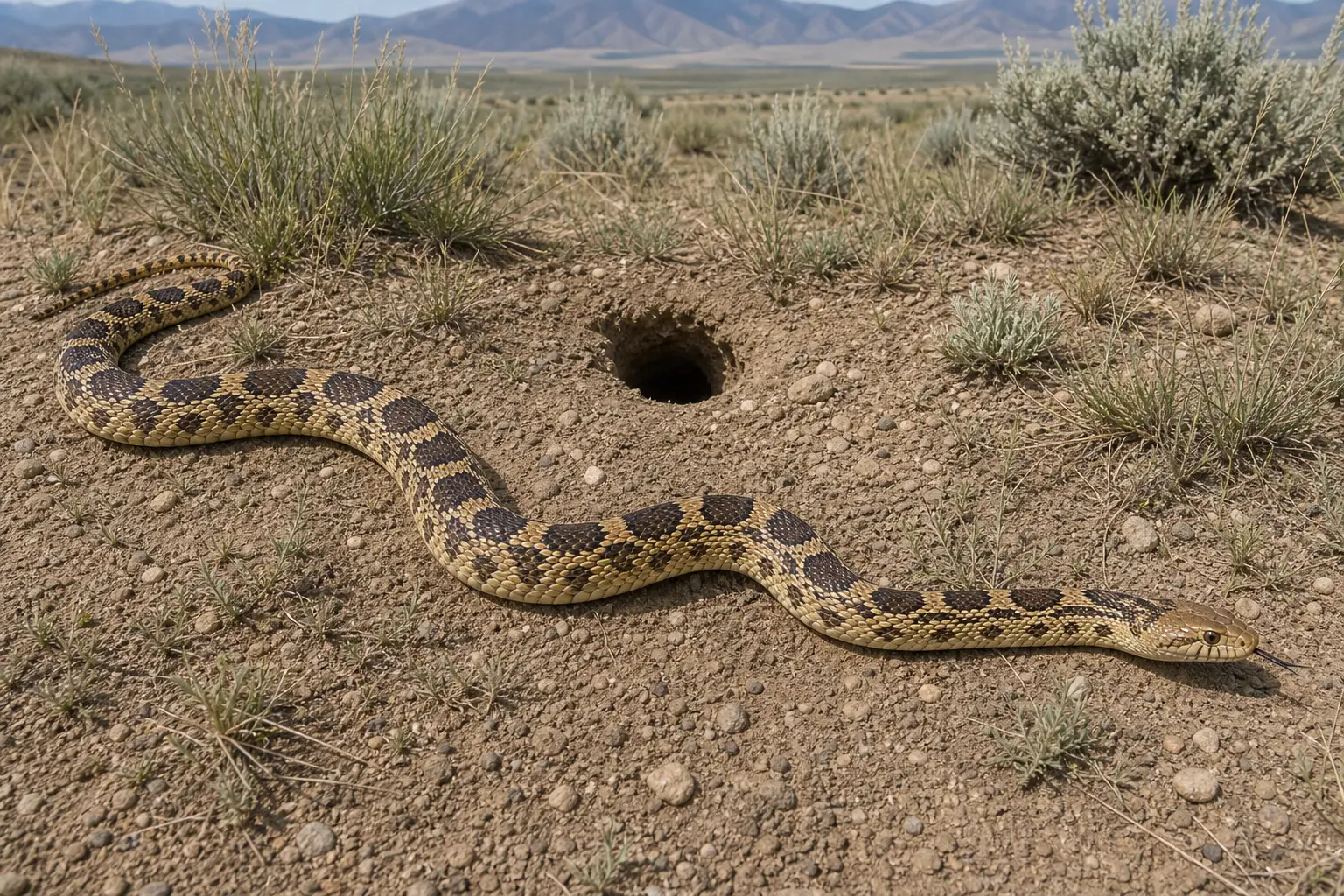
Western hognose snake · Heterodon nasicus
What makes the western hognose snake remarkable?
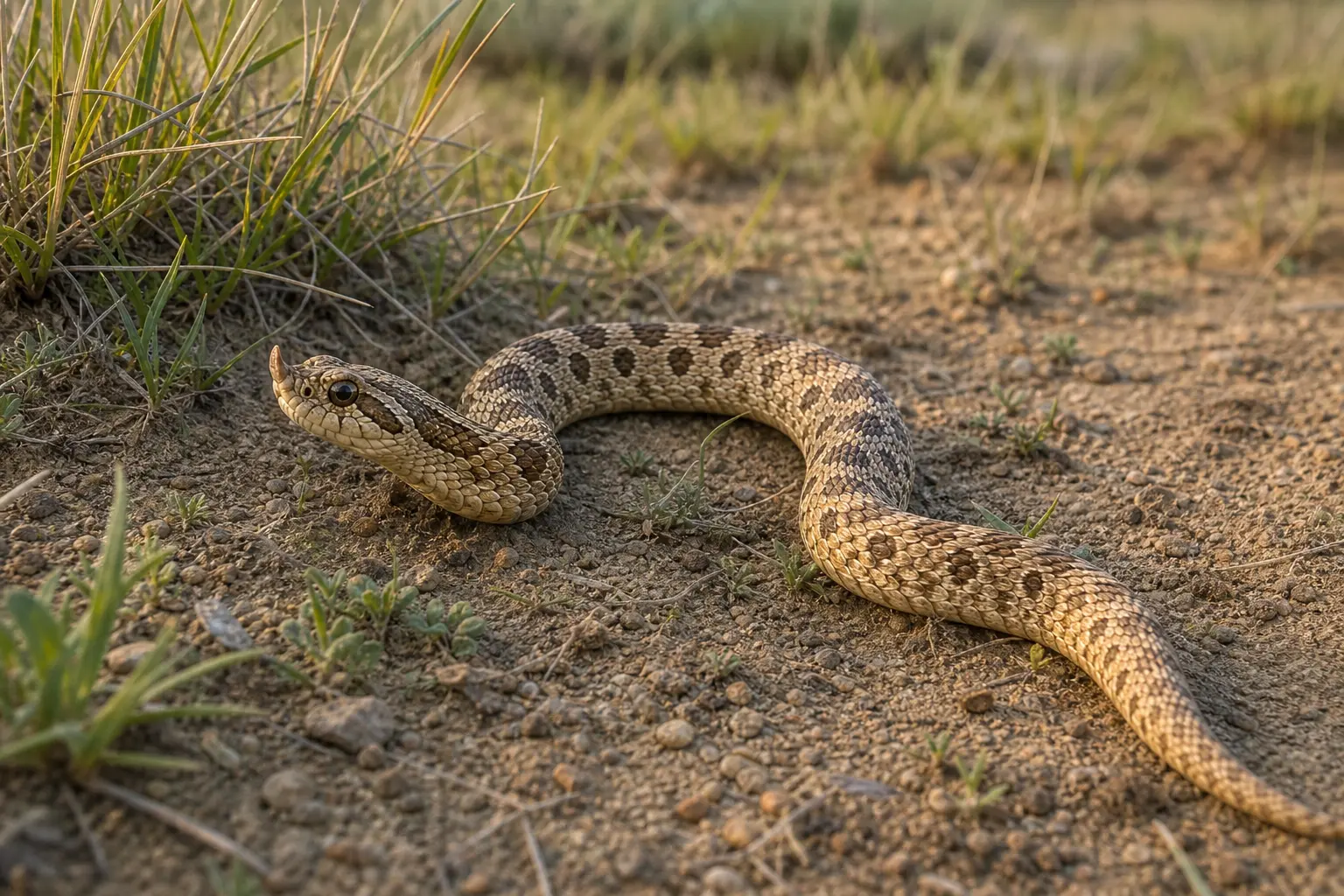
Western hognose snakes are small prairie diggers with an upturned shovel of a nose.
The drama is usually defensive, not a wish to fight.
See what they needBefore you decide
Could a western hognose snake thrive in your home?
Picture the full-grown animal, the permanent enclosure, and the ordinary care you would still be happy to give years from now.
The honest fit
Would their everyday rhythm suit you?
Think about an ordinary week, including the days when you are tired, busy, or away from home.
Life together may suit you if…
- You would enjoy a small daytime snake whose best behaviour happens underground
- You can provide a wide enclosure with deep substrate rather than a bare display tank
- You find hissing and bluff displays interesting, not funny to provoke
- You have checked local rules and are comfortable with this mildly venomous species
Pause if…
- Anyone in the home has a serious reaction risk and your physician advises against keeping one
- You want a snake that can be handled whenever you choose
- The seller cannot show that the animal reliably eats frozen-thawed rodents
- You plan to keep the enclosure shallow, sparse, or damp throughout
A comfortable home
Build the home around their choices.
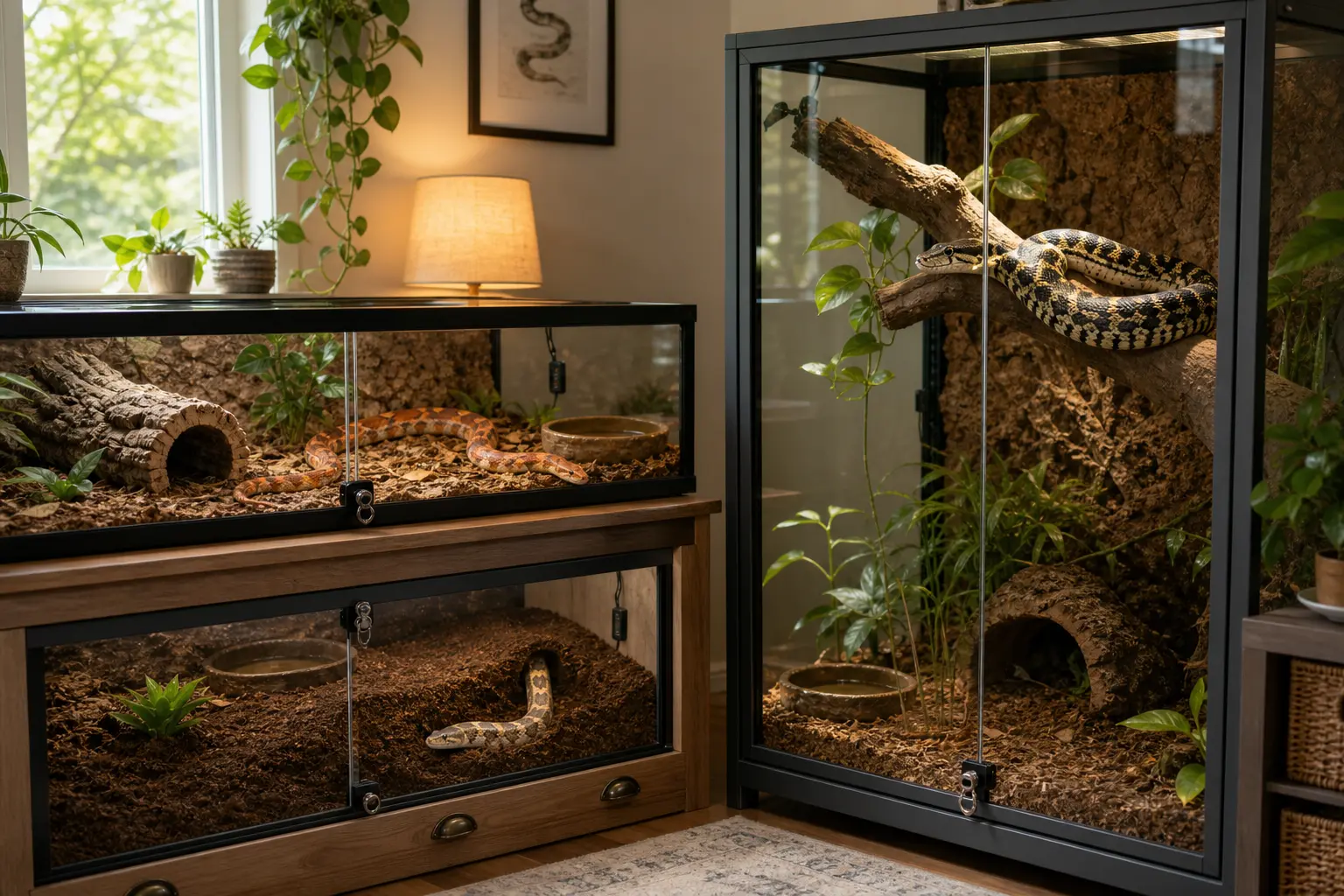
Make the floor useful: a locked enclosure, several inches of tunnel-holding substrate, snug hides, water, cork and roots, a warm open patch, and deep cover across the cool side.
Measure where the animal actually rests
A real retreat from the warm side
Use a digital hygrometer and watch ventilation
Build light and shade as a gradient
The rhythm
What an ordinary week asks of you.
Warm the prairie
Bring up light and overhead heat, verify the basking and cool readings, refresh water, and look for the night’s new tunnels.
Let the nose do its work
Offer leaf litter, roots, cork, and new scents, then watch without uncovering the snake every time it disappears.
Keep the routine calm
Use tongs for the planned thawed mouse, record the result, close the enclosure securely, and skip handling while the meal is digested.
Care with tenderness
Learn what is normal for your western hognose snake.
Respect the rear fangs
Western hognose snakes have enlarged rear teeth and mildly venomous saliva. Bites are uncommon but can cause swelling; never allow chewing, and seek medical advice for a bite or any concerning reaction.
Do not applaud a stress display
Hissing, neck-flattening, striking with a closed mouth, or playing dead means back away. Repeatedly provoking the display for entertainment is not kind handling.
Digging is not disappearing
A buried hognose is behaving normally. Use weight, meals, sheds, waste, and occasional visual checks to monitor health without excavating a resting snake every day.
Ask before appetite becomes a crisis
A prolonged refusal with weight loss, wheezing, swelling, burns, regurgitation, mites, or repeated poor sheds needs a reptile veterinarian.
Good to know
Common questions, answered.
Open any question for a short, practical answer.
Life together
Could a western hognose snake suit a first-time keeper?
This may suit you if you would enjoy a small daytime snake whose best behaviour happens underground. Pause if anyone in the home has a serious reaction risk and your physician advises against keeping one. Build and test the habitat before deciding.
How large do western hognose snakes get?
Males often 35–50 cm; females commonly 60–90 cm
How long do western hognose snakes live?
Often 10–15 years or longer. Individual lifespan varies, so plan around the longer end.
When are western hognose snakes active?
Awake during the day and happiest while burrowing
Do western hognose snakes enjoy handling?
Brief and low to the ground after the snake settles. Watch the animal's posture and movement, support the whole body, and stop when it tries to leave.
Can two western hognose snakes live together?
House separately
What do western hognose snakes eat?
A reliably established frozen-thawed rodent diet
How large should a western hognose snake's enclosure be?
Start with at least 91 × 46 cm of floor space for an adult. More usable room is valuable when it creates better gradients, cover, and movement choices.
Home and health
What temperatures does a western hognose snake need?
Provide a surface around 32–35°C (90–95°F), with a retreat around 21–24°C (70–75°F). Measure both where the animal actually spends time and control every heater appropriately.
Does a western hognose snake need UVB?
The reviewed plan calls for low-to-moderate linear UVB over the basking end with full shade. Fixture, reflector, mesh, distance, lamp age, and shade all change what reaches the animal.
What humidity does a western hognose snake need?
About 30–50%, with moisture available below ground and in a humid hide. Check it with a digital hygrometer. Keep fresh air moving through the enclosure, and let the animal choose between damp shelter and dry ground.
What should be inside the enclosure?
Make the floor useful: a locked enclosure, several inches of tunnel-holding substrate, snug hides, water, cork and roots, a warm open patch, and deep cover across the cool side.
What substrate works for a western hognose snake?
Deep reptile-safe soil, coconut husk, or fine aspen that holds a burrow without staying wet
What does ordinary cleaning involve?
Remove waste and shed weekly, refresh water daily, and complete a reptile-safe full clean about monthly.
What should I arrange before bringing a western hognose snake home?
Build and test the complete adult habitat, verify the readings over several days, identify a reptile veterinarian, check local and rental rules, and choose a responsible captive source or rescue.
Can a healthy-looking western hognose snake carry Salmonella?
Yes. Reptiles can carry Salmonella without looking ill, so handwashing and keeping habitat water, food, and cleaning equipment away from kitchens are part of ordinary care.
Still thinking about western hognose snakes?
Put this animal beside the others on your shortlist. Then build and test the complete adult habitat before anyone comes home.
Compare reptilesSources and care boundaries
Exact targets depend on the measured location, equipment, animal, and veterinary context. This profile keeps source disagreements visible instead of blending them into one number.