

Turtle & tortoise guides
Find the life behind the shell
Find a turtle or tortoise whose adult care fits your life.
The complete directory
Meet the animals
26 guides. Turtles include aquatic and land-dwelling species; open the exact profile before planning a habitat.
Tortoises
- Greek tortoisesTestudo graeca
- Hermann's tortoisesTestudo hermanni
- Indian star tortoisesGeochelone elegans
- Leopard tortoisesStigmochelys pardalis
- Marginated tortoisesTestudo marginata
- Pancake tortoisesMalacochersus tornieri
- Red-footed tortoisesChelonoidis carbonarius
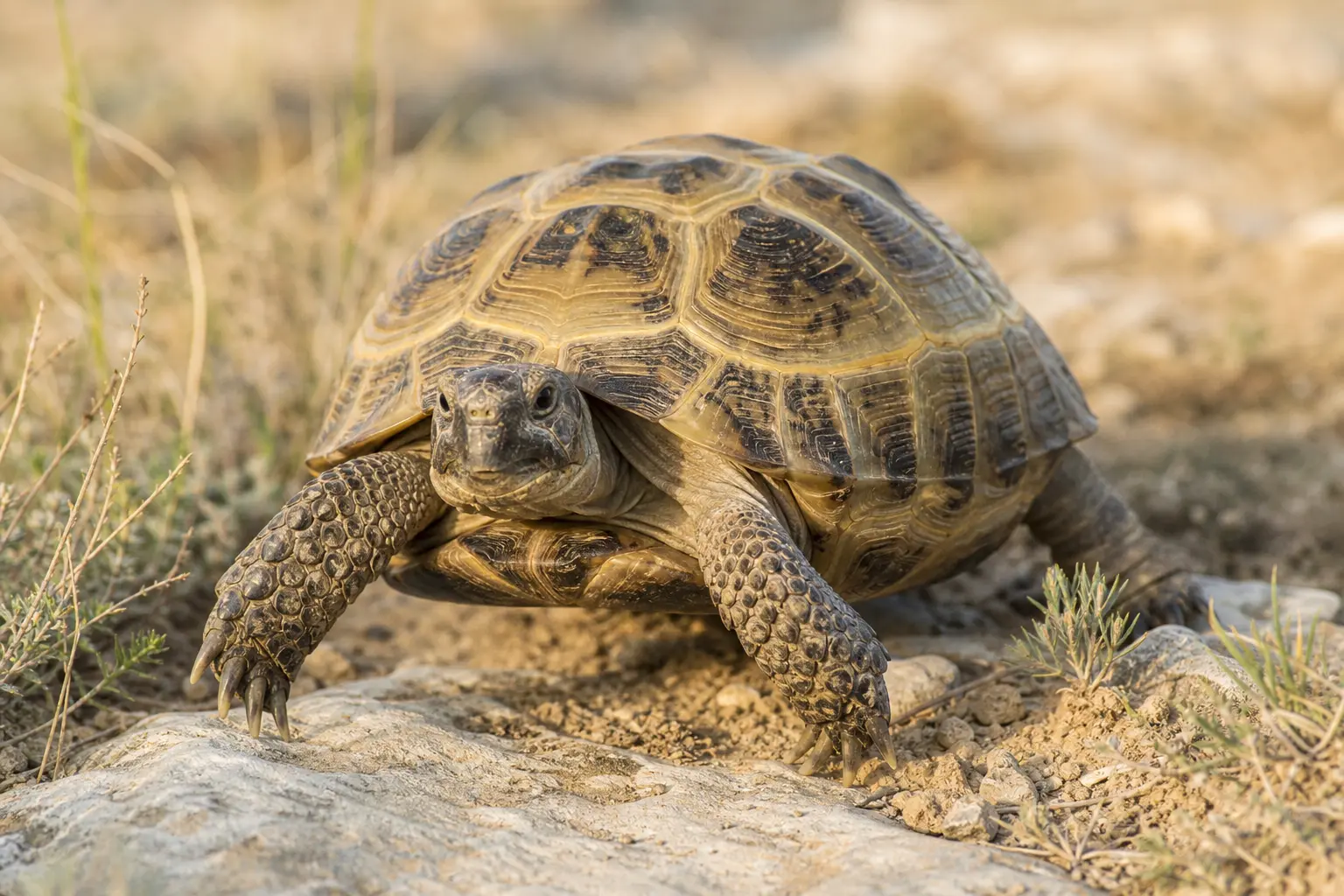
- Russian tortoisesTestudo horsfieldii
- Sulcata tortoisesCentrochelys sulcata
- Yellow-footed tortoisesChelonoidis denticulatus
Turtles, including box turtles
- African helmeted turtlesPelomedusa subrufa
- Box turtlesTerrapene spp.
- Common musk turtlesSternotherus odoratus
- Common snapping turtlesChelydra serpentina
- Diamondback terrapinsMalaclemys terrapin
- Eastern box turtlesTerrapene carolina carolina
- Eastern mud turtlesKinosternon subrubrum
- Map turtlesGraptemys spp.
- Ornate box turtlesTerrapene ornata
- Painted turtlesChrysemys picta
- Red-eared slidersTrachemys scripta elegans
- Reeve's turtlesMauremys reevesii
- Spotted turtlesClemmys guttata
- Three-toed box turtlesTerrapene carolina triunguis
- Wood turtlesGlyptemys insculpta
- Yellow-bellied slidersTrachemys scripta scripta
No matching guide yet
Try a shorter common name, scientific name, or the other animal group.
Show every guideBefore choosing
Picture the full-grown home
Land or water?
Box turtles are not swimming-turtle setups. Start with the exact species, not the shape of its shell.
Adult room
Measure permanent walking space or water volume, including the room needed for safe maintenance.
Warmth and shade
Plan measured heat and UVB, with a retreat from both. Swimming turtles also need a fully dry basking place.
A long life
Think beyond today's home: care, veterinary access, and a plan for holidays and future moves.
Take a closer look before deciding
Open the full species guide for diet, climate, space, and everyday care. There is no single turtle setup.
Habitat planning and hygiene
Make room for the full-grown animal
Measure the finished home, not the hatchling display.
A swimming turtle adds heavy water, a dry dock, filtration, hoses, and splash-safe power.
Build heat, UVB, shade, and a truly dry retreat
Before anyone moves in, watch a full day's light and warmth at shell height.
A tortoise or box turtle needs ground, cover, and moisture that suit its natural life.
Treat water and cleanup as part of the habitat
A filter does not cancel maintenance.
Reptiles can carry Salmonella while looking healthy.
Clean supplies outdoors when possible.