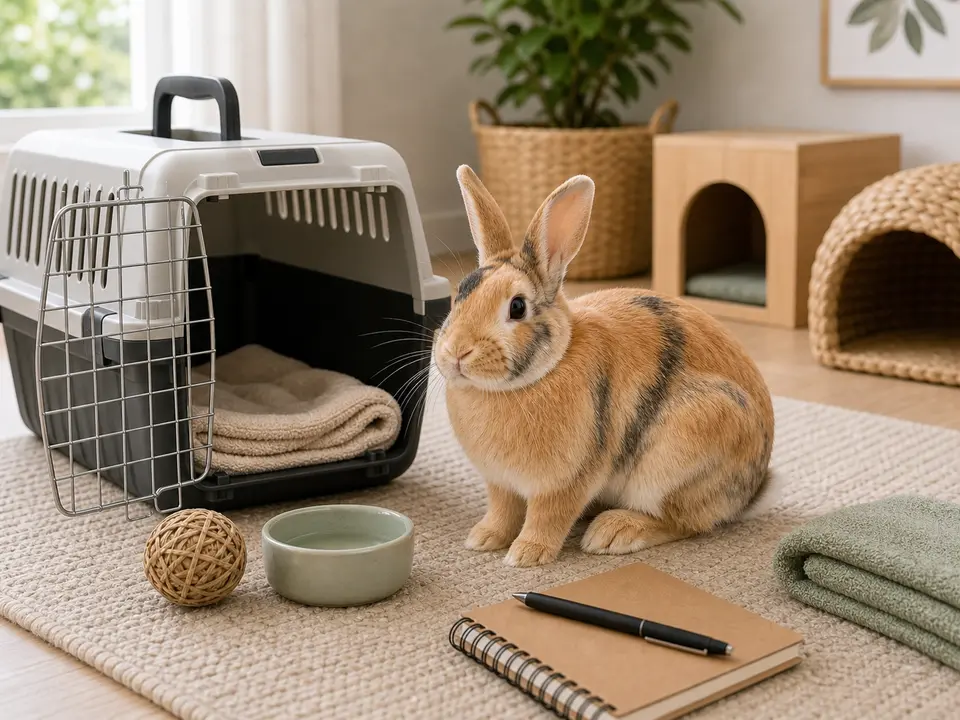
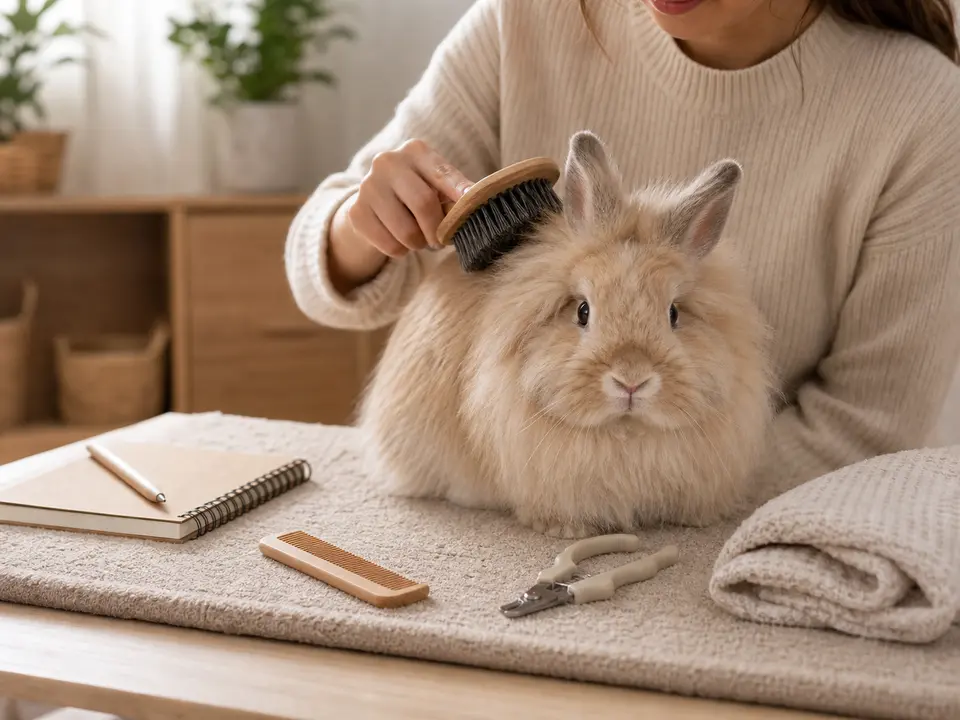
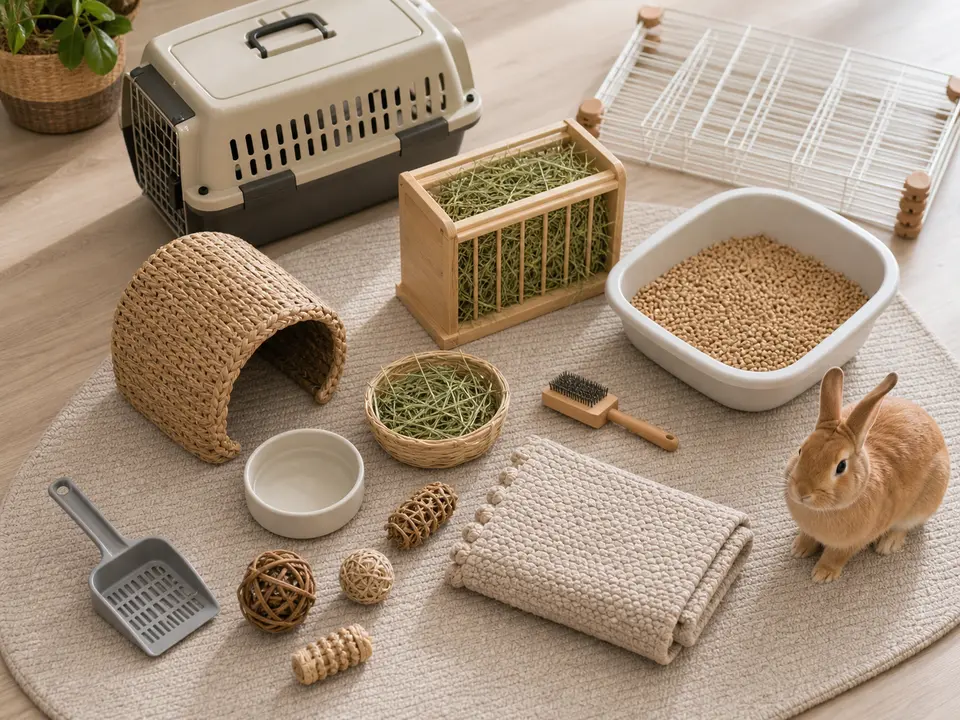
A rabbit emergency bag should make a vet trip easier: carrier supplies, towel, notes, medication list if relevant, and the information your vet would need quickly. It should not replace calling a rabbit-savvy vet.
Rabbit supplies should earn their space in the daily routine. The best choice is the one that makes hay, litter, traction, chewing, transport, hiding, water, or cleanup easier tomorrow.
Pack the carrier first
A rabbit emergency bag should make a vet trip easier: carrier supplies, towel, notes, medication list if relevant, and the information your vet would need quickly. It should not replace calling a rabbit-savvy vet. Start with the carrier because most rabbit emergencies turn into a trip or a call where transport details matter.
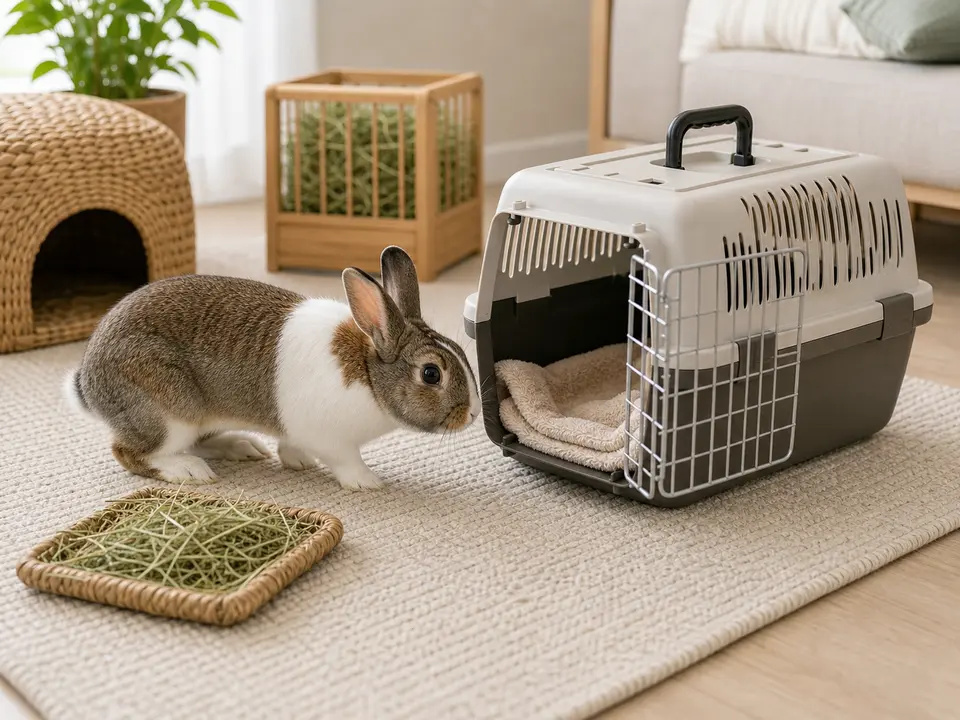
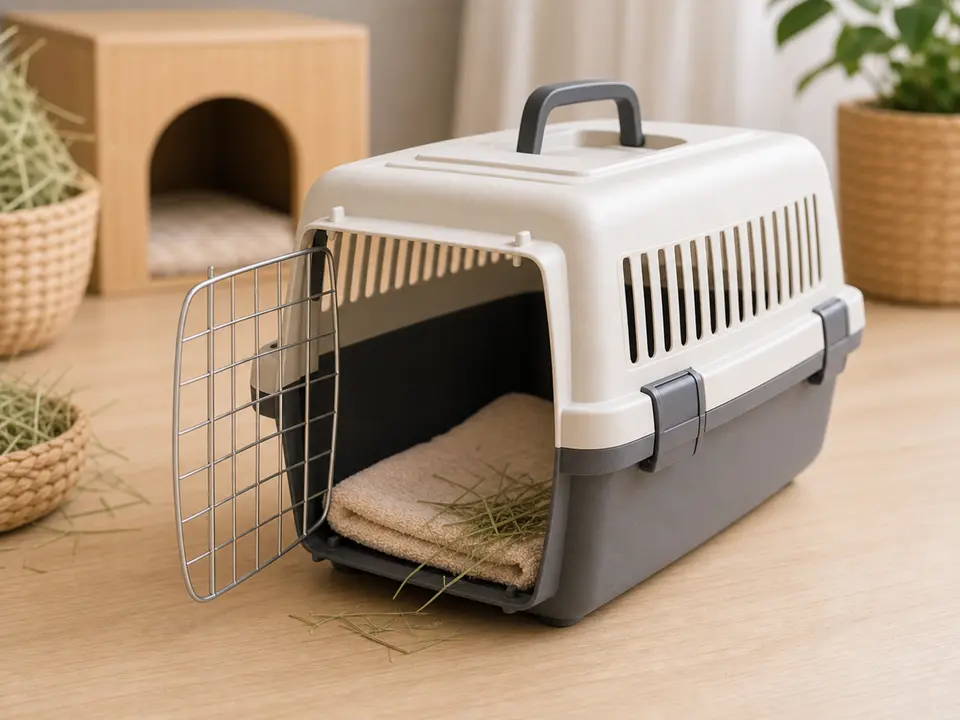
Keep a hard-sided carrier ready with a washable towel or flat liner for traction. Add a spare towel so you can swap a damp layer before the ride home instead of making a stressed rabbit sit in a mess.
Store the carrier where you can reach it quickly, not behind heavy storage. Leave it familiar when possible so it does not only appear on frightening days.
Keep vet notes easy to grab
Put the rabbit-savvy vet phone number, emergency clinic details, medication list, and any current diagnosis notes in the bag or taped near the carrier.
Leave space for one plain note: when your rabbit last ate, when you last saw normal poops, what changed, and whether breathing, posture, movement, or temperature seemed different.
A written note helps when you are worried and moving fast. It also helps another person call the clinic with the facts if you are driving or holding the carrier steady.
Add food and cleanup basics
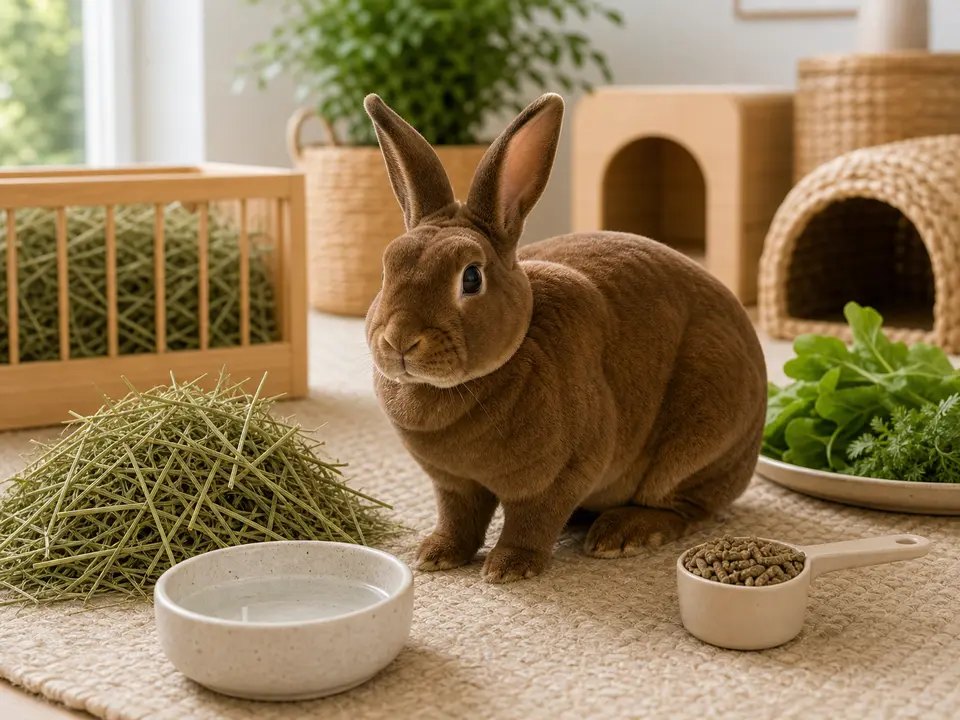
Pack a small amount of familiar hay, a few normal pellets if your rabbit eats them, cleanup bags, paper towels, and an extra liner. These are for necessary travel and waiting-room comfort, not for experimenting with new food during a crisis.
Do not overload the carrier with bowls, toys, or loose bedding. The rabbit needs steady footing, air, and room to sit normally more than a crowded comfort display.
Keep the food portion small enough that you rotate it before it gets stale. The goal is a familiar smell and something safe to offer if your vet says it is appropriate.
Plan for heat, cold, and waiting
An emergency bag should help you protect the rabbit while you get professional help: a towel for shade or warmth, a way to keep the carrier level, and a plan for avoiding hot cars, drafts, and loud waiting areas.
This is especially important during storms, power outages, travel delays, or urgent vet calls when the room may not stay calm and predictable.
Do not put hot or cold packs directly against your rabbit. If temperature support is needed, wrap it, keep it outside the main body space, and follow vet advice.
Restock it before you need it
After any trip, wash the towel, replace used liners, update notes, and check that the vet contact still matches your current clinic. An emergency bag only helps if it is ready before the stressful day starts.
Keep medications, syringes, or medical supplies in the bag only when your rabbit-savvy vet has told you to use them. The bag supports quick action; it should not turn into a substitute for calling the vet.
Check the bag on the same day you clean the carrier or replace hay storage. A small monthly reset keeps the kit boring, current, and ready.
Before you decide
What changed recently?
Can your rabbit choose a quiet retreat?
Are hay, water, litter, and footing easy?
Is this normal for your individual rabbit?
Next best moves
Make one small change.
Watch what your rabbit chooses next.
Keep the setup calm enough to repeat tomorrow.
Helpful rabbit supplies
These are practical pieces for the routine, not clutter to buy all at once.
Affiliate links: Furball Cove may earn from qualifying purchases at no extra cost to you.
A rabbit emergency bag should make a vet trip easier: carrier supplies, towel, notes, medication list if relevant, and the information your vet would need quickly. It should not replace calling a rabbit-savvy vet.
What should I change first?
Choose one small setup change that makes the daily routine easier: closer hay, better traction, a calmer hideout, a larger box, or a shorter handling session.
When should I get extra help?
If your rabbit stops eating or pooping, seems painful, breathes strangely, or changes suddenly, call a rabbit-savvy vet. For bonding or handling problems, an experienced rabbit rescue can also help.