What should I do the night before bringing a rabbit home
The night before bringing a rabbit home, finish the room instead of adding more stuff: hay and litter together, water filled, hideout ready, cords and plants moved, grippy floor down, carrier path clear, and the first few days kept quiet.
New rabbits do best when the first room feels predictable and quiet. This guide keeps the answer grounded in the room your rabbit actually uses: hay, water, litter, hideouts, safe chewing, quiet handling, and enough patience for trust to build.
Finish the room, then stop tinkering
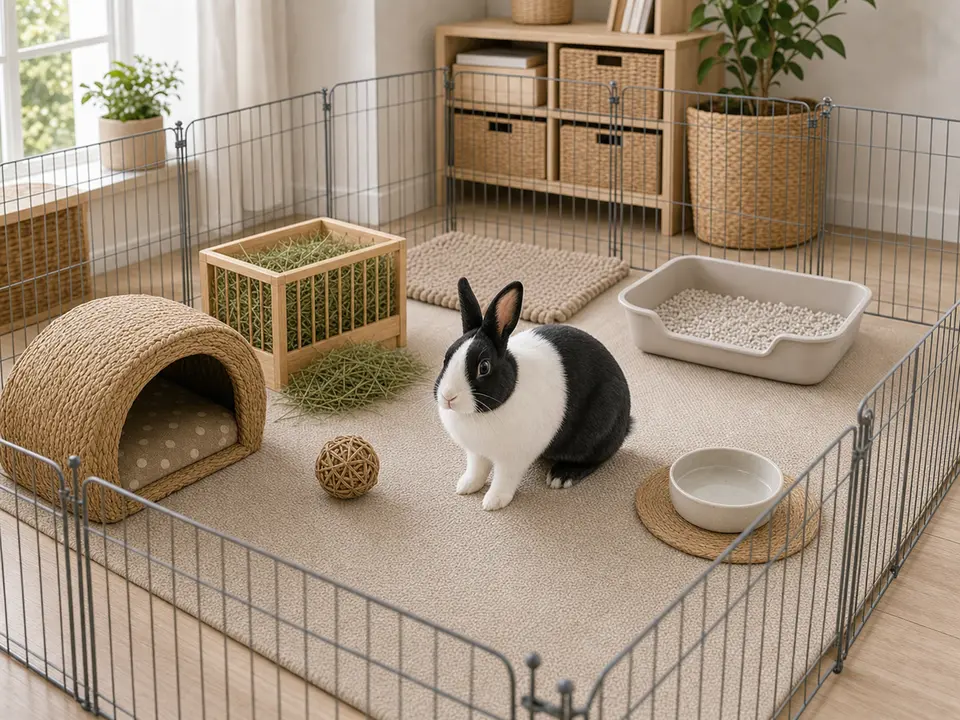
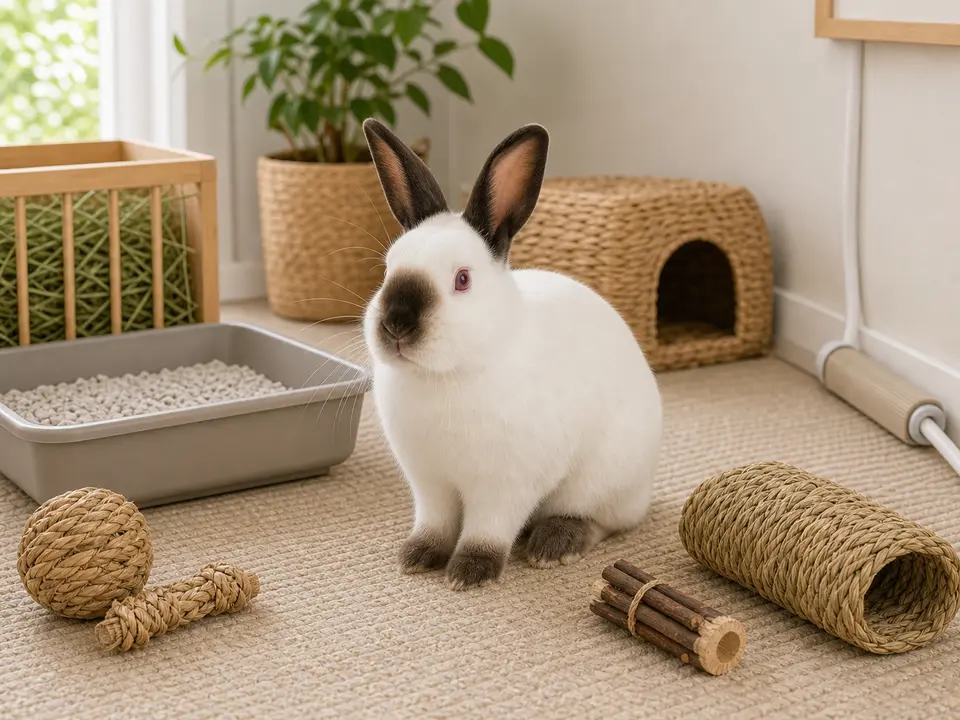
The night before bringing a rabbit home, finish the room instead of adding more stuff: hay and litter together, water filled, hideout ready, cords and plants moved, grippy floor down, carrier path clear, and the first few days kept quiet. The room should feel simple and predictable when the carrier opens.
If the essentials are ready, resist one last redesign. A new rabbit needs calm more than a perfect display.
Keep this decision tied to the room your rabbit will actually use. If the setup makes hay, water, litter, rest, and safe movement easier tomorrow morning, it is doing more work than a prettier extra.
Set hay, water, and litter where they belong
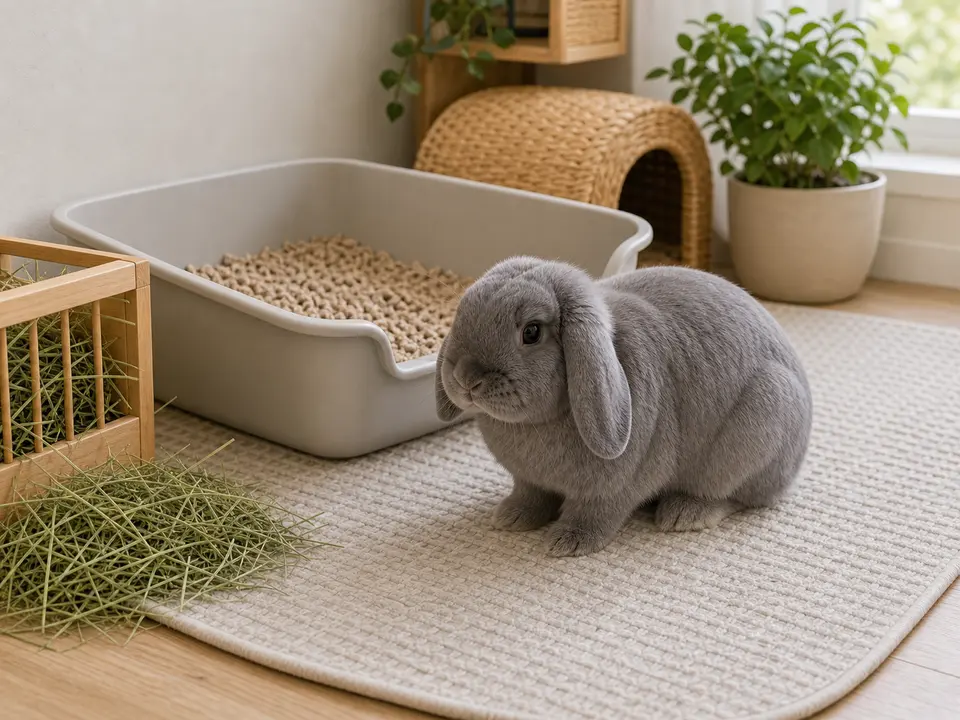
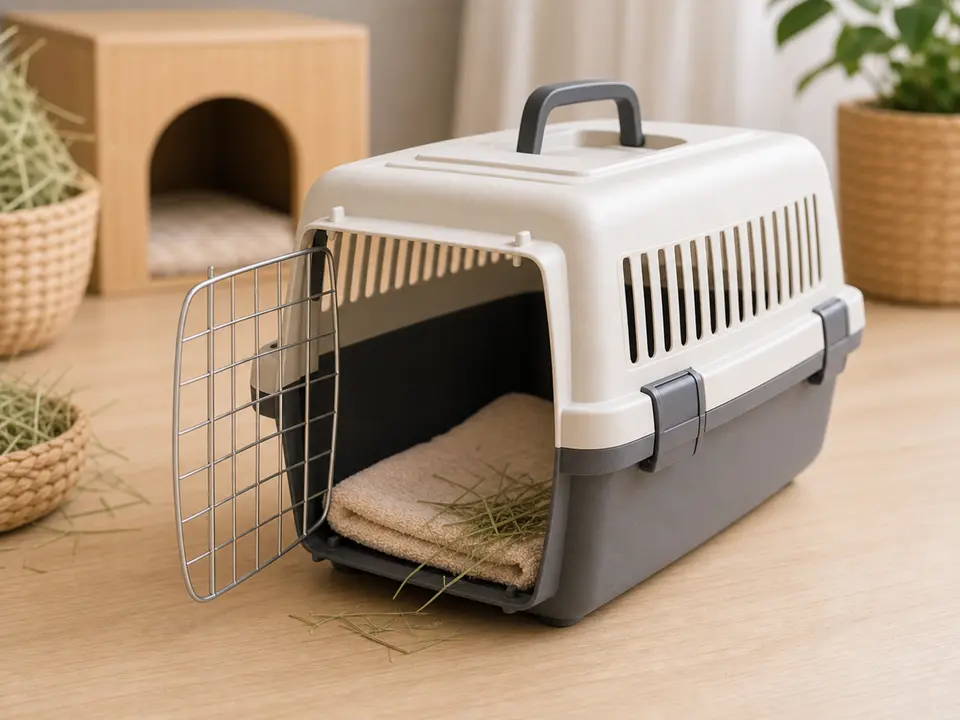
Put hay and the litter box together, fill the water bowl, and make sure the hideout is easy to find from the carrier door.
Those first familiar jobs help the rabbit orient without being handled repeatedly.
This also keeps the advice honest for new owners. A rabbit's first week is easier when the basics are visible, repeatable, and calm enough that you can notice small changes.
Remove the obvious hazards
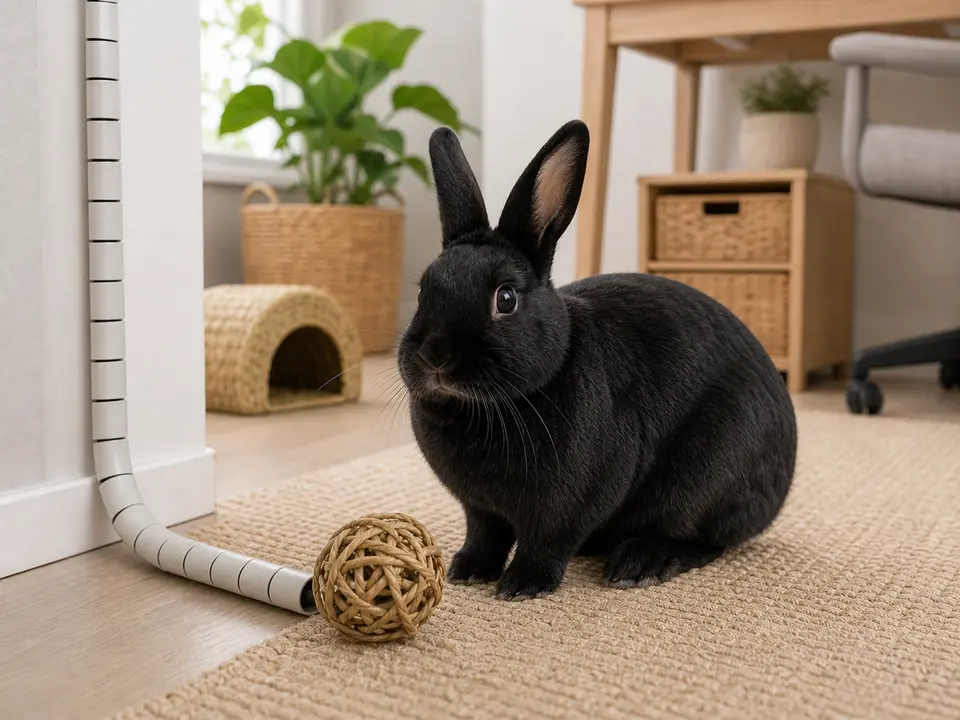
Move cords, plants, dangling fabric, sharp edges, and rug corners before curiosity starts.
The safer the room is, the less you will need to interrupt the first exploration.
Write down the practical detail before adoption day if more than one person helps. A shared note prevents guessing about food, cleanup, vet contacts, or where the first supplies live.
Plan a quiet arrival
Keep visitors, dogs, loud chores, and constant phone photos away from the first evening.
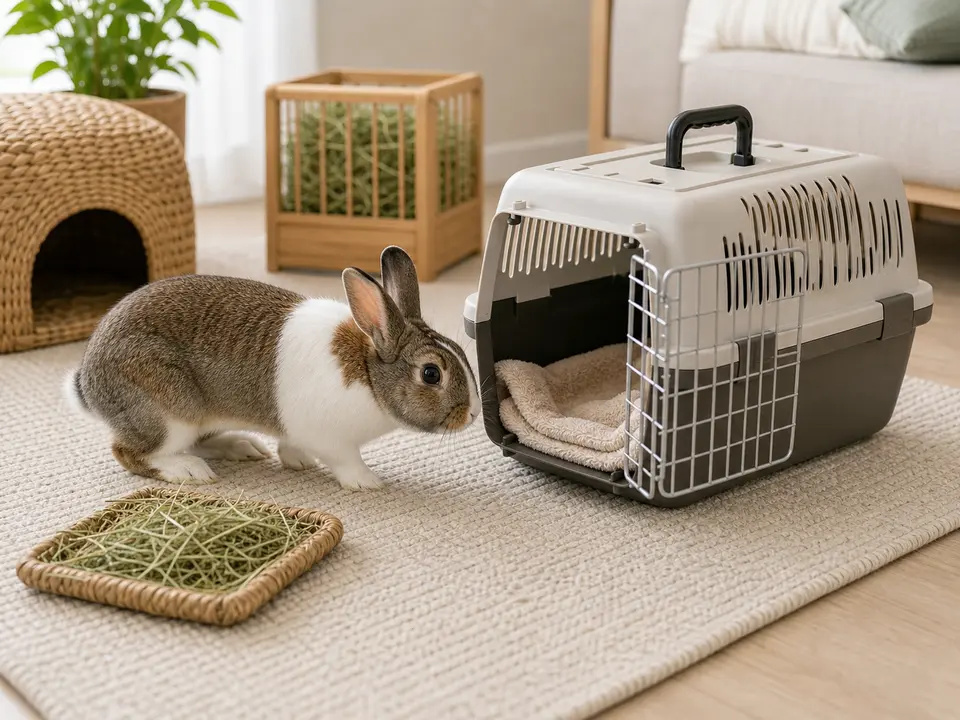
Open the carrier in the prepared space and let your rabbit decide when to come out.
A good first setup should lower pressure on both of you. Your rabbit gets a predictable room, and you get fewer moments where you have to improvise while they are already nervous.
Leave notes for the first morning
Before bed, know where the hay refill, litter scoop, greens, and vet contact are.
The first morning should be boring: check hay, water, poops, posture, and whether your rabbit is starting to read the room.
If the answer makes you pause, that is useful information. Waiting until the space, budget, or vet plan is ready can be the kindest choice for the rabbit you want to bring home.
Before you decide
What changed recently?
Can your rabbit choose a quiet retreat?
Are hay, water, litter, and footing easy?
Is this normal for your individual rabbit?
Next best moves
Make one small change.
Watch what your rabbit chooses next.
Keep the setup calm enough to repeat tomorrow.
First setup pieces that earn their space
Start with the pieces that make the first room calm before buying cute extras.
Affiliate links: Furball Cove may earn from qualifying purchases at no extra cost to you.
What should I do the night before bringing a rabbit home?
The night before bringing a rabbit home, finish the room instead of adding more stuff: hay and litter together, water filled, hideout ready, cords and plants moved, grippy floor down, carrier path clear, and the first few days kept quiet.
What should I change first?
Choose one small setup change that makes the daily routine easier: closer hay, better traction, a calmer hideout, a larger box, or a shorter handling session.
When should I get extra help?
If your rabbit stops eating or pooping, seems painful, breathes strangely, or changes suddenly, call a rabbit-savvy vet. For bonding or handling problems, an experienced rabbit rescue can also help.