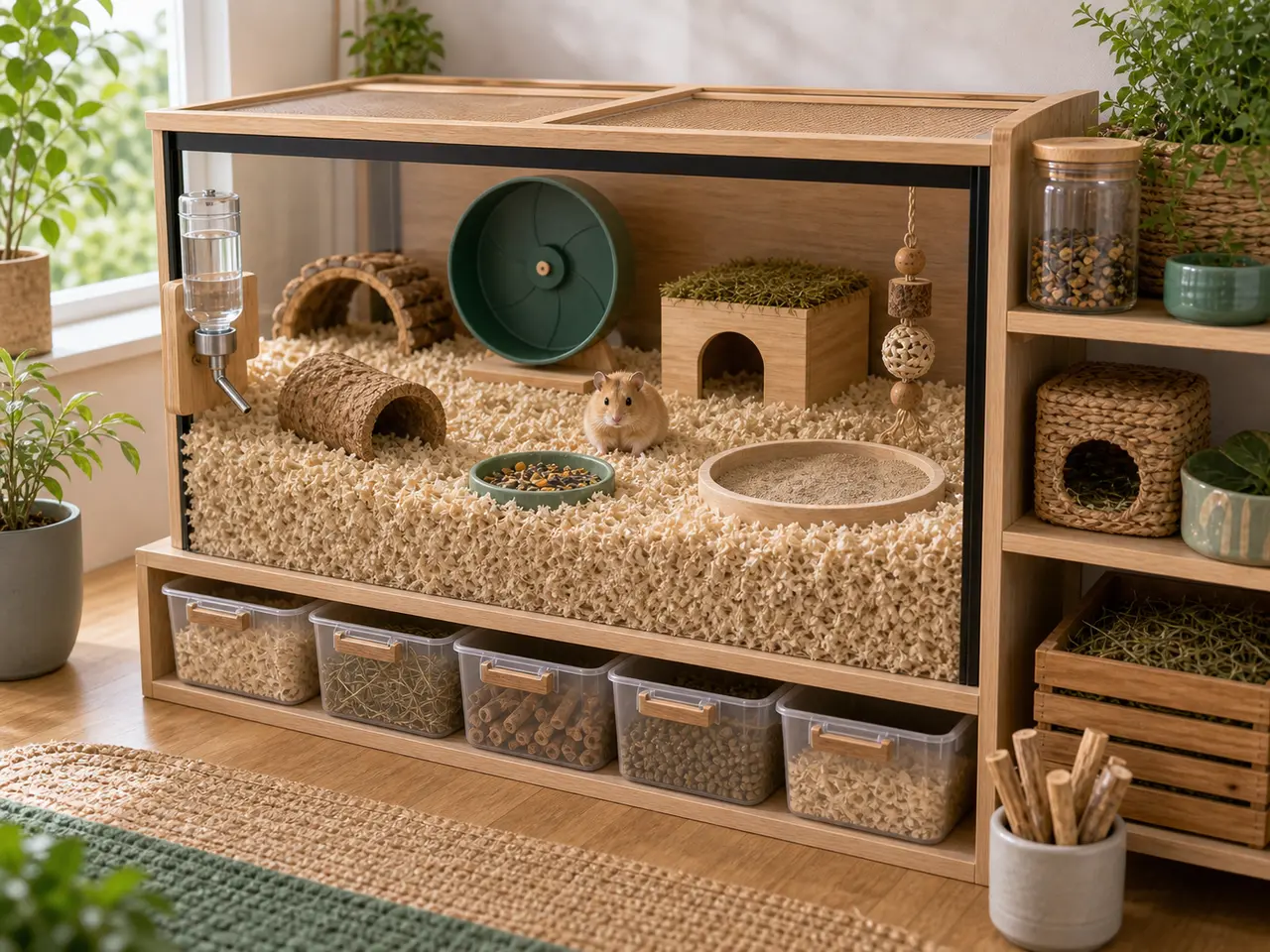
Start with one hamster
Syrian hamsters should live alone, and dwarf hamsters usually do safest in a solo pet-home setup. Do not use another hamster as enrichment. Use bedding depth, wheel quality, hides, sand, and foraging instead.
Updated
Housing detail
Hamster housing should be solitary, secure, deep-bedded, wheel-safe, quiet, enriched, and easy to spot-clean.
Build for burrowing and evening activity, not a shallow toy cage.
Syrian hamsters should live alone, and dwarf hamsters usually do safest in a solo pet-home setup. Do not use another hamster as enrichment. Use bedding depth, wheel quality, hides, sand, and foraging instead.

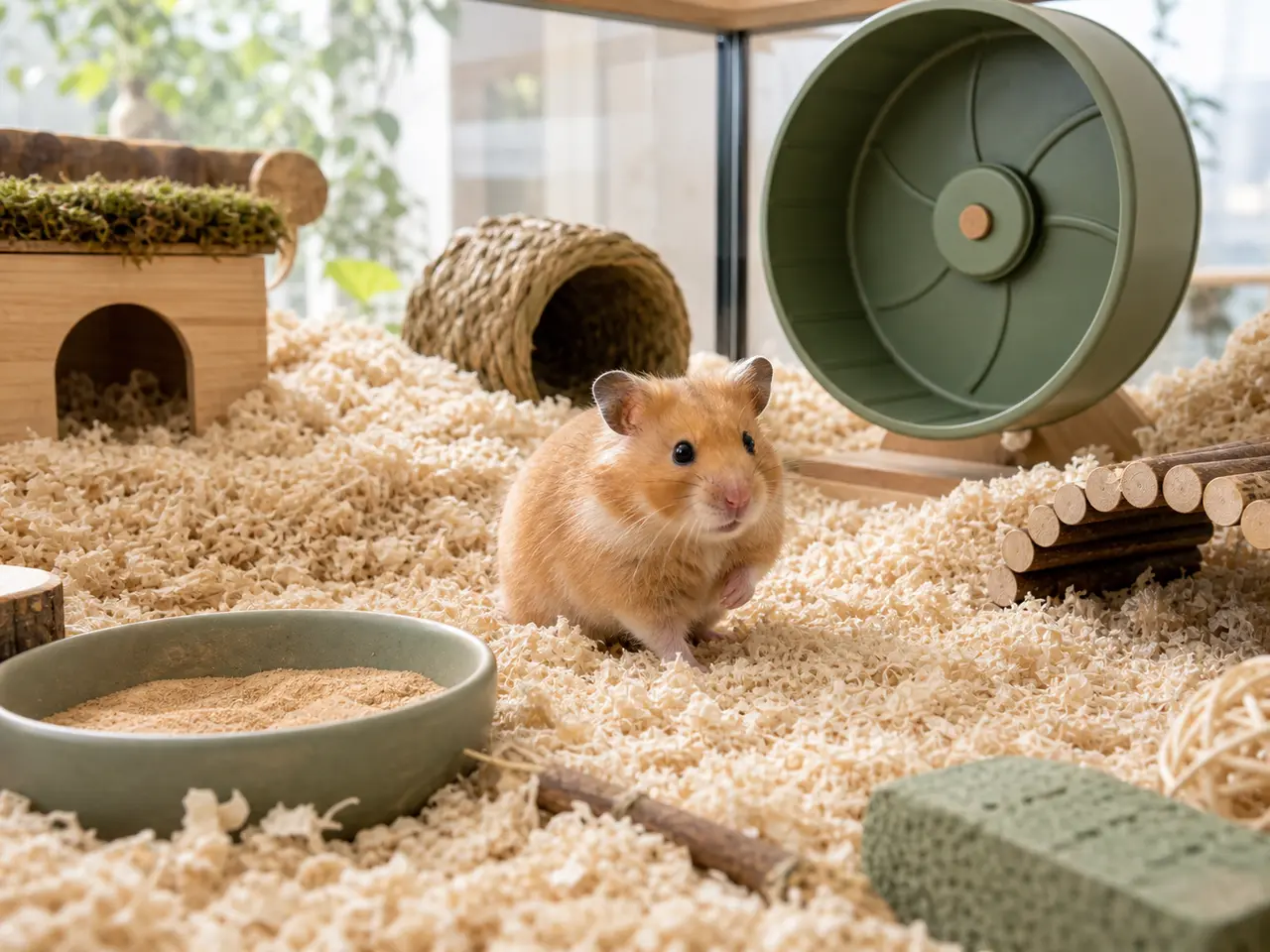
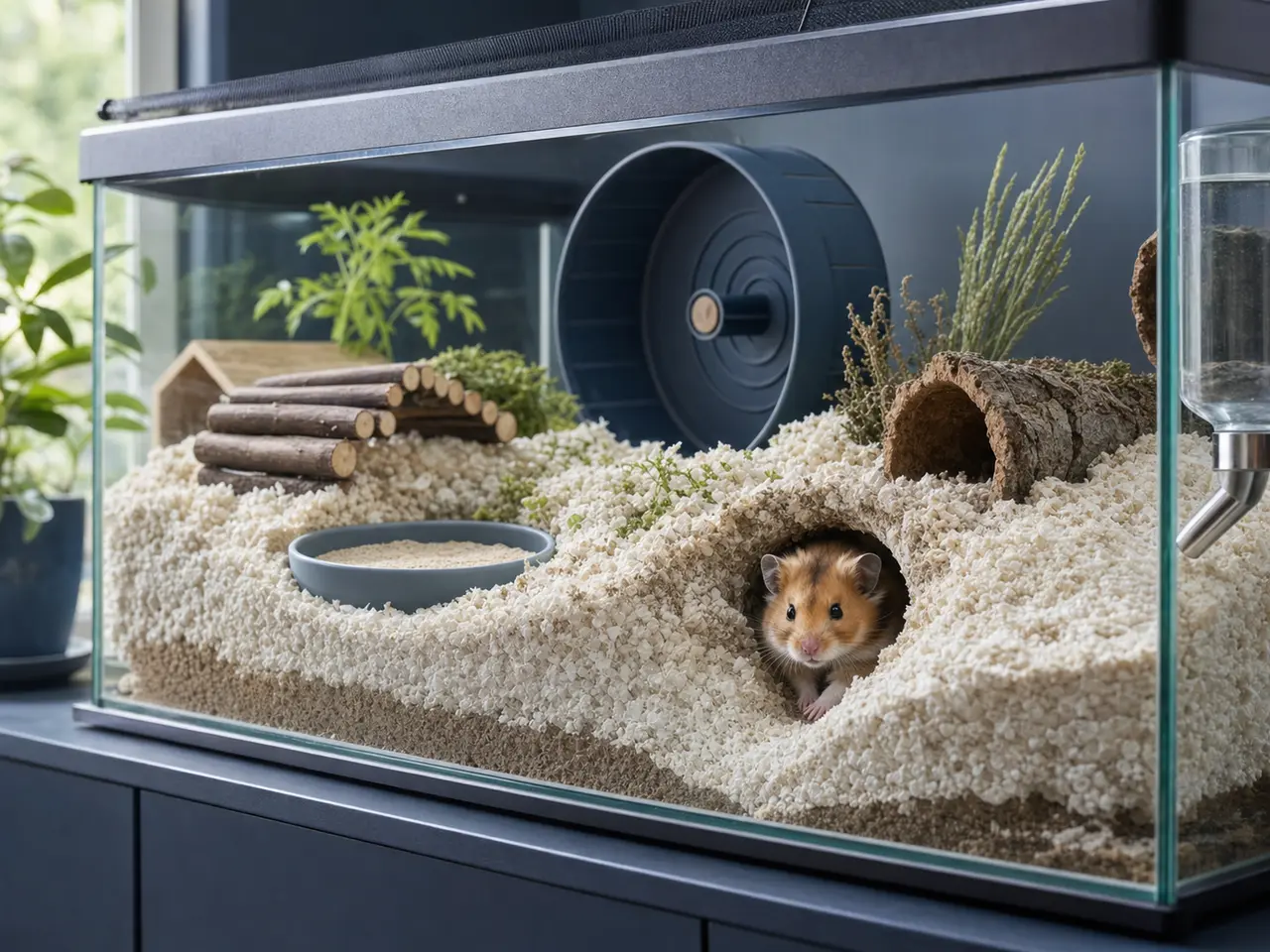
Deep paper-based bedding lets a hamster dig, tunnel, nest, and store food. Thin bedding forces surface-only life and can make pacing, chewing, and stress more likely.

The wheel should be solid, stable, and large enough that the hamster runs without a sharply arched back. Keep bedding from jamming the wheel and avoid open rungs that can catch feet.
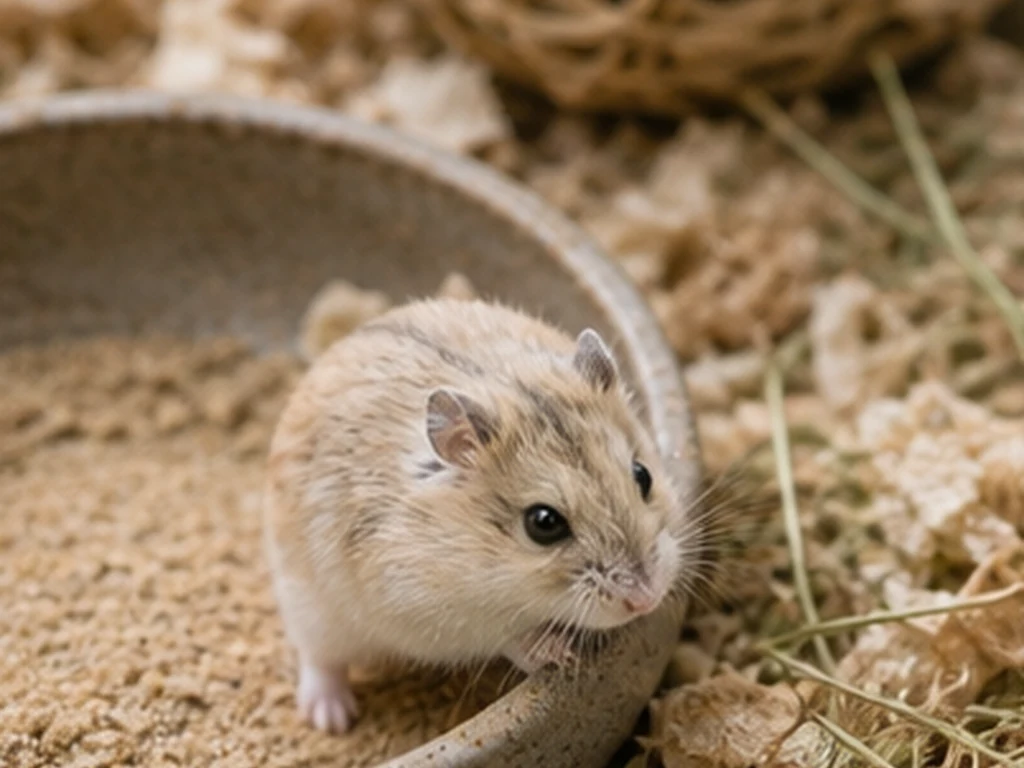
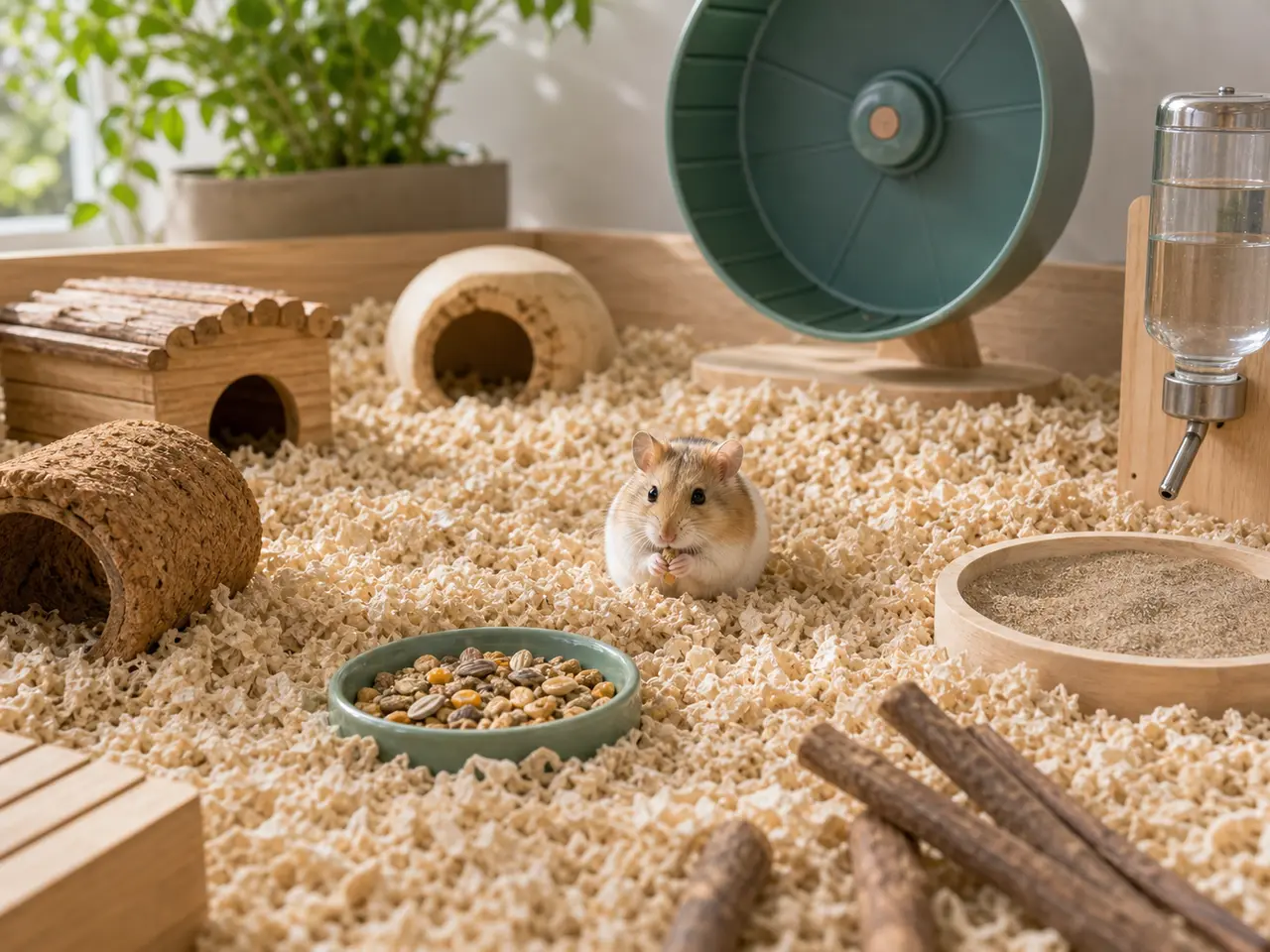
A sand bath supports grooming, hides make open space less stressful, and scatter feeding turns food into a normal search routine. Keep sugary extras limited, especially for dwarf hamsters with weight or blood-sugar concerns.
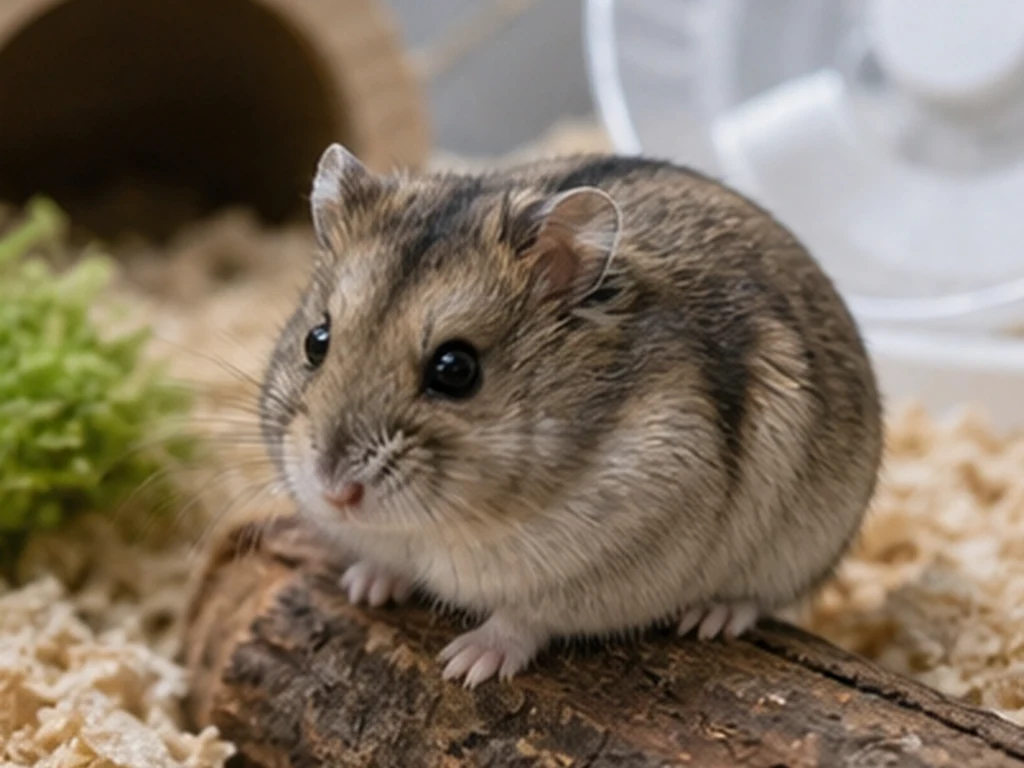
Avoid direct sun, loud daytime rooms, drafts, and locations where people wake the hamster for entertainment. A hamster who sleeps safely during the day is more likely to handle calmly in the evening.
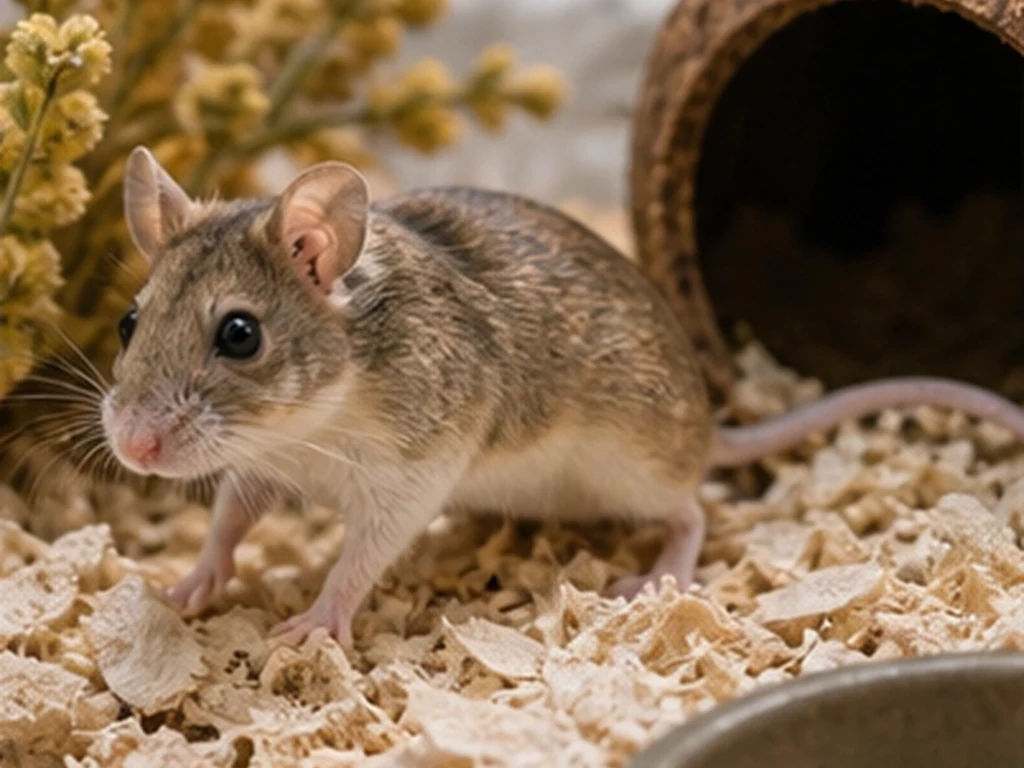
Remove wet bedding, stale food, and dirty sand often, but preserve clean burrow zones when possible. Constant full cleanouts can make a hamster rebuild in stress and hide more. Mark the wet corner, food hoard, and sand bath on cleaning day so the next check is faster and less disruptive.
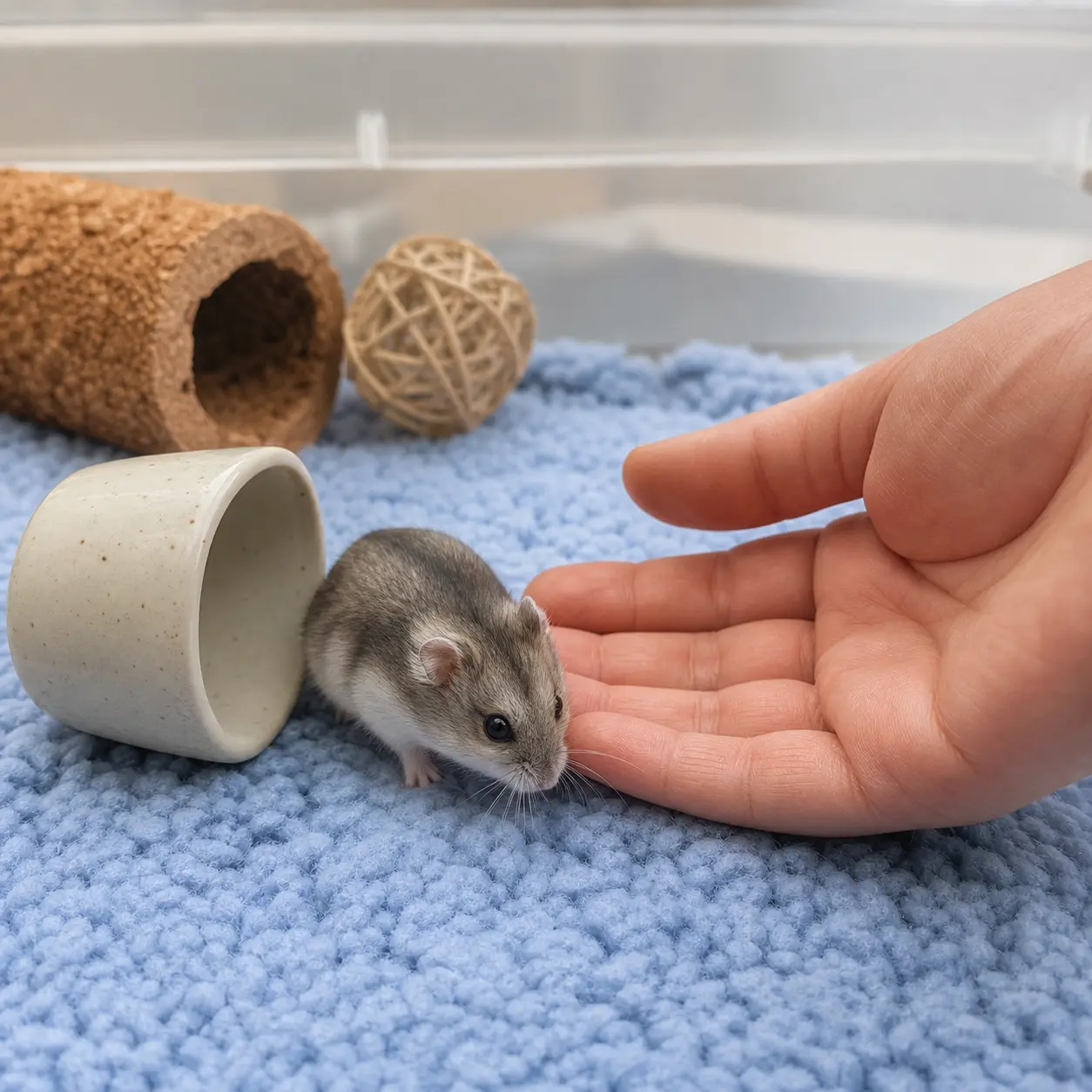
Look at every gap, lid edge, door latch, water mount, wheel stand, and tunnel opening as if the hamster will test it at midnight. Syrian hamsters are powerful enough to push weak points, while dwarf hamsters can exploit smaller spaces. A secure habitat also needs human access for water checks, stuck wheel fixes, food hoard inspection, and spot-cleaning without forcing the hamster into daily panic.
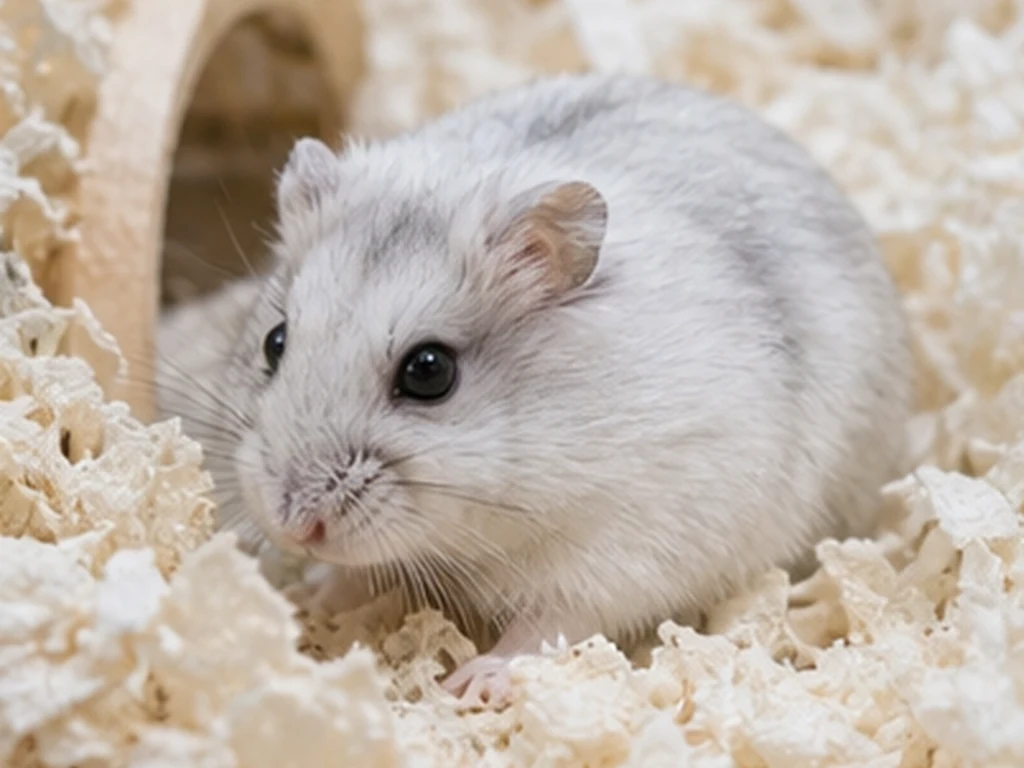
A hamster habitat should be rich, not chaotic. Hides, cork tunnels, chews, sand, scatter feeding, and a wheel should create routes and choices while leaving room to move naturally. If every object blocks the wheel, collapses burrows, traps food, or makes cleaning impossible, remove the weakest pieces and make the remaining layout work better.
Optional supplies that support the care routine after the species needs are clear.
Affiliate links: Furball Cove may earn from qualifying purchases at no extra cost to you.
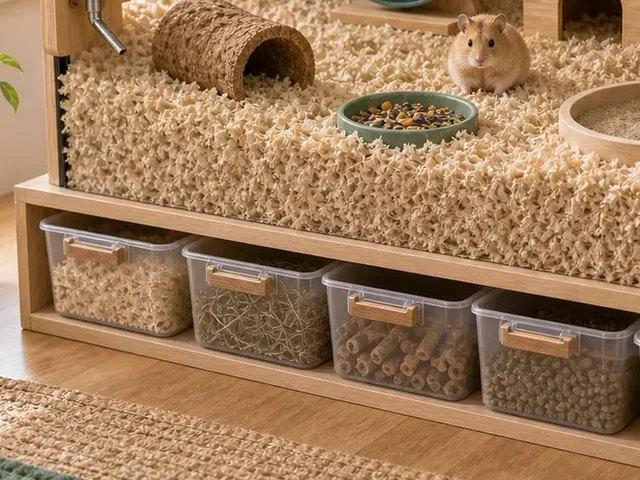
Builds the burrowing base a Syrian hamster needs without fragrance, dusty shavings, or cotton fluff.
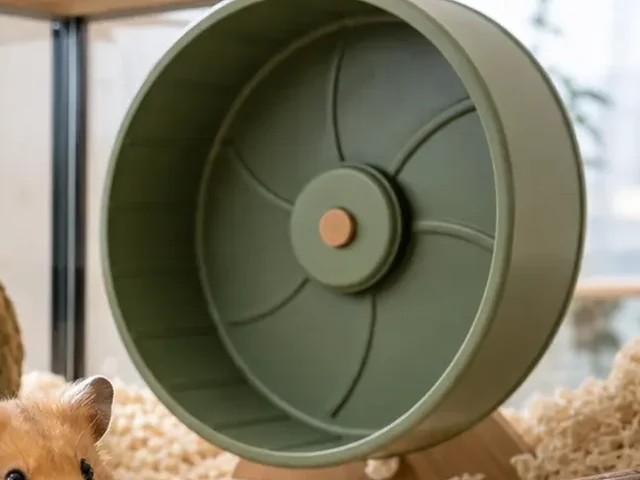
A solid running surface helps a Syrian hamster run without wire rungs or a curved back.

A smooth wheel sized for dwarf hamsters, with no wire rungs or mesh.
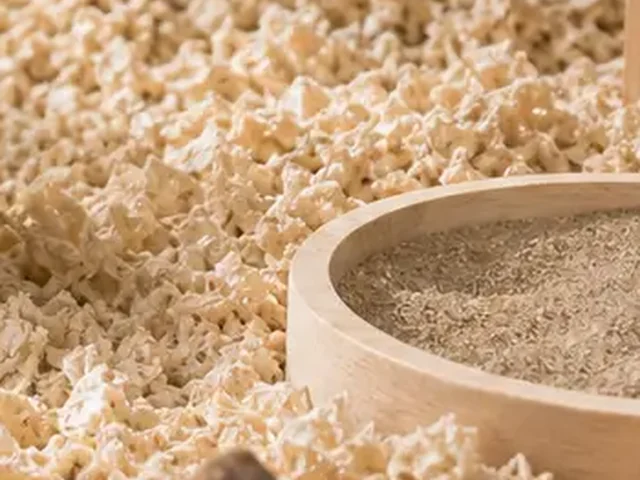
Keeps a tiny dry-grooming zone removable so sand does not take over the whole habitat.
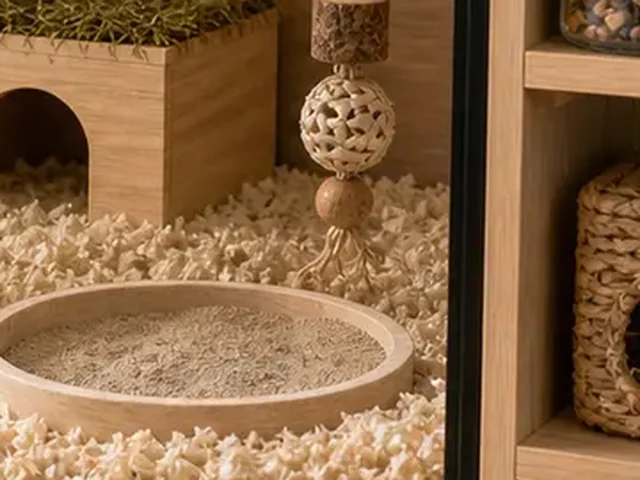
Creates a covered nest zone for sleeping, hoarding, and retreating without exposing the whole animal.