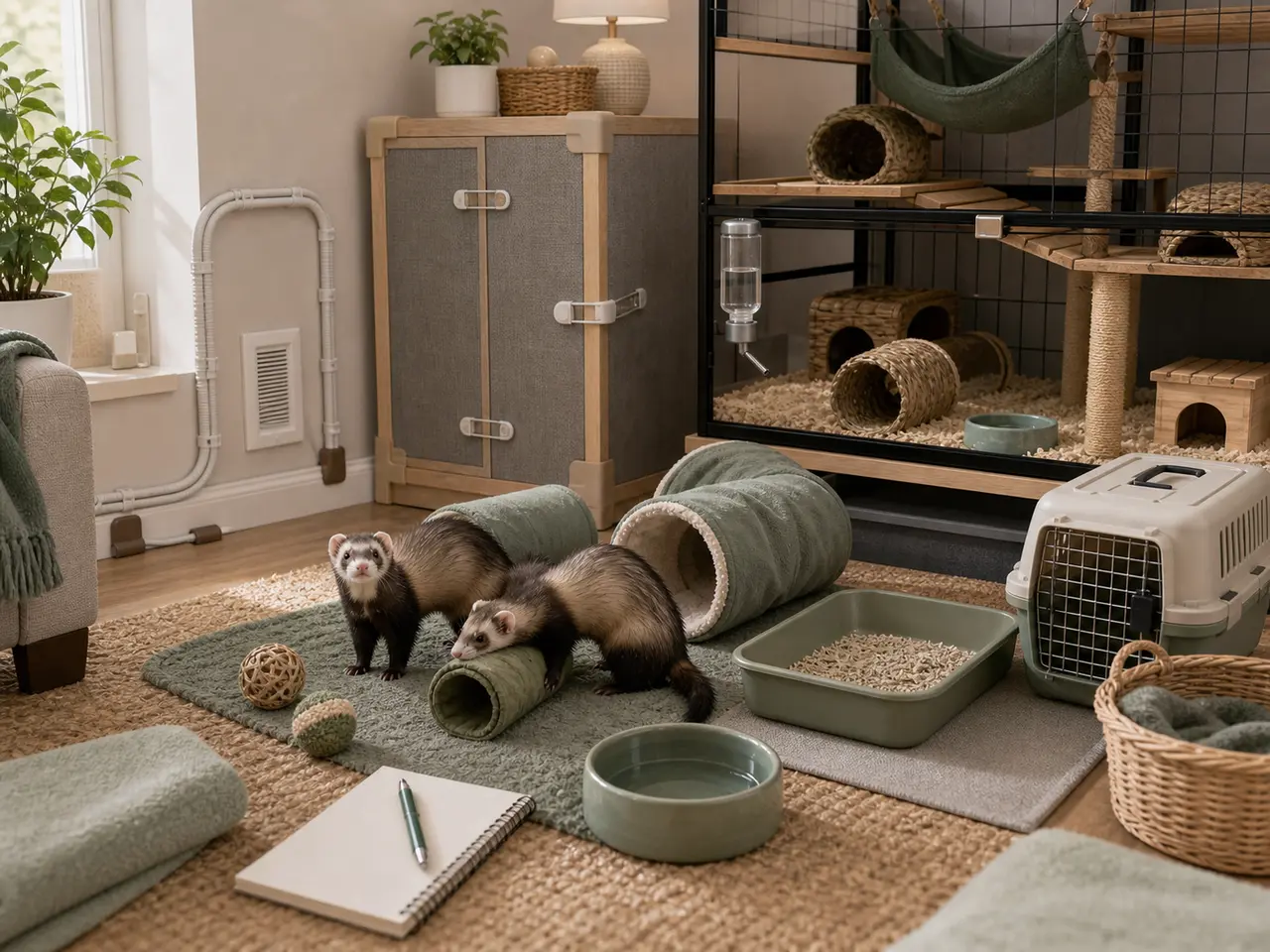
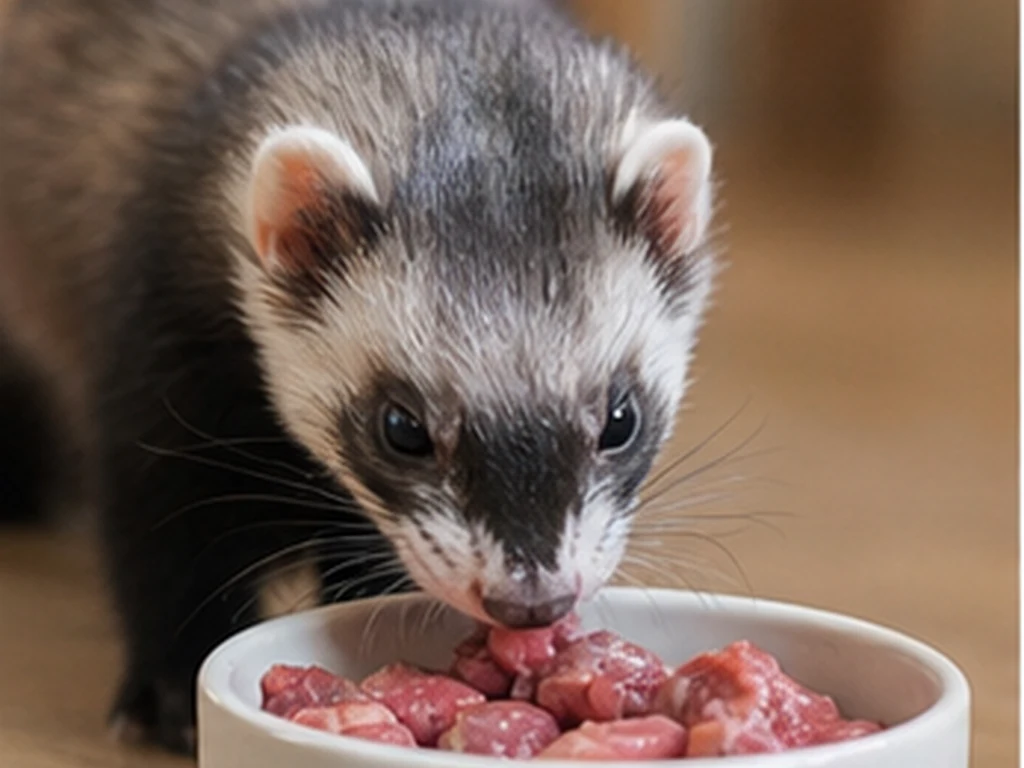
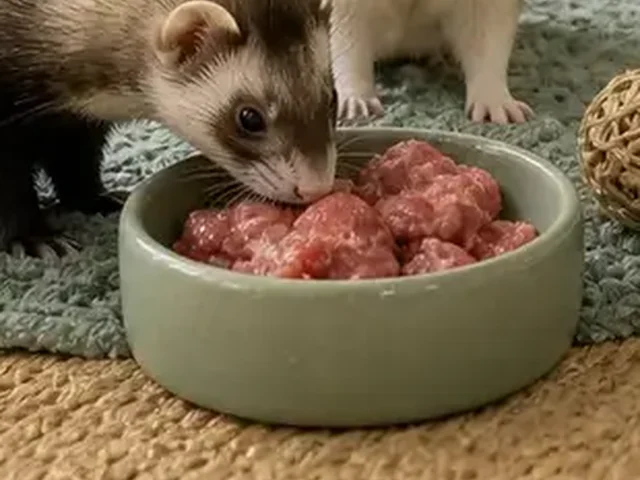
Ferrets need a ferret-appropriate meat-based diet, clean water, and careful stool and appetite monitoring. They should not eat hay, seed mixes, or generic rodent food.
Plan around proofed play, meat-based food, and vet risk.
Start with the daily diet
Start with the normal daily diet, then judge the specific food question against that routine.
Check the staple food, hay or seed balance when relevant, water, treats, hoards, droppings, weight, and whether one animal is eating less.
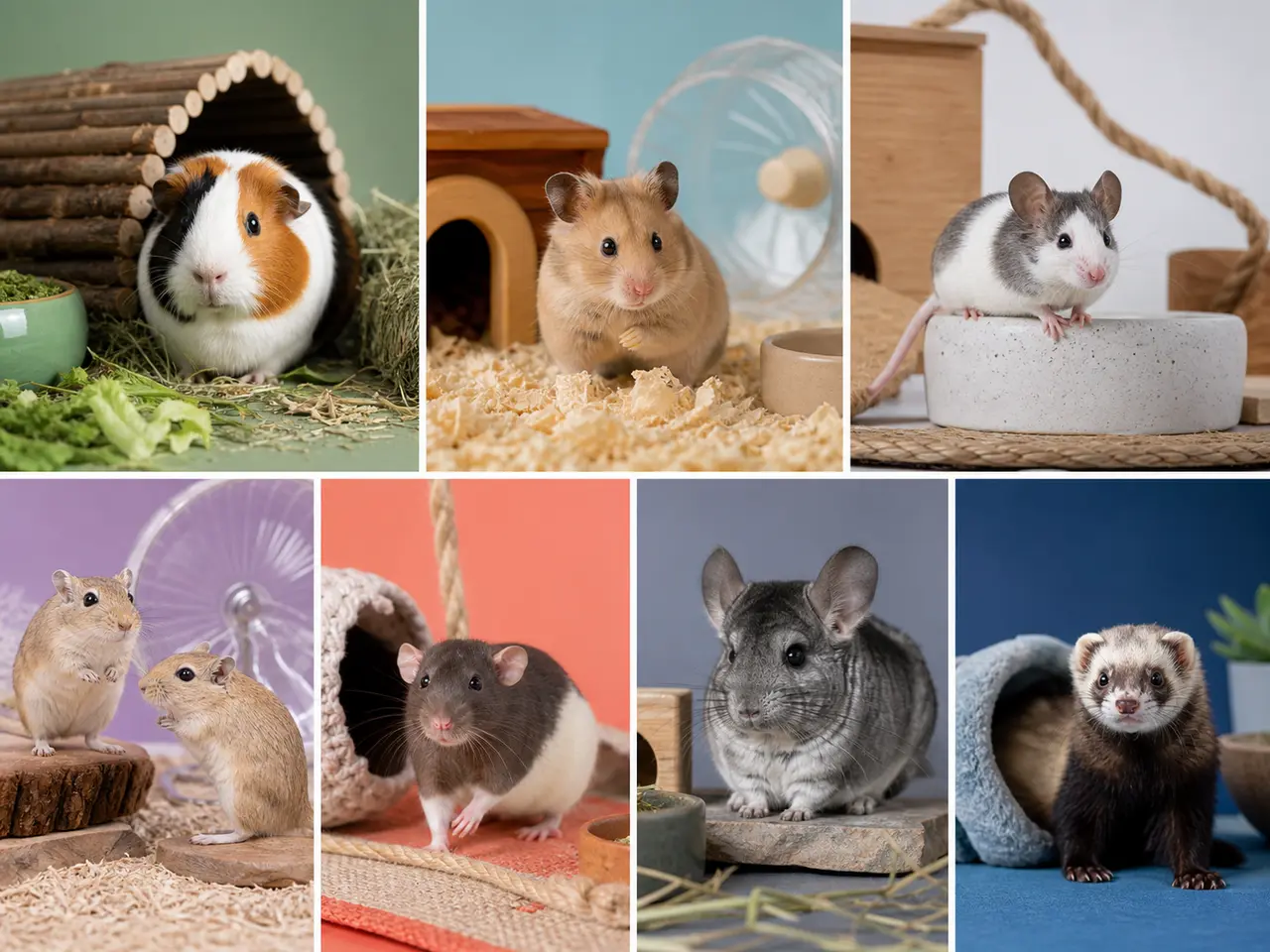
Food differs by species
Ferrets are carnivores, so their diet belongs with ferret-appropriate meat-based food rather than rodent mixes, hay, fruit bowls, or seed treats.
Food changes should be judged with stool, appetite, energy, water, and blockage risk in mind.
Set the food routine
Set the staple, water check, treat rule, and leftover check so appetite changes are easy to notice.
The routine should make proofing, litter, play, food, water, and blockage concerns easy to notice.
Notice appetite changes
Less appetite, fewer droppings, soft stool, weight loss, drooling, hoard changes, or one animal being blocked from food deserves an exotic-pet vet call.
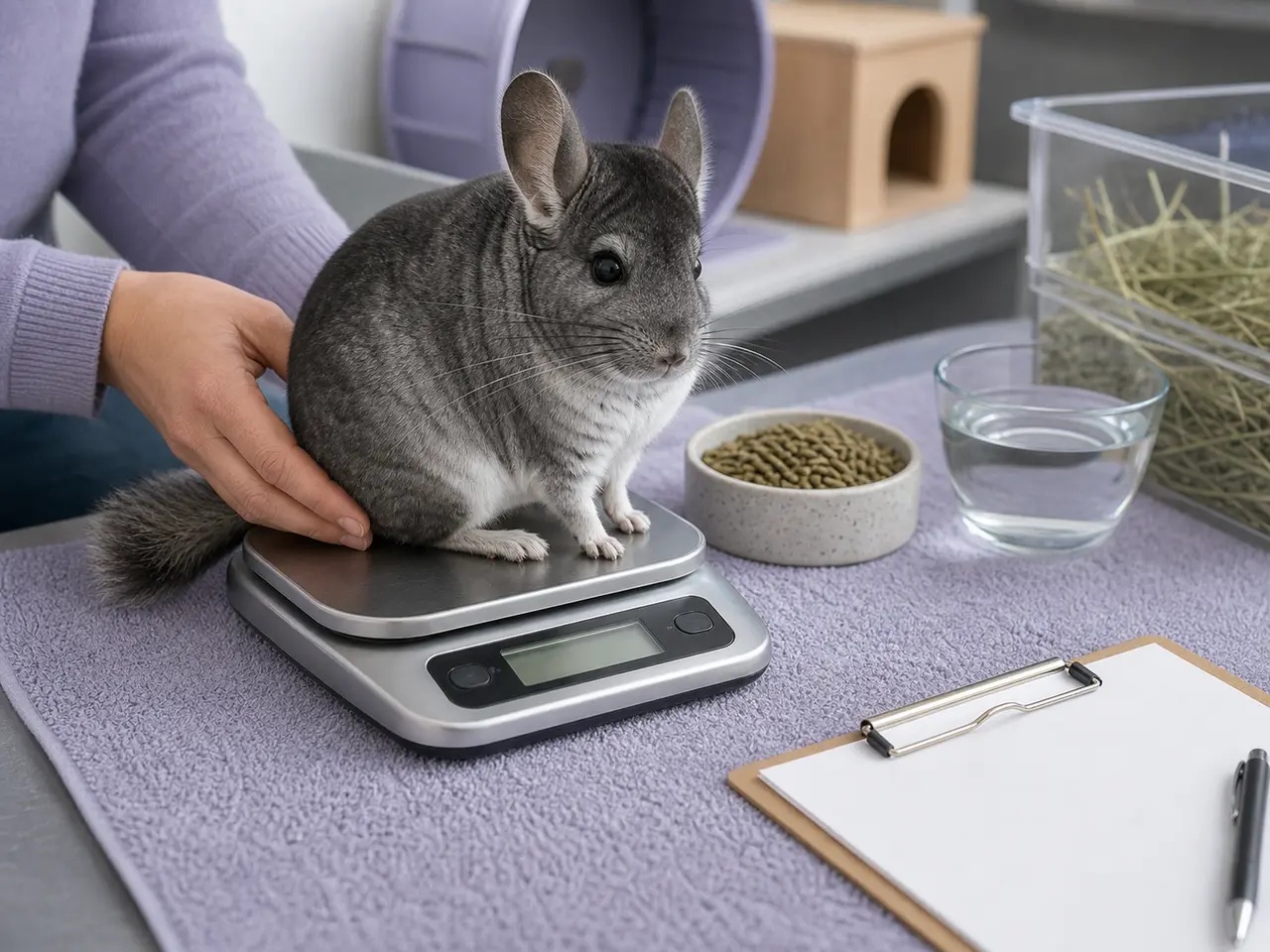
Write down the staple, water check, treat amount, hoards or leftovers, droppings, weight, and the exact food change.
Before you decide
Does this match the species' normal staple diet?
Are water, portions, leftovers, and hoards easy to check?
Would you notice less appetite, fewer droppings, soft stool, or weight loss today?
Have you opened the matching food guide before changing the diet?