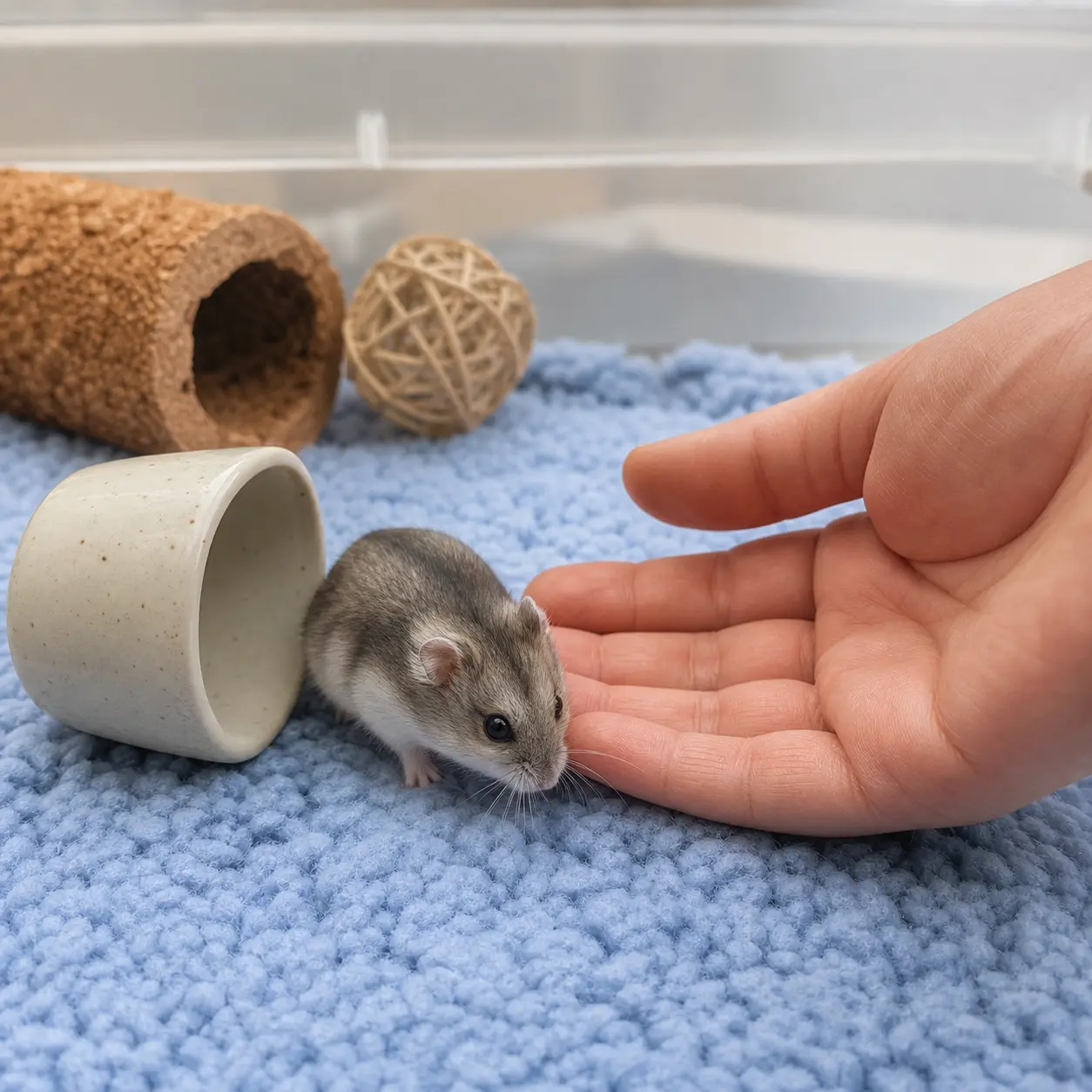
Tame a scared hamster with quiet presence, evening timing, food association, tunnel transfers, and short low sessions. Stop before panic so the hamster learns contact is predictable.
Protect solitary housing, deep bedding, and quiet timing.
Start with the safest step
Start with the animal's body language and give it a way to leave before trust runs out.
Check body language, footing, escape routes, food motivation, session length, child rules, and whether pain or fear could explain the behavior.
Handling differs by species
Handling answers change with body shape, prey instincts, vision, confidence, age, pain, and past handling.
The routine should protect sleep, burrows, water, hoards, wheel use, and low handling.
Give the animal an exit
Set up a low, calm handling space with a hide, carrier, tunnel, or playpen ready before hands reach in.
The routine should protect sleep, burrows, water, hoards, wheel use, and low handling.
Stop before fear escalates
Biting, panic jumping, freezing, hiding, teeth chattering, noisy breathing, or sudden aggression can be a stress or pain clue; ask an exotic-pet veterinarian or qualified behavior professional.
Keep the next session shorter, lower, and easier to leave; write down what body language ended this one.
Before you decide
Can handling happen low, calm, and without chasing?
Does the animal have a hide, tunnel, carrier, or safe exit?
Would you call an exotic-pet veterinarian or qualified behavior professional for biting, fear, pain signs, or sudden behavior change?
Have children been given safe helper jobs instead of risky lifting?
Next best moves
Protect solitary housing, deep bedding, and daytime sleep.
Use a secure lid, safe wheel, sand, hides, and calm evening handling.
Call an exotic-pet veterinarian quickly for wet-tail signs, wounds, weight loss, breathing changes, or not eating.
Common hamster questions
Does this answer apply to every small mammal?
No. The page gives the practical rule, then the species profile should decide the final housing, food, handling, and vet plan.
When should I ask a veterinarian?
Ask an exotic-pet veterinarian promptly for appetite loss, fewer droppings, labored breathing, collapse, severe lethargy, wounds, heat stress, or sudden weight change.